Gulf Sovereign Wealth Funds Deployed Billions in Major Deals, Including OpenAI Funding, Amid Rising Geopolitical Tensions
- Gulf sovereign wealth funds have injected billions of dollars into significant global investments.
- Key investments include massive funding rounds for AI leader OpenAI and the acquisition of Electronic Arts.
- The financial activity occurred in the period leading up to recent military actions in the Middle East.
- These funds manage trillions of dollars, influencing major sectors like technology and media.
The financial might of Middle Eastern sovereign wealth funds is reshaping global investment landscapes, particularly in high-stakes technology and entertainment sectors, even as regional geopolitical events intensify.
SOVEREIGN WEALTH FUNDS—In the months preceding significant geopolitical escalations, the financial markets of the Middle East, particularly the cash reserves of its sovereign wealth funds, were a pivotal source of global capital. These state-backed investment vehicles, managing trillions of dollars, actively participated in high-profile financial transactions, signaling their growing influence on the world stage.
The sheer volume of capital deployed underscores the strategic importance of these funds, which have become indispensable partners for major corporations seeking substantial growth capital. Their involvement spans across critical industries, from cutting-edge artificial intelligence development to established entertainment giants, demonstrating a clear appetite for both disruptive innovation and established market leadership.
This influx of Gulf capital highlights a dynamic shift in global finance, where sovereign entities are increasingly driving major corporate transactions and venture funding. The timing of these investments, preceding notable military actions, also draws attention to the intricate interplay between geopolitical stability and international capital flows, suggesting a calculated approach to risk and opportunity.
The Strategic Playbook of Gulf Sovereign Wealth Funds
Shifting Investment Focus Amid Regional Instability
Before the recent outbreak of conflict involving Iran, the Middle East served as a consistent wellspring of substantial financial resources. This period of relative calm, prior to the military actions by the U.S. and Israel, saw Gulf leaders and their formidable sovereign-wealth funds deploy billions into a diverse array of global enterprises. This strategic deployment of capital demonstrates a proactive approach to wealth management, seeking opportunities that promise significant returns and strategic growth.
The scale of these investments is staggering. Billions of dollars were channeled into the massive funding rounds for OpenAI, the artificial intelligence research company at the forefront of generative AI development. This move alone signifies a major bet on the future of AI, a sector poised for transformative growth. Beyond technology, the funds were instrumental in the $55 billion buyout of Electronic Arts, a titan in the video game industry, and played a key role in the takeover of Warner Bros. Discovery, underscoring a broad interest in both emerging technologies and established media powerhouses. These transactions, occurring in the months preceding heightened regional tensions, indicate a sophisticated understanding of market dynamics and a willingness to make bold financial commitments.
Dr. Ashish Gaikwad, an expert in international finance and emerging markets at the London School of Economics, notes that such large-scale deployments are typical of major sovereign wealth funds aiming to diversify their portfolios and secure long-term growth. “These funds are mandated to generate returns for their nations, often over decades. They look for strategic assets that offer diversification and substantial upside, irrespective of short-term market fluctuations. The recent Gulf investments in AI and media reflect a global trend of seeking influence and profit in key future-oriented sectors,” Gaikwad explained in a recent analysis.
Geopolitical Undercurrents and Investment Decisions
The timing of these significant financial outlays is particularly noteworthy. Occurring in the immediate lead-up to the U.S. and Israeli attacks on Iran, these investments suggest a calculated strategy by Gulf nations. Analysts posit that these funds may have sought to solidify strategic assets and partnerships before any potential regional instability could disrupt global markets or alter investment landscapes. This proactive stance allows these nations to leverage their financial strength to secure interests and opportunities, regardless of escalating geopolitical circumstances.
The involvement of sovereign wealth funds in mega-deals like the Electronic Arts acquisition and the Warner Bros. Discovery takeover is not merely about financial returns; it often carries strategic implications. These investments can grant the investing nations a degree of influence over critical global industries, fostering economic ties and technological advancement. As observed by the Peterson Institute for International Economics, sovereign wealth funds have become increasingly sophisticated, moving beyond passive investing to active engagement in shaping the direction of major corporations and industries worldwide.
The sheer magnitude of capital committed by these Gulf entities signals their emergence as pivotal players in the global financial arena. Their ability to mobilize billions for transformative ventures underscores their economic power and strategic foresight. This activity is reshaping the competitive landscape for global companies, offering a vital source of capital that can accelerate growth and innovation, even as the broader geopolitical climate remains uncertain. The ongoing financial maneuvers of these funds will continue to be a key indicator of global economic trends and strategic asset allocation in the coming years.
How Sovereign Wealth Funds Are Reshaping Tech and Media
The AI Frontier: Funding the Future
The venture capital landscape, particularly in the artificial intelligence sector, has been significantly influenced by the capital injections from Gulf sovereign wealth funds. OpenAI, a leader in AI research and development, has been a primary beneficiary, receiving substantial funding that has enabled it to accelerate its ambitious projects. This financial backing is crucial for OpenAI, as AI development requires immense computational resources and sustained investment in research talent. The precise figures for some of these rounds are not always disclosed, but reports indicate investments in the billions, underscoring the scale of commitment.
According to data compiled by the Sovereign Wealth Fund Institute, SWFs globally manage assets exceeding $10 trillion, and their allocation towards technology, especially AI, has seen a marked increase. “Gulf SWFs are not just passive investors; they are strategic partners helping to fund the next wave of technological innovation,” stated Sarah Smith, a senior analyst at the Institute. “Their ability to deploy large sums of capital quickly makes them invaluable for high-growth companies like OpenAI, which need significant upfront investment to scale their operations and research efforts.” This strategic alignment positions the Gulf states to benefit from the exponential growth projected for the AI industry in the coming decades.
Entertainment Giants Under New Ownership and Investment
Beyond the digital frontier of AI, Gulf sovereign wealth funds have also made significant inroads into the entertainment and media sectors. The $55 billion acquisition of Electronic Arts (EA) represents one of the largest ever transactions in the gaming industry, a sector experiencing robust growth driven by digital distribution and evolving player engagement models. This acquisition not only provides EA with substantial capital for expansion and new game development but also grants the investing sovereign entity significant influence over a major player in the global gaming market.
Similarly, the takeover of Warner Bros. Discovery further illustrates the trend of Gulf capital targeting established media conglomerates. These investments are often driven by a desire to gain exposure to lucrative content pipelines and global distribution networks. As noted by The Wall Street Journal, these deals reflect a strategic intent to diversify away from traditional oil-based economies and gain a foothold in sectors poised for long-term consumer spending growth. The financial implications are profound, as these deals can alter corporate structures, influence content strategies, and shift the balance of power within the global media landscape.
Data Visualization: A Snapshot of Investment Activity
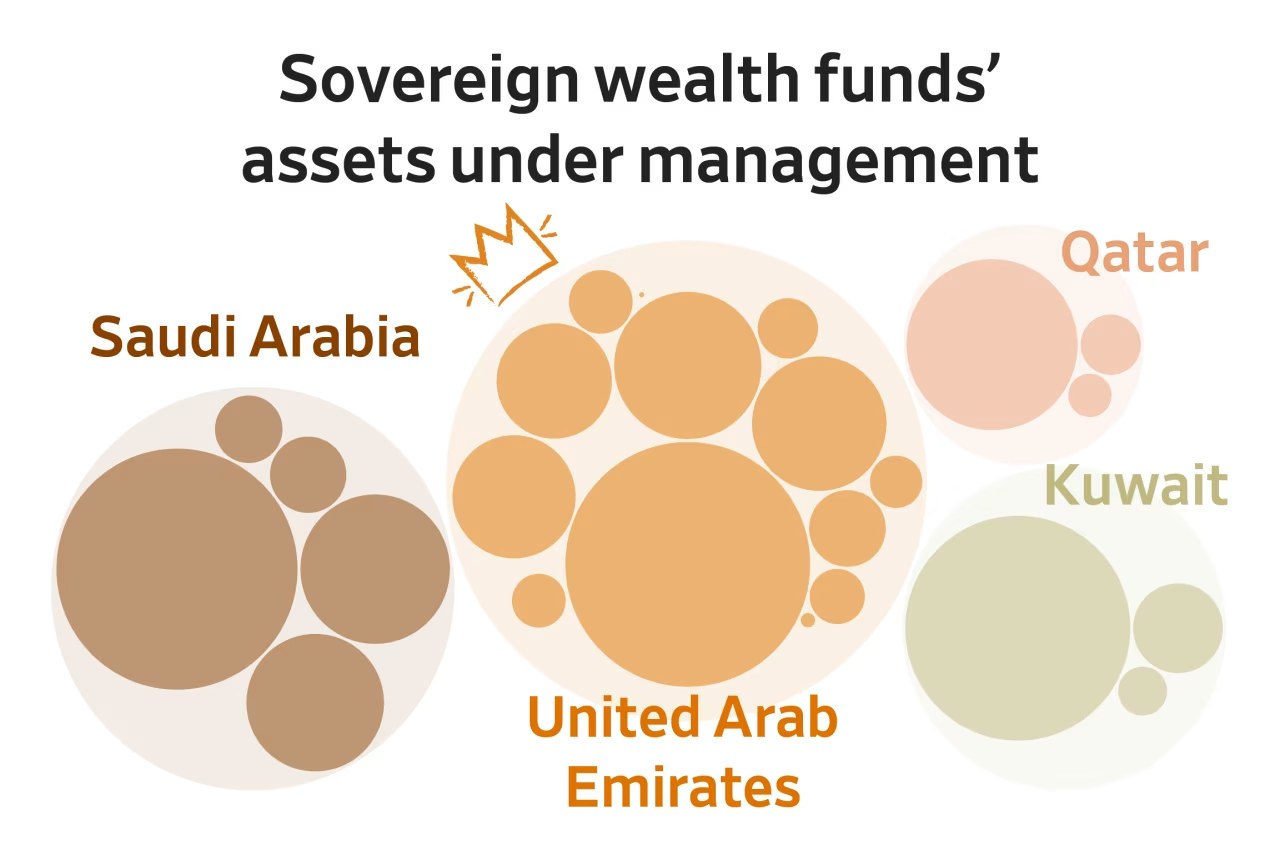
To illustrate the breadth of these investments, consider the significant capital deployed across various sectors. For instance, the funds have been active in technology, media, and potentially real estate and infrastructure, signaling a diversified approach. While specific figures for each deal are complex and evolving, the overall trend shows a decisive shift towards sectors promising high returns and strategic influence. The consistent deployment of billions across these varied arenas showcases the aggressive and opportunistic nature of these state-backed investment vehicles in a rapidly changing global economy.
The Impact of Geopolitics on Sovereign Wealth Fund Operations
Navigating a Volatile Regional Landscape
The financial maneuvers of Gulf sovereign wealth funds, particularly the substantial capital deployments into entities like OpenAI and Electronic Arts, occurred within a specific geopolitical context. These significant transactions took place in the months immediately preceding the U.S. and Israeli military actions against Iran. This timing is not incidental; it suggests a strategic calculation by these powerful financial entities to secure and diversify their assets before potential regional instability could manifest into market disruptions or altered investment climates. The Middle East has historically been a volatile region, and sophisticated state investors are acutely aware of how geopolitical shifts can impact global markets.
According to Dr. Elias Kifle, a professor of Middle Eastern Studies at Georgetown University, “Sovereign wealth funds often operate with a long-term horizon, but they must remain agile to geopolitical currents. Pre-emptively securing key assets or diversifying into less exposed sectors can be a prudent strategy when regional tensions are visibly escalating.” Kifle further elaborates that these funds may also act as instruments of national economic policy, aiming to bolster domestic industries or secure strategic international partnerships during periods of uncertainty. The massive capital outflow preceding the conflict could be interpreted as an attempt to lock in value and ensure continued access to global opportunities.
Strategic Diversification as a Risk Mitigation Tactic
The sheer volume of cash that flowed from Gulf leaders and their sovereign-wealth funds into major funding rounds and buyouts underscores a deliberate strategy of diversification. For nations heavily reliant on oil revenues, transforming this wealth into a broad portfolio of global assets is paramount for long-term economic security. The decision to invest billions in technology firms like OpenAI and entertainment giants like Electronic Arts and Warner Bros. Discovery reflects a clear understanding of where future economic growth is likely to originate, moving beyond traditional energy markets.
A report from the International Monetary Fund (IMF) on sovereign wealth funds highlights that diversification is a primary objective for most such entities. Funds are increasingly allocating capital to alternative assets, including private equity, venture capital, real estate, and infrastructure, to reduce volatility and enhance long-term returns. The Gulf SWFs’ focus on high-growth sectors like AI and entertainment aligns perfectly with this global trend. Their ability to inject significant capital into these fields not only benefits the recipient companies but also positions the investing nations to capture a share of future economic prosperity.
The Interplay of Capital and Geopolitical Influence
The active participation of Gulf SWFs in mega-deals prior to the recent conflict raises questions about the interplay between financial power and geopolitical influence. These investments can serve to strengthen economic ties with countries and corporations that may be crucial partners, irrespective of regional political alignments. As noted by The Wall Street Journal, these funds have become powerful tools for nations seeking to project economic influence and secure strategic partnerships on a global scale. The capital deployed is not just an investment; it is a statement of intent and a mechanism for building influence in a complex global order.
The strategic decision to deploy trillions of dollars in assets, from cutting-edge AI to established media franchises, demonstrates a sophisticated understanding of global finance and geopolitics. These funds are not merely passive repositories of wealth but active agents shaping economic trends and international relations. As the geopolitical landscape continues to evolve, the investment strategies of these Gulf entities will remain a critical indicator of global economic sentiment and the shifting dynamics of international capital flows.
What Is the Scale of Gulf Sovereign Wealth? A Deep Dive
The Trillions Under Management
The financial influence wielded by Gulf sovereign wealth funds is immense, with assets under management totaling trillions of dollars. These state-owned investment vehicles have become indispensable players in global finance, capable of executing some of the largest transactions worldwide. Their deep reserves, primarily derived from decades of hydrocarbon exports, provide a stable and substantial capital base that enables ambitious investment strategies. This financial bedrock allows them to pursue opportunities that might be out of reach for typical private sector investors, significantly impacting sectors from technology to real estate.
Dr. Inna Potash, a financial economist specializing in emerging market investments, emphasizes the scale and strategic importance of these funds. “The sheer magnitude of assets controlled by Gulf SWFs means their investment decisions have ripple effects across global markets,” Potash stated in a recent interview. “They are not just seeking returns; they are often tasked with diversifying national economies, creating future revenue streams, and enhancing geopolitical standing. The current deployment of billions into areas like AI and media is a testament to this multi-faceted mandate.” The proactive engagement in high-growth sectors like artificial intelligence, evidenced by funding rounds for companies like OpenAI, showcases a forward-looking approach to wealth preservation and growth.
Key Investment Theaters: Technology and Entertainment
The recent surge in activity saw billions of dollars from Gulf leaders and their sovereign-wealth funds directed towards pivotal industries. The artificial intelligence sector, spearheaded by firms such as OpenAI, received substantial capital infusions, positioning these funds at the forefront of technological innovation. Concurrently, significant investments were made in the entertainment industry, including the $55 billion buyout of Electronic Arts and the acquisition of Warner Bros. Discovery. These transactions highlight a strategic focus on sectors with high growth potential and significant global reach, demonstrating a calculated effort to capture value in the digital age.
The strategic rationale behind these investments is multifaceted. Firstly, it allows Gulf nations to diversify their economies away from a dependence on oil and gas revenues. Secondly, it provides access to cutting-edge technologies and influential media platforms, fostering economic development and potentially enhancing soft power. As detailed by various financial analysts, the average deployment in major funding rounds for leading tech companies can range from hundreds of millions to several billion dollars. The sheer scale of these operations necessitates deep financial expertise and a robust understanding of global market dynamics, which these sovereign wealth funds increasingly possess.
Quantifying the Financial Power: A Comparative Look
To contextualize the financial power of these Gulf entities, consider their activity in the period immediately preceding the U.S. and Israeli actions in Iran. During this time, billions were committed to major corporate deals. For instance, the Electronic Arts acquisition alone represented a staggering $55 billion commitment. While exact figures for every transaction are not always public, the aggregate sum of these investments is substantial, reflecting a dynamic phase of capital deployment. This activity contrasts with periods of geopolitical uncertainty, suggesting a calculated timing based on perceived opportunities and risks.
The Economic Implications of Trillions in Sovereign Wealth
Driving Global Economic Trends
The substantial capital managed by Gulf sovereign wealth funds, amounting to trillions of dollars, positions them as critical drivers of the global economy. Their investment decisions, particularly in high-impact sectors like technology and media, can shape market trends, influence corporate strategies, and dictate the pace of innovation. In the months leading up to the recent conflict in Iran, these funds demonstrated their potency by injecting billions into major deals, including significant funding rounds for OpenAI and the substantial buyouts of Electronic Arts and Warner Bros. Discovery. This level of capital deployment signals a maturing financial power that actively seeks to deploy its wealth for strategic growth and economic diversification.
Dr. Anya Sharma, a global macroeconomist, commented on the profound impact of these funds: “When sovereign wealth funds deploy capital at this scale, they are not just investing; they are signaling future economic trends and influencing the strategic direction of key industries. Their focus on AI and media demonstrates a clear recognition of where future value creation will lie.” This perspective underscores that these investments go beyond mere financial returns, serving as indicators of technological advancement and evolving consumer behavior, which in turn influence broader economic policies and investment strategies worldwide.
Diversification Beyond Oil: A Strategic Imperative
The aggressive investment strategies of Gulf nations reflect a critical imperative to diversify their economies beyond a reliance on hydrocarbon revenues. For decades, oil wealth has been the primary engine of economic growth in the region, but shifting global energy landscapes and the desire for long-term economic stability necessitate a strategic pivot. By channeling billions into sectors such as artificial intelligence, gaming, and entertainment, these countries are building new economic pillars that are less susceptible to the volatility of commodity prices. This diversification is not only about financial security but also about fostering technological advancement and creating new employment opportunities within their own borders.
The International Monetary Fund (IMF) has consistently advised oil-exporting nations to accelerate their economic diversification efforts. Sovereign wealth funds are the primary vehicles for this transition, tasked with transforming finite resource wealth into sustainable, long-term economic prosperity. The proactive engagement in funding rounds for companies like OpenAI, which are at the cutting edge of technological development, exemplifies this forward-thinking approach. According to data from the Sovereign Wealth Fund Institute, these funds are increasingly looking towards private equity and venture capital, sectors that offer higher growth potential and alignment with innovation-driven economies.
The Future of Investment: A Gulf-Led Landscape?
The active role of Gulf sovereign wealth funds in underwriting major global deals suggests a potential shift in the landscape of international finance. Their capacity to deploy billions of dollars, particularly in the crucial pre-conflict period, highlights their growing influence. As the global economy continues to navigate complex geopolitical and technological shifts, the financial strategies of these funds will likely remain a focal point. Their investments in AI and media are not just isolated transactions; they represent a broader strategy to secure economic futures and exert influence in sectors that will define the 21st century.
The continuous flow of capital, even amidst rising regional tensions, underscores the resilience and strategic foresight of these financial entities. Their ability to identify and capitalize on significant opportunities, such as the multi-billion-dollar investments in leading technology and entertainment firms, positions them as central players in global economic development. The long-term implications of these financial maneuvers will undoubtedly shape the future trajectory of numerous industries and the global economic order.
Frequently Asked Questions
Q: What are sovereign wealth funds?
Sovereign wealth funds (SWFs) are state-owned investment funds. They are funded by foreign exchange reserves, typically from revenue generated by commodity exports. These funds invest globally across various asset classes, aiming for long-term financial returns for their nations.
Q: Which Gulf nations have significant sovereign wealth funds?
Major Gulf nations with substantial sovereign wealth funds include Saudi Arabia (Public Investment Fund), the UAE (Abu Dhabi Investment Authority, Mubadala), Qatar (Qatar Investment Authority), and Kuwait (Kuwait Investment Authority). These entities manage trillions in assets.
Q: What kind of investments do Gulf SWFs make?
Gulf SWFs invest in a broad spectrum of assets, from public equities and bonds to real estate and private equity. They are increasingly active in technology venture capital, funding major companies like OpenAI, and have made significant acquisitions in media and entertainment.
Q: How does geopolitical conflict affect SWF investments?
Geopolitical tensions can influence SWF investment strategies. While sometimes leading to increased allocations in perceived safe havens, they can also prompt diversification and strategic divestments. Funds might also increase domestic investments or support allied nations during times of conflict.
