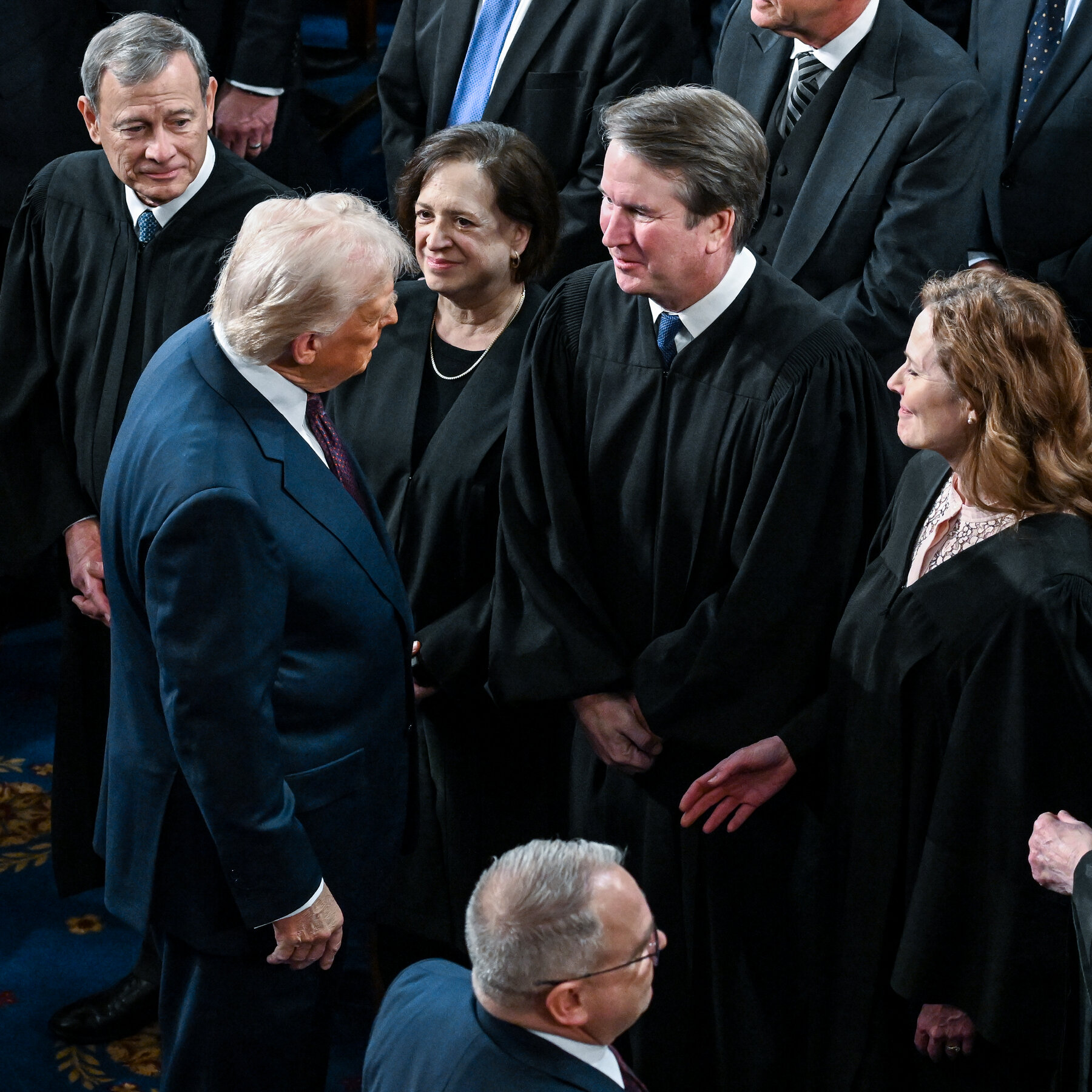
SUPREME COURT—A recent ruling by the Supreme Court on President Trump’s tariffs has underscored subtle yet significant divisions among the court’s conservative justices, potentially signaling a testing point for the Trump administration’s agenda. The decision, while unanimous in rejecting the tariffs, revealed diverse perspectives on executive power, setting the stage for future showdowns on the scope of presidential authority.
The Tariff Ruling and Its Implications for Executive Power
Introduction to the Ruling
The Supreme Court’s decision to reject President Trump’s tariffs marks a pivotal moment in the ongoing debate over executive authority. The ruling, while not surprising in its outcome, highlighted the complex and sometimes divergent views among the court’s conservative justices on the limits of presidential power.
Conservative Justices’ Perspectives
Chief Justice John Roberts, along with Justices Clarence Thomas, Samuel Alito, Neil Gorsuch, Brett Kavanaugh, and Amy Coney Barrett, each brought their unique interpretation to the table. While all agreed on the outcome, their written opinions and concurrences revealed subtle differences in how they approach questions of executive power.
Potential Impact on Trump’s Agenda
The implications of this ruling extend far beyond the immediate context of tariffs. It sets a precedent that could influence how the court approaches future challenges to the Trump administration’s policies, particularly those that rely on broad interpretations of executive authority.
The Role of Justice in Checks and Balances
Historical Context of Judicial Review
The Supreme Court has long played a crucial role in the system of checks and balances, ensuring that no one branch of government oversteps its constitutional bounds. The concept of judicial review, established in Marbury v. Madison, empowers the judiciary to declare laws and actions of the executive branch unconstitutional.
Conservative Justices and the Constitution
The conservative justices on the Supreme Court, with their Originalist and Textualist approaches to constitutional interpretation, have vowed to adhere strictly to the Constitution. Their views on executive power, as displayed in the tariff ruling, suggest a deep respect for the separation of powers and a willingness to limit presidential overreach.
Future Implications for Executive Actions
As the Trump administration continues to advance its agenda, the Supreme Court’s willingness to intervene when it perceives executive overreach could become a significant hurdle. The court’s actions will be closely watched, particularly in areas such as immigration, national security, and environmental policy, where the administration has pushed the boundaries of executive authority.
Divisions Among Conservatives: A Sign of Health in the Judiciary?
Interpretations of Executive Power
The differences in opinion among the conservative justices reflect a healthy and necessary debate within the judiciary about the role of the executive branch. This discourse, while sometimes obscured by the unanimous decision in the tariff case, points to a nuanced understanding of constitutional law and the principles of federalism.
Implications for Judicial Independence
The fact that conservative justices are willing to question and limit executive actions, even those emanating from a Republican administration, underscores the independence of the judiciary. This independence is crucial for maintaining the integrity of the system of checks and balances and ensuring that no branch of government becomes too powerful.
Potential for Future Rulings
As the Supreme Court continues to grapple with cases involving executive power, the divisions among the conservative justices could lead to more discerning and thoughtful decisions. This could result in a more robust defense of constitutional principles and a clearer definition of the boundaries of executive authority.
Conclusion: The Road Ahead for Trump’s Agenda
Executive Power and the Rule of Law
The recent Supreme Court ruling on tariffs and the ensuing discussion on executive power highlight the complex interplay between the branches of government. The Trump administration, in advancing its agenda, will need to navigate these legal and constitutional challenges, mindful of the Supreme Court’s role as a check on executive overreach.
Future Challenges and Opportunities
Looking ahead, the administration will face numerous tests of its authority, from immigration policies to national security measures. The Supreme Court, with its divided yet principled conservative majority, stands poised to play a pivotal role in shaping the boundaries of executive power and ensuring that the rule of law prevails.
A Constitutional Legacy
The legacy of the Trump administration, and that of the Supreme Court under Chief Justice Roberts, will be defined in part by how they navigate these constitutional issues. The ability of the court to maintain its independence, coupled with its commitment to upholding the Constitution, will be crucial in determining the long-term impact of the administration’s policies and the health of American democracy.
