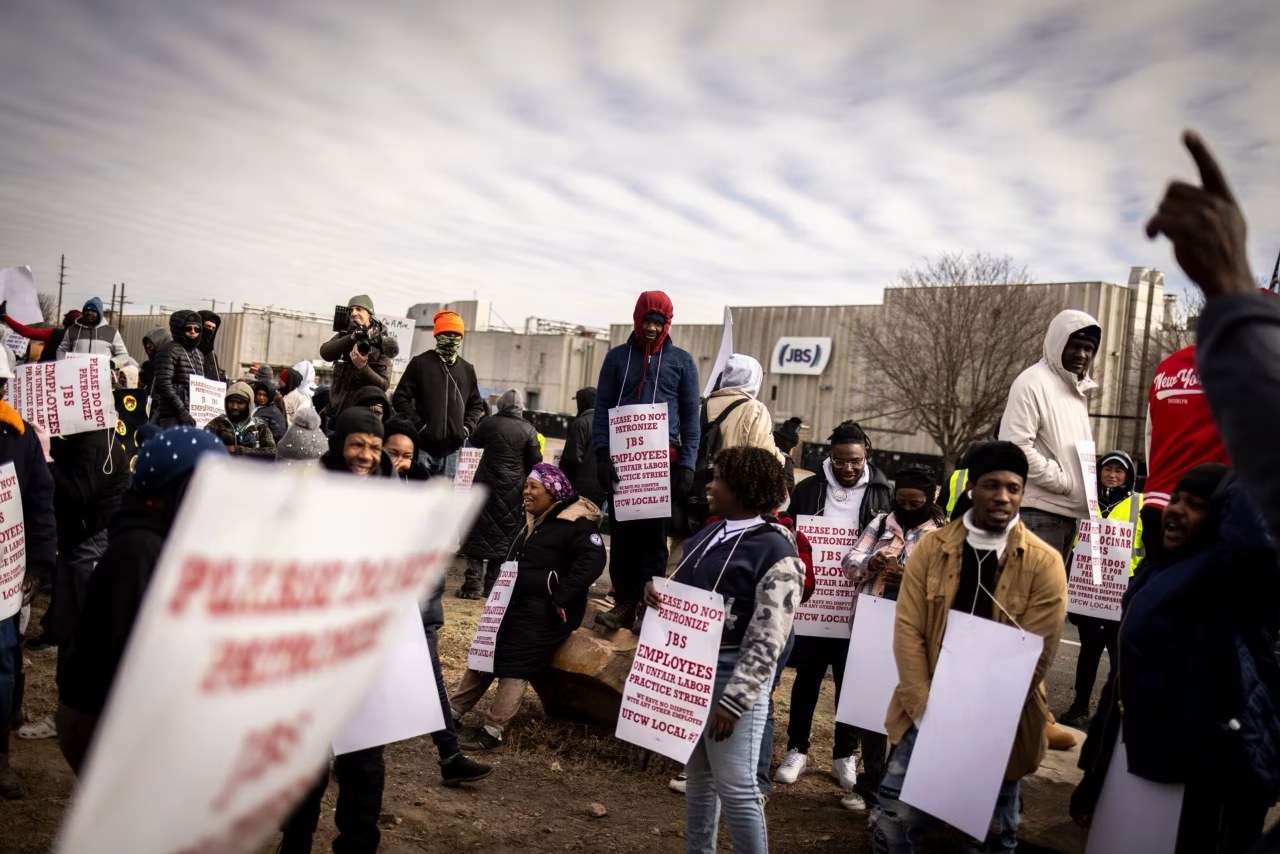
3,800 JBS Workers End 3-Week Strike with New Contract Talks
- 3,800 workers at JBS’s Greeley, Colo., beef plant go back to work after three-week strike.
- New contract negotiations set for April 9-10.
- JBS is the world’s largest meatpacker.
- Strike ends without disclosure of specific worker demands or agreed terms.
- Union representing workers had called for negotiations.
The strike’s resolution comes as a relief to the beef processing industry.
NEW YORK—The three-week strike by 3,800 workers at JBS’s Greeley, Colorado beef plant has ended with an agreement for workers to return to their shifts.
The Strike’s End
The strike, which lasted for three weeks, involved 3,800 workers at the Greeley, Colo., beef plant owned by JBS, the world’s largest meatpacker. According to the union representing the workers, JBS has agreed to a new round of contract negotiations, set to resume on April 9 and 10. As a result, workers will report for their shifts starting Monday.
Worker Concerns and Negotiations
While specific worker demands and agreed terms were not disclosed, the union’s call for negotiations indicates that workers were seeking improvements in their working conditions or compensation. The agreement to resume talks suggests that some progress was made in addressing these concerns.
Impact on the Beef Processing Industry
The strike’s resolution comes as a relief to the beef processing industry, which relies on a stable supply of labor to maintain production. The Greeley plant, owned by JBS, is a significant facility in the US beef market. The strike’s end ensures that the plant can continue to operate at full capacity, helping to meet demand for beef products.
Future Labor Relations
The agreement to resume contract negotiations on April 9-10 indicates that both parties are committed to finding a mutually beneficial solution. The outcome of these talks will likely have implications for labor relations in the beef processing industry as a whole.
JBS’s Market Position
JBS, the world’s largest meatpacker, plays a critical role in the global beef market. The company’s operations, including the Greeley plant, contribute significantly to the supply of beef products. The strike’s resolution helps to ensure that JBS can continue to meet its commitments to customers and maintain its market position.
Industry Implications
The strike and its resolution have implications for the broader meatpacking industry. The industry’s reliance on a stable workforce highlights the importance of effective labor relations and negotiations.
Frequently Asked Questions
Q: Why did the beef plant workers in Colorado go on strike?
The article does not specify the reasons for the strike, but it mentions that the workers, represented by a union, agreed to return to work after JBS agreed to a new round of contract negotiations.
Q: How many workers were involved in the strike?
3,800 workers at the Greeley, Colo., beef plant owned by JBS were involved in the strike.
Q: When will the new contract negotiations take place?
The new contract negotiations between JBS and the union representing the workers are set to resume on April 9 and 10.
Q: What is the significance of JBS in the meatpacking industry?
JBS is the world’s largest meatpacker, making it a significant player in the industry.
Q: How long did the strike last?
The strike lasted for three weeks.
