Wall Street’s ‘Iran War FOMO Trade’ Propels Stocks on a Two-Day Surge
- Anticipation of President Trump’s address on the Iran war fueled a two-day stock market rally.
- The surge was primarily driven by ‘Fear Of Missing Out’ (FOMO) on a potential ‘postwar rally.’
- Investor enthusiasm for the ‘Iran War FOMO trade’ moderated significantly during the president’s speech.
- The episode highlighted Wall Street’s reactive posture to geopolitical developments and future market shifts.
Understanding the Volatility Sparked by Geopolitical Tensions and Investor Psychology
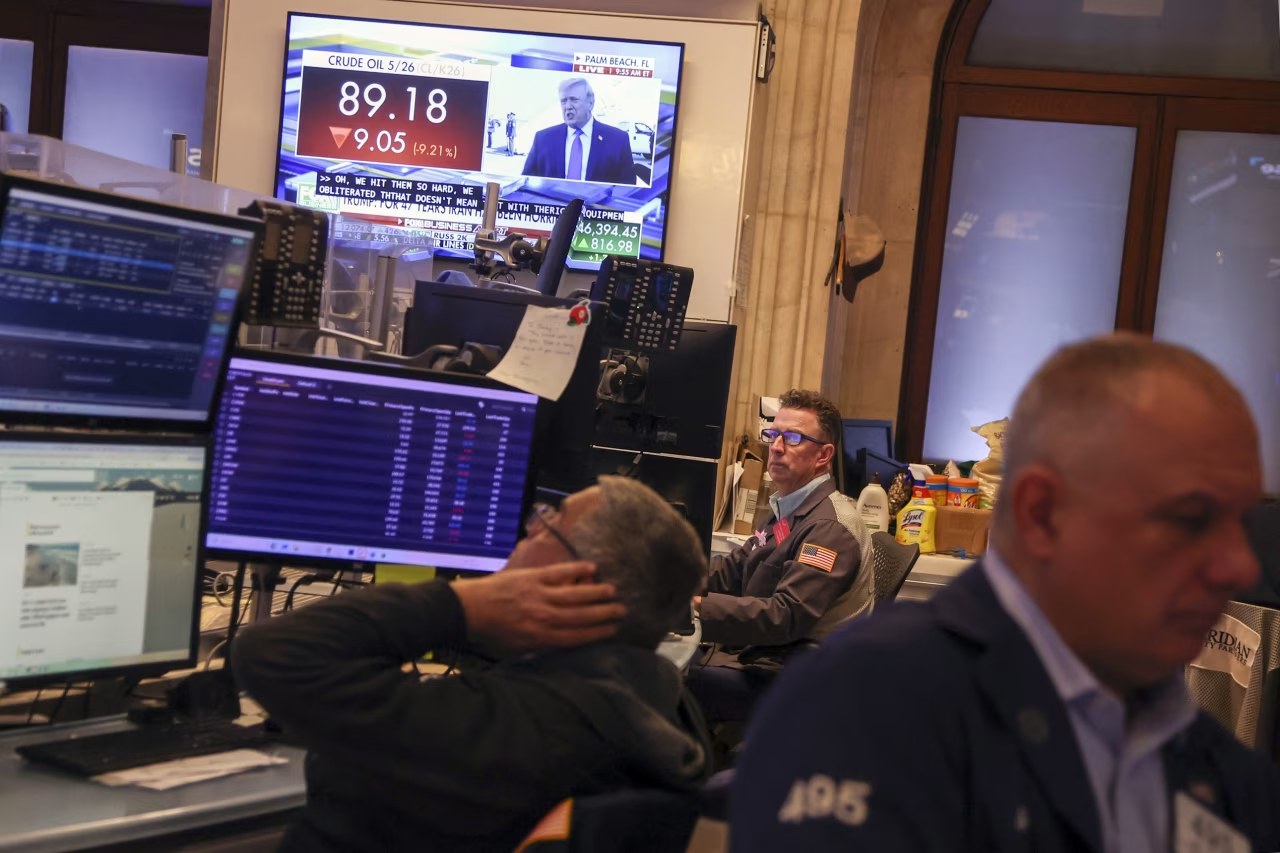
IRAN WAR FOMO TRADE—In a striking illustration of how swiftly geopolitical anxieties can translate into market momentum, the global stock market experienced a notable climb over two consecutive days. This ascent, driven largely by what analysts dubbed the ‘Iran War FOMO trade,’ unfolded just prior to a crucial address by President Trump to the nation on a Wednesday evening. The market’s preemptive rally was a visceral manifestation of Wall Street’s deeply ingrained desire to avoid being caught unprepared for a significant economic shift, specifically the potential for a ‘postwar rally’ that many investors anticipated would follow any perceived de-escalation or resolution of the Iran conflict.
This speculative surge, however, proved to be fleeting. As President Trump delivered his much-anticipated speech, the initial wave of enthusiasm that had propelled stocks upward began to dissipate. The market’s reaction underscored a critical dynamic: while the fear of missing out can galvanize significant capital flows in the short term, the actual details and implications of unfolding events often temper, or even reverse, such speculative movements. This brief but intense period of volatility offers invaluable insights into the psychological underpinnings of modern financial markets, particularly how investor sentiment, fueled by geopolitical uncertainty, can rapidly shape asset prices.
The intricate dance between international affairs and investor psychology remains a powerful, albeit unpredictable, force in finance. The ‘Iran War FOMO trade’ serves as a potent case study, revealing the inherent risks and rewards associated with positioning ahead of major political pronouncements. It highlights how the collective anticipation of future events, even those shrouded in uncertainty, can briefly overshadow fundamental economic indicators, creating both opportunities and significant pitfalls for market participants.
The ‘FOMO’ Fueling a Geopolitical Market Surge
The sudden upswing in the stock market over a two-day period preceding President Trump’s address vividly showcased the power of ‘Fear Of Missing Out,’ or FOMO, within financial circles. This particular surge, quickly labeled the ‘Iran War FOMO trade,’ was not primarily driven by tangible economic data or corporate earnings reports, but rather by a collective apprehension among investors. The prevailing sentiment on Wall Street was clear: ‘No one on Wall Street wants to be on the wrong side of a postwar rally.’ This concise observation from market veterans speaks volumes about the psychological pressures that can dictate trading behavior in times of geopolitical tension, particularly when the potential for a significant market reversal looms large.
Investors, acutely aware of historical patterns where markets can rebound sharply following periods of conflict or uncertainty, began to position themselves preemptively. The logic, however speculative, was that any perceived resolution or de-escalation of the Iran war might trigger a broader economic recovery and a corresponding surge in asset values. This forward-looking speculation, characteristic of a ‘risk-on’ environment, saw capital flow into equities as participants feared being left out of a potentially lucrative, albeit unconfirmed, ‘postwar rally.’ The intensity of this positioning demonstrated a deep-seated belief that future gains might be significant and swift, pushing market indices upward for the second straight day purely on the strength of anticipation.
This phenomenon underscores a fundamental aspect of market psychology: the desire to gain (and fear of losing out on gains) can often override more rational, long-term investment strategies, especially when high-stakes geopolitical events are in play. The ‘Iran War FOMO trade’ exemplified how widespread anticipation, even for an event as complex and uncertain as the resolution of a geopolitical conflict, can generate self-fulfilling prophecy-like movements in the short term. The challenge for investors lies in discerning genuine opportunities from speculative bubbles, a task made all the more difficult when the catalyst is a rapidly evolving international situation. Understanding the historical context of market reactions to conflict resolution provides a crucial framework, even if specific outcomes remain unpredictable, and helps to explain why this particular trade gained such rapid traction.
Understanding Pre-emptive Market Positioning
The decision by many market participants to aggressively buy into stocks before President Trump’s specific pronouncements on the Iran war reveals a deep-seated strategy in financial circles: attempting to ‘front-run’ major geopolitical shifts. This pre-emptive positioning is a gamble on the probability of an outcome rather than a reaction to a confirmed event. It’s a high-stakes play driven by the premise that early movers capture the largest gains, an idea that fuels the very essence of a ‘FOMO trade.’ This type of activity can lead to a divergence between market valuations and underlying economic fundamentals, creating a fragile rally susceptible to sudden corrections once concrete information emerges. The subsequent chapters will delve into how this dynamic played out as the presidential address unfolded.
Anticipation and the Presidential Address: A Turning Point
The market’s fervent anticipation reached its zenith just hours before President Trump’s address to the nation on Wednesday evening, with stocks having climbed for a second consecutive day. This upward trajectory was largely sustained by the ‘Iran War FOMO trade,’ a speculative bet on a positive geopolitical outcome. Financial journalists and market commentators across Wall Street observed a palpable tension, as traders braced themselves for an announcement that could either validate their aggressive positioning or trigger a swift reversal. The significance of a presidential address in setting market tone cannot be overstated; such pronouncements often carry the weight of policy shifts, military actions, or diplomatic breakthroughs, all of which have profound implications for global trade and investment.
However, the narrative shifted dramatically as President Trump began his speech. The initial enthusiasm that had propelled stocks upward over the preceding 48 hours began to fizzle. This rapid decline in market sentiment underscores a crucial lesson in speculative trading: while anticipation can build significant momentum, the reality of an event often brings a dose of sobriety, especially if the outcomes do not perfectly align with the market’s most optimistic forecasts. Investors, who had bought into the ‘Iran War FOMO trade’ with the expectation of a clear path to a ‘postwar rally,’ likely re-evaluated their positions as the details of the address unfolded, leading to a visible retraction of market gains. This immediate, almost real-time, adjustment highlighted the extreme sensitivity of markets to presidential rhetoric and the nuanced interpretation of geopolitical communication.
The swift change in market mood during the speech itself serves as a stark reminder of the inherent risks in basing investment decisions predominantly on speculative ‘Fear Of Missing Out.’ While the desire to capitalize on potential future events is natural, the absence of confirmed information or a definitive resolution can quickly expose speculative positions to significant downside. This particular Wednesday evening became a case study in how quickly investor psychology can pivot, moving from hopeful anticipation to a more cautious, or even disappointed, stance. The episode reinforces the notion that market rallies built on such foundations are often precarious, easily swayed by the nuances of official statements and the broader geopolitical landscape. The challenge for investors remains in balancing the pursuit of potential gains with a robust risk management framework, particularly when navigating the unpredictable terrain of international relations.
The Immediate Impact of Official Statements
Presidential addresses, especially those concerning sensitive international conflicts like the Iran war, act as critical junctures for financial markets. The moment President Trump’s speech began, it offered concrete information to an information-hungry market previously operating on speculation and rumor. This infusion of specific details, whether confirming or challenging prevailing market assumptions, often dictates an immediate and pronounced reaction. The fizzling of enthusiasm during the speech demonstrated that the market quickly processes new information, adjusting valuations and positions as the reality of the situation takes precedence over the preceding ‘Iran War FOMO trade.’ This highlights the transient nature of speculative rallies and the enduring influence of authoritative statements on global economic confidence.
The Illusive ‘Postwar Rally’: Decoding Investor Expectations
The core catalyst behind the ‘Iran War FOMO trade’ was the deeply entrenched expectation of a ‘postwar rally.’ This concept, pervasive on Wall Street, reflects a historical pattern where major conflicts or periods of intense geopolitical uncertainty, once resolved, are often followed by periods of economic growth and surging equity markets. The belief is that the cessation of hostilities reduces risk premiums, frees up capital, and ushers in a new era of stability conducive to investment and consumption. Consequently, ‘no one on Wall Street wants to be on the wrong side of a postwar rally,’ meaning institutional investors and individual traders alike are highly motivated to position themselves ahead of such a perceived boom, even if the timing and nature of the ‘postwar’ environment remain highly ambiguous.
This anticipation is rooted in a blend of historical precedence and behavioral economics. Major global events, from World War II to the end of the Cold War, have often been followed by periods of significant economic expansion. Investors, therefore, are conditioned to look for signals that might herald the end of a disruptive phase, interpreting any movement towards de-escalation as a green light for a market re-rating. In the context of the Iran war, the prospect of President Trump’s address became such a signal. It offered a potential inflection point, a moment where clarity might emerge, and with it, the opportunity to capture early gains in a subsequent bull market. This forward-looking approach, however, carries inherent risks, as market participants essentially bet on an unconfirmed future, often extrapolating past trends onto unique contemporary circumstances.
The speculative nature of the ‘postwar rally’ concept also highlights the influence of cognitive biases in financial decision-making. The desire for a clear, positive outcome following a period of tension can lead to an overemphasis on optimistic scenarios, overshadowing more cautious interpretations. When the specific details from President Trump’s speech began to temper the initial enthusiasm, it revealed the fragile foundation upon which such anticipatory rallies are built. The illusive nature of the ‘postwar rally’ demonstrates that while historical patterns offer guidance, each geopolitical situation is unique, and market reactions are not guaranteed to follow predictable paths. The ability to distinguish between genuine, fundamentally driven recovery and a purely speculative surge remains a critical skill for navigating complex market environments influenced by geopolitical tensions.
Historical Precedence of Post-Conflict Market Behavior
The concept of a ‘postwar rally’ is deeply embedded in financial history, drawing parallels from various historical periods where the resolution of conflict unlocked economic potential. Market analysts often cite examples where the end of major geopolitical uncertainties led to a reallocation of capital from defensive assets to growth-oriented sectors. This historical context informs the ‘Iran War FOMO trade,’ as investors sought to capitalize on a similar rebound. However, the precise nature, duration, and even the existence of such a rally are rarely guaranteed, making preemptive moves a high-stakes endeavor. The market’s reaction to President Trump’s address highlighted this uncertainty, reminding participants that not all conflict resolutions translate into immediate, unequivocal market gains, and the specifics of the ‘peace’ matter immensely.
Geopolitical Tensions and Market Volatility: A Persistent Dynamic
The ‘Iran War FOMO trade’ serves as a potent reminder of the enduring and often volatile relationship between geopolitical tensions and financial market behavior. Major international events, particularly those involving significant global energy producers or strategic regions, invariably introduce a layer of uncertainty that investors must price into their portfolios. The mere specter of conflict, or indeed its actual occurrence, can trigger rapid shifts in asset classes, from safe-haven flows into gold and government bonds to sharp corrections in equity markets. This sensitivity arises because geopolitical stability is a foundational element for global trade, supply chains, and consumer confidence, all of which directly impact corporate earnings and economic growth.
The context of the Iran war amplified these sensitivities. Iran’s strategic location and its role in global oil markets mean that any escalation or de-escalation can have immediate and far-reaching effects on commodity prices, inflation expectations, and ultimately, corporate profitability. The ‘Iran War FOMO trade’ was a direct response to this perceived link, with investors attempting to front-run potential changes in the risk landscape. However, as demonstrated by the fizzling of enthusiasm during President Trump’s address, the market’s initial reaction often represents a ‘first-order’ assessment of risk. Subsequent details and the nuanced reality of diplomatic or military developments can quickly lead to a ‘second-order’ re-evaluation, introducing fresh volatility and correcting prior speculative moves.
Market participants, including large institutional funds and individual traders on Wall Street, continuously monitor geopolitical flashpoints, integrating perceived risks into their investment models. This constant vigilance transforms geopolitical events into significant market drivers, often overshadowing traditional economic indicators in the short term. The challenge for investors is not only to interpret the immediate news but also to anticipate its broader implications for various sectors and economies globally. The ‘Iran War FOMO trade,’ while short-lived in its most aggressive phase, highlighted how easily and rapidly capital can move in response to shifts in the geopolitical outlook, underscoring the necessity for robust risk management strategies that account for international political dynamics as much as for corporate fundamentals.
Assessing Risk in a Geopolitically Charged Environment
In today’s interconnected world, geopolitical events frequently translate into market risk. The ‘Iran War FOMO trade’ is a prime example of how the financial community attempts to quantify and react to such uncertainties. This process involves assessing potential impacts on global supply chains, energy prices, and international trade agreements, ultimately influencing investor confidence. The challenge for professional asset managers and individual investors alike is to filter through the noise of speculation and political rhetoric to identify genuine threats or opportunities. This requires not only a keen understanding of global affairs but also a disciplined approach to investment that avoids being swept up purely by the ‘Fear Of Missing Out’ on a potential, but uncertain, ‘postwar rally.’ The dynamism of such situations means that market positions must be agile and adaptable to rapidly changing information.
Lessons from the ‘FOMO Trade’: Navigating Future Uncertainty
The fleeting surge and subsequent fizzling of the ‘Iran War FOMO trade’ offer a compelling set of lessons for investors and market observers navigating an increasingly unpredictable global landscape. Primarily, the episode underscores the potent, albeit often transient, influence of speculative enthusiasm driven by the ‘Fear Of Missing Out’ on a perceived ‘postwar rally.’ While the instinct to position ahead of significant geopolitical shifts is understandable, this event highlighted the inherent dangers of relying solely on anticipation without concrete information. Wall Street’s initial aggressive buying, which propelled stocks upward for a second straight day, quickly gave way to caution as President Trump’s actual address failed to fully align with the most optimistic pre-speech expectations.
One key takeaway is the critical role of presidential communication in shaping market sentiment. A president’s words, especially on matters of war and peace, carry immense weight and can instantaneously shift billions of dollars in investment. The rapid market adjustment during Trump’s Wednesday evening speech demonstrated that even well-established ‘FOMO trades’ are highly vulnerable to the specifics of official statements. This calls for a discerning approach, encouraging investors to prioritize detailed analysis over broad-stroke assumptions, and to be prepared for swift reversals if the narrative shifts. It reinforces the importance of a balanced portfolio that can withstand short-term volatility stemming from geopolitical events rather than chasing every perceived opportunity.
Furthermore, the ‘Iran War FOMO trade’ serves as a reminder of the broader context of market behavior in times of geopolitical tension. While markets often seek clarity and stability, their reaction to events can be paradoxical, sometimes rallying on the prospect of de-escalation, and other times retreating in the face of ongoing uncertainty. The long-term implications of such an event extend beyond immediate price movements, influencing risk appetites, capital allocation strategies, and the overall perception of global stability. As financial markets continue to evolve in an era of rapid information dissemination and interconnected global politics, the capacity to remain agile, informed, and fundamentally driven—rather than purely driven by the ‘Fear Of Missing Out’—will be paramount for sustained success. The lessons learned from this particular ‘FOMO trade’ will undoubtedly inform future responses to similar geopolitical flashpoints, emphasizing caution over speculative fervor.
Strategies for Mitigating Geopolitical Investment Risk
To navigate the complexities illuminated by the ‘Iran War FOMO trade,’ investors must adopt robust strategies for mitigating geopolitical risk. This includes diversifying portfolios, conducting thorough due diligence on global political dynamics, and maintaining a long-term investment horizon that is less susceptible to fleeting speculative rallies. Market analysts frequently advise against making impulsive decisions based on headlines, especially concerning high-stakes international events. Instead, a focus on intrinsic value, coupled with a deep understanding of how global events can impact specific sectors or companies over time, offers a more resilient approach. The experience of the ‘Iran War FOMO trade’ reinforces that while the lure of quick gains can be powerful, prudent investing demands patience, research, and an unwavering commitment to a well-considered strategy.
Frequently Asked Questions
Q: What is the Iran War FOMO trade?
The Iran War FOMO trade refers to a speculative surge in the stock market driven by investors’ ‘Fear Of Missing Out’ on a potential rally anticipated to follow a resolution or de-escalation of the Iran war. This phenomenon causes rapid market movements based on unconfirmed future events.
Q: How did President Trump’s address impact the stock market?
President Trump’s Wednesday evening address on the Iran war initially fueled a two-day stock market climb as investors anticipated a ‘postwar rally.’ However, market enthusiasm for the ‘Iran War FOMO trade’ significantly moderated and fizzled during his speech as specific outcomes unfolded, leading to a shift in investor sentiment.
Q: What factors drive ‘Fear Of Missing Out’ in financial markets?
FOMO in financial markets is driven by the psychological pressure to participate in a perceived upward trend or opportunity, fearing potential losses by being on the ‘wrong side’ of a significant market move. It often leads to speculative buying, driven by sentiment rather than fundamental analysis, especially around high-profile geopolitical events or economic shifts.
