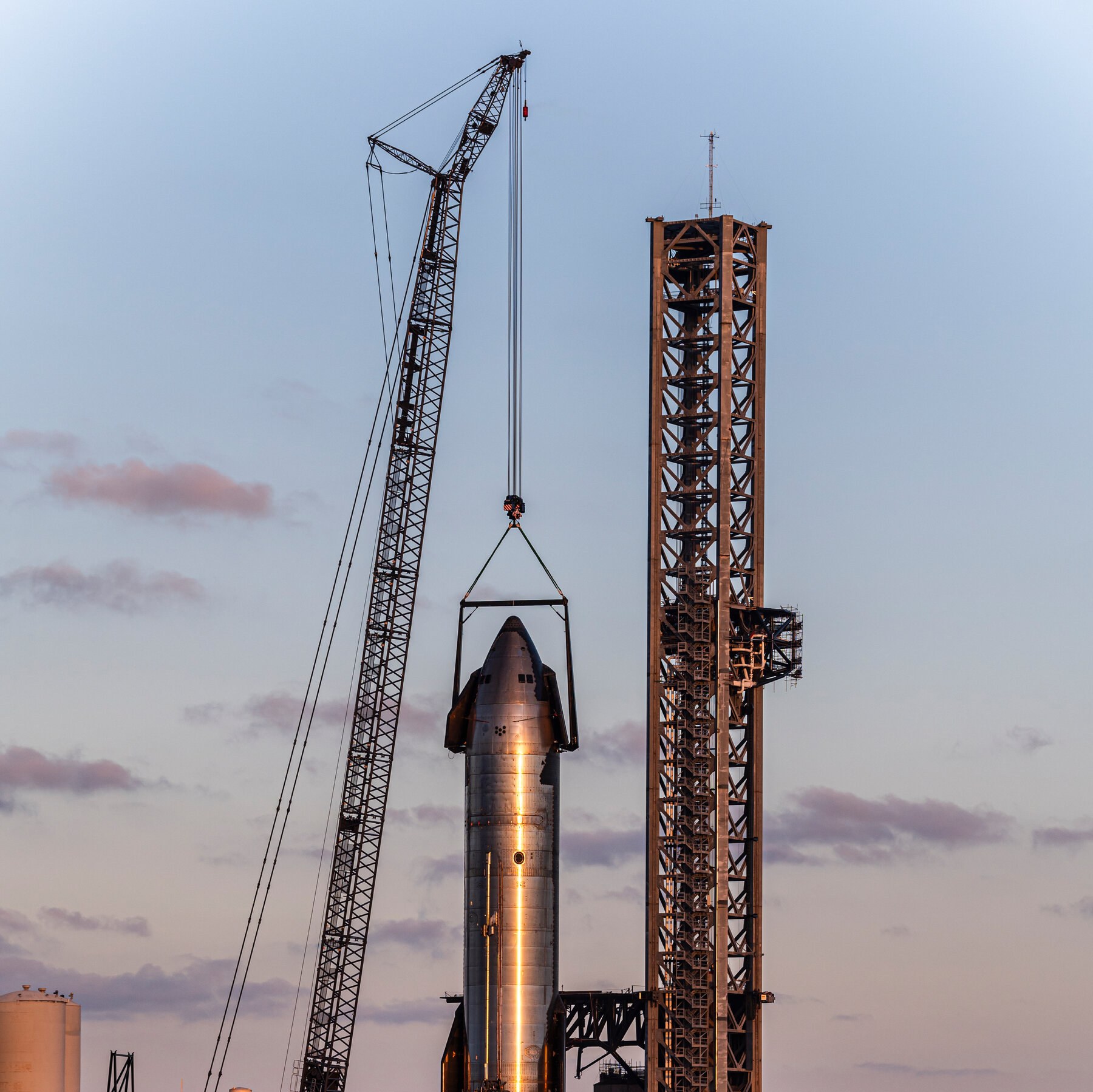
SpaceX IPO Filing Targets Estimated Trillion-Dollar Market Value
- Elon Musk’s SpaceX has formally filed for an Initial Public Offering, signaling a monumental shift to public ownership.
- The IPO is anticipated to create a generational wealth event, potentially ranking among the largest public offerings in financial history.
- SpaceX, known for its rocket technology and expansive Starlink satellite network, stands at the forefront of the commercial space industry.
- The move to public markets will usher in new levels of scrutiny and opportunities for the privately held aerospace giant.
The Unprecedented Leap: How SpaceX’s Public Debut Could Reshape Global Finance and Space Exploration
SPACEX IPO—The financial world is abuzz following the confirmation that Elon Musk’s groundbreaking aerospace enterprise, SpaceX, has officially initiated the process to become a publicly traded company. This pivotal development, which heralds an initial public offering (IPO) of unprecedented scale, is poised to create a generational wealth event, a phenomenon rarely witnessed in modern financial markets.
For years, SpaceX has operated largely outside the direct gaze of public shareholders, fueled instead by private investment rounds and the visionary leadership of its founder. Now, as the company files to go public, it signals a strategic pivot that could redefine investment landscapes, offering retail and institutional investors alike a stake in the future of space exploration and global connectivity. This monumental step is not merely a transaction; it is a declaration of intent, affirming SpaceX’s ambition to accelerate its transformative projects, from Starlink’s global internet service to Starship’s Mars colonization efforts.
The sheer magnitude of this anticipated offering sets it apart. Market analysts and financial commentators are already speculating that the SpaceX IPO could be one of the largest offerings ever, a testament to the company’s dual role as both a cutting-edge rocket manufacturer and a rapidly expanding satellite internet provider. The move promises to unlock substantial value for early investors and employees, while simultaneously subjecting the company to the rigorous demands and opportunities of the public market. This transition will undoubtedly be one of the most closely watched financial events of the coming period, as the implications for technology, investment, and humanity’s reach into space begin to unfold.
The Public Market Horizon: SpaceX’s Generational Wealth Event
The filing by Elon Musk’s SpaceX to go public marks a momentous turning point, not just for the company itself, but for the entire landscape of global finance and commercial space exploration. This isn’t merely another initial public offering; it’s being framed as a potential ‘generational wealth event,’ a rare occurrence that promises to create immense value for early investors, employees, and potentially, the wider public market. For a company that has, for decades, embodied the audacious spirit of private enterprise and long-term vision, this shift represents a strategic evolution, acknowledging the scale of its ambitions demands public capital.Historically, transformative technology companies moving from private to public markets have often created significant economic ripples. Think of the IPOs of companies like Google in the early 2000s or Facebook later, which fundamentally reshaped their respective industries and generated substantial shareholder value. The SpaceX IPO is expected to fall into this elite category, driven by its unique dual identity as a leading ‘rocket and satellite company.’ This distinction encompasses both its reusable launch vehicle technology, exemplified by the Falcon series and the ambitious Starship program, and its rapidly expanding Starlink satellite internet constellation.
Unlocking Value and Expanding Vision
The transition from a privately held entity to a public one is a complex dance between capitalizing on existing successes and securing future growth. Investment banking circles, according to reports from financial institutions observing the pre-IPO buzz, are already drawing comparisons to the dot-com era’s biggest offerings, but with a tangible, hardware-driven core. The value unlocked by such an event extends beyond mere share prices; it signifies a validation of years of high-risk, high-reward engineering and strategic foresight. For employees, particularly those with vested stock options, this public debut could transform years of dedication into tangible financial security, living up to the ‘generational wealth’ descriptor.
However, the move also brings with it a new era of scrutiny and accountability. As a publicly traded entity, SpaceX will be subject to quarterly earnings reports, shareholder demands, and the often-volatile whims of market sentiment. This newfound transparency, while fostering trust with investors, will also expose the company to greater public and regulatory oversight, a significant shift for a firm known for its rapid development cycles and often opaque operational details. As one expert from a leading financial advisory firm recently noted, paraphrasing a common market sentiment, “While the capital infusion is immense, the regulatory and investor relations overhead will be a new beast for SpaceX to tame.”
Ultimately, the SpaceX IPO is not just about cashing out; it’s about fueling the next phase of its extraordinary journey. The capital raised will be instrumental in accelerating the development of Starship for lunar and Martian missions, expanding Starlink’s global reach, and pushing the boundaries of what’s possible in space. The ramifications of this public market entry will be felt across the global economy, setting the stage for subsequent discussions about its valuation, strategic priorities, and the long-term impact on the burgeoning space economy.
Deciphering SpaceX’s Valuation: Rockets, Satellites, and Future Visions
The anticipated scale of the SpaceX IPO, described as one of the ‘largest offerings ever,’ forces a closer examination of what precisely constitutes the company’s colossal value. Unlike many tech giants whose valuations are often based on software or intangible assets, SpaceX’s worth is deeply rooted in its tangible, groundbreaking hardware and its ambitious, long-term projects. At its core, SpaceX is a dual-engine enterprise: a pioneering rocket development and launch services provider, and a rapidly expanding global satellite internet operator through Starlink. Understanding the interplay of these segments is crucial to grasping its market potential.The Falcon 9 and Falcon Heavy rockets have revolutionized access to space, making launches more frequent and significantly more affordable through reusability. This launch service segment provides a robust, if somewhat cyclical, revenue stream, serving both governmental agencies like NASA and commercial clients worldwide. However, the true speculative value, the ‘future vision’ component, largely rests with Starship, Elon Musk’s ambitious program aimed at interplanetary travel and large-scale space colonization. While still in advanced development and testing phases, the potential of Starship to ferry vast payloads and hundreds of people to the Moon and Mars represents an almost incalculable long-term value driver.
Starlink: The Near-Term Revenue Powerhouse
While rockets capture headlines, it is the Starlink satellite internet constellation that provides a more immediate, scalable, and recurring revenue stream, making it a critical pillar in the SpaceX IPO valuation. Starlink aims to provide high-speed, low-latency broadband internet globally, particularly in underserved and remote areas. Industry analysts from various research institutions frequently highlight Starlink’s growing subscriber base and geographic expansion as the primary engine for near-term financial growth. One report from a leading telecommunications research firm estimated Starlink’s independent valuation could exceed tens of billions, underscoring its significant contribution to the overall SpaceX enterprise. This dual nature—cutting-edge space hardware coupled with a disruptive global service—presents a compelling, albeit complex, narrative for potential public investors.
Evaluating SpaceX’s valuation also involves considering its substantial intellectual property, its experienced engineering talent, and its strategic agreements with key partners. The sheer volume of patents related to rocket propulsion, satellite communication, and advanced manufacturing processes forms a formidable barrier to entry for competitors. Moreover, long-term contracts with entities like NASA for crew and cargo transport to the International Space Station provide a stable revenue base that offsets some of the inherent risks in pioneering new space technologies. As investment banks prepare their due diligence for the public offering, they will be meticulously dissecting these intertwined revenue streams and future prospects.
The confluence of these factors—proven launch capability, a rapidly expanding global service, and aspirational interplanetary projects—positions SpaceX not just as an aerospace company, but as a multi-faceted technology giant whose public debut will force a re-evaluation of how such diversified innovation is valued on the global stage. This intricate valuation story will be central to the investor roadshow, setting expectations for the company’s trajectory in the post-IPO era.
The Starlink Effect: Driving a New Economic Frontier
The strategic filing for a SpaceX IPO places an intensified spotlight on its Starlink division, a key driver behind the company’s valuation and its promise of a ‘generational wealth event.’ Starlink, SpaceX’s ambitious satellite internet constellation, is far more than just a supplementary business; it represents a paradigm shift in global connectivity, offering high-speed, low-latency internet access from virtually anywhere on Earth. This recurring revenue model, distinct from the episodic nature of rocket launches, is paramount to understanding SpaceX’s appeal to public investors.The growth trajectory of Starlink has been nothing short of remarkable since its inception. From its initial beta tests to its widespread commercial availability across numerous countries, the service has consistently expanded its user base. This rapid adoption is a testament to its ability to serve populations in remote areas, maritime operations, and even during disaster relief efforts where traditional terrestrial infrastructure is absent or compromised. Financial analysts from institutions tracking the telecom and space sectors consistently point to Starlink’s subscriber additions as a primary indicator of SpaceX’s commercial success and long-term viability.
Global Reach and Market Disruption
Starlink’s impact extends beyond mere subscriber numbers; it’s actively disrupting established telecommunications markets. By leveraging its vertically integrated structure—designing and manufacturing its own satellites, launching them with its own rockets, and operating the ground infrastructure—SpaceX has achieved an efficiency and pace of deployment unparalleled in the industry. This vertical integration allows for rapid iteration and cost control, factors that appeal strongly to savvy investors looking for sustainable competitive advantages. As a prominent venture capitalist specializing in aerospace recently stated, “Starlink isn’t just selling internet; it’s selling resilience and access, and that’s an incredibly powerful value proposition for a global market starved for reliable connectivity.”
However, the Starlink segment also comes with its own set of challenges and capital demands. The continuous deployment of thousands of satellites, along with the development of next-generation hardware and ground stations, requires significant ongoing investment. Public market capital, accessed through the SpaceX IPO, would provide a crucial injection of funds to accelerate this expansion, enhance network capacity, and fend off emerging competitors. The regulatory complexities of operating a global internet service, navigating spectrum rights and international agreements, also present a unique set of hurdles that public shareholders will be watching closely.
The narrative of Starlink’s growth and its potential to connect billions globally will undoubtedly be a central theme in the company’s investor roadshows. Its success not only validates SpaceX’s technological prowess but also underpins the financial strength required to pursue its even more audacious goals, positioning Starlink as a vital bridge to SpaceX’s interplanetary future.
What Does a SpaceX IPO Mean for the Future of Space Exploration?
The decision for Elon Musk’s SpaceX to file for an Initial Public Offering carries profound implications that extend far beyond financial markets, directly influencing the future trajectory of space exploration itself. For decades, space endeavors were primarily the domain of government agencies, driven by national prestige and scientific inquiry. SpaceX’s public debut fundamentally shifts this paradigm, injecting private capital and public market pressures into the ambitious quest for off-world colonization and broader space utilization.By accessing a broader pool of public capital, SpaceX gains a significant advantage in funding its most audacious projects, particularly the development of Starship. This fully reusable, super heavy-lift launch system is central to Elon Musk’s vision of making humanity a multi-planetary species, with ambitions for lunar bases and Martian cities. The sheer scale of investment required for such endeavors has historically been prohibitive for private entities. An IPO, as noted by researchers at an aerospace policy think tank, could provide the sustained funding necessary to accelerate these long-term, capital-intensive projects, potentially shaving years off development timelines.
Democratizing Access to Space?
The public listing also carries the potential to democratize investment in space. For the first time, ordinary investors will have a direct stake in a company actively pursuing large-scale space colonization and revolutionizing launch services. This could foster greater public engagement and support for space exploration, moving it from a niche scientific pursuit to a more mainstream investment opportunity. However, it also introduces the challenge of balancing long-term, visionary goals with the short-term demands for profitability and shareholder returns inherent in public markets. The historical volatility of investor sentiment for high-risk, capital-intensive ventures poses a unique test for SpaceX’s leadership.
Moreover, the increased capital from a successful SpaceX IPO could intensify competition within the commercial space sector. With enhanced financial resources, SpaceX might further reduce launch costs, increase launch frequency, and expand its service offerings, putting pressure on competitors like United Launch Alliance (ULA) and Blue Origin. This competitive environment could drive further innovation across the industry, benefiting not just SpaceX but the entire ecosystem of space startups and established players. The quest for market dominance, fueled by public investment, could accelerate the pace of technological advancement, making space more accessible and economically viable for a wider range of applications, from satellite deployment to space tourism.
Ultimately, the SpaceX IPO signals a new chapter in the commercialization of space, where the pursuit of profits and the grand vision of human expansion beyond Earth become inextricably linked. The success of this public offering will undoubtedly serve as a bellwether for future private space ventures considering their own path to public markets, shaping how humanity reaches for the stars.
Navigating the Public Eye: Challenges and Opportunities for Elon Musk
Elon Musk, the visionary behind SpaceX, stands at a crucial juncture as his rocket and satellite company prepares for its initial public offering. While the IPO promises to be a ‘generational wealth event’ and one of the ‘largest offerings ever,’ it simultaneously ushers in an era of unprecedented public scrutiny for both the company and its outspoken CEO. Musk’s previous experiences with publicly traded companies, most notably Tesla, offer a glimpse into the unique challenges and opportunities he will face in navigating the demands of public shareholders and regulatory bodies.One of the primary challenges will be managing investor expectations. SpaceX has thrived on audacious, long-term goals and a culture of rapid iteration and risk-taking, often with timelines that don’t always align with traditional quarterly reporting cycles. Public markets, by contrast, often demand predictable growth, consistent profitability, and clear communication. Financial governance experts from leading academic institutions often highlight that a founder-led company going public must mature its reporting structures and investor relations significantly. This involves striking a delicate balance between maintaining the innovative drive that defines SpaceX and satisfying the fiduciary duties to a vast public shareholder base.
Regulatory Oversight and Market Volatility
The regulatory environment for a company like SpaceX is also complex and multi-layered. Operating in both the aerospace and telecommunications sectors, the company is subject to a myriad of domestic and international regulations, from Federal Aviation Administration (FAA) approvals for launches to Federal Communications Commission (FCC) licenses for Starlink. As a public entity, any regulatory missteps or delays could have immediate and significant impacts on share price and investor confidence. The increased transparency that comes with an IPO means that operational challenges or testing setbacks, which were once largely internal matters, will now be under constant public review and market speculation.
However, the IPO also presents immense opportunities for Elon Musk. Beyond the capital infusion, public listing enhances SpaceX’s brand visibility and credibility on a global scale. This can facilitate partnerships, attract top talent, and even influence policy discussions regarding space exploration and internet infrastructure. Musk’s personal brand, while sometimes controversial, also brings an unparalleled level of public interest and engagement to his ventures. Leveraging this for positive investor relations, while mitigating potential negative impacts, will be a key strategic task for SpaceX’s leadership team post-IPO.
The path forward for Elon Musk and SpaceX in the public arena will be a high-stakes balancing act. It requires harnessing the financial muscle of public markets to achieve their grandest ambitions, while adeptly managing the pressures of transparency, regulation, and diverse shareholder interests, a journey that will undoubtedly shape the company for decades to come.
Investor Enthusiasm and the Dawn of a New Space Economy
The impending SpaceX IPO is not just a financial transaction; it’s a litmus test for the public’s appetite for the burgeoning space economy, promising to generate significant investor enthusiasm. The term ‘generational wealth event’ applied to this offering underscores the profound belief among venture capitalists and early investors that space-related industries are on the cusp of exponential growth. Historically, public offerings of companies that fundamentally redefine sectors, such as Amazon in e-commerce or Apple in personal computing, have created lasting shareholder value, and SpaceX aims to emulate this trajectory in the domain of space technology.The public market, often characterized by its diverse investor base ranging from large institutional funds to individual retail investors, stands ready to embrace a company with SpaceX’s profile. Its unique blend of advanced manufacturing, complex engineering, and a visionary mission provides a compelling investment narrative. Analysts from major investment banks who specialize in emerging technologies often cite SpaceX’s dual-revenue model—stable launch services complemented by the high-growth potential of Starlink—as particularly attractive. This diversified approach mitigates some of the inherent risks associated with pure-play space exploration companies.
Shaping the Broader Space Sector
The success of the SpaceX IPO could have a ripple effect across the entire space sector. A robust valuation and strong investor demand would signal confidence in the long-term viability and profitability of commercial space ventures. This could encourage other private space companies, from satellite manufacturers to orbital tourism providers, to consider their own public listings, further expanding the ‘new space economy.’ This shift from government-funded monopolies to a vibrant, competitive private sector is keenly observed by economists and policy makers worldwide, anticipating new job creation and technological breakthroughs.
However, managing investor expectations will be critical. While the promise of innovation and long-term growth is immense, the space industry remains capital-intensive and subject to high-risk development cycles. Public investors, accustomed to quicker returns in other tech sectors, will need to be educated on the unique investment thesis of space. Elon Musk’s track record of pushing boundaries and sometimes facing delays will be a factor in how the market perceives the company’s ability to execute its ambitious plans post-IPO. The company’s transparency regarding these risks will be paramount in building enduring investor trust.
As SpaceX prepares to open its books to the world, the global financial community is watching intently. This public offering represents not just an opportunity to invest in a company, but to become part of a larger movement that seeks to expand human civilization beyond Earth, marking a pivotal moment in both financial history and humanity’s future aspirations.
Frequently Asked Questions
Q: What is the primary significance of the SpaceX IPO filing?
The SpaceX IPO filing signifies the company’s strategic move to public markets, aiming to become one of the largest initial public offerings in history. This event is expected to unlock substantial value, creating a generational wealth event for early investors and employees, while providing new capital for its ambitious space exploration and satellite internet projects, further solidifying the company’s position as a leader in commercial aerospace.
Q: How might a SpaceX IPO impact its core business operations?
A SpaceX IPO is likely to bring increased capital, potentially accelerating development for its Starship program and the expansion of its Starlink satellite internet constellation. However, it also introduces public market scrutiny, quarterly reporting pressures, and new governance requirements. The IPO could also intensify competition as traditional aerospace firms and emerging space tech companies adapt to a more transparent and competitive market environment.
Q: What are the potential benefits for investors from the SpaceX IPO?
Investors in the SpaceX IPO could benefit from exposure to a leading innovator in both rocket technology and satellite communications. The company’s unique position, driven by projects like Starlink and Starship, offers significant growth potential in the rapidly expanding commercial space sector. This initial public offering represents a rare opportunity to invest in a company that is fundamentally reshaping global infrastructure and human capabilities in space.
Q: What role does Starlink play in the overall valuation of SpaceX?
Starlink is a crucial component of SpaceX’s valuation, often considered its most immediately lucrative and scalable business segment. Its global satellite internet service provides a recurring revenue stream that complements the high-cost, high-reward nature of rocket development and launch services. The potential for Starlink’s continued expansion and market penetration is a major factor analysts consider when projecting the overall value of the SpaceX IPO.
