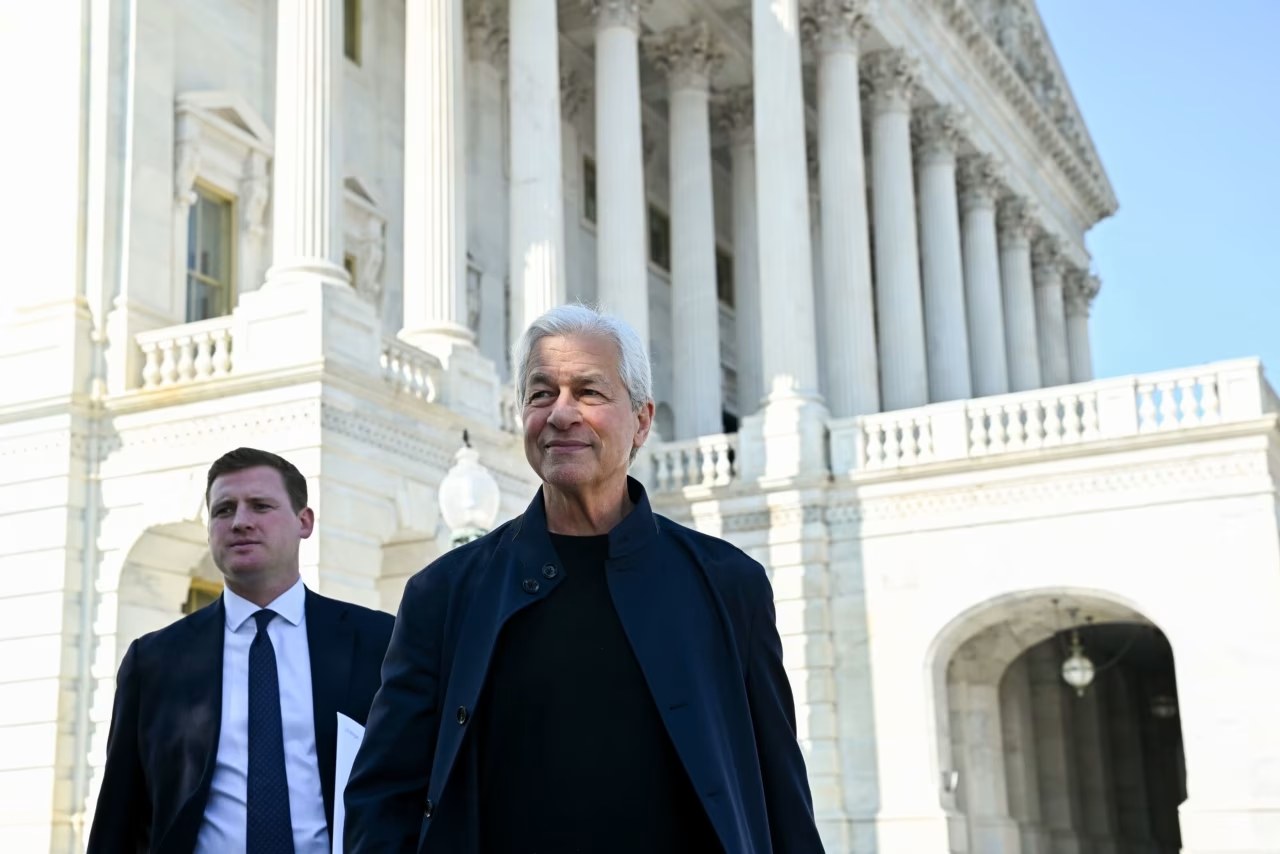
JPMorgan CEO Jamie Dimon Identifies 5 Major Risks Facing Global Stability in 2026
- The potential for persistent geopolitical conflict is a primary concern for 2026.
- Higher interest rates and inflation remain significant economic threats.
- Climate change and the transformative impact of artificial intelligence pose additional challenges.
- Dimon’s insights come from his annual letter to JPMorgan shareholders.
The world’s most influential bankers are increasingly vocal about the complex threats brewing on the horizon.
JAMIE DIMON—Jamie Dimon, the long-serving CEO of JPMorgan Chase, has articulated a sobering outlook for the year 2026, spotlighting five critical risks that he believes could significantly shape global affairs. In his annual letter to shareholders, released on April 8, 2024, Dimon, a titan of the financial industry, laid bare a series of complex scenarios that extend beyond typical economic forecasts, encompassing geopolitical instability, persistent inflation, the specter of higher interest rates, the existential challenge of climate change, and the disruptive power of artificial intelligence.
This comprehensive assessment underscores the interconnected nature of modern global challenges. Each risk identified by Dimon has the potential to cascade through financial markets, impact corporate strategies, and influence the daily lives of billions. The letter, a staple for those tracking the pulse of global finance, serves not only as a report to shareholders but also as a profound analysis of the precarious landscape businesses and economies are likely to navigate in the coming years.
Dimon’s perspective, honed over decades at the helm of one of the world’s largest financial institutions, provides a crucial lens through which to view these potential disruptions. His willingness to address such a broad spectrum of threats signals a recognition that the future is not merely about economic cycles but about navigating profound structural shifts and unforeseen crises. This proactive identification of risks is vital for building resilience in an increasingly volatile world.
Geopolitical Conflict: A Looming Threat to Global Order
The World Stage Is Set for New Conflicts
Jamie Dimon’s foremost concern for 2026 centers on the escalating potential for geopolitical conflict, a risk underscored by the ongoing global tensions and emerging flashpoints. The JPMorgan CEO’s annual letter to shareholders highlights that while specific conflicts might be unpredictable, their collective impact could be decisive in reshaping world affairs. This broad category of risk encompasses a range of possibilities, from existing wars intensifying to new theaters of conflict emerging, each carrying the potential to disrupt supply chains, energy markets, and international trade routes.
The implications of sustained geopolitical instability are profound. Dr. Richard Haass, former president of the Council on Foreign Relations, has frequently emphasized that the current era is characterized by a ‘return of geopolitics,’ where great power competition is replacing the unipolar moment. Haass’s analysis, often cited in discussions of international relations, suggests that a multipolar world, marked by the rise of several major powers, is inherently more prone to friction and conflict. This dynamic creates a complex web of alliances and rivalries, increasing the likelihood of miscalculation and escalation.
For the financial sector, heightened geopolitical risk translates directly into market volatility and increased uncertainty. As outlined by the International Monetary Fund (IMF) in its recent global outlook reports, geopolitical fragmentation can lead to trade protectionism, reduced cross-border investment, and inflationary pressures due to supply chain disruptions. Dimon’s emphasis on this risk suggests a strategic imperative for JPMorgan and its clients to build robust contingency plans that account for a less predictable and more contentious global environment. The potential for disruptions, whether in critical commodity supplies or key shipping lanes, requires a heightened state of vigilance and adaptability. The specter of prolonged conflicts could indeed dominate global economic and political discourse by 2026.
Persistent Inflation and Higher Rates: A Double-Edged Sword
The Persistent Shadow of Inflation
Beyond geopolitical tremors, Jamie Dimon’s analysis in his shareholder letter pivots to a more familiar, yet still potent, economic threat: persistent inflation and the consequent possibility of higher-than-anticipated interest rates. While central banks globally have made strides in taming the inflationary surges of recent years, Dimon suggests that the battle may not be fully won. The risk lies in inflation proving more stubborn than expected, forcing monetary policymakers, including the U.S. Federal Reserve, to maintain tighter monetary conditions for longer or even consider further rate hikes.
The implications of elevated interest rates for an extended period are multifaceted. As noted by the Brookings Institution’s economic scholars, persistently high rates can significantly increase the cost of capital for businesses, potentially stifling investment and innovation. For consumers, higher borrowing costs for mortgages, auto loans, and credit cards can dampen spending and slow economic growth. Furthermore, governments with high levels of debt could face increased servicing costs, potentially straining public finances. This economic recalibration challenges the optimistic ‘soft landing’ scenarios that many analysts have projected.
Dimon’s caution here is particularly resonant given JPMorgan’s central role in global credit markets. A sustained period of higher rates could lead to increased defaults across various loan portfolios and place pressure on asset valuations. The banking sector itself must navigate this environment carefully, balancing the potential for higher net interest margins against the increased risk of credit losses and reduced deal activity. The delicate dance between controlling inflation and avoiding a severe economic downturn is a central challenge that Dimon believes will continue to define the economic landscape through 2026.
Climate Change: An Existential Economic Challenge?
The Long-Term Impact of a Changing Climate
Jamie Dimon’s inclusion of climate change among his top five risks for 2026 signals a growing recognition within the financial industry that environmental factors are no longer peripheral but central to economic stability and long-term investment strategy. While the immediate impacts of climate change—such as extreme weather events—are increasingly evident, Dimon’s concern likely extends to the systemic economic shifts required to transition to a low-carbon economy, as well as the physical risks posed by a warming planet.
The transition itself presents a complex set of challenges and opportunities. Experts at the International Energy Agency (IEA) consistently report that achieving global climate goals requires unprecedented investment in renewable energy, grid modernization, and sustainable technologies. This transition necessitates significant capital reallocation, potentially stranding assets in carbon-intensive industries and creating new investment vehicles for green initiatives. The pace and efficacy of this transition will have profound implications for growth, employment, and the stability of financial markets. Furthermore, the physical impacts—rising sea levels, increased frequency of natural disasters—pose direct threats to infrastructure, real estate, and insurance markets.
For a global financial institution like JPMorgan Chase, managing climate-related risks involves assessing physical risks to its assets and operations, as well as transition risks associated with the shift to a low-carbon economy. This includes evaluating the climate resilience of its loan portfolios and investment strategies. Dimon’s acknowledgment of climate change as a major risk underscores the imperative for businesses and financial institutions to integrate climate considerations into their core strategies, moving beyond compliance to proactive adaptation and mitigation. The economic consequences of inaction, or inadequate action, on climate change are projected to be substantial by 2026 and beyond.
Artificial Intelligence: The Unforeseen Disruptor?
Navigating the AI Revolution
In his 2026 risk assessment, Jamie Dimon includes artificial intelligence (AI) as a significant factor, highlighting its potential to be a disruptive force across industries. While AI promises unprecedented gains in productivity and innovation, its rapid advancement also brings a host of challenges that demand careful consideration. These range from the ethical implications and potential for job displacement to the cybersecurity risks and the concentration of power in a few tech giants.
The transformative potential of AI has been widely discussed by technology leaders and economists. For instance, Accenture’s research on AI adoption indicates a significant potential for economic growth but also warns of the need for proactive strategies to manage workforce transitions and ensure equitable distribution of benefits. As AI systems become more sophisticated, their integration into financial services—from algorithmic trading and fraud detection to customer service—will accelerate, creating both efficiencies and new vulnerabilities. Dimon’s inclusion of AI acknowledges its pervasive influence on business operations, competitive landscapes, and the very structure of the economy.
The risks associated with AI are complex and evolving. Cybersecurity experts point out that AI can be leveraged by malicious actors to create more sophisticated cyberattacks, while the reliance on AI systems introduces new single points of failure. Moreover, the ethical considerations surrounding data privacy, algorithmic bias, and accountability are critical areas that require robust regulatory frameworks. For JPMorgan Chase, understanding and managing these AI-driven risks is crucial for maintaining its competitive edge, ensuring operational integrity, and upholding customer trust in an increasingly AI-influenced world. The full impact of AI on global stability by 2026 remains a subject of intense speculation, but its significance as a factor is undeniable.
The Interconnected Nature of Global Risks
No Risk Exists in Isolation
Jamie Dimon’s overarching message in his 2026 risk assessment is not just the enumeration of individual threats, but a stark depiction of their interconnectedness. The geopolitical conflicts he highlights can exacerbate inflation and disrupt the transition to green energy. Persistent inflation and high interest rates, in turn, can fuel social unrest and complicate the massive investments needed to address climate change. Artificial intelligence, while offering potential solutions, can also amplify cybersecurity vulnerabilities or create new geopolitical imbalances.
This complex interplay of factors means that a crisis in one area can quickly spill over into others, creating cascading failures. Dr. Adam Tooze, a prominent economic historian, often emphasizes how global systems are increasingly fragile and prone to ‘compound crises.’ His work details how seemingly disparate events, from pandemics to financial shocks, can interact and magnify each other, leading to outcomes that are far more severe than the sum of their individual parts. Dimon’s framework appears to echo this sentiment, suggesting that a holistic and integrated approach to risk management is essential.
For leaders in finance and policy, this interconnectedness demands a strategic foresight that moves beyond siloed thinking. Effective risk mitigation requires understanding the second- and third-order effects of any given event. JPMorgan Chase, under Dimon’s leadership, must therefore not only monitor each risk category individually but also analyze their potential interactions. This integrated perspective is crucial for developing resilient strategies that can withstand the multifaceted challenges anticipated for 2026 and beyond, positioning the firm to navigate an era defined by complexity and uncertainty.
Frequently Asked Questions
Q: What are the main risks Jamie Dimon identified for 2026?
Jamie Dimon’s 2026 risk assessment encompasses geopolitical conflict, the potential for higher interest rates, inflation concerns, climate change impacts, and the challenges posed by artificial intelligence.
Q: Why is Jamie Dimon concerned about geopolitical conflict?
Geopolitical instability can disrupt global trade, supply chains, and energy markets, leading to economic volatility. Events like ongoing conflicts and potential flashpoints can create widespread uncertainty, affecting financial markets and corporate planning.
Q: How might interest rates impact the global economy in 2026?
Persistent higher interest rates could increase borrowing costs for businesses and consumers, potentially slowing economic growth. They can also strain government budgets and affect asset valuations, creating financial system stress.
Q: What is the significance of Jamie Dimon’s annual shareholder letter?
Dimon’s annual letter is closely watched as it offers insights from one of the most influential figures in global finance. His assessments provide a crucial perspective on potential economic and geopolitical challenges that could shape the business landscape.
