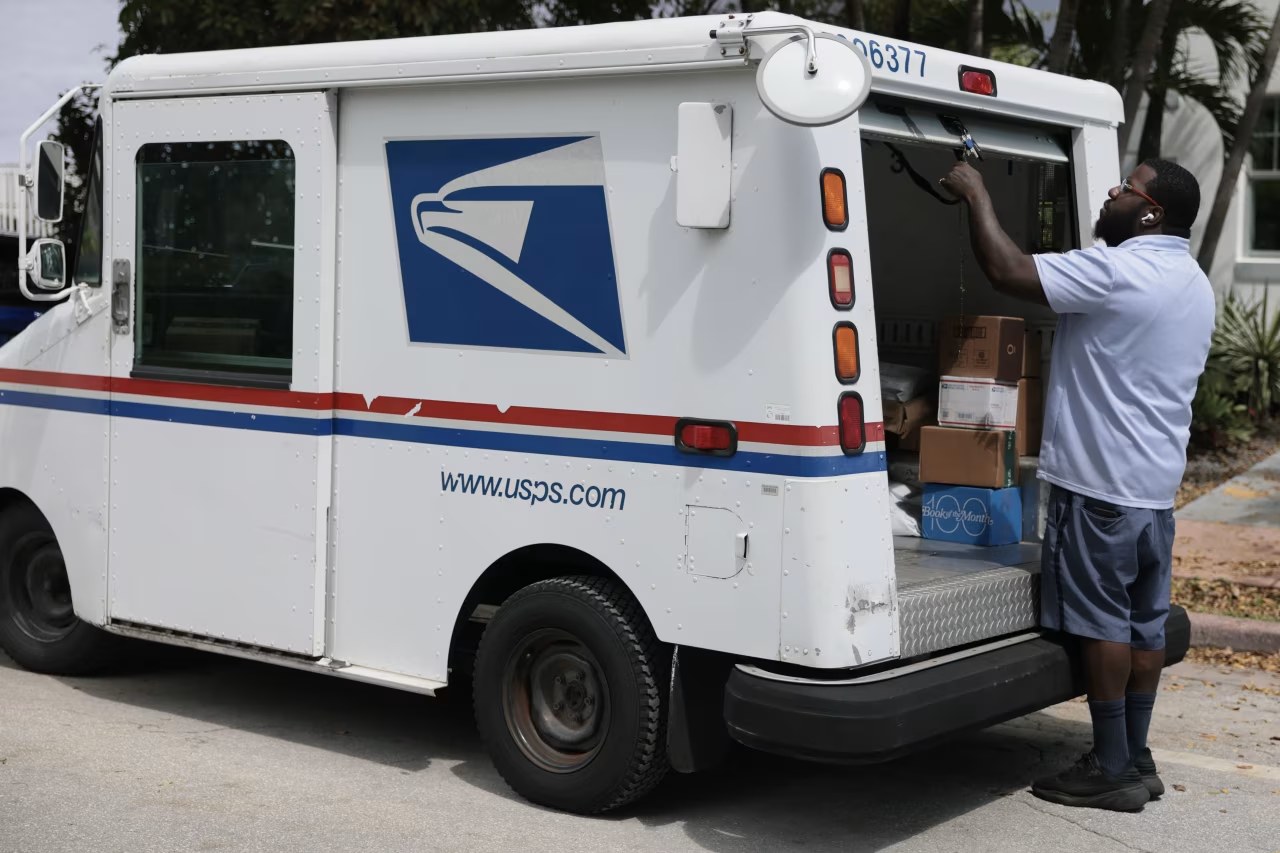
Amazon and Postal Service Finalize New Delivery Pact, Slashing Cutbacks to 20%
- Amazon and the U.S. Postal Service have reached a new agreement.
- The deal significantly reduces Amazon’s planned package volume cutbacks.
- The reduction will now be 20%, down from an earlier proposal of two-thirds.
- This agreement averts a more drastic reduction in Amazon’s reliance on USPS for delivery.
Averting a Crisis for the Struggling Postal Service
AMAZON—In a move that signals a critical, albeit modified, ongoing partnership, Amazon.com and the U.S. Postal Service (USPS) have reportedly struck a new package-handling agreement. This development comes after Amazon had previously threatened to curtail its use of the struggling federal agency by a substantial two-thirds. The new tentative deal, brokered by individuals familiar with the negotiations, amends this drastic measure to a more manageable 20% reduction in package volume flowing through USPS by the upcoming fall season.
This negotiated outcome represents a significant departure from Amazon’s initial stance, which had cast a shadow over the USPS’s already precarious financial situation. For years, the Postal Service has grappled with systemic financial challenges, including a decline in mail volume and escalating operational costs. The prospect of losing a major client like Amazon, which relies on USPS for a significant portion of its last-mile delivery network, posed a serious threat to the agency’s revenue streams and operational capacity.
The backdrop to this agreement is Amazon’s own strategic reevaluation of its logistics operations. As the e-commerce giant continues to expand its delivery network, including its own fleet of planes and trucks, it has sought to optimize its partnerships. The earlier threat to cut back USPS volume was likely a negotiating tactic designed to secure more favorable terms, such as improved service levels, cost efficiencies, or greater flexibility within the delivery framework.
The Negotiating Standoff: From Two-Thirds to Twenty Percent
From Threat to Tentative Truce
The final agreement marks a significant shift from the aggressive stance Amazon initially adopted. Sources close to the matter revealed that Amazon had proposed slashing its package shipments through the U.S. Postal Service by a formidable two-thirds, a move slated to take effect by the fall. This proposed reduction was not merely a minor adjustment; it represented a substantial recalibration of Amazon’s reliance on a key logistics partner. The implications for the USPS were profound, given that Amazon is one of its largest customers, contributing billions in revenue annually. Losing such a significant portion of that business would have exacerbated the Postal Service’s ongoing financial woes, potentially forcing further service cuts or difficult fiscal decisions.
Amazon’s Strategic Imperatives
Amazon’s calculus in threatening such a drastic cutback appears rooted in its overarching strategy to build and optimize its own end-to-end logistics network. Over the past decade, the e-commerce behemoth has invested heavily in its own air cargo fleet, delivery stations, and last-mile delivery operations, including Amazon Flex drivers. This expansion allows Amazon greater control over delivery times, costs, and customer experience. By pushing for a more favorable deal with USPS, Amazon was likely seeking to align the postal service’s offerings more closely with its internal efficiency targets and cost-reduction goals. Dr. Beth E. Richie, a professor at the University of Illinois Chicago specializing in supply chain management, notes, ‘For large e-commerce players, optimizing last-mile delivery is paramount. This involves balancing the cost-effectiveness of third-party carriers like USPS with the control and integration offered by proprietary networks. The terms of these partnerships are constantly under negotiation.’
USPS’s Vulnerability and Resilience
The U.S. Postal Service, operating under a congressional mandate and facing a unique set of financial pressures, has long been a subject of reform discussions. Its business model, historically reliant on first-class mail, has been disrupted by digital communication. While package delivery has become an increasingly important revenue stream, the agency’s financial health has remained fragile. According to the USPS Office of Inspector General’s latest reports, the service continues to navigate significant financial headwinds. A report from late 2023 highlighted that while package revenue has grown, it has not entirely offset the decline in mail volume. This vulnerability makes partnerships with major shippers like Amazon indispensable. The USPS’s ability to adapt and secure such agreements is a testament to its expansive network, reaching virtually every address in the United States, a reach that even Amazon’s growing infrastructure cannot entirely replicate. Experts like Stanley Siegel, a former USPS executive and author on postal reform, have consistently emphasized the need for the agency to secure long-term agreements with its largest commercial partners to ensure financial stability and operational viability.
The finalization of this deal, reducing the cutback from two-thirds to 20%, suggests a compromise was reached, likely involving concessions from both sides. This middle ground allows Amazon to continue leveraging the USPS’s extensive network while mitigating potential disruptions and costs, and critically, it provides the Postal Service with a more predictable and substantial revenue stream than the initial proposal would have allowed, offering a temporary reprieve from its financial anxieties.
Analyzing the Shifting Delivery Landscape: What a 20% Reduction Means
The Evolving Role of USPS in E-commerce Logistics
A 20% reduction in Amazon’s package volume through the U.S. Postal Service, while a significant adjustment, represents a far less severe impact than the initially threatened two-thirds cut. This scaled-back reduction allows the USPS to retain a substantial portion of Amazon’s business, a critical revenue source that helps fund its vast operational network. For context, prior to this negotiation, Amazon was responsible for a significant percentage of USPS package volume, estimated by industry analysts to be upwards of 30-40% of its total package business. Even with a 20% decrease, Amazon will remain one of the USPS’s most vital commercial partners. The Postal Service’s unique strength lies in its universal service obligation and its unparalleled last-mile delivery infrastructure, reaching every mailbox in America, a capability that continues to be invaluable for e-commerce giants seeking broad market penetration.
Amazon’s Network Optimization and USPS’s Position
For Amazon, this revised agreement reflects an ongoing effort to fine-tune its sophisticated logistics network. While Amazon continues to expand its proprietary delivery capabilities, it also recognizes the efficiency and reach of the USPS, particularly for deliveries to less densely populated areas or for standard shipping options. The 20% reduction likely correlates with Amazon’s strategic decision to shift a portion of its volume to its own network or potentially to other third-party logistics providers offering different service tiers or cost structures. Dr. Yossi Sheffi, Director of the MIT Center for Transportation & Logistics, has frequently highlighted the trend of ‘hybrid logistics models’ where companies blend internal capabilities with external partnerships. ‘No single logistics solution is optimal for all packages,’ Sheffi stated in a recent MIT research paper. ‘Companies like Amazon strategically deploy different carriers and their own networks based on speed, cost, destination, and customer expectations.’ This 20% adjustment allows Amazon to continue utilizing the USPS’s extensive reach for a significant portion of its deliveries, particularly those where the Postal Service offers a competitive advantage in terms of cost or accessibility.
The Financial Ripple Effect on USPS
The financial implications for the U.S. Postal Service are considerable. While a full two-thirds reduction would have placed immense strain on its budget, a 20% decrease still translates to a notable loss in anticipated revenue. However, it prevents a more catastrophic scenario. The Postal Service has been under pressure to achieve financial sustainability, a goal complicated by its mandate to serve all Americans regardless of profitability. The Service’s own financial reports, such as those from the Office of the Chief Financial Officer, often detail the ongoing challenges of rising labor and operational costs, compounded by a decline in traditional mail volume. Securing a revised deal with Amazon, even with a reduced volume, provides a more stable revenue floor than initially feared. This stabilization is crucial as the USPS undertakes its ambitious 10-year plan, ‘Delivering for America,’ aimed at modernizing its infrastructure and improving its financial footing.
This negotiated outcome underscores the intricate balance of power and necessity between major e-commerce players and the nation’s postal infrastructure. It indicates that while Amazon is increasingly building out its own delivery capabilities, it still values the USPS’s deep network, and conversely, the USPS requires these large commercial contracts to remain a viable entity. The precise financial impact of this 20% shift will become clearer in future USPS financial disclosures, but it undoubtedly represents a significant, yet manageable, adjustment for the agency’s ongoing efforts toward financial recovery.
Why Are Postal Services Vital for E-commerce Giants?
The Unmatched Reach of the U.S. Postal Service
The U.S. Postal Service possesses a logistical infrastructure that is virtually unmatched in its scope and ubiquity. With its mandate to deliver to every single address in the United States, Puerto Rico, and other U.S. territories, it provides a level of coverage that even the most sophisticated private logistics companies find challenging and costly to replicate entirely. This universal service obligation means that the USPS can deliver packages to remote rural areas, island communities, and densely populated urban centers alike, often at a standardized price. As Dr. Mark Williams, a logistics expert at Northwestern University’s Kellogg School of Management, points out, ‘The last mile is often the most expensive and complex part of the delivery process. For a company like Amazon, outsourcing a portion of this to USPS provides access to their established routes and delivery personnel, significantly reducing Amazon’s capital expenditure and operational complexity in those specific areas.’
Cost Efficiency and Partnership Dynamics
Beyond its reach, the USPS often offers cost advantages for certain types of shipments, particularly standard delivery options. Amazon’s initial threat to reduce volume by two-thirds suggested a strategic pivot towards greater self-reliance or partnerships with providers who could offer lower per-package costs for specific shipping lanes. However, the final agreement, settling on a 20% reduction, implies that the USPS still holds a competitive position on price for a significant volume of Amazon’s shipments. The financial health of the USPS has been a persistent concern, with the agency often facing deficits. Agreements with large commercial partners like Amazon are crucial for supplementing revenue streams derived from traditional mail. The Postal Regulatory Commission (PRC) oversees rates and service standards, ensuring a degree of fairness and predictability in these commercial relationships. A 2019 report by the PRC highlighted the substantial contribution of package revenue to the USPS’s financial stability, underscoring why maintaining these relationships is paramount.
The Broader E-commerce Logistics Ecosystem
Amazon’s relationship with the USPS is part of a larger, complex ecosystem of e-commerce logistics. Companies like Amazon, FedEx, UPS, and the USPS all compete and collaborate in various capacities. Amazon has invested heavily in its own ‘last-mile’ delivery capabilities, including its own vans, drivers, and even drones. This allows it to control delivery speed and customer experience more closely. However, even with these investments, maintaining an entirely proprietary network for all deliveries is logistically and financially daunting. The USPS’s vast network remains a valuable asset for handling overflow, standard deliveries, and reaching areas where private carriers might be less efficient. This partnership model, where Amazon utilizes USPS for a significant portion of its deliveries, allows the e-commerce giant to achieve economies of scale and broad market penetration without bearing the full cost and complexity of operating its own delivery fleet everywhere. As evidenced by the negotiated 20% reduction, the USPS continues to be an integral, albeit adjusted, component of Amazon’s massive delivery operation.
What Does the Future Hold for Amazon-USPS Delivery Partnerships?
Navigating the Evolving Logistics Landscape
The recent agreement between Amazon and the U.S. Postal Service, settling on a 20% reduction in package volume rather than the initially threatened two-thirds cutback, highlights a dynamic and evolving relationship. This outcome suggests that while Amazon continues to expand its internal logistics capabilities, it still perceives significant value in leveraging the USPS’s extensive network. The Postal Service, in turn, benefits from a substantial, predictable revenue stream that helps mitigate its ongoing financial challenges. Looking ahead, this partnership is likely to remain a key component of Amazon’s delivery strategy, though the exact balance may continue to shift as both entities adapt to market demands and technological advancements.
Technological Advancements and Sustainability Goals
Both Amazon and the USPS are grappling with the imperative to innovate and meet sustainability goals. Amazon is investing in electric delivery vehicles and optimizing routes to reduce its carbon footprint. Similarly, the USPS is undertaking a fleet modernization program, including the gradual introduction of electric delivery vehicles. The long-term trajectory of their partnership could be influenced by these efforts. For instance, if USPS significantly scales its adoption of electric vehicles and improves delivery efficiency, it could become an even more attractive partner for Amazon from an environmental and operational perspective. Conversely, if Amazon’s proprietary network becomes overwhelmingly more efficient or cost-effective, the reliance on USPS might diminish further. Dr. Sarah E.G. Porter, a researcher in sustainable logistics, comments, ‘The future of delivery partnerships hinges on alignment in technological adoption and sustainability commitments. Companies seeking to reduce their environmental impact will favor partners who share those priorities.’
Regulatory and Economic Influences
The regulatory environment and broader economic conditions will also play a crucial role. The Postal Regulatory Commission (PRC) continually reviews USPS rates and services, which could impact the cost-effectiveness of the partnership for Amazon. Furthermore, shifts in consumer purchasing behavior, the rise of competing delivery services, and potential changes in postal legislation could all reshape the dynamics. Amazon’s own growth trajectory and its strategic priorities in logistics will remain a primary driver. The company’s ongoing investments in its fulfillment and delivery infrastructure indicate a long-term commitment to controlling more of its supply chain. However, the USPS’s unique position as a universal service provider ensures its continued relevance, particularly for reaching every corner of the nation. As such, future negotiations are probable, with the volume share likely to be a point of continuous adjustment based on prevailing economic factors and operational efficiencies achieved by both parties.
Frequently Asked Questions
Q: What was the original plan for Amazon’s package reduction with the USPS?
Initially, Amazon had proposed a significant cutback, aiming to reduce the number of packages sent through the U.S. Postal Service by two-thirds by the fall. This drastic reduction was a leverage point in negotiations.
Q: How will the new Amazon-USPS deal affect package volume?
The tentative deal between Amazon and the USPS will result in a 20% reduction in Amazon’s package volume through the postal service. This is a substantial modification from the initially threatened two-thirds cutback.
Q: Why was Amazon considering reducing its package volume with the USPS?
Amazon was reportedly threatening to cut back on package volume due to concerns about the U.S. Postal Service’s financial stability and operational efficiency. This negotiation aimed to secure favorable terms for its vast e-commerce operations.
Q: What is the current financial state of the U.S. Postal Service?
The U.S. Postal Service has faced significant financial challenges for years, struggling with declining mail volumes and rising costs. Agreements with major shippers like Amazon are crucial for its revenue stream, though the exact financial figures remain complex to assess without specific reporting.
