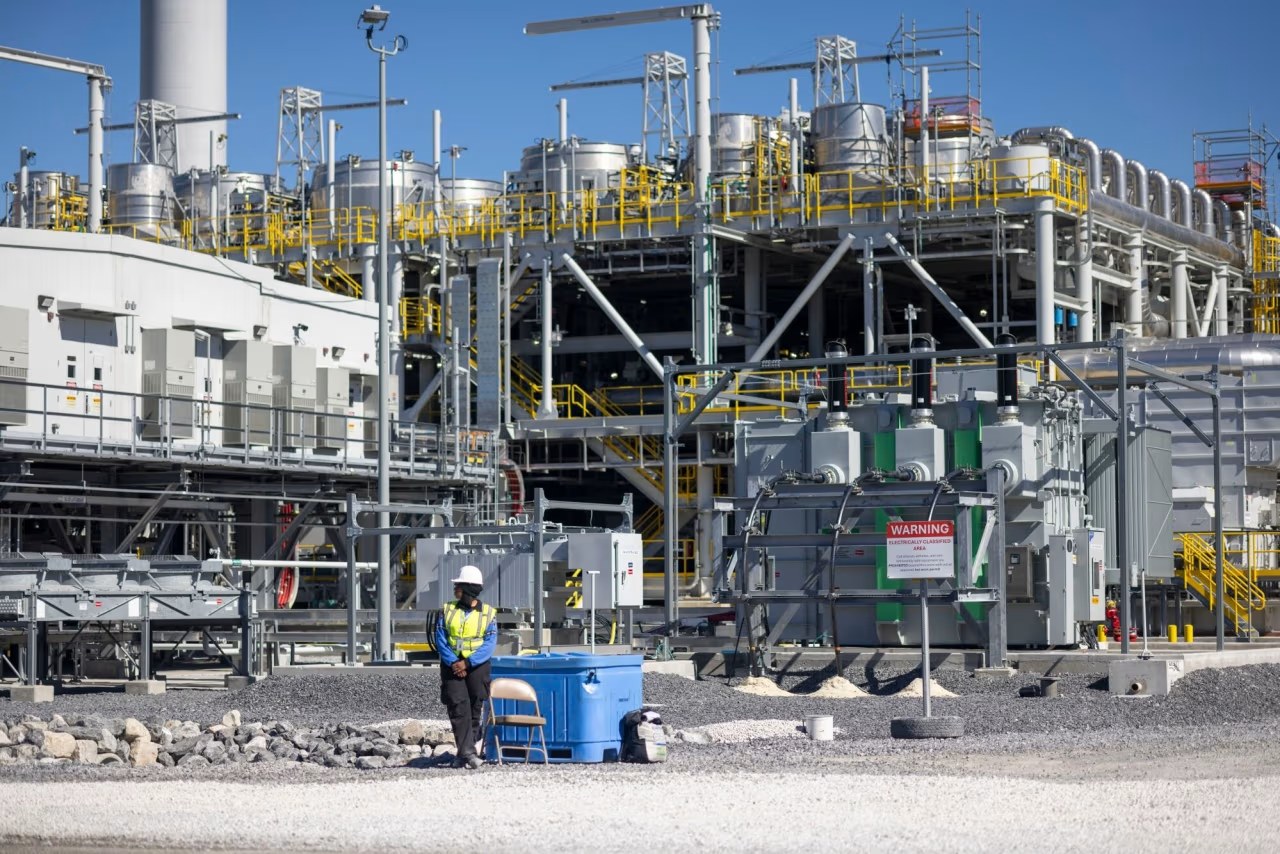
American Gas Exporter Venture Global Secures Billions in 2022 Windfall Amidst Energy Upheaval
- Venture Global, an American gas exporter, recorded billions of dollars in profits during 2022.
- The company’s success was driven by a global energy shock, the second in four years, precipitated by Russia’s reduction of gas supplies to Europe.
- Venture Global employs an unorthodox business model designed to capitalize on such global disruptions.
- This strategic positioning has solidified its status as the second-largest U.S. exporter of liquefied natural gas, following Cheniere Energy.
As geopolitical tensions reshaped global energy maps, one American company mastered the art of capitalizing on crisis, transforming market volatility into unprecedented financial triumph.
VENTURE GLOBAL—In a global economy increasingly defined by rapid shifts and unforeseen challenges, the energy sector has repeatedly found itself at the epicenter of disruption. The past four years alone have witnessed two significant energy shocks, each sending ripples across continents and forcing nations to re-evaluate their fundamental energy strategies. Amidst this volatility, one American enterprise, Venture Global, has not merely navigated the turbulence but has strategically positioned itself to thrive. The company, a prominent American gas exporter, has demonstrated a remarkable capacity to transform global energy upheavals into substantial financial gains, exemplified by its staggering performance in 2022.
Venture Global’s ascent to becoming a powerhouse in liquefied natural gas (LNG) exports is deeply intertwined with its distinctive operational philosophy. The firm’s business model, characterized as unorthodox by market observers, is specifically engineered to capitalize on the very global disruptions that destabilize other market players. This innovative approach proved exceptionally lucrative in 2022, a year when Russia dramatically curtailed its natural gas deliveries to European markets. The ensuing scramble by European buyers for new, reliable energy sources created an unparalleled demand for LNG, a void that Venture Global was uniquely prepared to fill.
The financial outcome for Venture Global in 2022 was nothing short of a windfall, with the company reportedly raking in billions of dollars. This significant profit surge not only underscored the efficacy of its strategic model but also cemented its position as a critical player in the global energy landscape. Its rapid expansion and market responsiveness have propelled Venture Global to become the second-largest U.S. exporter of liquefied natural gas, a significant achievement that places it squarely behind industry leader Cheniere Energy. The story of Venture Global is, therefore, not just one of corporate success, but a compelling narrative about adapting, innovating, and profiting from the inherent instability of the modern energy market.
The Geopolitics of Energy Shocks: A Recurring Global Challenge
The global energy market operates under a delicate balance, one that is perpetually susceptible to geopolitical tremors and unforeseen events. The observation that the world has experienced a significant energy shock for the second time in just four years is a stark reminder of this inherent fragility and the profound implications for national economies and international relations. Such shocks are not mere economic fluctuations; they are seismic shifts that redraw supply lines, inflate costs for consumers and industries, and often become flashpoints for international diplomacy. Understanding the anatomy of these disruptions is crucial to appreciating the unique position of companies like Venture Global.
Historically, energy markets have been buffeted by various forces, ranging from regional conflicts and natural disasters to policy shifts and infrastructure failures. The core characteristic of an ‘energy shock’ is a sudden, severe disruption to supply or a dramatic, unexpected surge in demand that overwhelms existing capacity. In 2022, the catalyst was explicitly tied to geopolitical actions: Russia’s decision to throttle natural gas deliveries to its European customers. This move was not just a commercial dispute; it was a strategic lever in a broader geopolitical confrontation, transforming energy into a weapon and fundamentally altering the supply-demand dynamics of the European continent.
Understanding the ‘Second Time in Four Years’ Context
The reference to this being the ‘second time in four years’ highlights a worrying trend of increased volatility. While the source text does not specify the preceding shock, its mention underscores a pattern of fragility that market analysts and energy economists closely monitor. Each shock carries distinct characteristics, yet collectively, they illustrate an increasingly interconnected and vulnerable global energy system. The consequences extend far beyond immediate price spikes, influencing long-term investment decisions, accelerating transitions to alternative energy sources, and reshaping geopolitical alliances based on energy dependency and supply reliability. The rapid succession of these events underscores a new era of energy insecurity that demands robust, adaptable solutions.
For nations heavily reliant on imported energy, particularly natural gas, these shocks represent existential threats to economic stability and social welfare. The sudden curtailment of Russian gas supplies to Europe, for instance, forced countries to scramble for alternative sources, primarily liquefied natural gas (LNG), at exorbitant prices. This created a profound sense of urgency and a willingness among buyers to pay a premium for immediate availability, regardless of traditional contractual agreements. It is precisely within this environment of heightened demand and disrupted supply that an agile American gas exporter like Venture Global found its unparalleled opportunity to contribute to energy security while securing substantial financial gains. The profound impact of these recurring shocks sets the stage for understanding the rise of companies capable of navigating and profiting from such turbulence.
Venture Global’s Unorthodox Blueprint for Profit Amidst Disruption
Venture Global’s remarkable ascent within the fiercely competitive liquefied natural gas (LNG) market is directly attributable to what the source text describes as an ‘unorthodox business model.’ In an industry typically characterized by multi-decade contracts, massive upfront investments, and often rigid supply chains, an ‘unorthodox’ approach suggests a deviation from the norm, specifically designed to extract value from market inefficiencies and sudden shifts. This model has allowed the American gas exporter to not merely survive but to thrive during periods of intense global energy disruption, converting market volatility into significant financial success, as evidenced by its 2022 performance.
While the precise mechanisms of this unorthodox model are not detailed in the source, its ability to ‘capitalize on global disruptions’ strongly implies a focus on agility, rapid project development, and perhaps a strategic emphasis on the spot market or shorter-term contracts rather than solely relying on long-term, fixed-price agreements. Traditional LNG projects can take years, if not a decade, to move from conception to full operation. If Venture Global can bring liquefaction capacity online faster and with greater flexibility, as energy sector observers might infer, it gains a substantial advantage when unexpected supply shortages emerge, as they did when Russia reduced gas flows to Europe.
Strategic Agility: A Competitive Edge
Energy market analysts, observing the swift response of companies like Venture Global during the 2022 crisis, would likely point to operational flexibility as a key component of an unorthodox strategy. This might involve modular construction techniques for its liquefaction terminals, allowing for faster expansion and lower initial capital expenditure. Such an approach reduces the lead time for bringing new capacity online, making the company exceptionally responsive to sudden spikes in global demand. When European buyers urgently sought new supplies in 2022, Venture Global was positioned to deliver, directly contrasting with more ponderous, long-lead-time projects typical of some competitors.
This strategic nimbleness is critical in a world where geopolitical events can instantaneously reshape energy flows. By not being exclusively tied to rigid, long-term contracts for all its capacity, Venture Global could have retained a portion of its LNG for the lucrative spot market, where prices soared in 2022. This ability to capture premium prices during periods of extreme scarcity is a hallmark of profiting from disruption. For an American gas exporter, this model not only translates into significant financial gains, reaching billions in 2022, but also enhances the strategic value of U.S. LNG as a flexible, emergency supply for global allies. The sustained viability of such a model depends on continued market volatility, a prospect that seems increasingly likely in the current geopolitical climate, hinting at future successes for agile players.
The Russian Factor: How Geopolitics Reshaped Global Gas Markets
The geopolitical landscape of 2022 provided the perfect storm for Venture Global’s unique business model to shine. At the heart of this disruption was Russia’s deliberate decision to throttle natural gas deliveries to Europe. This act, widely interpreted as a political leverage tactic amidst heightened international tensions, sent shockwaves through the global energy market, creating an unprecedented scramble for alternative supplies. For an American gas exporter, this represented not only a moral imperative to support allies but also an unparalleled commercial opportunity.
Europe, for decades, had built a significant portion of its energy infrastructure around pipeline gas imports from Russia. This dependency, while economically efficient in times of stability, proved to be a critical vulnerability when political relations deteriorated. When Russia began reducing flows, particularly through key pipelines, European nations faced the very real prospect of energy shortages, industrial shutdowns, and a harsh winter without adequate heating. The immediate consequence was a dramatic surge in natural gas prices across the continent, reaching record highs as competition for available supplies intensified, as noted by energy policy experts.
Europe’s Urgent Search for New Supplies
The imperative for Europe was clear and immediate: secure new energy sources, and fast. This urgency translated directly into a massive surge in demand for liquefied natural gas (LNG) from distant producers, most notably the United States. Countries that had previously relied on Russian pipeline gas suddenly looked across the Atlantic, willing to pay premium prices for cargoes that could be delivered by sea. This pivot fundamentally reshaped global LNG trade routes, with a significant redirection of cargoes from Asian markets towards Europe, reflecting the extreme urgency of the situation and the critical role of the American gas exporter fleet.
This sudden shift in demand dynamics created an environment where an American gas exporter capable of quickly increasing its export volumes, or having flexible capacity available, could achieve extraordinary profitability. Venture Global’s ability to step into this breach, providing much-needed energy to a continent in crisis, not only solidified its market position but also underscored the strategic importance of U.S. LNG as a reliable, politically stable alternative to traditional pipeline supplies. The financial ‘billions’ raked in by Venture Global in 2022 were a direct reflection of this desperate European demand, showcasing how geopolitical crises can translate into immense commercial opportunities for strategically positioned energy firms. The lasting implications of this shift continue to influence global energy policy and investment strategies, pointing towards a future where supply diversification is paramount.
How Does an American Gas Exporter Rise to the Top?
Venture Global’s emergence as the second-largest U.S. exporter of liquefied natural gas, following closely behind industry titan Cheniere Energy, is a testament to its rapid growth and strategic prowess within a highly competitive sector. This achievement is particularly significant given the capital-intensive nature of LNG infrastructure and the entrenched positions of established players. The question of ‘how’ an American gas exporter ascends to such a prominent rank involves a complex interplay of market timing, technological adoption, and a keen understanding of global energy needs, factors closely analyzed by industry economists.
Cheniere Energy has long been recognized as the pioneer and leader in U.S. LNG exports, having brought the first large-scale liquefaction terminals online and establishing a significant global footprint. Its early mover advantage and substantial operational capacity have kept it at the forefront. However, Venture Global’s rapid expansion indicates a different, perhaps more agile, path to market dominance. The company’s ‘unorthodox business model,’ as described in the source, likely includes elements that allow for faster project execution and a more responsive supply chain, enabling it to quickly scale operations when market conditions become favorable.
The Competitive Landscape of U.S. LNG Exports
The U.S. has rapidly transformed into a pivotal global LNG supplier, driven by its abundant shale gas resources and the development of sophisticated export terminals along its coasts. This rise has created a dynamic competitive landscape where companies vie for liquefaction capacity, long-term supply agreements, and access to international markets. For an American gas exporter like Venture Global to climb to the second position highlights not only its commercial success but also its critical role in meeting global energy demand, especially during periods of stress, a fact often highlighted by energy security strategists.
The intense demand for natural gas in 2022, spurred by Europe’s urgent need for alternatives to Russian supplies, provided a unique growth accelerator for companies with available capacity. Venture Global’s strategic positioning allowed it to significantly increase its export volumes, capturing a larger share of the surging market. This performance propelled it past numerous other established and emerging players in the U.S. LNG sector, solidifying its status as a top-tier American gas exporter. Its continued growth trajectory suggests an ongoing commitment to expanding its liquefaction and export capabilities, ensuring that the U.S. maintains its position as a global energy security provider. The ongoing race for market share among these major exporters will likely shape the future of global energy supply for decades to come.
Beyond the Windfall: The Enduring Role of Flexible LNG Supply
While the billions of dollars reaped by Venture Global in 2022 represent a significant financial windfall, the broader implications of its success extend far beyond immediate profits. The story of this American gas exporter underscores a fundamental shift in the global energy paradigm: the increasing value of flexible, responsive liquefied natural gas (LNG) supply in an era of heightened geopolitical instability and unpredictable market shocks. As nations increasingly prioritize energy security and diversification, the ability to quickly pivot and secure alternative supplies becomes a strategic imperative, making companies with adaptable models indispensable.
The severe energy shock of 2022, triggered by Russia’s actions in Europe, served as a stark lesson for energy-dependent nations worldwide. It highlighted the dangers of over-reliance on a single supplier or a geographically constrained energy source. This realization is driving a long-term trend towards greater investment in LNG import infrastructure and stronger relationships with diverse LNG exporting nations. For an American gas exporter like Venture Global, this means that the market conditions that led to its 2022 success are unlikely to be isolated incidents but rather indicators of a more volatile and demand-driven future for LNG, a perspective shared by many in the energy policy community.
Building Resilience in Global Energy Supply Chains
Experts in energy policy and international relations increasingly advocate for resilient energy supply chains that can withstand shocks without crippling national economies. This resilience is built through a combination of domestic production, strategic reserves, and, critically, diversified international partnerships for energy imports. LNG, with its ability to be transported globally by sea, offers a unique flexibility that pipeline gas cannot match, making it a cornerstone of future energy security strategies for many nations, particularly in Europe and Asia. Such a view is espoused by institutions focused on global energy stability.
Venture Global’s model, designed to capitalize on disruptions, is inherently aligned with this pursuit of resilience. By proving its capacity to deliver substantial volumes of LNG during a severe crisis, the company has not only demonstrated commercial acumen but has also positioned itself as a key contributor to global energy stability. The future of the American gas exporter, and indeed the broader LNG market, will likely be shaped by ongoing geopolitical tensions, the accelerating energy transition, and the continuous need for reliable, flexible energy sources. This sustained demand environment suggests that the principles of agility and responsiveness, championed by companies like Venture Global, will continue to define success in the evolving global energy landscape, well beyond any single windfall year, pointing to a new era of energy trade.
Frequently Asked Questions
Q: How did Venture Global become a major American gas exporter?
Venture Global ascended to become the second-largest American gas exporter by leveraging an unorthodox business model designed to capitalize on global energy disruptions. The company significantly profited when Russia curtailed gas deliveries to Europe in 2022, creating a surge in demand for new liquefied natural gas supplies from the U.S. This strategic positioning enabled substantial revenue generation.
Q: What led to Venture Global’s billions in profit during 2022?
Venture Global reported billions of dollars in profits during 2022 primarily due to the severe energy shock that year. Russia’s decision to throttle natural gas deliveries to Europe forced European buyers to urgently seek alternative supplies. Venture Global’s business model allowed it to rapidly provide liquefied natural gas (LNG), meeting this critical demand and securing significant financial gains as a leading American gas exporter.
Q: What is Venture Global’s business model for the LNG market?
Venture Global operates with an unorthodox business model specifically tailored to capitalize on global energy disruptions. While the source text does not detail its precise mechanisms, its success in 2022, when global gas supplies were disrupted, suggests a flexible and responsive approach, possibly emphasizing spot market sales or rapid deployment to meet urgent demand, positioning it as a key American gas exporter.
Q: Who are the largest American gas exporters?
The U.S. liquefied natural gas (LNG) export market is dominated by a few key players. As of 2022, Cheniere Energy holds the top position as the largest American gas exporter. Venture Global has rapidly emerged as the second-largest U.S. exporter, demonstrating significant growth and strategic importance, particularly in response to recent global energy shocks.
