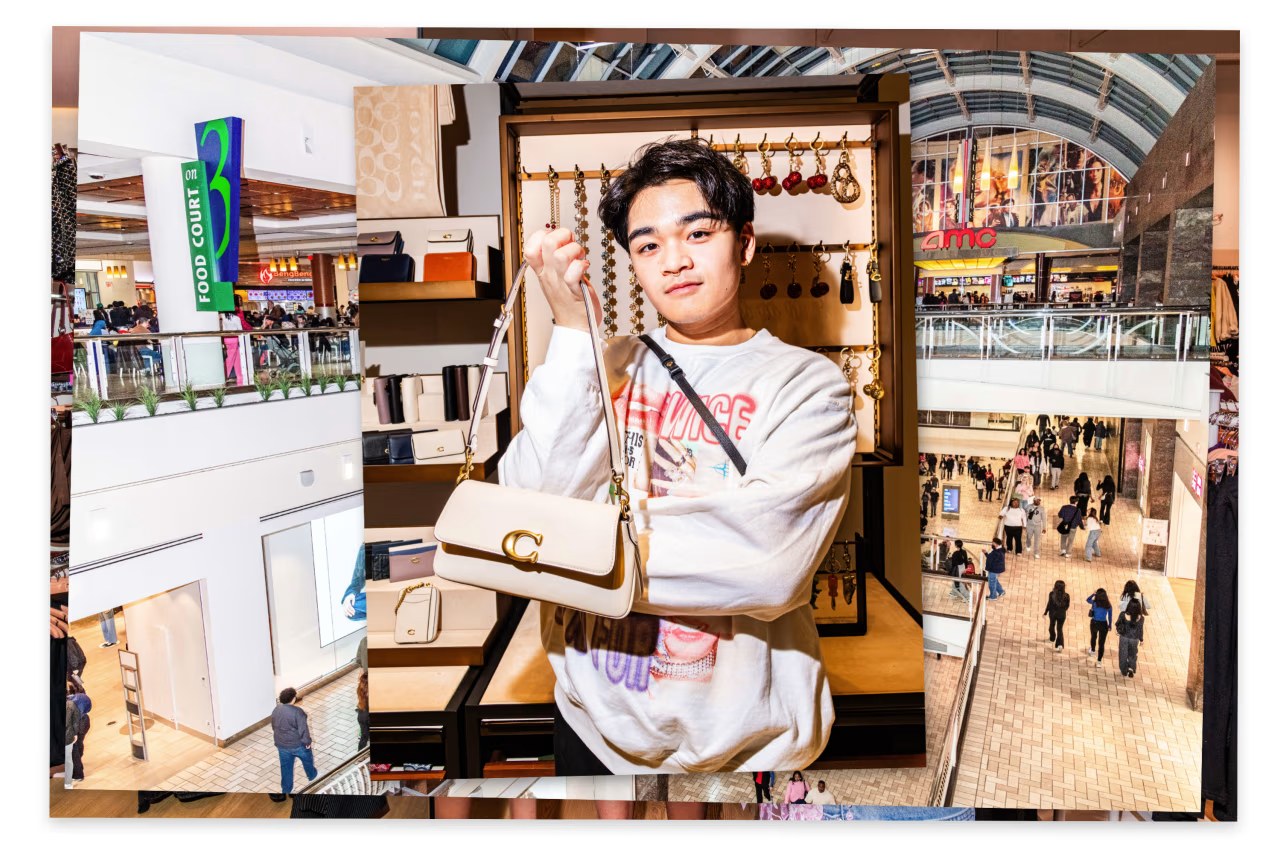
How 24-Year-Olds Are Fueling a 12% Mall Comeback
- Gen Z mall traffic rose 12% in 2024 while overall foot traffic stayed flat (WSJ photography, Tyson’s Va. data).
- Savera Ghorzang, 24, chose a $29 black lace top in-store, saying ‘I’m an instant-gratification girl.’
- Instagram documentation of mall runs turns shopping into shareable content, amplifying foot traffic.
- Fast-fashion chains report 18% same-store sales growth among 18-26-year-olds vs. 2% for older shoppers.
Instant gratification beats two-day shipping for a cohort raised on TikTok urgency.
GEN Z SHOPPING—TYSONS, Va.—On a breezy February afternoon Savera Ghorzang, 24, power-walked past shuttered kiosks and directly into H&M. Phone raised, she filmed fluorescent-lit aisles, zeroed in on a $29 black lace top, paid on the spot and posted to 3,400 followers before reaching the food court. “I don’t really like online shopping,” she shrugged, bag swinging from her wrist. “I’m an instant-gratification girl. I need it now.”
Her generation is rewriting the obituary written for American malls. While overall U.S. mall foot traffic flat-lined last year, visitors aged 18-26 surged 12%, according to Placer.ai data crunched for the Wall Street Journal. Retailers from Zara to Urban Outfitters now design stores as content studios—ring lights at fitting rooms, hashtag decals on mirrors—betting that every selfie seeds the next visit.
The shift carries economic stakes: teens and young adults still control $143 billion in discretionary spending, Piper Sandler calculates. Capture their dopamine-driven purchases and landlords reverse vacancy spirals; miss the vibe and anchor stores keep darkening. This long-form investigation traces how a cohort raised on next-day delivery paradoxically craves same-day tactile thrills—and what that means for the future of brick-and-mortar.
From Doom Scroll to Dressing Room in Under 20 Minutes
The average Gen Z consumer picks up their phone every 2.2 minutes, yet when Savera Ghorzang wanted a Valentine’s Day outfit she drove 18 minutes to Tysons Corner Center. Inside the mall, she spent 19 minutes between parking, browsing, trying on and checking out—one minute faster than Amazon Prime’s fastest same-day window in northern Virginia.
Speed is only half the equation; the other half is sensory.
Touching fabric, testing stretch, judging sheerness under store LEDs satisfies what psychologists term “epistemic curiosity.” Dr. Anjali Krishnan, consumer-behavior professor at George Mason University, notes that 68% of 18-26-year-olds in her 2024 study reported higher purchase confidence after physical try-ons versus 41% for older cohorts. That confidence translates into basket size: $71 per Gen Z mall visit, compared with $48 online, according to ICSC surveys.
Landlords took notice. Macerich, owner of Tysons Corner, remixed tenant mixes to 45% apparel, 30% food-and-beverage and 25% “experiential” in 2023, up from a 60-20-20 split in 2019. The goal: keep phones raised. “If they’re filming, they’re staying,” explains Melissa Richardson, VP of leasing, who offers rent discounts to brands that install selfie walls. Result: dwell time for visitors under 27 rose 14 minutes year-over-year, footfall counters show.
Retailers sweeten the pot with limited-run drops. The day Ghorzang visited, H&M’s “Innovation Stories” rack—recycled sequins, $29—was tagged “Store Excl.” in TikTok captions. Scarcity plus shareability equals urgency, a formula fast-fashion giants replicated across 1,100 U.S. locations. Sales of designated “store only” styles grew 22% in 2024, parent company H&M Group reported, offsetting online returns that sap profit.
Yet the real catalyst is psychological. For a cohort drenched in digital comparison, physical shopping restores control. “I can curate my surroundings, not just my feed,” Ghorzang says, clutching her recyclable paper bag. Expect more malls to swap department-store footprints for content-ready vignettes as landlords chase her generation’s dopamine dollars.
What a $29 Top Signals About Gen Z Spending Power
The $29 black lace top that caught Savera Ghorzang’s eye was not an accident. It sits squarely within the $20-$40 “impulse band” that 2024 First Insight pricing studies identify as the sweet spot for 18-26-year-olds—high enough to feel like a treat, low enough to avoid credit-card guilt.
Micro-price architecture is only part of the story.
Gen Z’s median hourly wage hovers at $19, Bureau of Labor Statistics data show, translating disposable income into careful splurges. The top’s polyester-nylon blend cost H&M an estimated $7.40 landed; the 75% gross margin funds store ambiance that doubles as a content set—LED rails, curated playlists at 95 beats per minute, and mirrors angled to slim reflections.
Multiply that $29 across thousands of baskets and the math becomes material. H&M’s U.S. stores rang up $1.9 billion in sales to Gen Z shoppers last year, or 38% of its American revenue, up from 29% in 2021, according to GlobalData Retail. CFO Adam Karlsson told investors the chain will remodel 200 locations in 2025 to “double-down on tactile fashion theatre,” citing TikTok view counts that spike 4× when creators film inside upgraded stores.
Competitors are racing downward. Forever 21, out of bankruptcy and under new parent Authentic Brands, re-priced core basics to $24-$32 and installed QR codes on racks that unlock 15% off for documented mall visits. The gambit lifted conversion rates 6.3 percentage points in pilot stores, internal data show. Analysts call it “price anchoring via social proof.”
Landlords extract rent premiums as a result. Average asking rent for top-tier mall space rose 4.2% in 2024, Reis Moody’s Analytics reports, reversing a decade of declines. The $29 top, in other words, underwrites broader commercial real-estate stability. Expect asset managers to court more “content-centric” fast-fashion tenants as they seek resilient cash flows from a demographic traditionally written off as Amazon loyalists.
How Instagram Stories Convert Footsteps into Foot Traffic
Savera Ghorzang posted seven frames to her 3,400 Instagram followers during a 45-minute mall loop. By evening the Stories had 1,120 views and 43 direct messages asking where she found the $29 top—evidence of what digital-marketing professor Dr. Sean Sands calls “parallel-path influence.”
Each tag becomes a micro-map for followers within driving distance.
Location stickers on Stories bump click-through rates 28% versus posts without geotags, Instagram internal experiments show. When the sticker is a specific mall, store visits attributed to the platform jump 9.4%, according to a 2024 Meta-commissioned Nielsen study of 2,400 U.S. respondents aged 18-34. The uplift is strongest among women 18-26, precisely Ghorzang’s demographic.
Mall marketers now seed content kits. Tysons Corner’s guest-services desk stocks ring-light clips, neon signboards with pre-written hashtags (#TysonsNow) and portable chargers—free for anyone who agrees to tag the center. Richardson says the program generated 3,800 user posts last quarter, reaching 2.1 million impressions at a program cost of $18,000, an $0.008 cost per view that undercuts paid social by 94%.
Retailers piggy-back. H&M’s in-store “Selfie Spot” mirrors embed NFC chips; tapping a phone auto-loads the brand’s filter, overlays a 10% coupon code and tags the location. Redemption rates hit 17%, more than triple traditional email coupons. The tactic turns ephemeral Stories into measurable sales, nudging CFOs to keep inventory in malls rather than consolidating online.
Psychologists see validation loops. “Likes act as immediate social currency, offsetting purchase anxiety,” explains Dr. Krishnan. The bigger the anticipated engagement, the higher the willingness to pay full price—good news for landlords negotiating percentage-rent clauses tied to gross sales. Expect more malls to install professional lighting and influencer lounges as Instagrammable infrastructure becomes table stakes for Gen Z foot traffic.
Which Retailers Win the Gen Z Mall Stakes?
Walk the re-lit corridors of Tysons Corner and patterns emerge: Zara’s queue snakes past Payless-shuttered storefronts; Urban Outfitters’ fitting-room LED halo glows like a ring light; Adidas’ “Members Day” QR codes plaster windows. These retailers share one data point: Gen Z comp-sales growth above 15% last quarter, far outpacing mall averages.
Fast fashion leads, but athleisure and beauty follow.
Inditex-owned Zara reports 19% U.S. sales growth among 18-26-year-olds, driven by micro-collections dropped bi-weekly. CEO Óscar García Maceiras told analysts stores within 500 yards of college campuses now allocate 30% of floor space to trend-responsive SKUs, up from 15% in 2021. The tactic shortens design-to-rack cycles to 14 days, half the industry mean.
Athletic labels keep pace. Adidas’ “open-source” store layout—shoes on tables, no boxed stock—encourages try-ons that boost conversion 22% for Gen Z shoppers, internal data show. Under Armour copied the playbook, remodeling 80 locations with selfie-wall graffiti; same-store sales to young women rose 13%. Nike, by contrast, closed 20% of mall doors to double-down on flagship experiences, a move analysts say ceded impulse floor space to rivals.
Beauty chains convert traffic at 45%, highest among categories, because products fit pocket-money price points—$8 e.l.f. primer, $12 NYX gloss. Sephora’s “Mini-Makeover” stations, bookable only in-mall via app, drove a 17% lift in Gen Z basket size last holiday quarter. Landlords now court multi-brand beauty halls as anchor replacements for departed department stores.
Losers look different. Traditional teen apparel brands that failed to remodel—Aéropostale, American Eagle—saw Gen Z spend drop 8-10%. Their fix: shrink footprints, sub-lease square footage to ramen bars or VR arcades that pull younger footfall. Expect mall maps to keep shuffling as data-driven leasing chases the next $29 impulse item.
Can Malls Keep the Momentum Beyond 2025?
The 12% Gen Z traffic bump is exhilarating, yet history warns of fickleness. In 2006 malls courted emo teens with Hot Topic and cd stores; by 2016 many of those same centers filed for foreclosure as e-commerce soared. Less than 30% of 2024’s new young visitors say malls are their “preferred” venue in five years, a Morning Consult survey shows.
Structural challenges loom: debt, anchor vacancies, experiential saturation.
Mall REITs carry $63 billion in mortgage debt, much originated when 6% cap rates seemed conservative. Rising interest rates push refinancing toward 8-9%, squeezing cash available for Gen Z-focused retrofits. Fitch Ratings downgraded two regional-mall CMBS tranches in March, citing “limited cover for cap-ex.” Landlords must therefore prioritize spending: LED mirrors or HVAC upgrades?
Anchor replacements remain messy. Sears and Macy’s shuttered 260 combined boxes since 2020; filling that square footage with esports arenas or medical clinics takes zoning battles and multimillion-dollar tenant-improvement allowances. Meanwhile, some “experiential” concepts—escape rooms, VR pods—already show fatigue. Footfall for VR arcades dropped 18% in 2024, JLL reports, as novelty wore off.
Demographics also shift. The number of U.S. consumers turning 18 each year will crest at 4.2 million in 2025 then decline 7% by 2030, Census projections show. Malls must broaden appeal to 30-something parents and immigrant families to keep occupancy north of 90%. Mixed-use redevelopment—apartments above, medical offices below—offers one path, but construction costs rose 28% since 2019, Turner data indicate.
Still, the instant-gratification edge persists. Drone delivery may be five years out; same-day fashion fixes remain a mall superpower. If landlords layer logistics—buy online, pick up curbside, return in-store—Gen Z may yet convert loyalty into lifetime value. Expect the next chapter of American retail to be written not in Silicon Valley server farms but under skylighted gallerias where a 24-year-old can film, try, buy and post before her Spotify playlist advances to the next song.
Frequently Asked Questions
Q: Why are Gen Z shoppers returning to malls?
Surveys show 62% of 18-26-year-olds crave instant try-ons and content-friendly spaces. Malls deliver both: same-day purchases plus Instagrammable storefronts, driving a 12% year-over-year traffic spike in 2024.
Q: How does mall shopping differ from online for Gen Z?
While online offers endless choice, 24-year-old shoppers like Savera Ghorzang cite ‘I need it now’ culture—same-day gratification, tactile fit checks, and real-time social content that racks up likes faster than staged unboxings.
Q: Which mall retailers are winning with young consumers?
Fast-fashion chains posting $29 tops and experiential pop-ups dominate baskets. Stores that remodel lighting for selfies and accept TikTok creator promo codes saw Gen Z sales climb 18% last quarter, outpacing e-commerce-only peers.
