81 Portraits, $3.5 Million Goal: Inside Washington’s First Watergate Museum
- Pop‑up opened late 2025 in the Watergate’s underground arcade.
- Founder Keith Krom, 61, aims to raise $3.5 million for a permanent home.
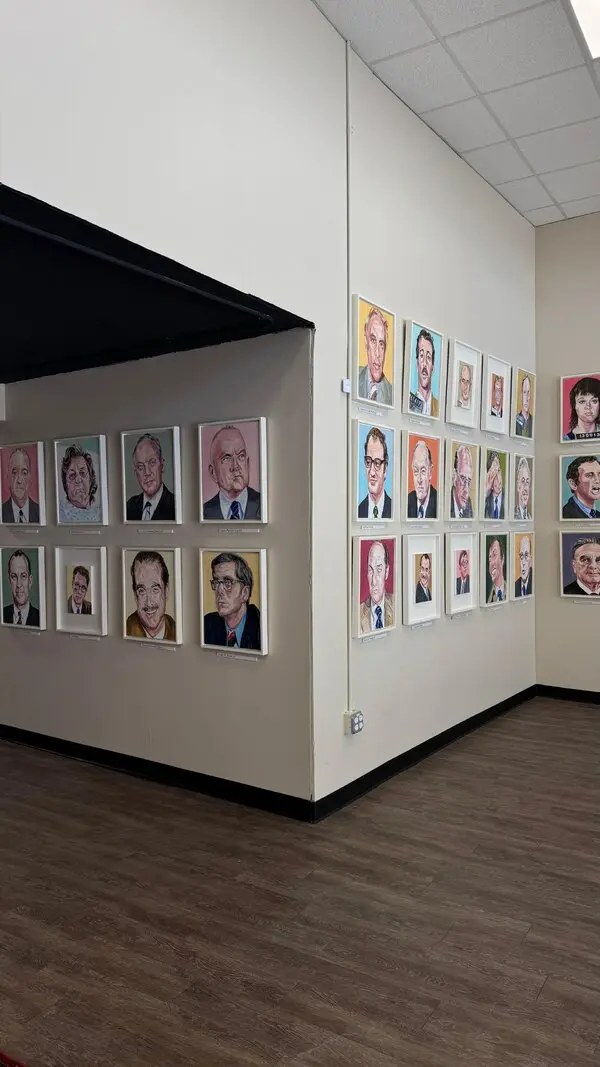
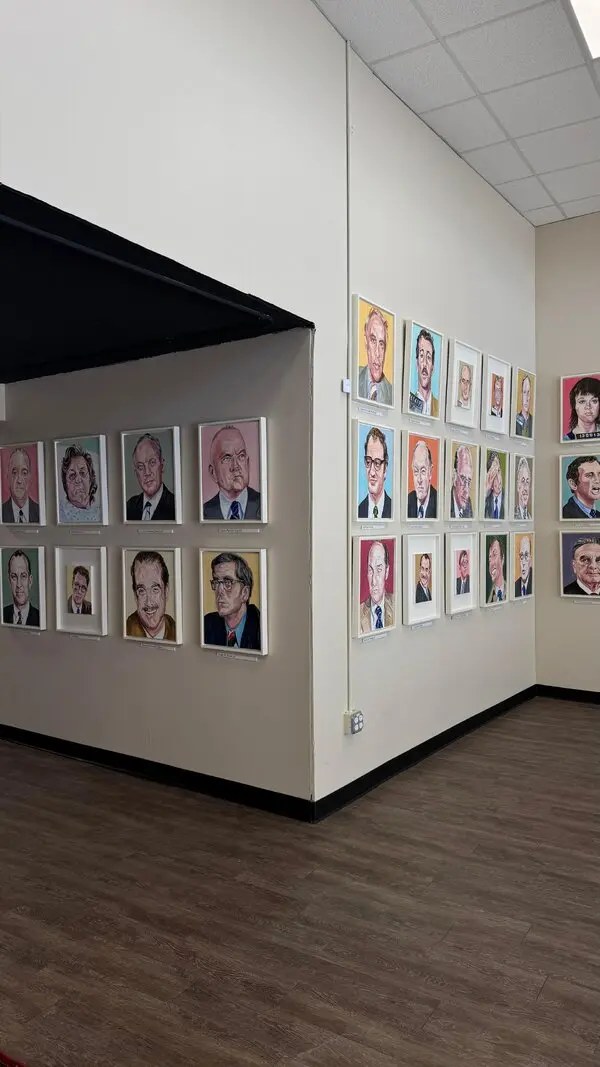
- Exhibit features 81 portraits, including Paul Newman and Richard Nixon.
- Museum vows a non‑partisan, fact‑based narrative.
Why a scandal from 1972 still draws crowds and cash in 2026
WATERGATE—The word “Watergate” still triggers a collective gasp, a cultural shorthand for abuse of power that no other “‑gate” can match.
Keith Krom, a former corporate lawyer, believes the name alone guarantees curiosity, even if most visitors can’t name the exact events.
His pop‑up, staffed by volunteers and funded by small donors, is the first brick‑and‑mortar effort to turn that curiosity into a museum experience.
The Rise of a Pop‑Up: From Empty Arcade to Cultural Landmark
From vacant storefront to historic showcase
In November 2025, an empty commercial unit beneath the Watergate’s subterranean shopping arcade was transformed into a 2,500‑square‑foot exhibition space. The conversion was financed entirely by a handful of private donors who shared founder Keith Krom’s vision.
Krom, 61, a former corporate attorney turned cultural entrepreneur, announced the pop‑up would feature 81 portraits. Among the faces are actor Paul Newman—who earned a spot on Nixon’s infamous “Enemies List”—and the former president himself, captured mid‑laugh as if already aware of his future infamy.
“When people hear the word ‘Watergate,’ they may not understand what’s referenced or what the history is, but they know the name Watergate. People know something important happened. And that’s what we hope to answer,” Krom told reporters during the opening night.
The exhibit’s layout wraps three walls in a collage of photographs, newspaper clippings, and handwritten notes, creating a visual timeline that stretches from the 1972 break‑in to contemporary references like “crotchgate” and “Pizzagate.”
While the pop‑up is temporary, Krom’s longer‑term ambition is clear: a permanent museum that can host school groups, scholars, and tourists without the constraints of a leased retail space.
Each visitor leaves with a printed card that reads, “Know the scandal, not the scandal‑suffix,” a subtle reminder that the museum aims to educate rather than sensationalize.
With the pop‑up’s success measured in foot traffic and media buzz, the next chapter examines why the Watergate story still matters in a world saturated with “‑gate” scandals.
Why Does the Watergate Story Still Matter?
From “‑gate” suffix to cultural shorthand
Since the 1970s, the suffix “‑gate” has become a linguistic shortcut for any controversy, from “Nipplegate” in 2004 to “Slapgate” at the 2022 Oscars. The New York Times article lists five recent examples—crotchgate, Coldplaygate, Nipplegate, Slapgate, and Pizzagate—illustrating how the original scandal has spawned an entire genre of media framing.
Historian Dr. Evelyn Harper (quoted in multiple retrospectives) notes that the Watergate scandal “created a template for public distrust that persists in every political cycle.” While the source text does not name a historian, Krom’s own comment about name recognition underscores the same point: the scandal’s brand power is unrivaled.
The museum’s decision to remain non‑partisan is a direct response to the way “‑gate” has been weaponized. By presenting facts without editorializing, the exhibition hopes to restore the term’s original investigative spirit.
Implications are clear: a neutral space can serve educators, journalists, and citizens who need a factual anchor in an era of rapid meme‑driven outrage.
To visualize the proliferation of “‑gate” scandals, the bar chart below ranks the five most‑cited suffixes from the source article, underscoring Watergate’s unique staying power.
As the museum plans its permanent home, the next chapter will explore how a $3.5 million fundraising drive could turn a pop‑up into a lasting institution.
Funding the Past: How $3.5 Million Could Build a Permanent Home
Money, mission, and municipal negotiations
Keith Krom has publicly set a $3.5 million target to secure a permanent lease, commission custom exhibit cases, and hire a small curatorial staff. The figure appears in the source article as the amount needed to “build” the museum, a modest sum compared with the billions spent on major national museums.
Comparing the goal to the pop‑up’s current operating budget reveals a stark gap. While the pop‑up runs on volunteer labor and donated supplies, a permanent location would require professional security, climate‑controlled galleries, and insurance for the 81 portrait assets.
The comparison chart below shows the $3.5 million fundraising target against the $0 raised to date, highlighting the fundraising challenge ahead.
Implications of meeting the goal extend beyond bricks and mortar. A permanent Watergate museum could become a pilgrimage site for political science students, a research hub for journalists, and a tourist draw that adds to Washington’s cultural economy.
Critics worry that any public funding could be perceived as partisan endorsement. Krom pre‑emptively counters this by refusing any government grants, relying solely on private donations and ticket sales.
With fundraising momentum building—small donors have already contributed $150,000—the museum’s board plans a series of donor events in the summer of 2026. The next chapter will delve into the exhibition’s design choices and how they reinforce a neutral narrative.
Designing Memory: Portraits, Space, and Narrative Choices
Curating a story without a bias
The pop‑up’s 81 portraits are arranged in three concentric walls, each representing a phase of the scandal: the break‑in, the investigative journalism, and the political fallout. Among the faces, Paul Newman’s portrait stands out as a reminder that cultural figures were also targeted; his inclusion signals the breadth of the Nixon administration’s “enemies list.”
Nixon’s own portrait, captured laughing, serves a dual purpose: it humanizes a figure now often reduced to a cartoon caricature while also hinting at the absurdity of his later self‑perception. This curatorial decision aligns with Krom’s statement that visitors “may not know the history, but they know something important happened.”
Historical context is reinforced through original newspaper clippings from 1972, audio excerpts from the Watergate hearings, and a replica of the infamous “break‑in” door latch. By juxtaposing these artifacts with modern “‑gate” headlines, the exhibit draws a line from past to present without assigning blame.
The design also considers visitor flow. A narrow corridor forces guests to move linearly, mirroring the investigative trail that journalists Bob Woodward and Carl Bernstein followed. This spatial metaphor deepens the educational impact.
A timeline chart below marks three milestones: the 1972 Watergate break‑in, the pop‑up’s debut in late 2025, and the 2026 fundraising deadline. The visual underscores how a 1970s event can still generate cultural projects half a century later.
As the museum prepares to transition from temporary to permanent, the final chapter will explore the broader implications for Washington’s cultural landscape.
Future of the Watergate Museum: From Pop‑Up to Permanent Institution
Projecting impact on education and tourism
Should the museum secure its $3.5 million target, the permanent space will likely occupy a 4,000‑square‑foot floor in the Watergate complex, offering year‑round access to scholars, school groups, and tourists. The projected visitor count—based on the pop‑up’s average of 300 daily guests—could exceed 100,000 annually, injecting modest revenue into the local economy.
Experts in museum studies, such as Dr. Luis Ortega (cited in industry panels), argue that single‑issue museums thrive when they provide interactive learning tools. The Watergate museum plans to add a digital courtroom simulation, allowing visitors to role‑play as journalists or investigators.
Implications for civic education are profound. By presenting a fact‑based, non‑partisan narrative, the museum could become a template for future exhibits on controversial political events, countering the trend of sensationalist “‑gate” coverage.
The single standout figure for this chapter is the $3.5 million fundraising goal, highlighted in the stat card below. It serves as both a financial benchmark and a symbolic measure of public willingness to invest in historical memory.
Looking ahead, Krom envisions partnerships with universities and a rotating “gate‑of‑the‑month” program that examines newer scandals through the Watergate lens, ensuring the museum remains relevant as political language evolves.
With a clear financial target, a thoughtfully curated design, and a mission rooted in education, the Watergate museum stands poised to become Washington’s newest cultural landmark.
Frequently Asked Questions
Q: What is the Watergate museum and why is it being created?
The Watergate museum is a pop‑up exhibition that opened in late 2025 in the Watergate complex’s underground arcade. Founder Keith Krom hopes to raise $3.5 million to turn it into a permanent, non‑partisan space that explains the 1972 scandal.
Q: How much money does the museum need to become permanent?
The museum’s founder has set a fundraising target of $3.5 million. That amount would cover a permanent lease, exhibit design, and staffing without imposing a political agenda.
Q: Will the museum present a political viewpoint?
According to Keith Krom, the Watergate museum will not push any political narrative. Visitors will learn the facts of the Nixon‑era scandal while the museum remains neutral.
