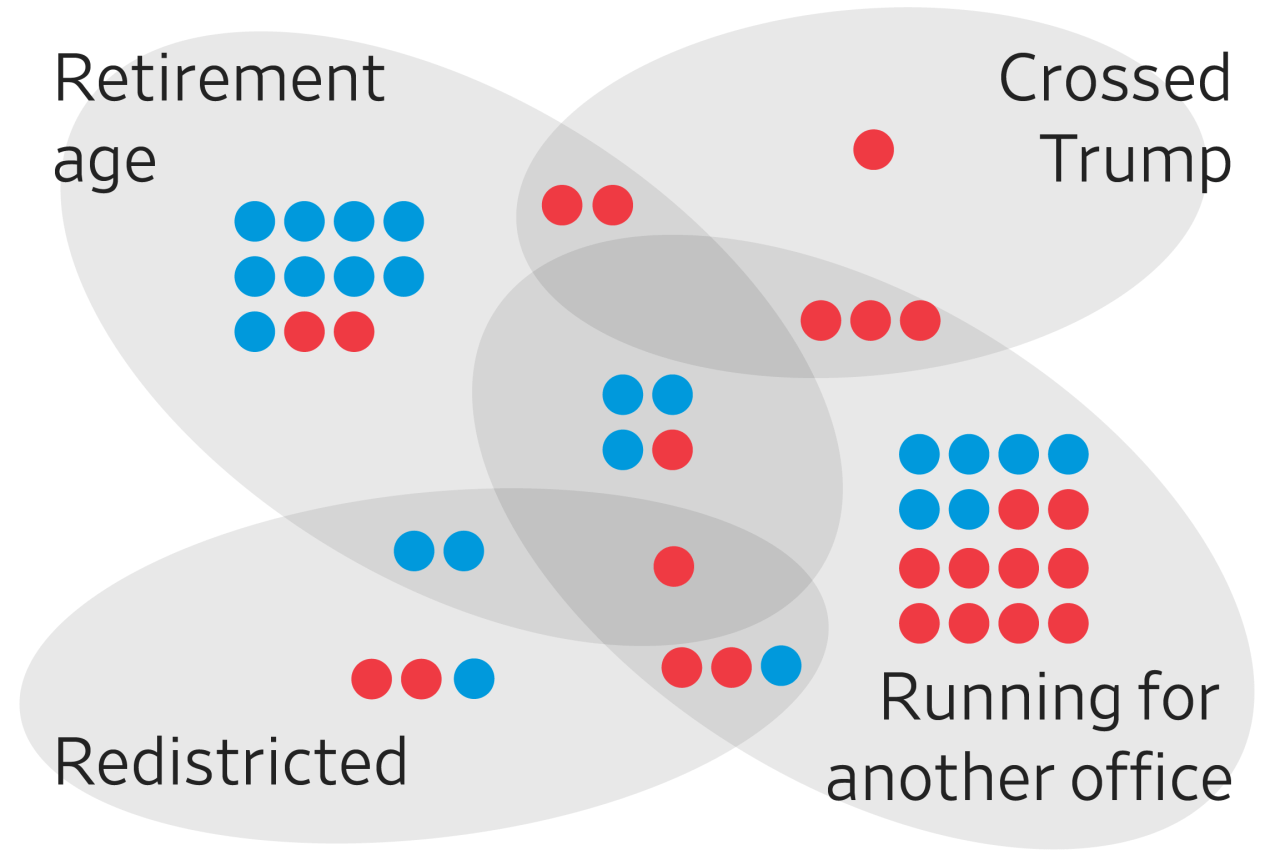
House Retirements Hit Record Highs
- Elise Stefanik, Nancy Pelosi, and Don Bacon are among the notable names leaving Congress.
- The current pace of retirements is on track to surpass previous midterm records.
- Members cite a mix of political, personal, and ideological reasons for their decisions to step down.
A Shift in the Political Landscape
HOUSE RETIREMENTS—The announcement of House retirements has become a frequent occurrence in recent months, with several high-profile members deciding not to seek re-election. This trend is not only significant in terms of the number of departures but also due to the caliber of individuals choosing to leave. From influential party leaders to seasoned lawmakers, the exodus is poised to reshape the congressional landscape.
The reasons behind these retirements are diverse and multifaceted. Some members have expressed frustration with the political climate, citing polarization and gridlock as major factors in their decisions. Others have chosen to pursue different opportunities or to focus on personal matters. Regardless of the motivation, the cumulative effect of these retirements will undoubtedly impact the balance of power and the legislative agenda in the months to come.
As the political world grapples with the implications of these departures, one thing is clear: the next election cycle will bring significant changes to the House of Representatives. With retirements paving the way for new candidates and potentially altering the trajectory of various policy initiatives, the stakes are high. This article will delve into the notable retirements, explore the reasons behind them, and examine the broader implications for the political landscape.
The Who’s Who of Retirements
The list of retiring House members includes a broad spectrum of politicians, from those who have spent decades in public service to relative newcomers. Elise Stefanik, known for her conservative stance and rise through the Republican ranks, has announced her decision to step down. Similarly, Nancy Pelosi, a household name and former Speaker of the House, has chosen not to seek re-election, marking the end of an era for Democratic leadership. Don Bacon, a moderate voice within the Republican Party, also joins the list, citing personal reasons for his retirement.
These announcements are merely the tip of the iceberg. Several other members, including both Democrats and Republicans, have made public their intentions to leave Congress. The diversity in the group—ranging from committee chairs to freshman representatives—underscores the complexity of the situation. Each retirement story is unique, reflecting a blend of personal, political, and sometimes, ideological considerations.
The sheer number of retirements speaks to a larger issue within the political system. It suggests dissatisfaction among lawmakers with the current state of affairs, whether due to the inability to effectively pass legislation, the intense partisan divide, or the personal toll of public service. As these members prepare to exit the stage, their decisions will have a ripple effect on the political dynamics, potentially leading to shifts in committee assignments, changes in party leadership, and an altered legislative focus.
Moreover, the retirements of key figures like Stefanik and Pelosi will undoubtedly influence the power structure within their respective parties. Leadership roles will need to be filled, and the process of selecting successors could uncover new fault lines or areas of consensus within the parties. The transition period will be closely watched, as it may signal the direction in which each party intends to move, both in terms of policy and political strategy.
The impact of these retirements will also be felt at the grassroots level. Constituents will have to adapt to new representation, and the vacuum left by retiring members could lead to competitive races in the upcoming elections. This, in turn, may attract a new wave of candidates, each with their own vision for the district and the country. As the political map continues to evolve, the interactions between retiring members, their successors, and the constituents will shape the future political landscape.
Reasons Behind the Retirements
Understanding the reasons behind the surge in House retirements requires a nuanced approach, considering both the political climate and personal factors. For some, the decision to retire is a response to the increasingly polarized environment in Washington, D.C. The frustration with the political process, the lack of progress on key issues, and the personal costs of serving in such a divisive atmosphere have led some members to conclude that their efforts are not yielding the desired outcomes.
Others have cited personal reasons, including health concerns, family obligations, or simply a desire to pursue other interests outside the realm of politics. Don Bacon’s retirement, for instance, highlights the personal side of these decisions, where the toll of public service on family life and personal well-being becomes a significant factor. These reasons, while deeply personal, contribute to the broader trend of retirements and reflect the complex interplay between public service and private life.
The ideological landscape of the parties also plays a role, with some members feeling that their views are no longer aligned with the majority of their party or that they can no longer effectively represent their constituents’ interests. This disconnection can stem from shifts within the party, changes in the constituent base, or the evolution of the member’s own political beliefs over time. As parties continue to evolve, the challenge of maintaining a cohesive political identity while accommodating diverse viewpoints will remain a significant issue.
The financial aspect of running for office is another consideration. The cost of political campaigns has skyrocketed, making it increasingly difficult for some members to justify the expense, especially if they are not seeking higher office or do not have the personal wealth to support their campaigns. This factor can particularly affect moderate or less ideologically driven candidates, who may find it challenging to secure the necessary funding to compete in primaries and general elections.
In addition to these factors, the changing nature of political service itself may also contribute to the decision to retire. The constant scrutiny, the 24-hour news cycle, and the instantaneous judgment on social media can make the life of a public servant very demanding. For some, the allure of returning to a more private life, free from the intense public gaze, becomes too great to resist. This desire for a return to normalcy, combined with the other factors, contributes to the trend of retirements and underscores the human side of political decisions.
Implications for the Political Landscape
The wave of retirements will have far-reaching implications for the political landscape, affecting everything from party leadership and committee assignments to the overall policy direction of Congress. The departure of seasoned lawmakers will create vacancies in key positions, such as committee chairs and ranking members, which will need to be filled by less experienced members. This transition could lead to a period of adjustment, as new leaders learn the ropes and establish their authority within the party and the chamber.
The policy impact will be significant, as retiring members take with them years of experience and institutional knowledge. This loss could hinder the ability of Congress to tackle complex issues, at least in the short term, as new members learn about the issues and build relationships with their colleagues and stakeholders. However, it also presents an opportunity for fresh perspectives and new ideas, potentially leading to innovative solutions to long-standing problems.
The retirements could also influence the outcome of future elections, both directly and indirectly. Directly, open seats are often more competitive, attracting a larger pool of candidates and potentially leading to more contested races. Indirectly, the departure of key figures can alter the political calculus, affecting fundraising, endorsements, and voter turnout. These changes can, in turn, impact the balance of power within the House, potentially leading to shifts in party control or the influence of different factions within the parties.
Moreover, the retirements may reflect and contribute to broader societal trends, such as disillusionment with the political system or changes in public opinion on key issues. As voters and potential candidates observe the exit of long-serving members, they may draw conclusions about the viability of a career in politics or the effectiveness of the current political system. This could lead to a reevaluation of political engagement strategies, with potential implications for voter turnout, political activism, and the role of money in politics.
The international community will also be watching these developments closely, as the stability and predictability of U.S. policy are important factors in global relations. The retirements, and the subsequent changes in Congress, could affect how the U.S. engages with the world, from trade agreements and security alliances to environmental and health initiatives. As the U.S. navigates its role in the global arena, the continuity and coherence of its domestic political institutions will be under scrutiny.
Looking Ahead: The Future of the House
As the current term draws to a close, attention will increasingly turn to the future of the House of Representatives. The retirements of notable members have set the stage for a potentially transformative election cycle, with implications for party control, policy direction, and the overall functioning of the legislative branch. The candidates who emerge to fill the vacancies will face significant challenges, from navigating the complexities of congressional politics to addressing the pressing issues of the day.
The election outcomes will be influenced by a combination of national trends, local factors, and the personal qualities of the candidates. National issues, such as the economy, healthcare, and national security, will likely play a major role in shaping voter decisions. However, local concerns, including infrastructure, education, and community development, will also be crucial, as voters seek representatives who can effectively address their specific needs and concerns.
The role of party leadership will be critical in these elections, as parties seek to retain or gain seats. The strategies employed by party leaders, from candidate recruitment and fundraising to messaging and get-out-the-vote efforts, will be under intense scrutiny. The success or failure of these strategies will not only determine the composition of the next Congress but also reflect on the parties’ abilities to adapt to changing political circumstances and voter expectations.
Furthermore, the upcoming elections will provide insight into the evolving nature of political engagement and participation. The use of technology, social media, and other digital tools will continue to play a significant role in political campaigns, potentially changing how candidates interact with voters, raise funds, and build their brands. The effectiveness of these strategies will be closely watched, as they may offer clues about the future of political marketing and the ways in which political narratives are constructed and disseminated.
In conclusion, the wave of House retirements marks a significant turning point in the political landscape. As the reasons behind these retirements are complex and multifaceted, so too will be their implications. The upcoming elections, with their potential for dramatic changes in party control and policy direction, will be a critical moment in American politics. The future of the House, and by extension, the legislative branch, will depend on the ability of new and returning members to navigate the challenges ahead, forge consensus where possible, and lead the country forward in a time of great change and uncertainty.
Conclusion: A New Era for the House of Representatives
The retirement of several notable House members, including Elise Stefanik, Nancy Pelosi, and Don Bacon, signals the beginning of a new era for the House of Representatives. This transition, marked by a significant number of departures, will reshape the political landscape, influencing party dynamics, policy initiatives, and the overall functioning of the legislative branch. As the House prepares for this new chapter, it is essential to consider both the opportunities and challenges that lie ahead.
The opportunity for fresh perspectives and new leadership is undeniable. The influx of new members can bring innovative ideas, renewed energy, and a deeper connection to the communities they serve. However, this transition also poses risks, including the loss of institutional knowledge, potential disruptions in the policy-making process, and the challenge of maintaining continuity in key areas such as national security and economic policy.
As the political world looks to the future, the retirements of current members serve as a reminder of the dynamic nature of public service. The decision to enter or leave public life is deeply personal and reflects a complex array of factors, from political ideology and personal ambition to family considerations and a desire for private life. The stories of these retiring members, each unique and compelling in its own right, contribute to the rich tapestry of American political history.
In the months and years to come, the focus will shift from the retirements themselves to the elections that will fill the vacant seats and the new legislative sessions that will follow. The political landscape will continue to evolve, influenced by a myriad of factors, including voter sentiment, economic conditions, and global events. Through this process, the House of Representatives will continue to play its vital role in American democracy, serving as a forum for debate, a catalyst for policy innovation, and a symbol of the enduring strength and resilience of the U.S. political system.
Ultimately, the future of the House, and indeed of American politics, will be shaped by the interactions of countless individuals and groups, each with their own agendas, values, and visions for the country. The retirements of notable House members are but one chapter in this ongoing story, a reminder of the constant flux and the enduring principles that underpin the American political experiment. As this chapter closes and a new one begins, the nation looks forward, poised on the threshold of a new era in politics, governance, and public service.
Epilogue: Reflections on Public Service
The wave of House retirements serves as a poignant reminder of the personal and professional sacrifices made by those in public service. The stories of Elise Stefanik, Nancy Pelosi, Don Bacon, and numerous other retiring members are testaments to the dedication, perseverance, and passion that define a life in politics. As these individuals prepare to leave the public stage, their contributions, large and small, will be remembered and cherished by their constituents, colleagues, and the broader community.
Public service, in all its forms, is a noble calling, requiring a unique blend of idealism, pragmatism, and resilience. Those who choose this path often do so out of a deep commitment to their communities, their country, and the principles of democracy. They understand that public service is not merely a profession but a vocation, one that demands sacrifice, flexibility, and an unwavering commitment to the public good.
As the nation moves forward, it is essential to recognize the value of public service and to support those who embark on this journey. This includes not only the elected officials but also the countless civil servants, advocates, and volunteers who work tirelessly behind the scenes to make a difference. Their contributions, though often unseen, are vital to the functioning of our democracy and the well-being of our society.
In reflecting on the retirements of House members and the future of public service, it becomes clear that the challenges and opportunities of our time require a new generation of leaders, educators, and activists. They will need to be equipped with the skills, knowledge, and character to navigate the complexities of the 21st century, from technological innovation and global interconnectedness to social inequality and environmental sustainability.
The legacy of retiring House members, and indeed of all those in public service, serves as a powerful reminder of the importance of civic engagement, political participation, and community involvement. As we honor their service and dedication, we are also reminded of our own responsibilities as citizens, to engage with the political process, to demand accountability from our leaders, and to strive for a more just, equitable, and prosperous society for all.
