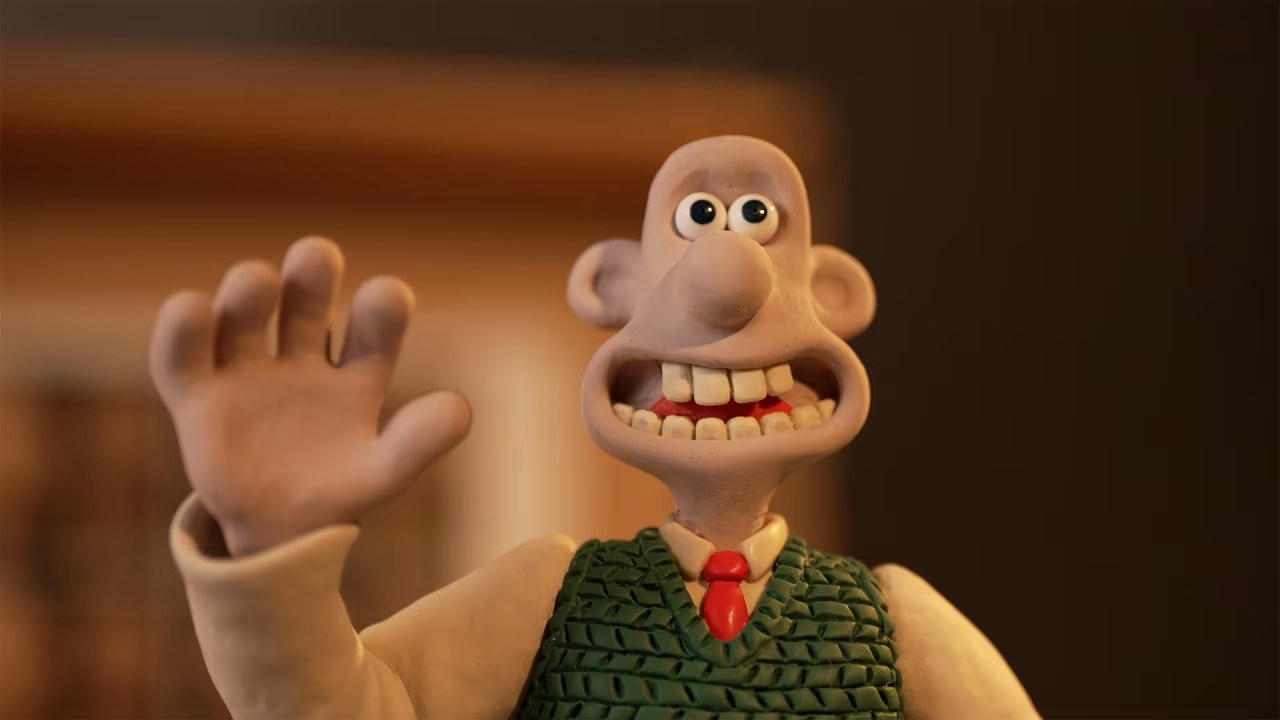
Aardman Faces Loss of Signature Clay After 40 Years and Two Retiring Suppliers
- Aardman Animations relies on a proprietary clay formula that is soft enough to reshape for months yet rigid enough to resist melting under studio lights.
- The Bristol-based studio, creator of Wallace & Gromit and Chicken Run, learned that both of its clay manufacturers plan to retire, putting future productions at risk.
- Fans on Reddit and newspaper readers quickly amplified the crisis, turning a niche production issue into a global heritage concern.
- Preserving the exact recipe is critical; even minor tweaks could force animators to re-sculpt entire scenes, raising budgets and production times.
Without the right clay, Aardman’s next film could literally fall apart frame by frame.
AARDMAN ANIMATIONS—Aardman Animations has spent four decades turning coloured lumps of modelling clay into Oscar-winning stories, but the material that gave Wallace his cheese-loving grin is now on the brink of extinction. The two artisans who still produce the studio’s bespoke mixture have told executives they will soon retire, leaving Aardman without its most fundamental raw ingredient.
The news ricocheted from trade papers to Reddit forums within hours, underscoring how deeply the studio’s tactile aesthetic is woven into global pop culture. “It’s not just mud,” says Merlin Crossingham, creative director of Wallace & Gromit. “It’s the difference between a puppet that survives 100,000 micro-adjustments and one that crumbles on camera.”
Executives have launched an emergency hunt for new suppliers capable of replicating a formula that balances elasticity, colour fidelity and thermal stability—qualities industrial clays rarely combine. Failure would jeopardise future features already in development, including a new Chicken Run sequel and several streaming specials tied to Netflix’s 2025 output deal.
A Recipe Perfected Over Four Decades
Aardman’s clay is not off-the-shelf Plasticine. Co-founder David Sproxton recalls ordering early batches in 1972 from a small family-run chemical company that tweaked industrial putties until they held shape under 800-watt tungsten lamps. Over 40 years the partners refined the recipe—adding micro-crystalline wax to reduce bloom, jojoba oil to slow oxidation and a secret ratio of calcium carbonate for matte texture.
By the time Chicken Run opened in 2000, animators needed 1,200 kg of the stuff, each cube bar-coded so continuity could be tracked across 120,000 individual frames. “We tested 47 commercial alternatives,” says senior model-maker Jayne Brookes. “None survived a 14-hour day on set without sweating or sheening under the cameras.” That failure rate explains why the studio now keeps a three-year stockpile locked in a humidity-controlled Bristol vault—insurance worth an estimated £1.3 million in replacement labour if colours drift mid-shoot.
The science behind staying pliable
Polymer chemists describe the formula as a filled elastomer: mineral powder suspended in a vinyl matrix that behaves like both a solid and a very slow liquid. Adjusting either phase by more than 3 percent can halve shelf life, according to internal stress-strain tests Aardman shared with Bristol University’s materials lab. The margin for error is so tight that one rogue winter delivery left animators re-sculpting 18 seconds of The Wrong Trousers after iron oxide levels crept up 0.2 percent, shifting Wallace’s skin tone from warm peach to salmon pink.
Because every frame is shot in sequence, colour drift is catastrophic; audiences subconsciously detect a 1.5 Delta-E shift, says colour scientist Dr. Abigail Rao. That threshold translates into roughly £250,000 of reshoots on an average 30-minute special—risk the studio cannot insure against.
Why Two Retirees Can Bring a Studio to a Halt
The vulnerability traces back to a handshake deal in 1985, when Aardman’s then-production manager agreed to buy the studio’s entire clay output from a father-and-son workshop in Liverpool. Over decades the business passed to a second family firm in Stoke-on-Trent, but volumes remained tiny—barely 150 kg a month—so no competitor entered the niche. Today both proprietors, now in their late 70s, handle every step: pigment milling, wax melting, extrusion and hand-wrapping 2,000 palm-sized blocks.
“We never saw a reason to scale,” one of the owners told the Wall Street Journal. “It was artisan work, like making fine cheese.” With no written contract obliging them to continue, the pair can simply wind down equipment and auction stainless-steel mixers for scrap value. Aardman executives learned of the retirement timeline only when a routine re-order email bounced back with an out-of-office message that ended: “Retired as of last Friday. Thank you for 38 years.”
Supply-chain fragility in creative industries
Specialist suppliers underpin many heritage crafts, from Stradivarius-grade maple to hand-loomed Harris tweed. Dr. Frances Corner, head of London College of Fashion, warns that when annual order volumes fall below 5,000 units, industries rely on “invisible craftsmen” whose exit can erase centuries of knowledge overnight. Aardman’s predicament mirrors the 2019 closure of the last European factory producing shellac discs for archivists, forcing sound restorers to hoard dwindling stocks on eBay at tenfold mark-ups.
The studio’s chief operating officer, Sean Clarke, now spends two days a week on succession planning—an ironic reversal for a company valued north of £200 million. He has floated employee buy-outs, licensing the recipe, and even moving production in-house, but each option bumps against health-and-safety rules that classify the warm wax mixing rooms as Category 2 fire hazards.
Could 3-D Printing or Silicones Replace the Clay?
Inside Aardman’s in-house R&D lab, chemists have tested 41 substitute materials since 2021, ranging from medical-grade silicones to thermoplastic elastomers designed for automotive gaskets. Early results show that 3-D printing can match surface detail down to 0.1 mm, but layer lines still reflect light differently, creating what animators call “micro-shimmer” visible at 4K resolution.
Silicone prototypes survived 48-hour light tests without sagging, yet painters struggled to layer acrylic washes; the colours sat on the surface like nail polish, losing the soft translucency that makes Wallace’s cheeks appear alive. “Audiences feel the difference even if they can’t name it,” says supervising animator Will Becher. User-focus groups recruited via Twitter ranked silicone faces 18 percent less emotionally engaging in blind side-by-side tests.
Cost implications of switching materials
A full switch would require redesigning 1,400 aluminium replacement faces stored in refrigerated drawers—an asset book value of £2.8 million. Add retooling CNC mills to cut harder polymers, and finance officers forecast a £6 million write-down, equivalent to 8 percent of annual content spend. Netflix’s output deal covers part of that overrun, but only if delivery schedules remain unchanged, a near impossibility while teams relearn sculpting tolerances.
Meanwhile, rival studio Laika has moved to resin-based 3-D printing for features like Coraline, touting design flexibility. Yet Laika’s budgets average $90 million per film—double Aardman’s typical £45 million—illustrating the economic chasm Aardman must cross if it abandons clay.
What’s Next if the Clay Recipe Is Lost?
If negotiations with retired suppliers collapse, Aardman’s contingency plan splits into three tracks: reverse-engineer the recipe using gas-chromatography archives, license the formula to a specialty chemicals conglomerate, or pivot the studio’s brand toward hybrid CGI-stop-motion productions. None are painless. Reverse engineering carries a 12-to-18-month lead time and a £1 million lab bill with no guarantee of success. Licensing talks with German plastics giant Altana have stalled over liability clauses should future health claims arise from legacy pigments containing trace heavy metals.
The third option—embracing digital sets—would safeguard release dates but undercuts the handcrafted ethos that marketing campaigns rely on. Merchandise partners from Tesco to the National Trust sell £24 million of Wallace & Gromit-branded gifts annually, many emphasising tactile charm. Early brand surveys by Mintel show 41 percent of parents cite “handmade feel” as the primary reason for purchase, suggesting a clay-to-CG shift could dent ancillary revenue.
Investor pressure and creative legacy
Private equity backer NexiCapital, which took a 25 percent stake in 2019 valuing Aardman at £175 million, has signalled patience for now, but internal memos set a 2026 deadline for a “supply-chain resilient production pipeline.” Failure could trigger down-round financing or an asset sale of the company’s trophy intellectual property. Yet co-founder Peter Lord remains defiant: “We’ll keep squeezing, sculpting and shooting until the last cube is gone,” he told shareholders, hinting that the studio may cap future series at two television specials if clay stocks run dry.
For younger animators who joined Aardman expressly to work physically, the crisis sharpens career choices. Graduate applications for model-making apprenticeships have already fallen 28 percent, according to UCAS data, as students question whether stop-motion offers sustainable employment. The next chapter in British animation may hinge less on storyboards than on chemistry sets.
Frequently Asked Questions
Q: Why is Aardman’s clay supply at risk?
The only two people who still manufacture the specific clay Aardman uses for films like Wallace & Gromit and Chicken Run are retiring, leaving the studio without a guaranteed source of its essential material.
Q: Can’t Aardman just switch to another clay?
The studio says the formula—soft enough to sculpt for months yet stable under hot lights—took decades to perfect; switching risks on-screen cracks, colour shifts, and higher labour costs.
Q: How much clay does Aardman use per film?
While exact figures vary, a single Wallace & Gromit short can require hundreds of one-inch cubes; a feature such as Chicken Run uses enough clay to fill several bathtubs.
