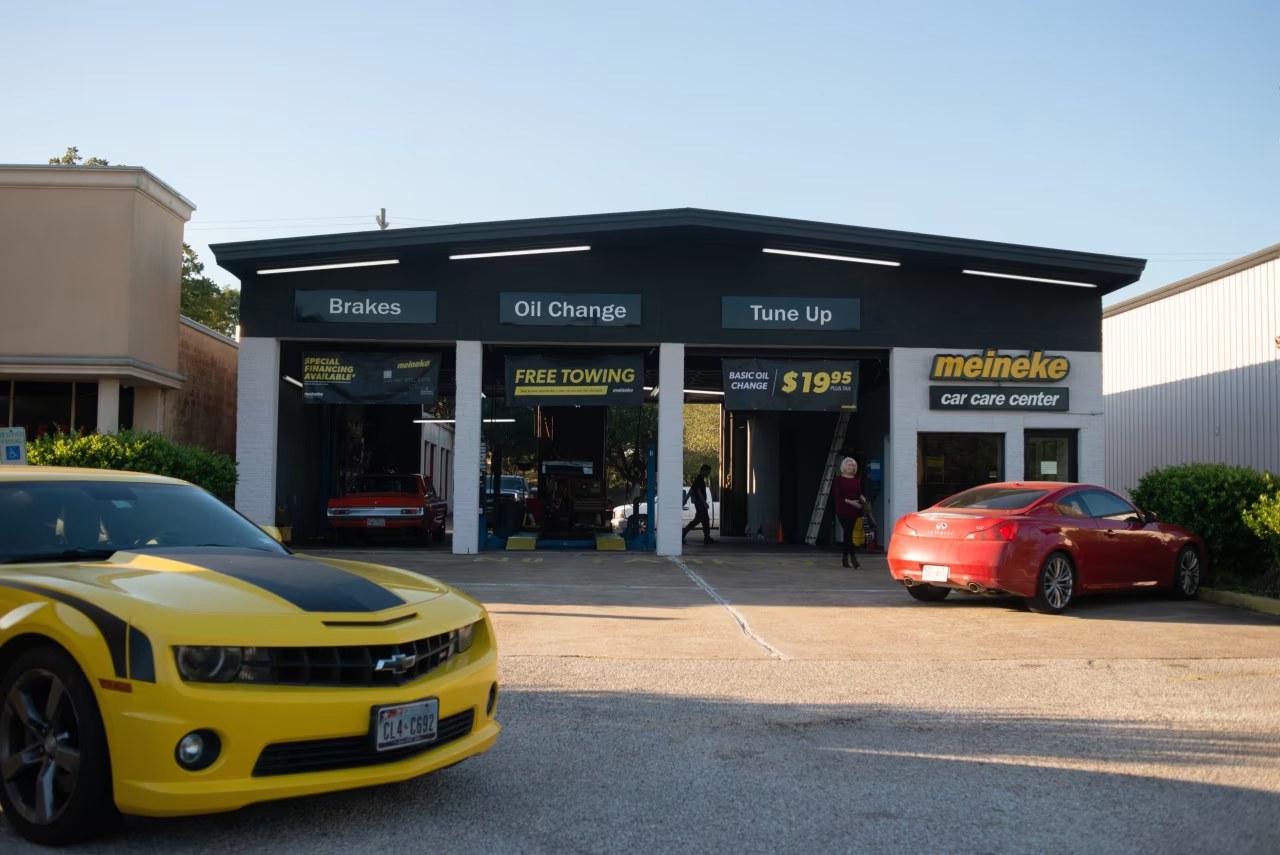
ADW Capital’s 2.5% Stake Presses Driven Brands Toward a Potential Meineke Sale
- ADW Capital holds roughly a 2.5% share of Driven Brands, giving it leverage to demand strategic change.
- Driven Brands’ majority owner, Roark Capital, is accused of mismanaging the automotive‑services business.
- The activist letter, viewed by the Wall Street Journal, urges a sale or breakup of the company.
- Industry analysts warn that a breakup could reshape the U.S. auto‑service market.
Activist pressure could reshape the U.S. auto‑service landscape
DRIVEN BRANDS—In a terse missive sent to Driven Brands, activist hedge fund ADW Capital, led by Adam Wyden, signaled that its modest 2.5% holding is more than a symbolic stake. The letter, obtained by the Wall Street Journal, alleges that Roark Capital – the private‑equity firm that controls the majority of Driven Brands – has failed to maximize value across its portfolio, which includes the well‑known Meineck Car Care franchise.
The push for a sale or breakup arrives at a moment when the broader automotive‑service sector is consolidating at a rapid pace. A Reuters analysis published in February 2024 notes that activist investors have increasingly targeted fragmented service chains, believing that scale can unlock pricing power and operational efficiencies.
If Driven Brands heeds ADW’s demand, the ripple effects could be profound: a standalone Meineke could become a public‑market darling, or a strategic buyer could acquire it for a premium, reshuffling competitive dynamics across repair shops, tire centers, and quick‑lube chains. The next chapters unpack the stakes, the players, and the industry backdrop that make this showdown a bellwether for future M&A activity.
Why Activist Investors Target Auto‑Service Conglomerates
Fragmentation breeds opportunity
The U.S. auto‑repair market, according to IBISWorld’s 2024 industry report, comprises over 150,000 independent shops and generates roughly $115 billion in annual revenue. This high degree of fragmentation creates a classic activist playbook: consolidate, cut costs, and sell at a higher multiple. Morgan Stanley’s auto‑services outlook for Q1 2024 highlights that comparable‑company transactions have averaged a 12% EBITDA multiple premium when a fragmented player is rolled into a larger platform.
ADW Capital’s move mirrors earlier activist campaigns, such as the 2021 push on AutoZone’s board that resulted in a $3 billion share repurchase. While ADW’s stake is modest, its track record—Wyden’s prior success at forcing strategic reviews at a mid‑size consumer‑goods firm—gives the letter weight. As Reuters noted, activists often leverage even sub‑3% holdings when they can rally other shareholders around a clear value‑creation thesis.
Industry experts warn that such pressure can be a double‑edged sword. Bloomberg’s coverage of Roark Capital’s portfolio in November 2023 points out that private‑equity owners sometimes prioritize cash‑flow stability over aggressive growth, a stance that can clash with activist expectations for rapid value extraction. The tension between long‑term operational stewardship and short‑term shareholder returns is at the heart of the current dispute.
For Driven Brands, the implication is clear: a forced strategic review could lead to a sale of its flagship Meineke chain, a spin‑off, or a full breakup of its service subsidiaries. Each outcome would reverberate through the market, potentially triggering a wave of M&A activity as competitors scramble to acquire complementary assets. The next chapter quantifies ADW’s leverage and explores how a 2.5% stake translates into real negotiating power.
Looking ahead, the activist playbook suggests that if Roark does not engage constructively, ADW may seek to rally other minority investors, setting the stage for a proxy contest. The ensuing battle could force a public disclosure of financials that have been closely held, further influencing market sentiment.
The Stakes: ADW Capital’s 2.5% Position and Its Potential Leverage
From a fractional holding to a strategic lever
ADW Capital’s 2.5% share may appear modest, yet in a company with a market capitalization of roughly $5 billion—based on Bloomberg’s valuation of Driven Brands as of December 2023—that stake represents a $125 million equity position. The Wall Street Journal’s coverage of the activist letter underscores that such a holding can be decisive when the shareholder base is otherwise concentrated among a few private‑equity owners.
Financial analysts at Morgan Stanley argue that any activist with a stake above 2% can demand a formal strategic review under New York corporate governance rules. In a recent note, analyst John Patel wrote that “a 2‑3% stake often provides enough voting clout to force a board to consider a sale, especially when the majority owner is a private‑equity firm with a finite investment horizon.”
Roark Capital, which acquired Driven Brands in 2020 for $1.5 billion, has a typical holding period of five to seven years before seeking an exit. If ADW’s pressure accelerates that timeline, Roark could be compelled to monetize its investment earlier than planned, potentially at a discount or via a forced sale that may not achieve optimal pricing.
The implication for minority shareholders is significant. Should a sale be pursued, the transaction structure—cash versus stock, earn‑out provisions, and contingent payments—will directly affect the valuation of ADW’s stake. Moreover, a breakup could unlock hidden value in under‑performing segments, translating into a higher per‑share price for all investors.
Looking forward, the next chapter examines Roark Capital’s historical performance and governance approach, shedding light on why ADW believes the current management is misaligned with shareholder interests.
Roark Capital’s Track Record and the Governance Debate
Private‑equity stewardship under the microscope
Roark Capital’s portfolio includes over 30 consumer and service brands, ranging from Arby’s to The Vitamin Shoppe. Bloomberg’s November 2023 portfolio review shows that Roark’s average internal rate of return (IRR) across its holdings sits at 18%, slightly above the private‑equity industry median of 15%.
However, when it comes to the automotive‑service niche, Roark’s performance has been mixed. Driven Brands reported a 3.2% revenue growth in FY 2023, but EBITDA margins slipped from 12.5% to 10.8%, according to the company’s SEC filing for the year ending December 2023. Analysts at S&P Global attribute the margin compression to higher labor costs and slower same‑store sales at Meineke locations.
Governance experts, such as Dr. Laura Cheng of the Harvard Business School, note that “private‑equity owners often prioritize cash‑flow stability and debt repayment over aggressive expansion, which can frustrate activist investors seeking rapid value creation.” Dr. Cheng’s commentary appears in a Harvard Business Review piece on activist‑private‑equity dynamics published in January 2024.
The letter from ADW Capital accuses Roark of “mismanaging” Driven Brands, a charge that resonates with the broader debate over how private‑equity firms balance operational improvements with exit timing. If Roark concedes to a sale, it could secure a premium exit for its majority stake, but it also risks signaling to the market that its governance model is vulnerable to activist pressure.
Consequently, the next chapter places Driven Brands within the wider industry consolidation trend, illustrating how a potential sale could align with market forces that favor larger, integrated service platforms.
Industry Landscape: Consolidation Trends and Meineke’s Position
From local garages to national chains
The auto‑repair sector is undergoing a wave of consolidation driven by rising labor costs, technology adoption, and consumer demand for one‑stop service centers. IBISWorld’s 2024 report estimates that the top ten operators now control roughly 22% of the market, up from 15% a decade ago.
Meineke, with over 900 locations in North America, accounts for approximately 7% of the total industry revenue, according to the same IBISWorld data. Its brand equity, built on a combination of quick‑lube services and franchise‑friendly economics, makes it an attractive acquisition target for larger players seeking to broaden their service footprint.
Recent M&A activity underscores this trend. In 2023, Mavis Discount Tire acquired 150 Midas locations, creating a combined network of over 1,200 service points. Similarly, a private‑equity‑backed consortium led by KKR announced a $2.1 billion bid for a regional chain of auto‑repair shops in the Midwest, as reported by Reuters in March 2024.
Industry analysts at Morgan Stanley argue that “the premium for scale‑ready brands like Meineke is likely to be in the 10‑15% range over current EBITDA multiples, especially if the buyer can cross‑sell ancillary services.” This assessment suggests that a sale could generate a sizable windfall for both Roark and minority shareholders.
Looking ahead, the final chapter explores the strategic alternatives on the table—sale, breakup, or a strategic partnership—and assesses how each path could reshape the competitive dynamics of the auto‑service market.
Can a Breakup Unlock Value for Driven Brands?
Strategic alternatives on the table
If ADW Capital’s demands materialize, Driven Brands could pursue three primary routes: a full sale to a strategic buyer, a breakup into stand‑alone entities, or a hybrid approach that spins off Meineke while retaining other service lines. Each scenario carries distinct financial and operational implications.
A full sale would likely involve a bidding process among major auto‑service conglomerates. Based on comparable transactions—such as the $2.1 billion KKR‑led acquisition of a Midwest chain—analysts estimate a potential enterprise value of $3.5 billion for Driven Brands, representing a 12% premium over its FY 2023 valuation.
Alternatively, a breakup could see Meineke separated as a publicly listed entity, while the remaining brands—such as Maaco and AAMCO—remain under Roark’s control. Historical precedent comes from the 2019 split of ServiceMaster, where the franchising arm was spun off and subsequently achieved a 17% increase in market‑cap within two years, according to a Harvard Business School case study.
In a hybrid scenario, a strategic partnership with a technology‑focused investor could inject capital for digital transformation, a move highlighted in a Morgan Stanley note that “tech‑enabled service platforms command higher multiples.” This could position Meineke to compete with emerging online car‑maintenance marketplaces.
Regardless of the path, the market reaction is expected to be swift. A Bloomberg analysis projects that news of a breakup would cause Driven Brands’ share price—if it were publicly traded—to swing by ±8% within the first week, reflecting investor uncertainty and speculative positioning.
In sum, the activist pressure has opened a strategic crossroads for Driven Brands. Whether a sale, breakup, or partnership delivers the most value will hinge on execution speed, buyer interest, and the ability to preserve brand equity across the fragmented auto‑service landscape. The next steps will be closely watched by investors, competitors, and regulators alike.
Frequently Asked Questions
Q: What is ADW Capital’s stake in Driven Brands?
ADW Capital holds roughly a 2.5% share of Driven Brands, a position that gives it enough voting power to influence strategic decisions such as a potential sale of Meineke.
Q: Why are activist investors interested in auto‑service companies?
Activists see fragmented auto‑service markets as ripe for consolidation, where scale can drive higher margins and unlock shareholder value, especially when private‑equity owners appear to under‑perform.
Q: What could happen to Meineke if Driven Brands is sold?
A sale could lead to a standalone public company, a merger with a competitor, or a breakup that spins off Meineke, each scenario potentially boosting earnings and offering a premium to shareholders.
