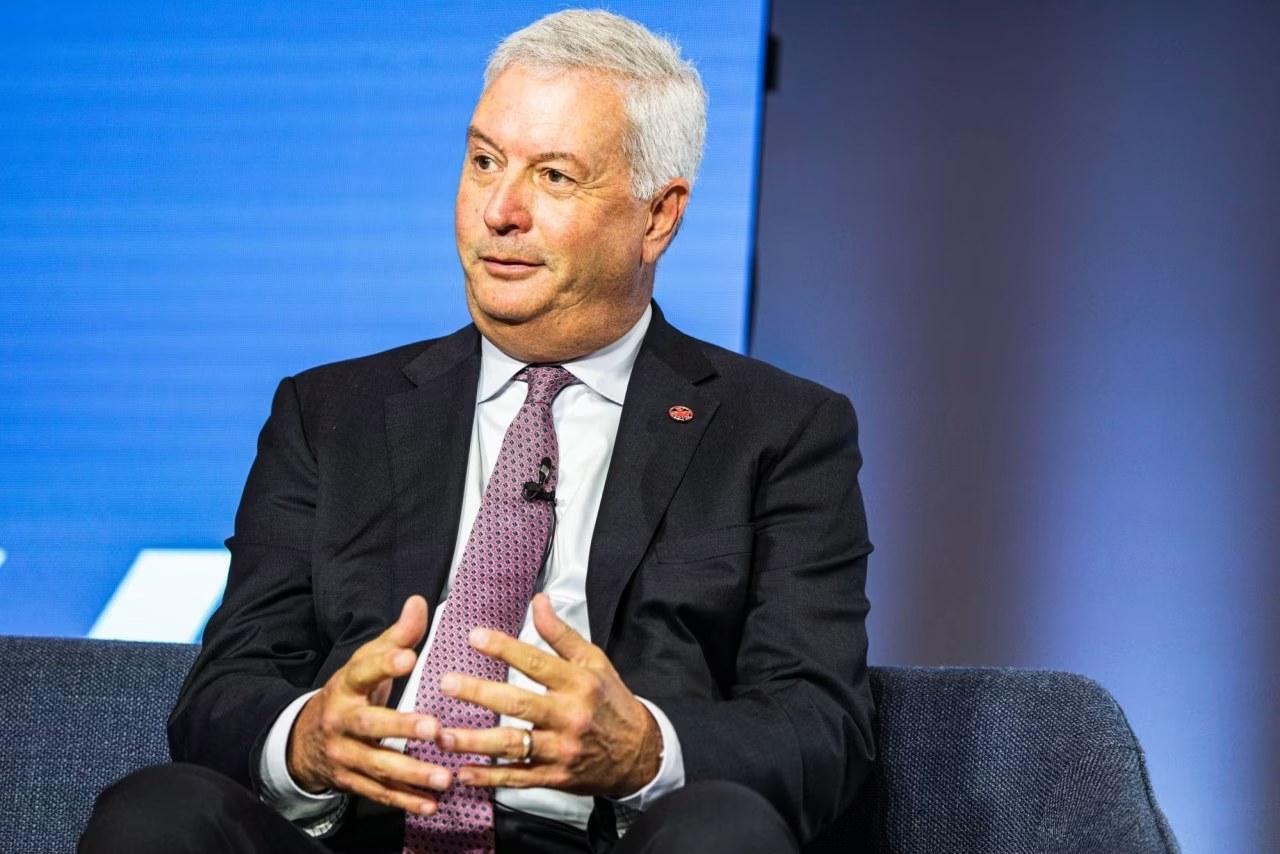
Air Canada CEO Michael Rousseau, 68, to Retire After Fatal LaGuardia Crash and French-Language Backlash
- Rousseau led Canada’s flagship carrier for five years from its Montreal headquarters.
- His departure follows a fatal LaGuardia runway collision that killed two pilots and injured dozens.
- Political pressure mounted after Rousseau struggled to communicate in French, Quebec’s official language.
- Air Canada’s board has not yet named a successor, leaving succession plans uncertain.
Crash, culture clash, and corporate control converge at Canada’s largest airline
AIR CANADA—Michael Rousseau’s tenure as chief executive of Air Canada is ending under a harsh spotlight: a deadly runway crash at New York’s LaGuardia Airport and a stinging political backlash over his limited command of French, the language that still shapes national identity in Quebec.
The 68-year-old executive, who steered the Montreal-based carrier for five years, will retire after a period that began with pandemic recovery and ends with regulatory scrutiny and cultural controversy.
Air Canada confirmed Rousseau’s exit on Wednesday, offering no exact timeline and no named replacement, leaving investors, employees, and Ottawa regulators guessing about the airline’s next chapter.
Runway Catastrophe at LaGuardia: The Crash That Shook Air Canada
The fatal incident that helped seal Rousseau’s fate occurred when an Air Canada Express jet, operating under the regional brand, collided with an emergency vehicle on an active LaGuardia runway. Both pilots died; dozens of passengers and crew sustained injuries ranging from fractures to smoke inhalation.
Federal Aviation Administration preliminary reports indicate the aircraft had been cleared to land while ground units were still traversing the runway—a breakdown in coordination that aviation-safety experts say points to procedural lapses both in the cockpit and on the ground.
Expert view: systemic risk in regional affiliates
‘When a mainline brand outsources to regional partners, the parent airline still owns the safety narrative,’ says John Goglia, former National Transportation Safety Board member. ‘This accident puts Air Canada’s training and oversight programs under congressional and Transport Canada review.’
The crash triggered immediate audits by both the U.S. National Transportation Safety Board and Transport Canada. Investigators have subpoenaed cockpit-voice recordings, maintenance logs, and the airline’s standard-operating-procedure manuals. Early findings suggest the crew may have received an outdated NOTAM—notice to airmen—about runway closures, according to people briefed on the probe.
Air Canada’s stock dropped 1.73 percent in the trading session following the accident, wiping roughly CAD 210 million off the carrier’s market capitalization. Analysts at TD Securities downgraded the stock to ‘Hold,’ citing ‘reputational headwinds and potential liability claims that could exceed insurance coverage.’
While Rousseau was not on the flight deck, corporate-governance specialists note that ultimate accountability rests with the CEO. ‘Regulators and insurers look for a single throat to choke,’ says Richard Aboulafia, managing director at AeroDynamic Advisory. ‘In aviation, the buck stops in the C-suite.’
The tragedy also revived memories of a 2017 San Francisco near-miss, when another Air Canada Express jet mistook a taxiway for a runway and narrowly avoided colliding with four fully loaded aircraft. That incident prompted new pilot-training protocols industry-wide, but critics argue implementation has been uneven.
Air Canada has since pledged full cooperation with investigators and established a CAD 50 million fund for victim compensation. Yet the reputational damage compounds what was already a turbulent year for North American carriers grappling with pilot shortages, aging regional fleets, and congested air-traffic corridors.
Looking ahead, the airline faces potential fines, civil litigation, and a renewed push by regulators to tighten oversight of regional partners—a shift that could increase operating costs and delay capacity expansion plans.
Language Politics in the Cockpit: Why French Fluency Became a Boardroom Issue
Quebec’s Charter of the French Language requires companies based in the province to operate primarily in French, and Air Canada—headquartered in downtown Montreal—has long been a flashpoint in Canada’s bilingual identity debate. Rousseau, a Toronto native, admitted in a 2021 parliamentary committee hearing that he had ‘not mastered’ French after four decades in the industry, sparking outrage among provincial lawmakers.
The political reaction was swift. Bloc Québécois leader Yves-François Blanchet called the CEO ‘a symbol of corporate anglophone arrogance,’ while Quebec premier François Legault demanded Air Canada ‘respect the spirit and letter of the law.’ Federal transport minister Omar Alghabra hinted Ottawa could withhold route approvals if linguistic commitments slipped.
Expert view: language as a proxy for national trust
‘Language isn’t just communication—it’s a proxy for cultural legitimacy,’ says Julie Sedivy, linguistics scholar at the University of Calgary. ‘When the head of a national carrier can’t greet francophone staff in their own tongue, it signals deeper governance gaps.’
Air Canada’s board initially backed Rousseau, pointing to his turnaround record: restoring cash flow positive status faster than many global peers after Covid-19 grounded fleets. Yet language missteps kept mounting. Internal memos leaked to La Presse showed senior executives mocking French-language training as ‘compliance theatre.’ Employee surveys found francophone cabin-crew morale at its lowest level since 2012.
Under Canada’s Official Languages Act, Air Canada—formerly a Crown corporation—faces stricter bilingualism obligations than private rivals like WestJet. The Commissioner of Official Languages received 487 complaints about Air Canada in the last fiscal year, a 42 percent jump from the prior period and the highest tally for any federally regulated transport firm.
Rousseau attempted damage control, hiring a private French tutor and promising to deliver portions of quarterly earnings calls en français. Critics dismissed the effort as cosmetic; Bloc Québécois MPs tabled a motion urging the transport committee to deny executive bonuses tied to linguistic targets.
The CEO’s limited French also complicated labor negotiations. The Canadian Union of Public Employees, representing 10,000 flight attendants, argued that safety briefings delivered primarily in English undermined crew resource management on bilingual routes. A 2023 arbitrator’s ruling forced the airline to reinstate French-language simulcasts, adding CAD 3.4 million in annual operating costs.
With public opinion turning, board members concluded Rousseau had become a liability. ‘No turnaround is sustainable if the political cost outweighs the financial benefit,’ says McGill governance professor Anita Nowak. ‘His retirement resets the narrative.’
Air Canada now faces the challenge of recruiting a successor fluent in both official languages while navigating complex labor contracts, pension deficits, and fleet renewal timelines.
Five Years at the Controls: Assessing Rousseau’s Financial Record
Rousseau inherited an airline bleeding CAD 4.6 billion in 2020 as global travel collapsed. Within 18 months he secured CAD 5.9 billion in federal aid, restructured pension obligations, and launched the country’s largest-ever convertible bond offering. By Q2 2022 Air Canada posted its first net profit since 2019, sending the stock up 47 percent year-to-date.
Yet the recovery proved uneven. Fuel-hedging losses totaled CAD 612 million in 2023 after Rousseau’s team misread post-pandemic demand curves, according to carrier disclosures. Labor strife added cost: a three-day mechanics’ strike in 2022 grounded 640 flights and erased CAD 51 million in pre-tax income.
Expert view: cash-rich but margin-thin
‘Rousseau stabilized liquidity, but operating margins lag North American peers by 380 basis points,’ says Walter Spracklin, transportation analyst at RBC Capital Markets. ‘His successor must tackle unit-cost creep.’
Net debt fell from CAD 7.1 billion at the end of 2020 to CAD 4.3 billion by mid-2024, yet leverage ratios remain above pre-Covid levels. Credit-rating agency DBRS placed the carrier under ‘negative review,’ citing ‘execution risk on international expansion and wide-body fleet renewal.’
On the revenue side, premium cabin traffic rebounded faster than expected, with business-class yields up 18 percent versus 2019. Cargo revenue—boosted by global supply-chain snarls—peaked at CAD 923 million in 2022 before normalizing to CAD 612 million last year, still double pre-pandemic levels.
Investors rewarded the airline with a market capitalization north of CAD 8 billion at its 2023 peak, but the stock has since retreated 28 percent amid recession fears and the LaGuardia fallout. Rousseau’s exit package, disclosed in the proxy circular, includes CAD 9.8 million in pension top-ups and share units vesting over 24 months.
Looking forward, analysts say the next CEO must balance growth with cost discipline while integrating 34 new Boeing 737-MAX aircraft scheduled for delivery through 2026. Failure to do so could erode the fragile margin gains achieved under Rousseau’s watch.
Who’s Next? The Succession Race Heats Up
Air Canada’s board has convened a special committee led by chair Vagn Sørensen to identify both internal and external candidates. The carrier’s bylaws require the CEO to be ‘conversant’ in both English and French, instantly shrinking the talent pool. Industry insiders say the shortlist includes two francophone insiders and at least one foreign airline veteran willing to undertake intensive language training.
Leading internal contender Lucie Guillemette, executive vice-president and chief commercial officer, joined the airline in 1999 and oversaw the successful relaunch of premium trans-Atlantic routes. She is bilingual and holds an MBA from HEC Montréal, but has limited operational experience with pilot unions and maintenance divisions.
Expert view: bilingual bar narrows the field
‘Mandating French fluency screens out 80 percent of global airline executives,’ says Addison Schonland, partner at consultancy AirInsight. ‘It forces the board to weigh cultural legitimacy against global experience.’
External names in circulation include Ben Smith, current CEO of Air France-KLM, who grew up in Canada and speaks fluent French. Smith’s contract in Paris runs through 2026 and includes a non-compete clause that could complicate negotiations.
Another possibility is former WestJet CEO Ed Sims, though he would need to commit to full-time French immersion. The board has also approached two North American airline COOs—both anglophones—signaling it may lobby Ottawa for a language exemption under the Official Languages Act, a move that would likely ignite fresh political controversy.
Timing is tight: Air Canada’s annual shareholders meeting is scheduled within six months, and regulators want clarity on succession before finalizing the next bilateral air-transport agreement with the European Union. The new CEO will also inherit tense labor talks: contracts for pilots and cabin crew open for renegotiation in 2025.
Analysts warn that prolonged uncertainty could weigh on the stock. ‘Every month without a permanent CEO adds a governance discount,’ says Helane Becker, managing director at Cowen. ‘The board needs to move before year-end.’
What Does the Shake-Up Mean for Travelers and Shareholders?
For passengers, the leadership transition comes at a delicate moment. Air Canada has restored 96 percent of its pre-Covid capacity but faces new U.S. customs pre-clearance bottlenecks at Toronto Pearson and Vancouver International. Any strategic pivot under a new CEO could reshape route maps: profitable trans-border flights to Florida and Arizona may expand, while marginal European leisure destinations could be trimmed.
Frequent-flyer members are watching closely. Air Canada’s Aeroplan loyalty program grew to 7.2 million active members under Rousseau, helped by credit-card partnerships with Toronto-Dominion Bank. A new executive might renegotiate those deals, potentially altering mile-earning rates or redemption charts.
Expert view: loyalty value at risk
‘Loyalty programs are cash cows, but tweaks that appear hostile to consumers can spark instant backlash on social media,’ says Jay Sorensen, president of IdeaWorksCompany, a loyalty consultancy.
Shareholders face a different calculus. The board is under pressure from large pension funds—Canada Pension Plan Investment Board and Caisse de dépôt et placement du Québec—to improve environmental, social, and governance metrics. A bilingual CEO with strong labor relations could unlock cost savings estimated at CAD 180 million annually through reduced turnover and grievance settlements.
Yet operational risks loom. Integration of new Boeing 737-MAX 10 aircraft requires certification timelines that remain uncertain. Further delays could push capital expenditure beyond the guided CAD 2.4 billion, straining free cash flow and jeopardizing dividend reinstatement promised for 2025.
On the liability front, legal experts estimate the LaGuardia crash claims could reach CAD 400 million if juries award punitive damages. Insurers have already reserved CAD 250 million, leaving Air Canada exposed to a potential CAD 150 million hit—material for an airline whose 2023 net income was CAD 1.8 billion.
Credit-rating agencies warn that any large cash outflow could tip leverage covenants. S&P Global has placed Air Canada on ‘CreditWatch with negative implications,’ citing ‘event risk related to litigation and leadership transition execution.’
Looking ahead, travelers may see enhanced safety briefings in both official languages, while investors will parse the new CEO’s first 100-day plan for signs of strategic drift or renewed cost discipline.
Frequently Asked Questions
Q: Why is Air Canada CEO Michael Rousseau leaving?
Rousseau, 68, announced his retirement after criticism over his limited French proficiency and the recent fatal runway collision at LaGuardia involving an Air Canada Express jet.
Q: How long was Rousseau CEO of Air Canada?
Michael Rousseau led the Montreal-based carrier for five years before announcing his exit.
Q: What happened in the LaGuardia Air Canada crash?
An Air Canada Express jet struck an emergency vehicle on the runway, killing both pilots and injuring dozens.
📰 Related Articles
- Alaska Air Warns Fuel Surge Will Deepen Q1 Losses Amid Middle East Conflict
- Sysco’s $29 Billion Purchase of Restaurant Depot Signals Massive Shift in Foodservice Landscape
- BYD Records First Year‑Over‑Year Profit Drop in Four Years Amid Slowing Chinese EV Demand
- Middle East Tensions Lift Oil Prices While Asian Markets Slide 4.7%
