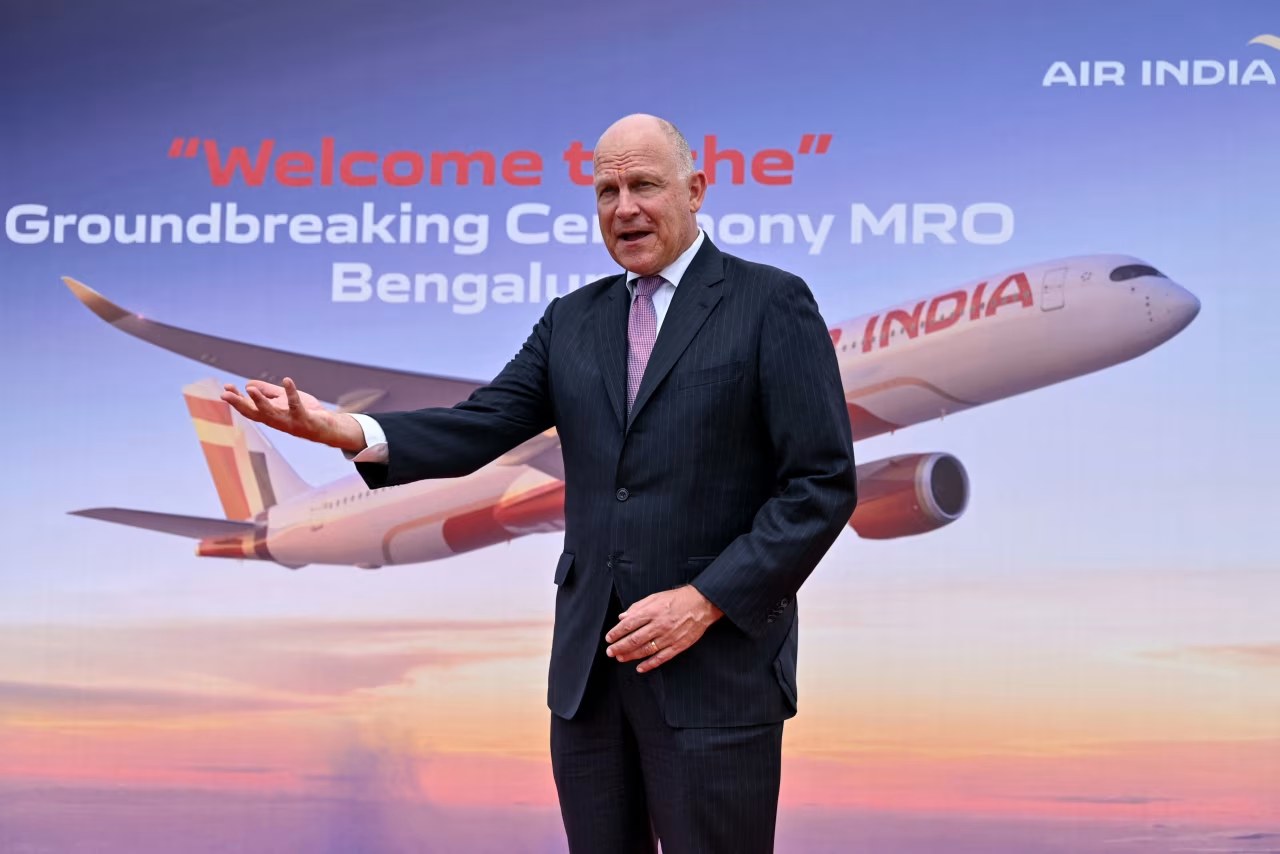
Air India CEO Campbell Wilson Resigns Amid Rising Fuel Costs and Industry Losses
- Air India CEO Campbell Wilson is stepping down from his position.
- His resignation follows significant financial losses and operational challenges for the airline.
- The Indian aviation sector is currently facing substantial headwinds, notably a surge in fuel costs.
- This departure marks the second major leadership change at a leading Indian airline this year.
A Critical Juncture for India’s Aviation Sector
AIR INDIA—Campbell Wilson’s resignation as Chief Executive of Air India marks a pivotal moment for the nation’s flag carrier and signals deeper turbulence within the Indian aviation landscape. The airline, which has been battling persistent financial losses, is now tasked with finding new leadership as it navigates a complex operational environment. This development underscores the precarious state of India’s aviation industry, which is grappling with a confluence of economic pressures and geopolitical instability.
The airline sector in India has been particularly vulnerable to external shocks. A sharp increase in fuel prices, directly linked to ongoing conflicts in the Middle East, has placed immense pressure on carriers. This economic strain has already forced some airlines to scale back or entirely suspend flights to critical regions, disrupting networks and impacting revenue streams. Wilson’s departure adds another layer of uncertainty to Air India’s strategic path forward.
This leadership transition at Air India occurs in the wake of a similar high-profile exit. Just last month, Pieter Elbers concluded his tenure as CEO of IndiGo, another dominant player in the Indian market. The frequency of such significant leadership changes within a short period suggests that the challenges facing India’s major airlines are systemic rather than isolated incidents, demanding robust strategic responses from their respective boards and incoming executives.
The Mounting Pressures on Air India’s Operations
Navigating the Financial Storm
Air India has been on a challenging financial trajectory, marked by continuing losses that have persisted despite efforts to revitalize the carrier. The airline’s struggle to achieve profitability is not a new narrative, but it is one that has been amplified by the current industry-wide economic climate. The immediate impact of rising fuel costs, a direct consequence of global geopolitical tensions particularly in the Middle East, has significantly eroded operating margins. This sustained financial pressure necessitates a careful recalibration of business strategies and cost management protocols, presenting a formidable task for any incoming leadership.
The implications of these financial headwinds are far-reaching. For Air India, it means a potential delay in ambitious expansion plans and fleet modernization projects, which are crucial for long-term competitiveness. Furthermore, the continuing losses can impact investor confidence and the airline’s ability to secure necessary capital for future growth and operational improvements. The market dynamics, coupled with the internal challenges of restructuring a legacy carrier, create a complex operational puzzle.
Expert Perspective on Aviation Economics
Industry analysts have long pointed to the sensitivity of airline profitability to fuel prices. A report by the International Air Transport Association (IATA) consistently highlights fuel as one of the largest single cost components for airlines, often accounting for over 20% of total operating expenses. When prices spike, as they have due to the Middle East conflict, the financial shockwaves are immediate and profound. Dr. Ananya Sharma, a senior aviation economist at the Indian Institute of Management Ahmedabad, noted in a recent interview that ‘sustained high fuel prices force airlines into a difficult trade-off between absorbing costs, passing them to consumers through higher fares, or reducing capacity. Air India, with its existing loss-making status, has limited room for maneuver on any front.’ This expert view underscores the critical nature of the current economic environment for airlines like Air India.
The decision by carriers to reduce or suspend flights to conflict-affected regions is a direct response to these economic realities. While necessary for immediate cost control and safety considerations, it also curtails potential revenue streams from these routes. This reactive measure, while prudent in the short term, can have long-term consequences for market share and network connectivity. The airline sector’s ability to adapt to such volatility is a testament to its resilience, but the current environment demands more than just adaptation; it requires strategic foresight and decisive leadership, making Wilson’s departure particularly impactful.
The resignation of Campbell Wilson underscores the intense pressures facing Air India. As the airline seeks a new leader, the fundamental economic challenges driven by fuel costs and industry-wide losses remain. This period of transition will be critical in determining the carrier’s ability to stabilize its operations and chart a course toward profitability amidst significant market turbulence.
Why Indian Airlines Face a Turbulent Future
Beyond Fuel: A Multifaceted Crisis
The current challenges facing the Indian aviation industry extend beyond the immediate impact of rising fuel costs. While the surge in jet fuel prices, driven by geopolitical tensions in the Middle East, is a dominant factor, other systemic issues are contributing to the industry’s turbulence. These include intense domestic competition, the need for significant capital investment in fleet expansion and modernization, and a complex regulatory environment. The resignation of Air India CEO Campbell Wilson, and previously IndiGo CEO Pieter Elbers, highlights a broader leadership strain in navigating these multifaceted issues.
The competitive landscape in India is particularly fierce, with multiple carriers vying for market share. This often leads to fare wars and pressure on profit margins, making it difficult for airlines to build financial resilience. According to a 2023 report by the Centre for Asia-Pacific Aviation (CAPA), Indian airlines collectively incurred significant operational losses in the preceding fiscal years, underscoring the profitability challenges inherent in the market. This intense competition means that any increase in operating costs, such as fuel, has a disproportionately large impact on the bottom line.
The Regional Impact of Middle East Tensions
The decision by various airlines to reduce or suspend flights to the Middle East is a direct consequence of the heightened geopolitical risks and safety concerns in the region. The conflict has disrupted travel patterns and increased operational risks, including longer flight paths to avoid airspace restrictions. This has not only impacted airlines with direct routes to the region but has also contributed to the global rise in jet fuel prices, affecting carriers worldwide. A statement from the Directorate General of Civil Aviation (DGCA) indicated that airlines are closely monitoring the situation and prioritizing safety while assessing the economic viability of routes.
The ripple effect of these suspensions and reductions is significant. For airlines, it means a loss of revenue from these routes and potential operational inefficiencies. For passengers, it can mean fewer travel options and potentially higher fares on alternative routes. This situation creates a complex strategic dilemma for airlines: balancing the need to maintain network connectivity with the imperative to manage costs and risks in an increasingly volatile global environment. The impact is felt across the entire aviation ecosystem, from passenger services to cargo operations.
The convergence of these factors—rising fuel expenses, fierce competition, and geopolitical instability affecting key routes—creates a perfect storm for the Indian aviation sector. Campbell Wilson’s departure from Air India serves as a stark reminder of the immense leadership fortitude required to steer an airline through such turbulent times. The industry’s future trajectory will depend on its collective ability to adapt to these persistent economic and geopolitical pressures.
The Broader Impact of Leadership Changes in Indian Aviation
A Pattern of Executive Departures
The resignation of Campbell Wilson from Air India is not an isolated event but part of a discernible pattern of leadership transitions within India’s critical aviation sector. His departure follows closely on the heels of Pieter Elbers’ exit from IndiGo, the country’s largest airline by market share. This trend of executive turnover at the helm of major carriers suggests underlying systemic pressures that are challenging for even experienced leaders to navigate. The search for new leadership at both Air India and previously IndiGo highlights the difficulty in sustaining executive tenures amidst the industry’s inherent volatility.
The role of an airline CEO in India is particularly demanding. They must contend with the global price of jet fuel, which can fluctuate dramatically due to geopolitical events. Simultaneously, they must manage intense domestic competition, which often necessitates aggressive pricing strategies that can squeeze profit margins. Furthermore, airlines in India require substantial ongoing investment in fleet expansion and modernization to remain competitive, a task made more arduous by the current economic climate. The financial instability of the sector, characterized by persistent losses for some carriers, adds another layer of complexity, making long-term strategic planning exceptionally challenging.
Lessons from IndiGo’s Transition
The departure of Pieter Elbers from IndiGo, after a successful tenure that saw the airline solidify its market dominance, provides a crucial point of comparison. While Elbers’ departure was reportedly due to personal reasons and a desire to return to Europe, it occurred amidst the same challenging industry conditions that Air India and its CEO are currently facing. IndiGo, despite its strong market position, has also been subject to the pressures of rising operational costs and the need for strategic foresight in an evolving market. The smooth, albeit perhaps unexpected, transition at IndiGo, with its board quickly appointing an interim replacement, demonstrates a degree of operational resilience within the company.
However, the succession challenges at Air India, a carrier with a complex history and significant restructuring needs, are arguably more pronounced. Campbell Wilson was appointed CEO in July 2022, tasked with transforming the airline after its acquisition by Tata Sons. His tenure, though relatively short, was marked by efforts to modernize the fleet and improve customer service. The reasons behind his resignation are not publicly detailed, but it is understood to be within the context of the broader headwinds affecting the entire sector. The timing of his exit suggests that the challenges may have outweighed the perceived rewards or long-term viability of the role for him.
The repeated executive departures underscore the significant difficulties in leading Indian airlines today. Leaders must possess not only strategic acumen but also an extraordinary capacity for resilience and adaptability. As Air India begins its search for a successor to Campbell Wilson, the focus will inevitably be on finding an individual capable of steering the airline through continued losses and industry-wide turbulence, while simultaneously addressing the complex operational and competitive demands of the Indian aviation market.
Frequently Asked Questions
Q: Why did Air India’s CEO resign?
Air India CEO Campbell Wilson has stepped down, signaling a significant leadership change. This departure occurs as the airline, along with the broader Indian aviation sector, navigates substantial operational and financial challenges. The reasons for his resignation are not fully detailed but follow a pattern of leadership flux in the industry.
Q: What are the current headwinds facing the Indian aviation industry?
The Indian aviation industry is contending with a confluence of challenges. A primary concern is the escalating cost of jet fuel, exacerbated by geopolitical tensions in the Middle East. This has compelled airlines to reduce or halt operations to affected regions, impacting their financial stability and operational planning.
Q: Has Air India experienced other recent leadership changes?
The departure of Campbell Wilson represents a significant leadership shift at Air India. While the provided text focuses on his resignation, it notes that the Indian aviation sector has seen other high-profile leadership changes this year. Notably, Pieter Elbers recently stepped down as CEO of IndiGo, another major Indian carrier.
Q: What is the financial outlook for Air India following the CEO’s departure?
Air India continues to grapple with ongoing financial losses. The airline’s struggle with profitability is a persistent issue, and the recent resignation of its CEO adds another layer of uncertainty. The industry-wide challenges, particularly rising fuel costs, are likely to further strain its financial performance.
