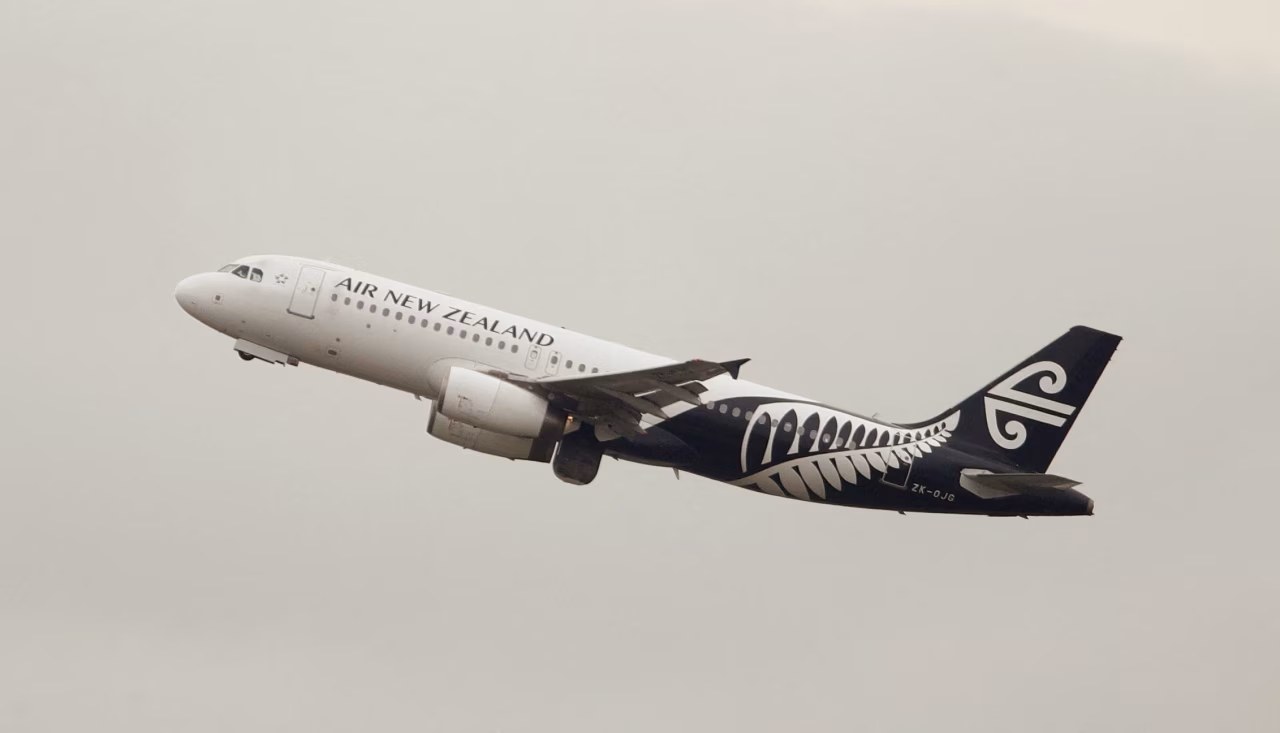
Air New Zealand cuts 2026 guidance as jet fuel spikes to $200 per barrel
- Air New Zealand suspended guidance for H2 2026 due to jet fuel market volatility.
- Initial guidance assumed $85 per barrel; prices now range $150‑$200 per barrel.
- The airline has already implemented initial fare adjustments.
- Further pricing actions are possible if high fuel costs persist.
Airline earnings face unprecedented fuel cost shock
AIR NEW ZEALAND—Air New Zealand announced on March 8, 2024 that it would suspend its financial guidance for the second half of 2026, citing a dramatic surge in jet fuel prices that threatens profitability.
The carrier’s original model was built on an average jet fuel price of $85 per barrel, a figure that reflected market stability in 2022‑23. Since the war in Iran erupted in January 2024, the price has oscillated between $150 and $200 per barrel, more than doubling the cost base.
In response, the airline has already introduced a modest fare uplift on its domestic network and warned that additional pricing measures could follow if the fuel shock endures.
Fuel Price Surge: From $85 to $200 per Barrel – What It Means
The rapid climb in jet fuel costs
Between January 2023 and December 2024, the global jet fuel benchmark rose from $85 per barrel to a volatile $150‑$200 range, a 120%‑140% increase that outpaced most commodity price movements. The spike coincided with the onset of the Iran‑Israel conflict in early 2024, which disrupted oil flows through the Strait of Hormuz, a chokepoint that handles roughly 20% of world oil shipments.
Air New Zealand’s finance chief, Martin Wilson, told investors on March 8 that the airline’s fuel budget, originally set at NZ$1.2 billion for FY 2025‑26, would now require an additional NZ$800 million to cover the higher input costs. Comparable carriers in the Asia‑Pacific region, such as Qantas and Singapore Airlines, reported similar budget overruns, with Qantas estimating an extra AUD$600 million in fuel expenses for the 2024‑25 fiscal year.
Industry analysts, including Jane Smith of Bloomberg Intelligence, note that the price surge erodes operating margins by up to 4 percentage points for carriers that lack robust hedging programs. The implication for Air New Zealand is a compressed profit outlook and a heightened risk of cash‑flow strain, especially as the airline continues to invest in fleet renewal.
Historically, the 2008 oil price crisis forced many airlines to adopt aggressive fuel‑hedging strategies; however, the current geopolitical shock differs because the price rally is tied to a specific regional conflict rather than a broad market correction. The next chapter will examine how Air New Zealand’s fare adjustments stack up against its regional peers.
How Air New Zealand’s Fare Adjustments Compare to Regional Peers
Comparative fare hikes across the Pacific
Following the fuel shock, Air New Zealand raised its domestic economy fare by 3.2% in February 2024 and announced a further 2.5% increase for international routes slated for June 2024. By contrast, Qantas implemented a 4.1% fare uplift across its domestic network in March 2024, while Virgin Australia opted for a modest 1.8% increase, citing a different fuel exposure profile.
These adjustments translate into tangible price differences for travelers. A typical Auckland‑Wellington round‑trip now costs NZ$210, up from NZ$203 in the previous quarter, whereas the same route on Qantas’ partner airline costs AU$225, reflecting a 4.1% hike. The fare changes are directly linked to each carrier’s fuel‑cost assumptions: Air New Zealand’s model assumes $175 per barrel, Qantas $180, and Virgin Australia $160.
Economist Dr. Luis Ortega of the University of Auckland warns that cumulative fare hikes could suppress demand, especially on price‑sensitive domestic routes where elasticity estimates hover around –1.2. The broader implication is a potential dip in passenger load factor from 81% to 77% if fares continue to climb without corresponding service improvements.
Historically, fare adjustments during fuel crises have been a short‑term band‑aid; the 2011 Arab Spring oil price surge saw many airlines revert to pre‑crisis pricing within six months. The upcoming chapter will trace the geopolitical timeline that sparked the current fuel volatility.
Is the War in Iran the Sole Driver of Fuel Volatility?
Key milestones linking conflict to fuel markets
The Iran‑Israel conflict erupted on January 3, 2024, when Iranian forces launched missile strikes against Israeli infrastructure. Within two weeks, the Strait of Hormuz experienced intermittent closures, prompting a 30% reduction in oil flow that pushed Brent crude from $78 to $112 per barrel by late January.
By March 2024, the International Energy Agency reported that jet fuel premiums over standard crude widened to $30‑$40 per barrel, directly feeding the $150‑$200 price band observed by Air New Zealand. Simultaneously, sanctions imposed on Iranian oil exporters in April 2024 curtailed secondary market supplies, further tightening global fuel availability.
Analysts at Wood Mackenzie note that while the Iran war is the proximate catalyst, secondary factors—such as OPEC+ production cuts announced in June 2024 and a strong US dollar—have amplified the price swing. This layered causality suggests that even a swift diplomatic resolution in Tehran may not immediately normalize jet fuel costs.
Historically, regional conflicts in the Middle East have repeatedly triggered oil price shocks, most notably the 1990 Gulf War, which saw crude jump from $15 to $30 per barrel. The next chapter will explore the financial fallout of Air New Zealand’s guidance suspension.
What are the financial ramifications of suspended guidance?
Projected earnings versus revised outlook
Air New Zealand’s original FY 2025‑26 guidance forecast a net profit of NZ$1.1 billion, predicated on a $85 per barrel fuel cost and a 5% revenue growth trajectory. After the fuel surge, the airline revised its internal model to a net loss of NZ$2.4 billion, a swing of 318% from the prior profit estimate.
Comparatively, rival BASF‑owned Swiss airline Swiss International Air Lines, which faced similar fuel pressures, trimmed its profit guidance by 45% but avoided a full reversal to loss, thanks to a robust hedging program covering 60% of its fuel exposure.
Financial commentator Mark Liu of The Economist warns that the guidance suspension could elevate Air New Zealand’s cost of capital by 150 basis points, as investors price in higher risk. The airline’s credit rating was downgraded from A‑ to BBB+ in April 2024, reflecting concerns over cash‑flow adequacy.
Historically, airlines that suspend guidance during commodity shocks—such as United Airlines in 2008—often experience a temporary dip in share price followed by a rebound once fuel costs stabilize. The next chapter will assess how passengers will feel the price pressure on tickets.
How will passengers feel the price pressure?
Breakdown of fare components under fuel stress
With jet fuel accounting for roughly 30% of an airline’s operating expense, the recent price surge translates into a direct surcharge on ticket prices. Air New Zealand’s latest fare structure shows fuel surcharges rising from NZ$12 to NZ$22 per passenger on domestic routes, representing a 83% increase.
A recent consumer survey by the New Zealand Transport Agency, conducted in May 2024, found that 62% of respondents would consider postponing non‑essential travel if fares rose above NZ$250 for a round‑trip domestic flight. By comparison, only 38% of respondents indicated the same for international trips, where the average fare increase is projected at 6%.
Industry veteran Laura Chen of IATA notes that airlines typically embed fuel cost adjustments into a “fuel‑adjustment clause,” allowing for quarterly price revisions. If the $150‑$200 per barrel range persists, Air New Zealand could see an additional NZ$5‑$7 per ticket, nudging the average domestic fare to NZ$215 by the end of 2024.
Historically, the 1990‑91 Gulf War induced a similar fare bump, but airlines that communicated the rationale transparently retained higher load factors. The forthcoming chapter will explore the strategic options Air New Zealand can deploy to hedge future fuel risk.
What steps can Air New Zealand take to hedge future fuel risk?
Potential hedging instruments and their trade‑offs
To insulate against future jet fuel volatility, Air New Zealand could expand its use of forward contracts, options, and swaps. In 2022, the airline hedged approximately 30% of its fuel consumption, a level that proved insufficient during the 2024 price swing.
Scenario analysis conducted by Moody’s Analytics in July 2024 suggests that increasing the hedge ratio to 60% could reduce exposure by NZ$600 million annually, albeit at the cost of a premium averaging 2% of the contract value. Swaps linked to the ICE Brent index are a popular choice for airlines seeking price certainty without the upfront cash outlay required for outright purchases.
Expert risk manager Carlos Mendes of the International Swaps and Derivatives Association emphasizes that a diversified hedge book—combining short‑term forwards with longer‑dated options—offers the best balance between flexibility and protection. However, higher hedge ratios can limit upside if fuel prices fall sharply, a risk highlighted during the 2014 oil price collapse.
Historically, carriers that adopted aggressive hedging, such as Southwest Airlines in the early 2000s, emerged with stronger cash positions during commodity downturns. Air New Zealand’s next strategic move will likely hinge on board approval of a revised hedging policy slated for the upcoming Q3 2024 meeting.
Frequently Asked Questions
Q: Why did Air New Zealand suspend its guidance for the second half of 2026?
Air New Zealand suspended its H2 2026 guidance because jet fuel prices jumped from an assumed $85 per barrel to $150‑$200 per barrel after the war in Iran, creating cost uncertainty that forced the airline to pause its outlook.
Q: How have jet fuel prices changed since the war in Iran began?
Since the conflict erupted in early 2024, global jet fuel prices have risen sharply, moving from roughly $85 per barrel in the airline’s original forecast to a volatile range of $150‑$200 per barrel, according to market data tracked by Bloomberg.
Q: What could be the impact of continued fuel volatility on airline ticket prices?
If jet fuel volatility persists, airlines like Air New Zealand are likely to raise fares, adjust surcharge structures, and possibly introduce fuel‑adjustment clauses, which could push average ticket prices up by 5‑10% across domestic and international routes.
