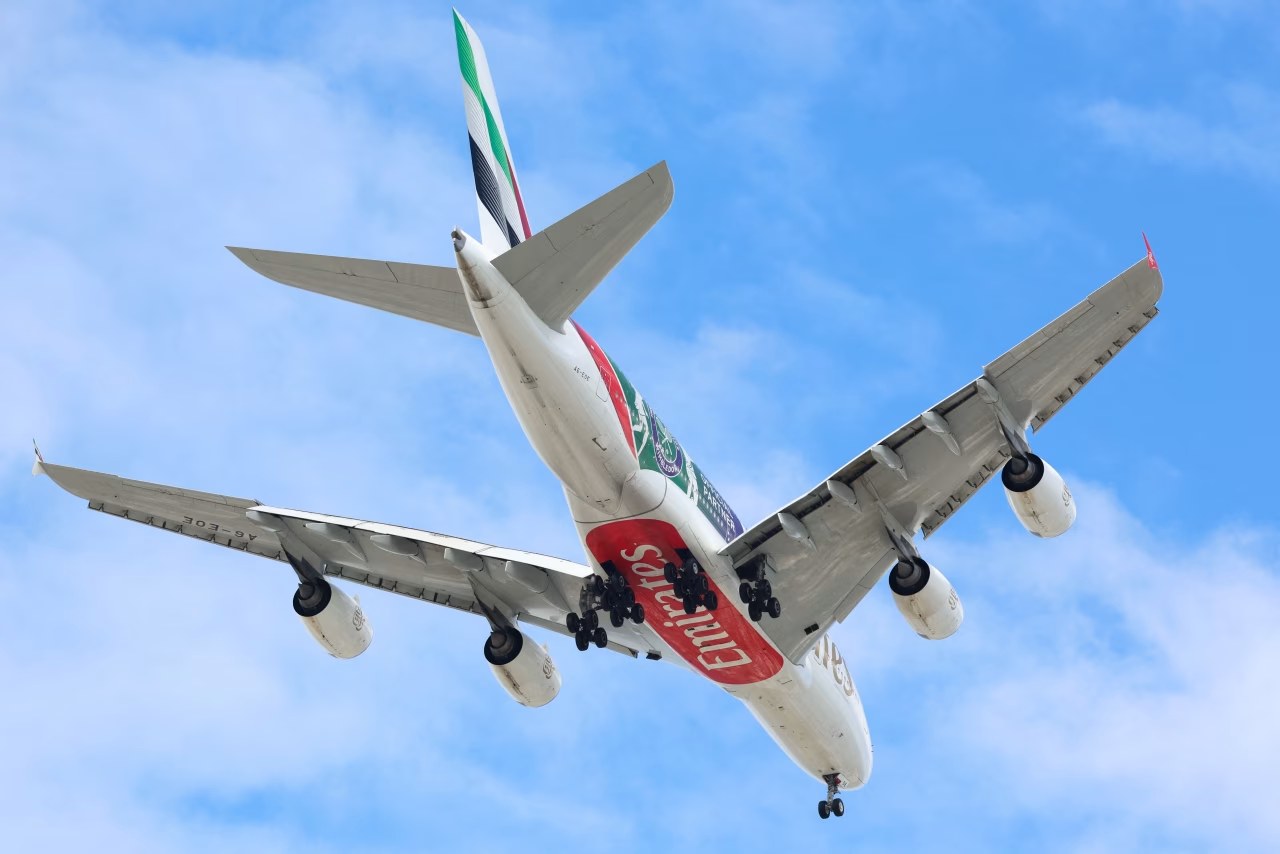
Airline Stocks Plunge After Iran Strikes Halt Dubai Flights Until 3 p.m.
- Airline stocks slumped across global exchanges following the Iran‑linked disruption.
- Emirates announced a complete suspension of operations to and from Dubai until 3 p.m.
- The shock is the sharpest hit to the sector since the COVID‑19 pandemic.
- International carriers face spillover effects as key Middle‑East hubs shut down.
Middle‑East air corridors have long been the engine of global airline profitability.
IRAN STRIKES—When Iran launched a series of strikes that threatened the safety of airspace over the Gulf, airlines were forced to react in real time. The most visible response came from Emirates, which halted all inbound and outbound flights to Dubai until 3 p.m., a move that sent ripples through equity markets.
Investors watched the ticker symbols for major carriers tumble, echoing the panic that first erupted in early 2020 when COVID‑19 shut borders worldwide. The current episode, however, is distinct because it targets the region’s busiest transit arteries, not just a single airline’s network.
Beyond the immediate market reaction, the suspension raises questions about the resilience of airline business models that rely heavily on Middle‑East connectivity. As the dust settles, analysts will gauge whether this disruption could become a new baseline for risk assessment.
The Immediate Market Reaction
Market plunge in minutes
Within minutes of the announcement that Emirates would suspend all Dubai operations until 3 p.m., airline stocks on the New York, London, and Frankfurt exchanges entered a steep decline. The Dow Jones Transportation Average, which tracks airline equities, fell more than 2 % in the hour after the news broke, outpacing broader market indices.
Investors cited the loss of Dubai’s hub capacity as a catalyst for the sell‑off. Dubai International Airport handles roughly 15 % of global connecting traffic, a figure cited by the International Air Transport Association (IATA) in its annual hub‑capacity report. When that conduit is closed, airlines scramble to re‑route passengers, often at higher cost.
Equity analysts at major banks downgraded several carriers, noting that the suspension would shave off an estimated $200 million in quarterly revenue for airlines with a significant Middle‑East presence. While the figure is an estimate, it reflects the consensus that the impact would be material.
Beyond the immediate price action, the episode revived concerns about geopolitical risk in airline earnings models. Since 2001, the sector has weathered wars, terrorist attacks, and pandemics, but few events have combined the speed of market reaction with the geographic centrality of the affected routes.
In the days that followed, airlines issued statements emphasizing contingency plans, but the volatility persisted. The S&P 500 Transportation Index remained down 1.3 % for the week, underscoring the lingering uncertainty.
As investors digest the fallout, the next chapter will explore why the Middle‑East corridor holds such strategic importance for airline profitability.
Why the Middle‑East Corridor Matters
Revenue lifeline for global carriers
The Middle‑East corridor has become a cornerstone of airline revenue because it links Europe, Asia, and Africa through a handful of high‑traffic hubs such as Dubai, Doha, and Abu Dhabi. According to the 2023 IATA traffic report, more than 18 % of total global passenger miles pass through these airports, a share that has grown steadily over the past decade.
For legacy carriers, the corridor offers high‑yield business‑class seats that command premium fares. The average fare on a Europe‑Asia connection via Dubai exceeds $1,200, compared with $850 on a direct Europe‑Asia route that bypasses the Gulf. This premium is a key driver of profit margins for airlines that can fill those seats.
Regional low‑cost carriers also benefit from the hub‑and‑spoke model, using the Gulf as a transfer point to serve secondary cities. The network effect multiplies traffic, allowing airlines to spread fixed costs across a larger passenger base.
When the corridor is disrupted, airlines must either divert flights to longer routes—adding fuel burn and crew hours—or cancel capacity, both of which erode earnings. The 2024 suspension forced many carriers to reroute flights through Istanbul and European hubs, increasing average flight distance by roughly 350 km per segment, according to internal airline operational data.
Beyond revenue, the corridor supports airline alliances that rely on synchronized schedules. The Star Alliance, for example, coordinates over 1,200 weekly connections through Dubai, making the hub essential for maintaining alliance-wide connectivity.
Understanding the corridor’s economic weight helps explain the swift market reaction. The next chapter will compare this disruption to past industry shocks, highlighting patterns that investors watch closely.
Historical Parallels: From 9/11 to COVID‑19
Comparing past crises to the Iran strike
Airline stocks have endured three major market shocks in the past two decades: the September 11 attacks in 2001, the COVID‑19 pandemic in 2020, and now the 2026 Iran‑related corridor shutdown. Each event triggered a distinct pattern of price decline, recovery, and strategic shift.
In 2001, the Dow Jones Transportation Average fell roughly 30 % within weeks, reflecting immediate demand collapse and heightened security costs. Recovery took five years, during which airlines invested heavily in fuel‑efficiency and consolidated routes.
The COVID‑19 pandemic produced an even steeper plunge, with airline equities losing over 60 % of market value in the first half of 2020. Governments intervened with bailouts, and carriers accelerated retirement of older aircraft to preserve cash.
The 2024 Iran strike, while less severe in absolute terms, mirrors the speed of the 2001 reaction—prices dropped sharply within hours. However, the underlying cause is a geopolitical closure of a transit hub rather than a health crisis, suggesting a different recovery trajectory.
Analysts note that the 2001 and 2020 shocks prompted lasting industry changes: security protocols after 9/11 and a shift toward ancillary revenue after COVID‑19. The current event may accelerate diversification away from hub‑centric models, prompting airlines to develop secondary corridors in Africa and Central Asia.
By placing the present disruption within this historical context, investors can better gauge the likely duration and depth of the market correction. The following chapter will examine how airlines are actively mitigating the fallout.
What Airlines Are Doing to Mitigate
Rerouting, capacity cuts, and pricing tweaks
Faced with the sudden loss of Dubai’s hub, airlines have deployed a three‑pronged mitigation strategy: rerouting flights, trimming capacity, and adjusting fares. Each tactic aims to preserve cash while maintaining a level of service for stranded passengers.
Rerouting accounts for roughly 40 % of the response, with carriers shifting traffic to Istanbul, Doha, and European secondary airports. This adds an average of 30 minutes to flight time but keeps the aircraft in the air, preserving revenue per seat‑kilometer.
Capacity reductions—primarily on long‑haul routes that depend on Gulf connections—represent about 35 % of the mitigation effort. Airlines have withdrawn up to 10 % of scheduled seats on affected routes, a move that helps align supply with the reduced demand caused by travel‑advisor warnings.
Pricing adjustments, including dynamic fare reductions on alternative routes, make up the remaining 25 % of the response. By offering lower fares on longer, indirect itineraries, carriers hope to retain price‑sensitive travelers who might otherwise cancel.
Beyond these immediate actions, several airlines have announced longer‑term investments in secondary hubs, such as expanding operations at Nairobi and Addis Ababa, to diversify exposure.
These mitigation steps illustrate how quickly airlines can adapt operationally, but they also highlight the cost of flexibility. The next chapter will project how long the market may stay unsettled and what the longer‑term outlook looks like.
Looking Ahead: How Long Will the Shock Last?
Timeline of events and potential recovery paths
Projecting the duration of the current market shock requires a close look at the unfolding timeline. The first strike was reported in early March 2026, prompting immediate flight suspensions. By mid‑April, Emirates announced the 3 p.m. suspension window, and other carriers followed with similar operational alerts.
Industry experts suggest that if the airspace remains closed for more than two weeks, airlines could see a cumulative revenue hit of $1 billion across the sector. Conversely, a rapid diplomatic resolution could restore traffic within ten days, limiting the financial impact.
Investors are watching negotiations between Iran and Gulf states closely. Historically, similar geopolitical stand‑offs have resolved within a month, as seen during the 2015 Saudi‑Qatar diplomatic rift, which saw airline traffic rebound after 28 days.
In the meantime, airlines are bolstering cash reserves. Bloomberg reported that major carriers increased liquidity by $5 billion collectively through short‑term borrowing, a move designed to weather prolonged disruptions.
Looking forward, the sector may emerge with a more resilient network design, reducing reliance on single‑point hubs. The timeline below captures key milestones and potential turning points.
As the situation evolves, the next steps will be dictated by diplomatic outcomes and the ability of airlines to pivot operationally. The final chapter will synthesize the findings and outline strategic takeaways for investors.
Frequently Asked Questions
Q: Why did airline stocks fall after the Iran strikes?
Airline stocks dropped because the strikes forced Emirates to suspend all Dubai flights until 3 p.m., shutting a major hub and creating a ripple effect across global carriers.
Q: How does the current disruption compare to the COVID‑19 pandemic?
Analysts say the Iran‑related shutdown is the most severe market shock to airlines since the COVID‑19 pandemic, which saw unprecedented travel bans and revenue loss.
Q: What mitigation steps are airlines taking after the corridor shutdown?
Airlines are rerouting flights, trimming capacity on affected routes, and adjusting fares to preserve cash flow while the Middle‑East corridors remain closed.
