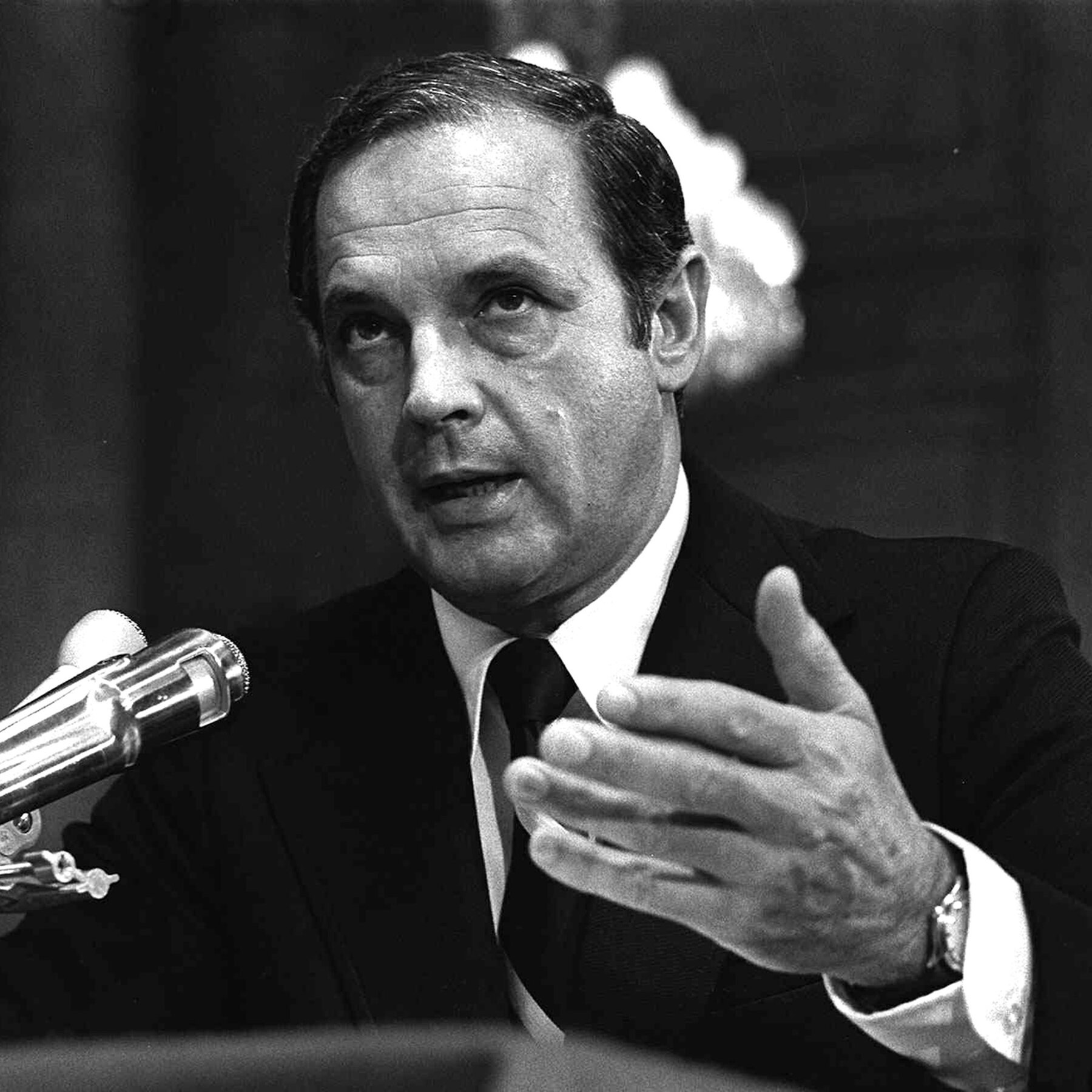
Alexander Butterfield, Who Revealed Nixon Tapes at 99, Dies—Watergate’s Smoking Gun Witness
- Butterfield’s July 16, 1973 Senate testimony exposed a secret sound-activated taping system that recorded 3,400+ hours of Nixon’s White House talks.
- The disclosure forced a Supreme Court fight; the 18½-minute gap and subsequent “smoking-gun” tape led Nixon to resign on Aug. 9, 1974.
- Colonel-turned-aide installed the system under Nixon’s 1971 order; only four men knew it existed until Butterfield’s reluctant revelation.
- Aviation administrator post-Watergate, Butterfield later said he felt “justice had prevailed” when the president quit.
How one reluctant witness rewrote presidential history
WATERGATE—When Alexander P. Butterfield raised his right hand before the Senate Watergate Committee on July 16, 1973, no one foresaw that the soft-spoken Federal Aviation chief—once a mid-level White House staffer—was about to detonate the most consequential bombshell in American political scandal history. In four crisp words—”I was aware, yes, sir”—he confirmed the existence of Richard Nixon’s clandestine taping system, instantly converting a partisan tug-of-war over conflicting recollections into a ferocious courtroom-style hunt for magnetic evidence that would, 13 months later, end a presidency.
Butterfield, who died Monday at 99 in his ocean-view La Jolla home, never sought the spotlight. A career Air Force colonel with 7,800 flight hours and a Distinguished Flying Cross, he had simply answered a college friend’s call to help manage White House security. Yet his reluctant disclosure—delivered first in a closed-door staff interview three days earlier—irrevocably altered the trajectory of the Watergate saga, ushered in a new era of accountability technology, and etched his name forever as the man who revealed the Nixon tapes.
“There’s absolutely no doubt” the president was guilty, Butterfield told an interviewer in 1995. His testimony did more than expose wrongdoing; it redefined the limits of executive secrecy and set the precedent that no commander-in-chief could hide behind palace walls. This is the inside story of how Alexander Butterfield became the accidental catalyst for the only presidential resignation in U.S. history.
From Cockpit to Cabinet Room: The Making of an Accidental Gate-Crasher
Alexander Porter Butterfield’s path to history began on April 6, 1926, on the Pensacola naval air station where his father piloted Navy seaplanes. Childhood among hangars and airstrips bred a discipline that carried him through UCLA, where he met Bob Haldeman—future Nixon chief of staff—and into the newly formed U.S. Air Force in 1948.
By 1951 he was leading the Skyblazers, the jet-fighter acrobatic team that thrilled NATO crowds over West Germany. Vietnam followed in 1963; he commanded a fighter squadron at Bien Hoa, logging 123 combat missions and earning the Distinguished Flying Cross. Between tours he collected degrees: a 1956 B.A. from the University of Maryland, a 1967 M.A. from George Washington University, and—decades later—a 2004 master’s from UC San Diego.
When Haldeman phoned in late 1968 asking for help with the incoming Nixon administration, Butterfield, then a Pentagon liaison in Australia, saw a chance to cap his career inside the White House. Officially named deputy assistant to the president and cabinet secretary, he oversaw everything from visitor badges to the Situation Room’s alarm system. It was, he later joked, “the perfect job for a control freak who can fly 600 knots but likes color-coded binders.”
The secret order that changed history
In February 1971 Haldeman’s aide Lawrence Higby passed along an unusual request: install a voice-activated recording network covering any room Nixon might use for official business. Butterfield coordinated with Secret Service technicians, hiding microphones in wall sconces, lamps and the president’s desk. Only four people knew the system existed—Nixon, Haldeman, Higby and Butterfield himself. From then on, every policy debate, expletive, and alleged criminal instruction was captured on reel-to-reel tapes stored in the Executive Office Building. The archive would ultimately exceed 3,400 hours, creating the evidentiary mother lode that Butterfield would later reveal under oath.
The Closed-Door Confession That Preceded the Televised Earthquake
Although 85 percent of Americans first learned of the taping system during Butterfield’s televised appearance, the real breakthrough came 72 hours earlier in a nondescript committee room beneath the Senate Caucus chamber. On Friday, July 13, 1973, deputy minority counsel Donald Sanders asked a question that had lingered for weeks: was there any basis to John Dean’s speculation that conversations were recorded?
“I was wondering if someone would ask that,” Butterfield replied, according to committee transcripts. Over the next 90 minutes he sketched every detail—how the Secret Service lugged reels to the EOB vault, how the president could switch the system off, and how “everything was taped as long as the president was in attendance.”
How a White House memo backfired
The committee’s suspicions had been piqued by a defensive memo from special White House counsel J. Fred Buzhardt intended to discredit Dean. The document contained verbatim quotes from Nixon-Dean meetings so precise that investigator Scott Armstrong realized only a mechanical source could explain the accuracy. Armstrong and Sanders then crafted the pointed questions that elicited Butterfield’s admission. The trap was set; the White House never saw it coming.
When the public session convened the following Monday, television networks broke into regular programming. An estimated 55 million viewers watched as Tennessee counsel Fred Thompson—later a GOP senator—calmly asked, “Are you aware of the installation of any listening devices?” Butterfield’s affirmative answer detonated across the political landscape, instantly turning an arcane Senate probe into a constitutional showdown over evidence that could prove or disprove presidential obstruction of justice.
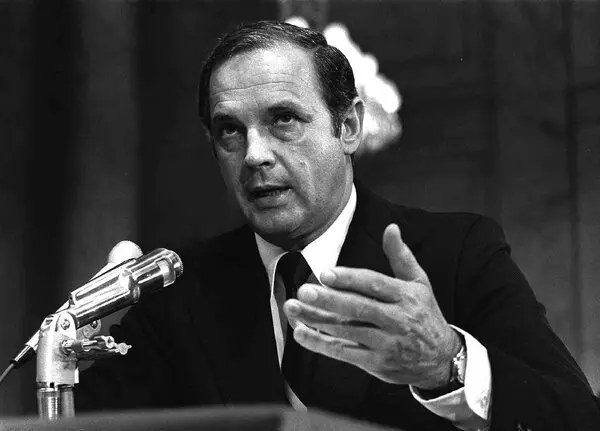
How the Nixon Tapes Became the Smoking Gun That Forced a Presidency to Collapse
Within minutes of Butterfield’s revelation, committee chairman Sam Ervin requested the tapes; Nixon refused, citing executive privilege. A protracted legal battle climaxed on July 24, 1974, when a unanimous Supreme Court ordered release of 64 conversations. Among them was the June 23, 1972 “smoking-gun” tape in which Nixon approved the CIA’s request to stifle the FBI’s Watergate probe.
The tape’s disclosure obliterated Nixon’s remaining congressional support. Ten Republicans on the House Judiciary Committee who had voted against impeachment announced they would now vote yes. Facing certain conviction in the Senate, Nixon announced his resignation on August 8, 1974, effective the next day. Butterfield, watching from suburban Virginia, told journalist Bob Woodward in 2015: “I could not believe that people were crying… Inside, I was cheering.”
The numbers behind the downfall
Butterfield’s testimony triggered a cascade of statistics that underscore the system’s reach: 3,432 hours of recordings, 950 taped conversations between Nixon and Dean, and 82 erased minutes in the infamous 18½-minute gap. Legal consequences were equally stark—48 Nixon aides or associates were convicted, and the president became the first to resign. Gerald Ford, upon taking office, ordered the system dismantled within days, ending what historians call “the most consequential eavesdropping operation in American politics.”
Life After the Bombshell: FAA, Boardrooms and a Final Verdict on Nixon
Watergate did not end Butterfield’s career; it redirected it. He remained FAA administrator until 1975, overseeing safety reforms after a spate of mid-air collisions. He then became an executive at United Services automobile insurance and later headed a California aircraft-leasing firm. Settling in La Jolla in 1992, he served on university boards and lectured on ethics, though he rarely gave interviews.
In 2015 he cooperated with Bob Woodward for the book “The Last of the President’s Men,” providing fresh detail on Nixon’s brooding paranoia. Butterfield insisted he had testified out of duty, not vengeance, but left no doubt about his moral judgment: “There’s absolutely no doubt” Nixon was guilty, he told Woodward. The former colonel who once executed orders now saw higher obligations. “The Constitution is bigger than any president,” he told a University of San Diego class in 2005.
Family and final years
Butterfield married Charlotte Maguire in 1949; they divorced in 1985. He is survived by his second wife, Kim, two daughters, eight grandchildren and 13 great-grandchildren. His son Alexander Jr., a commercial pilot, died in 2023. Despite the seismic historical role, friends described him as a meticulous, gentle man who flew gliders for relaxation and kept the same tidy haircut for 60 years. Memorial services are planned at the La Jolla Presbyterian Church, with military honors at Miramar National Cemetery.
Why Butterfield’s Revelation Still Matters in the Age of Smartphones and Encrypted Chats
Half a century after Butterfield’s disclosure, the questions he forced America to confront—What is the true record of power? Who controls it?—remain urgent. Modern presidents employ encrypted messaging apps, auto-deleting Signal threads, and classified servers, echoing Nixon’s assumption that technology could be bent to political survival.
Historians credit Butterfield with institutionalizing transparency norms: the Presidential Records Act of 1978 now mandates preservation of all official communications. Courts routinely cite the Supreme Court’s 9-0 ruling against Nixon when rejecting claims of absolute executive privilege. Yet the stakes keep rising: the National Archives estimates that 95 percent of today’s federal records are “born digital,” vulnerable to deletion with a keystroke.
The lesson Butterfield taught
At a 2019 symposium in Washington, Butterfield distilled his legacy: “Technology doesn’t corrupt; it merely amplifies the character of the hand that wields it.” His testimony is now case-study fodder in business schools for ethical decision-making under hierarchical pressure. The episode underscores that a single truthful voice—delivered reluctantly yet decisively—can still reroute history. As democracies worldwide grapple with deep-fake videos and AI-generated disinformation, the Butterfield precedent endures: authentic mechanical evidence, once revealed, can still topple the powerful.
Frequently Asked Questions
Q: What did Alexander Butterfield reveal about Nixon?
On July 16, 1973, Butterfield testified that Nixon had secretly recorded nearly every Oval Office conversation, providing the ‘smoking-gun’ evidence that proved presidential involvement in the Watergate cover-up.
Q: How old was Alexander Butterfield when he died?
Alexander Butterfield died at age 99 at his home in La Jolla, San Diego, his wife Kim Butterfield confirmed.
Q: Why were the Nixon tapes so important?
The tapes resolved conflicting accounts between Nixon and aide John Dean, ultimately proving Nixon ordered hush-money payments and obstruction, forcing his August 9, 1974 resignation.
