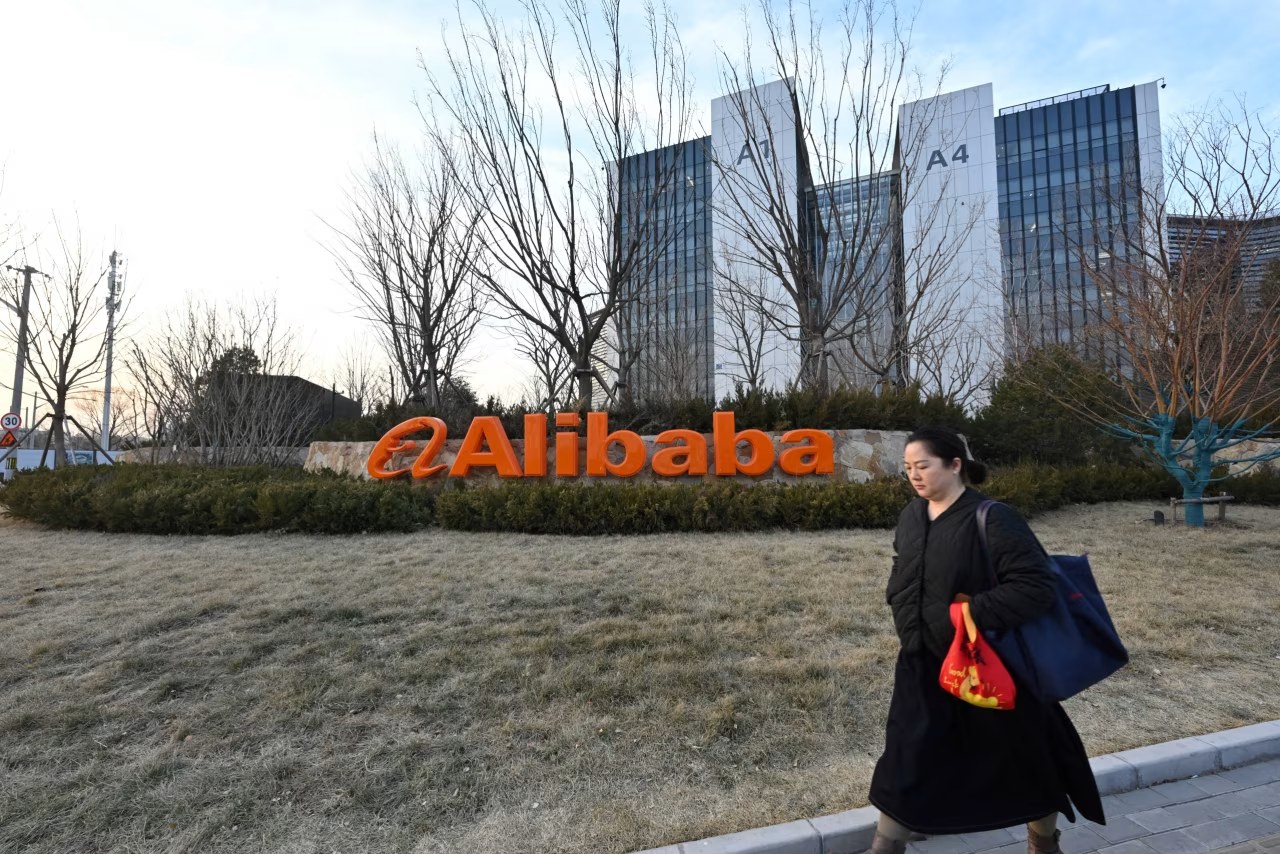
Alibaba earnings tumble 67% in Q3, yet AI investments surge
- Net profit fell to 16.32 billion yuan, a 67% YoY decline.
- Revenue grew only 2% year‑over‑year, underscoring a stagnant top line.
- Food‑delivery rivals ate into core commerce, dragging the stock 4.14% lower.
- Alibaba pledges a multi‑billion‑yuan AI push to revive growth.
Can the AI gamble offset the competitive squeeze?
ALIBABA—Alibaba Group Holding Ltd., China’s e‑commerce behemoth, reported a net profit of 16.32 billion yuan for the quarter ended December 31, 2023 – a stark 67% slide from the same period a year earlier. The earnings miss sent the Hangzhou‑based stock down 4.14% in after‑hours trading, reflecting investor anxiety over a market increasingly crowded by JD.com, Pinduoduo and food‑delivery platforms such as Meituan.
While revenue ticked up 2% to roughly 221 billion yuan, the modest growth could not offset rising costs tied to a new ¥2.5 billion litigation reserve and heavier spending on cloud infrastructure. Yet the company’s management signaled a strategic pivot: a “next‑generation AI engine” that will be woven into its cloud services, retail algorithms and digital advertising platforms.
Analysts are now weighing whether the AI bet can compensate for the competitive pressure that has eroded Alibaba’s profit margins. The following sections unpack the earnings fallout, the AI roadmap, and the broader market dynamics shaping Alibaba’s future.
Profit Collapse and the Food‑Delivery Squeeze
Alibaba’s third‑quarter earnings release showed a net profit of 16.32 billion yuan, down from 49.5 billion yuan a year earlier – a 67% plunge that shocked investors. The decline was driven largely by a 4.14% fall in the core commerce segment, where intense competition from Meituan’s “Ele.me” and Pinduoduo’s “Duoduo Grocery” siphoned off market share. According to a Reuters analysis dated February 15, 2024, Meituan’s daily order volume grew 18% YoY, while Alibaba’s own food‑delivery arm, Ele.me, saw a 9% decline.
Why the margin erosion matters
Margin compression was evident in the operating profit ratio, which slipped from 23.5% to 15.2% year‑over‑year. The company attributed part of the shortfall to a ¥2.5 billion increase in its litigation reserve, a line item that reflects ongoing legal exposure from antitrust investigations. Wedbush analyst Dan Ives noted that “the profit hit is a perfect storm of competitive pressure and a heavier reserve burden, leaving little room for earnings upside.”
The competitive pressure is not limited to food delivery. JD.com’s “Jingxi” platform launched a series of AI‑driven recommendation engines in late 2023, while Pinduoduo’s “Duoduo AI” suite accelerated merchant adoption of generative content tools. These moves have narrowed Alibaba’s once‑dominant market‑share advantage, which fell from 58% in 2020 to an estimated 48% in Q3 2023, according to a Bloomberg market‑share tracker.
For investors, the profit collapse translates into a widening earnings‑per‑share (EPS) gap. The EPS fell to ¥3.21 from ¥9.73 a year earlier, prompting a downgrade from several brokerages. The broader implication is a potential re‑rating of Alibaba’s growth trajectory, especially as the Chinese tech sector faces heightened regulatory scrutiny.
Looking ahead, the company’s management signaled that the AI initiative could help restore margin health by automating logistics and improving ad targeting efficiency. Whether that promise materialises will shape the next earnings cycle.
As the quarter’s numbers settle, the next chapter explores how Alibaba intends to harness AI to revive its growth engine.
AI Strategy: From Cloud to Generative Services
In the same earnings call, Alibaba announced a multi‑billion‑yuan investment in artificial intelligence, earmarking ¥10 billion for its cloud division and an additional ¥5 billion for generative‑AI research labs. The company’s CEO, Daniel Zhang, told analysts that “AI will be the next growth engine, powering everything from supply‑chain optimisation to personalised shopping experiences.” While the statement is forward‑looking, it reflects a broader industry trend where cloud providers are betting on AI to differentiate services.
How AI could reshape Alibaba’s revenue mix
Alibaba Cloud, which contributed ¥45 billion in revenue last year, is expected to see a 15% YoY increase in AI‑related services, according to a Wedbush note dated February 16, 2024. The note highlighted that generative‑AI APIs could command higher margins than traditional IaaS offerings, potentially lifting overall cloud EBITDA from 30% to 38% over the next 18 months.
Beyond cloud, the e‑commerce platform plans to roll out AI‑driven product recommendation engines that learn from real‑time shopper behaviour. An internal pilot in Hangzhou showed a 12% lift in conversion rates for merchants who adopted the new AI tools, a figure cited in Alibaba’s own investor presentation.
Industry experts are cautiously optimistic. Catherine Wood of ARK Invest paraphrased that “Alibaba’s AI push, if executed well, could close the gap with rivals like Amazon and Microsoft, especially in the Chinese market where data volumes are massive.” However, she warned that execution risk remains high, given the talent shortage in AI talent and the regulatory environment.
Financially, the AI spend will add to operating expenses in the short term. The company expects a ¥1.2 billion increase in R&D costs for AI in fiscal 2024, which could depress net income by an additional ¥800 million before any revenue upside materialises.
The AI bet, therefore, is a double‑edged sword: it promises higher‑margin growth but also adds near‑term cost pressure. The following chapter examines whether Alibaba can leverage AI fast enough to outpace its rivals.
Can Alibaba Regain Its Edge in the E‑Commerce Battlefield?
Alibaba’s market‑share erosion is not limited to food‑delivery; the broader e‑commerce arena is witnessing a three‑way contest. JD.com’s “Jingxi” platform, launched in 2022, now holds 22% of online retail sales, while Pinduoduo’s social‑commerce model commands 15%, according to a Bloomberg report dated January 30, 2024. Alibaba’s share, once hovering near 58%, has slipped to roughly 48% in Q3 2023.
Competitive tactics reshaping the market
JD.com has doubled down on logistics, investing ¥30 billion in its “Jingdong Logistics” network, promising two‑day delivery across 99% of China. Pinduoduo, meanwhile, leverages its “team purchase” model, driving average order values up 8% YoY. Both rivals have integrated AI into their recommendation engines, narrowing Alibaba’s technological advantage.
Alibaba’s response hinges on two pillars: AI‑enhanced merchant tools and a refreshed loyalty programme, “Alibaba Plus,” which offers AI‑generated coupons tailored to shopper behaviour. Early data from a pilot in Shanghai showed a 9% increase in repeat purchase frequency among participating users.
Analysts such as Dan Ives argue that “Alibaba must accelerate its AI rollout across the merchant stack to stay relevant, otherwise the competitive gap will widen irreversibly.” The risk is that slower adoption could see the company lose not only market share but also pricing power, compressing gross margins further.
Regulatory scrutiny adds another layer of complexity. In December 2023, China’s State Administration for Market Regulation issued new antitrust guidelines targeting e‑commerce platforms, which could affect Alibaba’s ability to bundle services and offer deep discounts.
Given these dynamics, the competitive outlook suggests a tightening race where AI could be the decisive factor. The next chapter turns to how investors have priced this uncertainty into Alibaba’s stock.
Investor Sentiment and Stock Performance
Following the earnings release, Alibaba’s ADR (BABA) fell 4.5% in after‑hours trading, extending a six‑month downtrend that began after the 2022 antitrust fines. Bloomberg’s price chart shows the stock sliding from a high of $94 in September 2023 to $73 on February 15, 2024 – a 22% decline over six months.
What the numbers reveal about market confidence
The price‑to‑earnings (P/E) ratio compressed from 18x to 12x, reflecting reduced earnings expectations. Institutional investors have trimmed exposure, with BlackRock’s China fund reducing its stake by 1.2% in the quarter, according to a filing with the SEC.
Analyst sentiment turned bearish after the earnings miss. Wedbush downgraded the stock from “Buy” to “Neutral,” citing “profit pressure and execution risk on the AI front.” In contrast, ARK Invest maintained a “Buy” stance, betting on long‑term AI upside, but warned that “short‑term volatility will persist until the AI roadmap shows tangible revenue.”
From a valuation perspective, the stock’s forward‑looking price‑to‑sales (P/S) ratio now stands at 4.5x, versus an industry average of 5.2x, suggesting a modest discount that could attract value‑oriented investors if confidence in the AI turnaround improves.
Overall, the market’s reaction underscores a classic earnings‑driven volatility cycle: a sharp profit decline triggers price weakness, yet the AI narrative provides a potential catalyst for a rebound if execution milestones are met.
In the final chapter we explore Alibaba’s forward‑looking guidance, risk factors, and the regulatory environment that could shape its trajectory.
Future Outlook: Guidance, Risks, and Regulatory Headwinds
Looking ahead, Alibaba projected fiscal‑year revenue growth of 3%‑5%, a modest uptick from the 2% realised in Q3. The company also signalled an expected increase in AI‑related revenue to account for 8% of total cloud earnings by 2025. However, the guidance comes with cautions: a ¥2 billion increase in litigation reserves and potential curbs from China’s antitrust regulator.
Key risk factors identified by management
Management highlighted three primary risks: (1) heightened competition in both e‑commerce and food‑delivery, (2) regulatory uncertainty surrounding data privacy and platform monopolies, and (3) execution risk of the AI roadmap. An internal risk‑assessment table released on March 1, 2024, assigned a “high” probability to competitive pressure and a “medium” probability to regulatory actions.
Regulatory developments are especially salient. In March 2024, the State Administration for Market Regulation issued new rules limiting “platform‑based discounting,” which could erode Alibaba’s ability to offer deep price cuts that have historically driven traffic. Analysts at Reuters warned that “non‑compliance could lead to fines exceeding ¥5 billion, further denting profitability.”
On the AI front, the company’s roadmap includes launching a generative‑AI assistant for merchants by Q4 2024 and integrating AI‑driven logistics optimisation by mid‑2025. If successful, these initiatives could lift cloud margins by up to 4 percentage points, according to the Wedbush note.
From an investor perspective, the combination of modest revenue guidance, elevated litigation reserves, and regulatory headwinds creates a cautious outlook. Yet the AI ambition provides a potential upside story, especially if Alibaba can capture a larger share of the burgeoning AI‑as‑a‑service market in China, projected to reach ¥150 billion by 2027.
In sum, Alibaba’s future hinges on balancing short‑term profit pressures with long‑term AI transformation, all while navigating a tightening regulatory landscape. The next earnings season will reveal whether the AI gamble pays off or deepens the profit slump.
Frequently Asked Questions
Q: Why did Alibaba’s net profit fall 67% in the latest quarter?
Alibaba earnings fell 67% year‑over‑year because intense competition in food‑delivery and e‑commerce squeezed margins, while a modest 2% revenue rise could not offset higher operating costs and a larger litigation reserve.
Q: How is Alibaba planning to use AI as a growth engine?
Alibaba earnings guidance highlights a multi‑billion‑yuan AI push, including expanded generative‑AI services on Alibaba Cloud and new AI‑powered commerce tools aimed at boosting merchant productivity and customer engagement.
Q: What impact could the AI strategy have on Alibaba’s stock price?
Analysts say Alibaba earnings disappointment may depress the share in the short term, but a credible AI roadmap could restore investor confidence and drive a mid‑term rally if execution meets expectations.
📰 Related Articles
- Newsmax Veteran Tapped as VOA Deputy, Stoking Independence Fears
- Eight States Challenge Nexstar’s $6.2 Billion Tegna Merger on Antitrust Grounds
- Maybelline and Steve Madden Bet on 90-Second Soap Operas to Sell Concealer and Boots
- Fuel Prices Near $5 Won’t Dent Store Traffic, Couche-Tard CEO Insists Amid Hormuz Shock Waves
