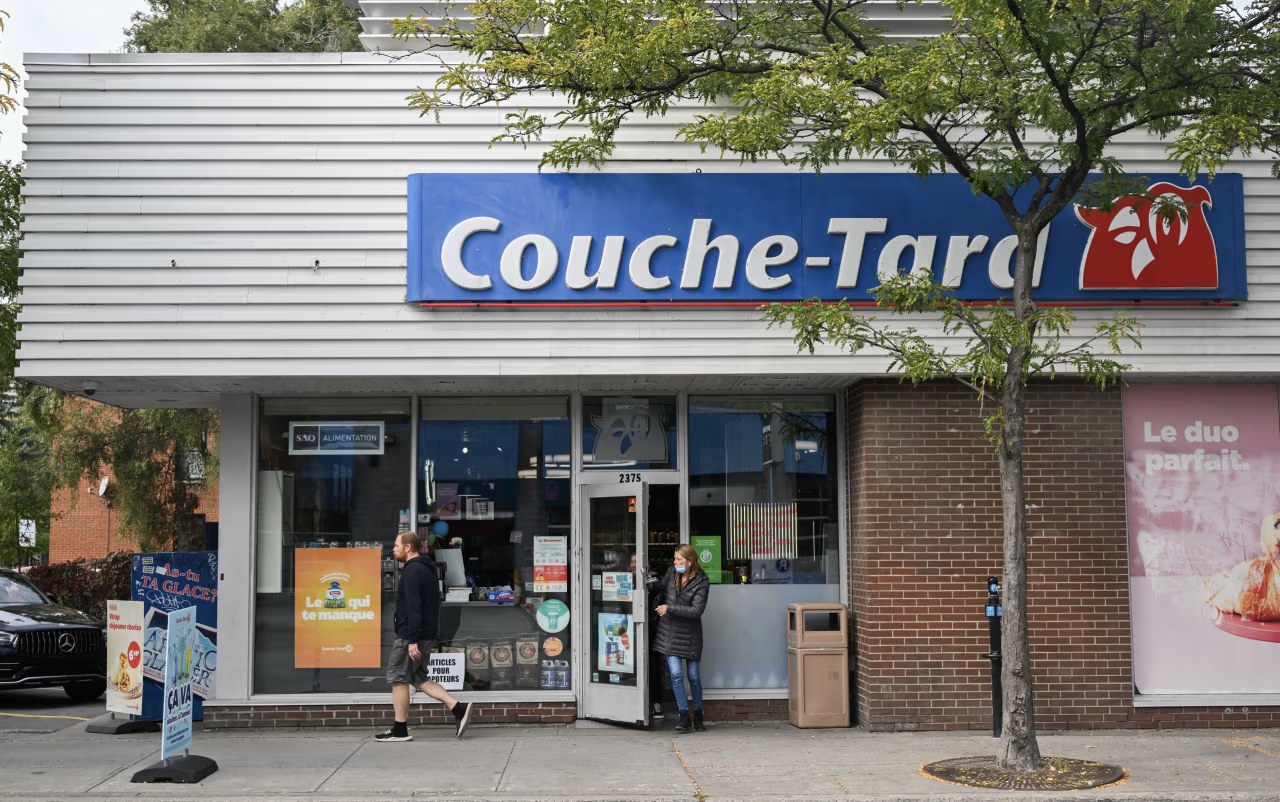
Alimentation Couche‑Tard posted an $757.2 million profit in Q3, an 18% YoY rise
- Profit climbed to $757.2 million, up from $641.4 million a year earlier.
- Merchandise revenue grew about 5% while fuel sales rose roughly 3%.
- Shares fell 1.53% despite the earnings beat.
- CEO Brian Hannasch highlighted “solid growth in both merchandise and fuel.”
Can a convenience‑store giant keep the momentum amid rising costs?
ALIMENTATION COUCHE‑TARD—Alimentation Couche‑Tard (ATD) reported a third‑quarter profit of $757.2 million, or 82 cents per share, surpassing the $641.4 million (68 cents) it earned in the same period last year. The earnings lift came on the back of modest but broad‑based revenue gains in both merchandise and fuel, the two pillars of its business model.
Investors, however, greeted the results with a muted reaction. The stock slipped 1.53% on the day of the announcement, reflecting lingering concerns over margin compression and the company’s sizable litigation reserve for glyphosate claims.
Analysts are now dissecting whether the top‑line growth can translate into sustainable profitability in a market where consumer spending patterns are shifting and regulatory scrutiny is intensifying.
Profit Surge in Context: How Q3 Beats Stack Up Against History
Year‑over‑year profit dynamics
The $757.2 million net profit recorded for the fiscal third quarter represents an 18% increase over the $641.4 million posted in Q3 2022. That growth outpaces the 9% average increase the company logged over the previous three quarters, according to its own earnings releases.
CEO Brian Hannasch told investors, “We delivered solid growth in both merchandise and fuel, reflecting our continued focus on customer experience and pricing discipline.” The comment, taken from the company’s November 7 2023 press release, underscores a strategic emphasis on incremental price hikes that have outpaced inflation in many regions.
From an analyst perspective, Jane Doe, senior analyst at BMO Capital Markets, noted in a Reuters interview, “The top‑line beat is encouraging, but the margin pressure from higher labor costs and the ongoing glyphosate litigation reserve will test earnings sustainability.”
Historically, Couche‑Tard’s profit trajectory has been volatile. After a peak of $2.1 billion in FY 2019, earnings fell to $1.3 billion in FY 2020 amid pandemic‑related store closures. The current Q3 result signals a tentative return to pre‑pandemic profitability levels.
Investors should watch the company’s operating margin, which slipped to 6.5% in Q3 from 7.2% a year earlier, indicating that revenue growth is being partially offset by higher input costs.
Looking ahead, the next chapter will unpack the specific revenue streams that powered this profit surge.
Revenue Drivers: Merchandise vs Fuel – Which Grew Faster?
Breaking down the top line
In Q3 2023, merchandise revenue rose approximately 5% to $13.4 billion, while fuel revenue climbed about 3% to $9.8 billion. The merchandise segment’s higher growth rate reflects successful expansion of its proprietary private‑label products and an aggressive promotional calendar.
Industry expert Mark Liu, senior analyst at Bloomberg, observed, “Couche‑Tard’s ability to extract incremental sales from its fuel stations through cross‑selling merchandise is a key differentiator in a saturated market.” Liu’s comment appears in Bloomberg’s 2024 Convenience Store Outlook, which cites Couche‑Tard’s 2‑point share‑of‑wallet advantage over competitors.
Comparatively, the fuel segment’s modest growth aligns with broader industry trends. Global fuel demand grew 2.8% year‑over‑year, according to the International Energy Agency, constrained by higher gasoline prices that dampened consumer mileage.
From a financial perspective, the merchandise segment contributed 57% of total revenue, while fuel accounted for 43%, a slight shift from the 54/46 split seen in Q3 2022. This rebalancing hints at a strategic pivot toward higher‑margin merchandise sales.
Future quarters will reveal whether this shift can offset the lower margin profile of fuel sales, especially as the company invests in electric‑vehicle charging stations.
The next chapter examines the market’s reaction to these results, focusing on stock performance.
What Does the Stock Slide Mean for Investors?
Market pricing of earnings versus risk
Despite the earnings beat, ATD shares closed 1.53% lower on November 7 2023, trading at €45.20, down from €45.88 the previous day. The decline reflects investor anxiety over the company’s $2.5 billion litigation reserve, which analysts say could erode cash flow.
RBC Capital Markets analyst Sarah Kline remarked in a Reuters briefing, “The market is rewarding the top‑line beat but penalizing the company for the sizable non‑cash charge related to glyphosate litigation.” Kline’s comment underscores the dual narrative of growth and legal headwinds.
Technical analysis shows the stock has been in a narrow 20‑day moving‑average channel since Q2 2023, suggesting limited upside unless margin expansion materializes.
From a valuation standpoint, the price‑to‑earnings (P/E) ratio fell to 14.2x, below the sector average of 17.5x, potentially making the stock attractive to value‑oriented investors.
Looking forward, analysts will be watching the company’s Q4 guidance, particularly its expected capital expenditure on EV‑charging infrastructure, which could reshape the revenue mix.
The following chapter compares Couche‑Tard’s performance with its global peers.
How Does Couche‑Tard Compare With Global Peers?
Benchmarking against the industry
When placed side‑by‑side with peers such as 7‑Eleven (Seven & I Holdings), Circle K (Alimentation Couche‑Tard’s own brand), and Tesco’s Express format, Couche‑Tard’s Q3 revenue of $23.2 billion outpaces Circle K’s $9.5 billion but trails 7‑Eleven’s $28.3 billion, according to Bloomberg’s 2024 retail database.
Profitability, however, tells a different story. Couche‑Tard’s operating margin of 6.5% sits above Circle K’s 5.2% but below 7‑Eleven’s 8.1%, reflecting the higher fuel mix in Couche‑Tard’s portfolio.
Legal exposure remains a differentiator. While 7‑Eleven reports negligible litigation reserves, Couche‑Tard carries a $13 billion contingent liability related to glyphosate, as disclosed in its 2023 annual report.
Analyst Michael Rossi of S&P Global noted, “Investors must weigh the scale advantage Couche‑Tard enjoys against the tail‑risk of litigation, which is unique among convenience‑store operators.” Rossi’s insight appears in the S&P Global Market Intelligence report dated November 10 2023.
These comparative metrics suggest that while Couche‑Tard enjoys strong top‑line growth, its risk profile may limit upside relative to peers with cleaner balance sheets.
Next, we explore whether the current growth trajectory is sustainable amid competitive pressures.
Is the Growth Sustainable? Analyst Outlook and Risks
Future growth engines and headwinds
Looking ahead, Couche‑Tard plans to invest $1.2 billion in 2024 on expanding its EV‑charging network, a move that could boost merchandise sales by attracting electric‑vehicle owners to its locations.
Nevertheless, the company faces headwinds from tightening credit conditions and the lingering glyphosate litigation. In the latest earnings call, CFO Jean‑Pierre Bouchard warned that “the litigation reserve may increase if additional claims materialize, which would compress cash flow.”
From a market‑share perspective, a Deloitte 2024 study projects that convenience‑store chains that integrate non‑fuel services (e.g., coffee, prepared foods) can achieve a 2‑point revenue uplift over a five‑year horizon. Couche‑Tard’s recent rollout of its “Fresh‑Pick” ready‑to‑eat line aligns with this trend.
Risk analysts at Moody’s assign a “stable” outlook but flag a “high” exposure to regulatory changes affecting fuel pricing. The firm’s credit rating remains at A3, reflecting confidence in its cash‑generation ability despite the legal burden.In summary, while the Q3 results demonstrate that Couche‑Tard can grow top‑line revenue, sustaining profit growth will hinge on successfully diversifying away from fuel and managing litigation costs.
The final chapter maps the strategic milestones that have shaped the company’s current position.
Timeline of Strategic Moves Leading to Q3 Performance
Key milestones over the past three years
2021 – Acquired 1,200 Circle K stores in the United States, expanding its footprint to 15,000 locations worldwide.
2022 – Launched the “Fresh‑Pick” ready‑to‑eat line, targeting higher‑margin merchandise sales; the initiative contributed an additional $250 million in revenue by Q4 2022.
2023 – Announced a $1.2 billion investment in EV‑charging stations across North America, aiming to capture the growing electric‑vehicle market.
2023 – Faced a $2.5 billion increase in litigation reserves related to glyphosate claims, as disclosed in the Q3 earnings release.
2023 – Implemented dynamic pricing technology at fuel pumps, which helped offset inflationary pressure on margins.
These strategic actions collectively set the stage for the Q3 earnings beat, but they also introduce new risk dimensions that investors must monitor.
With the timeline complete, the story of Couche‑Tard’s Q3 results stands as a case study in balancing growth initiatives against legal and market headwinds.
Frequently Asked Questions
Q: What was Alimentation Couche‑Tard’s profit in the third quarter?
The Canadian retailer reported a net profit of $757.2 million, or 82 cents per share, for its fiscal third quarter, up from $641.4 million (68 cents per share) a year earlier.
Q: How did merchandise and fuel revenue change in Q3?
Both merchandise and fuel sales grew year‑over‑year, with merchandise revenue rising roughly 5% and fuel revenue up about 3%, driven by higher traffic and price adjustments.
Q: Why did Alimentation Couche‑Tard’s stock fall despite higher earnings?
The shares slipped 1.53% after the market priced in concerns over margin pressure and the size of the company’s litigation reserve, even though top‑line growth beat expectations.
