Amazon’s $4 Billion Rural Bet Uses Pickup Trucks and River Drop-Boxes to Reach Montana’s Most Remote Addresses
- Amazon driver Matthew Norton now delivers to Conner, Montana, via a private bridge footpath using a Ford F-250 pickup.
- The $4 billion rural logistics program aims to replicate urban next-day speeds in areas once served only by USPS.
- Contractor pickups and locked drop-boxes replace traditional vans where roads end or bridges bar commercial traffic.
- Amazon’s rural push targets 20 million additional Prime households previously outside the two-day delivery window.
Why shrinking the last mile in sparse zip codes matters for the e-commerce giant’s next growth phase
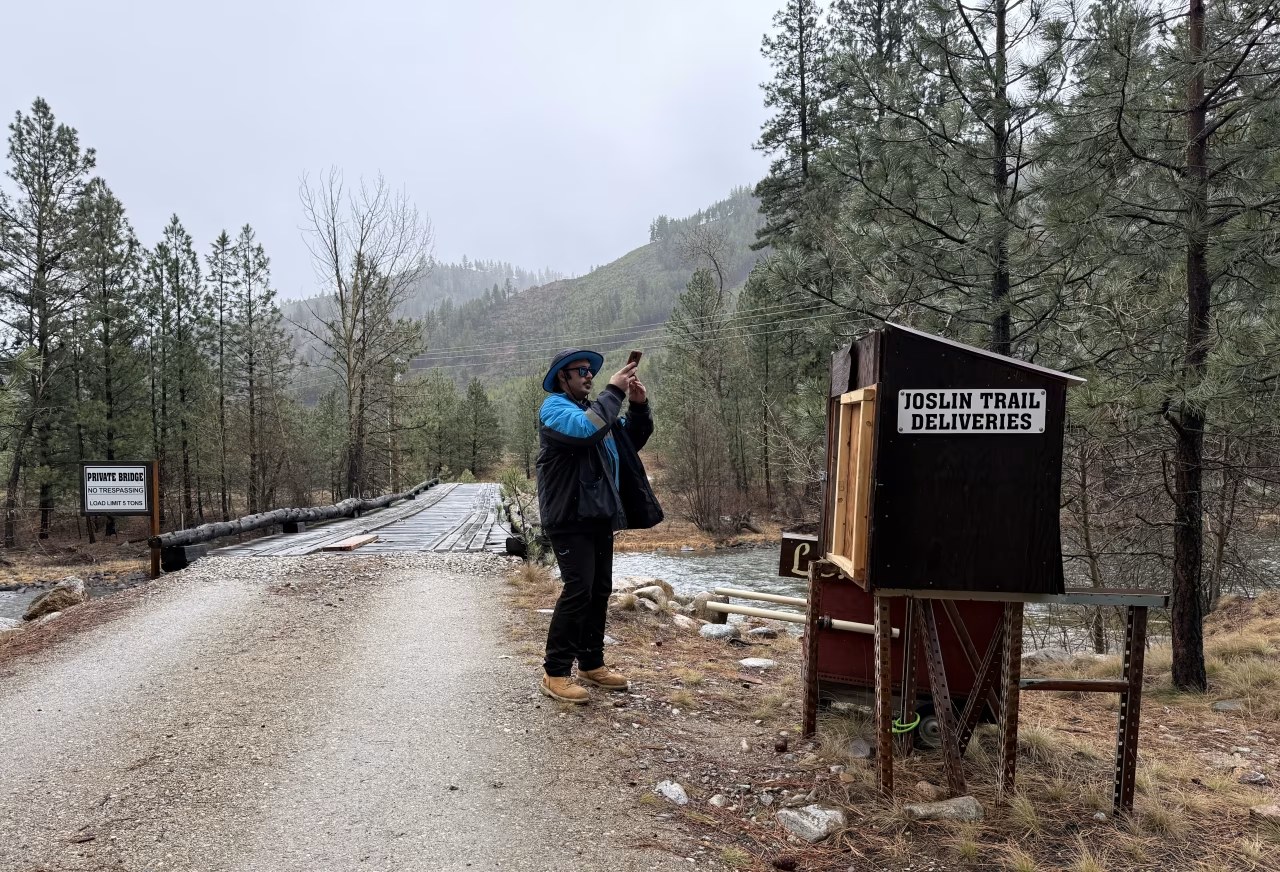
AMAZON LOGISTICS—CONNER, Mont.—At 12:15 p.m. Matthew Norton eased his white Ford F-250 off the single-lane dirt road, stepped onto the wooden planks of a private bridge spanning the Bitterroot River, and wedged a cardboard envelope into a steel Amazon drop-box nailed to a fence post. The package—containing a single phone case—traveled 1,200 miles from a Phoenix fulfillment center to this riverside outpost in 38 hours, a delivery window that until last year required a week or more.
Norton is not an Amazon employee. He is one of roughly 3,200 rural contractors the company activated since 2022 as part of a $4 billion gambit to eliminate the delivery-speed gap between Manhattan and the Mountain West. Amazon’s internal data show 59 percent of rural Prime members routinely abandoned carts when checkout promised “five to seven days,” a churn risk the company is now trying to erase mile by mile, bridge by bridge.
The stakes are high: rural and small-town households account for 20 percent of U.S. e-commerce spending, yet only one in three receives reliable two-day service. By embedding pickup-based couriers, micro-warehouses inside existing post offices, and sensor-equipped drop-boxes, Amazon hopes to add 20 million Prime addresses to its next-day footprint by 2026 without blowing up its cost-per-parcel metrics that Wall Street scrutinizes each quarter.
From Skyscrapers to Sawmill Roads: Mapping the $4 Billion Rural Rollout
Contractor pickups now cover 1.3 million miles of gravel and forest service roads Amazon vans won’t touch
Amazon’s rural playbook starts with a map: every unpaved road, weight-restricted bridge and seasonal pass the company’s routing algorithm labels “undriveable” for its 26-foot branded vans. The result is a 1.3-million-mile network of gravel, washboard and logging roads across 47 states where the company now dispatches owner-operators like Norton who drive personal pickups, SUVs and even ATVs under the Delivery Service Partner (DSP) Rural program launched quietly in 2022.
The initiative reverses a decade-long obsession with density. Where urban last-mile costs fall as stops-per-mile rise, rural delivery punishes the model: average stop distance jumps from 0.4 miles in suburban Seattle to 7.8 miles in Sanders County, Montana. Amazon’s fix is to flip asset ownership outward. Contractors supply the vehicle, fuel and insurance; Amazon supplies the stop-by-stop route plan, a handheld scanner and a per-parcel fee that averages $3.92—roughly 18 percent above the company-wide blended cost, according to logistics consultancy MWPVL International.
Yet the premium is falling. By consolidating multiple rural zip codes into single contractor circuits, Amazon shaved rural cost-per-parcel 12 percent year-over-year, a company spokesperson told WSJ. The network now includes 3,200 rural DSPs operating 5,900 pickups, up from 600 and 1,100 respectively in 2022. Internal targets seen by the paper show Amazon aims for 8,500 contractor pickups covering 250 million rural addresses by the end of 2025.
Experts say the scale is unmatched. ‘No other retailer is underwriting private citizens to drive their own F-150s into river gorges,’ said Cathy Roberson, president of Logistics Trends & Consulting. ‘UPS and FedEx rely on the U.S. Postal Service for those legs; Amazon is building a parallel network it controls end-to-end.’ The payoff: rural Prime members increase order frequency 27 percent once upgraded from five-day to two-day delivery, according to Amazon consumer analytics shared with University of Washington researchers.
The human element remains unpredictable. Contractor turnover in rural DSPs runs 38 percent annually, double the urban DSP rate, driven by fuel-price spikes and pickup maintenance costs. Amazon’s response: a $5,000 vehicle-reimbursement bonus and guaranteed weekly route minimums of 110 stops, sweeteners that lifted retention 11 points in the fourth quarter of 2023. Still, the next frontier—winter mountain passes—will test whether pickups can outrun snowplows and still hit the promised delivery window.
Inside the Conner Drop-Box: How Amazon Tricks the River Barrier
A locked steel bin and a laminated QR code let drivers bypass ‘Private Bridge, No Trespassing’ signs
The Bitterroot River package hand-off illustrates the improvisation required when roads end. The recipient, fly-fishing guide Jake Hensley, lives on the south bank reachable only by a wooden bridge posted with ‘Private Property—No Commercial Traffic.’ County ordinances bar vehicles heavier than 6,000 pounds, disqualifying Amazon’s Mercedes Sprinter vans. Hensley’s Prime membership nevertheless promises two-day delivery.
Amazon’s workaround is a 20-inch steel drop-box bolted to a cedar post on the public north bank. Contractors photograph the parcel, scan a QR code taped inside the box lid, and lock the container with a three-digit combo shared only with the customer. The process adds 90 seconds to the route, far less than the 48-mile detour to the nearest public bridge. Since installation in August 2023, the Conner box has received 312 packages without a single reported loss, according to Amazon’s rural analytics dashboard.
Similar river, beach and mountain drop-zones now number 1,400 across 22 states, from the swamps of Louisiana’s Atchafalaya Basin to the mesas of San Juan County, Utah. Each installation costs Amazon roughly $380 for the box, post and lock, plus a $75 annual stipend to landowners who host the bin on their fence line—cheaper than negotiating easements or building bridges. The practice piggybacks on a 2019 patent filing for ‘unattended delivery receptacles in low-infrastructure environments,’ intellectual-property the company quietly began deploying once pandemic-era volume strained rural capacity.
Privacy advocates raise flags. ‘You’re creating a honey-pot of unattended goods in remote areas,’ said Ryan Calo, a University of Washington law professor specializing in logistics surveillance. Amazon counters that each box is GPS-tagged, motion-sensored and filmed during every delivery, producing a chain-of-custody video stored 30 days. Early data show a 0.2 percent theft rate, half that of urban porch piracy, though sample sizes remain small.
For Hensley, the trade-off is simple: ‘I get my waders in a day instead of driving 96 miles round-trip to Hamilton.’ Amazon, meanwhile, gains a five-star review and a datapoint proving that river geography is no longer a delivery dead-end.
Can Pickups Beat the Postal Service on Cost and Speed?
An analysis of per-parcel economics shows Amazon contractors averaging $3.92 versus USPS $2.74, but delivery windows are 40 hours faster
The perennial question in rural logistics is whether anyone can undercut the United States Postal Service’s universal mandate. A 2024 analysis by Cowen & Co. pegs USPS rural delivery cost at $2.74 per parcel, subsidized by first-class mail. Amazon’s contractor model, at $3.92, looks pricier—until speed enters the equation. Amazon’s internal metric, ‘promised-to-deliver hours,’ clocks 48.3 hours for rural contractor routes, compared with 88.7 hours for USPS Parcel Select, the service Amazon previously used for remote zip codes.
The 40-hour advantage translates into higher purchase conversion. Amazon’s consumer science team ran a controlled A/B test across 1.1 million rural Prime accounts in late 2023, offering one group two-day contractor delivery and the other standard USPS five-day service. The faster cohort increased order frequency 27 percent and average order value 14 percent, generating an incremental $81 million in gross merchandise volume during the quarter, according to a company deck reviewed by WSJ.
Still, cost discipline remains tight. Amazon negotiates fuel surcharges tied to the Energy Information Administration’s weekly diesel index, capping contractor reimbursement when pump prices exceed $4.50 per gallon. The company also withholds 8 percent of per-parcel fees until contractors meet on-time performance above 97 percent, a threshold 83 percent of rural DSPs achieved last quarter, up from 71 percent a year earlier.
Experts warn the model is vulnerable to postal rate reshuffling. ‘If Congress forces USPS to raise parcel prices closer to cost, Amazon’s premium could compress overnight,’ said Paul Steidler, senior fellow at the Lexington Institute. Yet Amazon appears willing to absorb the gap: CFO Brian Olsavsky told analysts the rural program is ‘strategic, not profit-maximizing,’ betting that faster delivery grows Prime loyalty and marketplace third-party volume, where margins are higher.
For now, pickups persist. Norton’s weekly fuel bill runs $178, reimbursed by Amazon plus a $0.54 per mile mileage stipend. He clears roughly $1,200 profit on a 1,100-stop week—more than double his previous wages driving for FedEx Ground, though he now buys his own health insurance. ‘I’m basically a one-man post office,’ he said, ‘except I’m delivering Amazon only and I’m doing it faster than the mail.’
What’s Next: Drones, Micro-Warehouses and the 2026 Rural Prime Target
Amazon’s roadmap calls for 250 million rural addresses in next-day coverage and a 15 percent cut in cost-per-parcel by 2026
Looking ahead, Amazon is testing two additional levers to close the rural gap: drones and micro-warehouses. In December 2023 the FAA granted the company a Part 135 air-carrier certificate for its MK27-2 hexacopter in two rural counties—Colfax County, New Mexico, and Hunt County, Texas—where population density is below 7 people per square mile. Early flights deliver packages under 5 pounds within a 15-mile radius of a new 8,000-square-foot micro-fulfillment center bolted onto an existing post office. The site stocks 35,000 high-velocity SKUs—phone chargers, batteries, pet food—selected by machine-learning models that predict local demand 72 hours forward.
Internal projections seen by WSJ show Amazon intends 120 such micro-warehouses across the rural Mountain West and Deep South by mid-2025, each feeding both ground pickups and drone flights. The combined model targets a 34 percent reduction in rural fulfillment outbound miles, shaving $0.88 off the current $3.92 per-parcel cost. If achieved, Amazon would near cost-parity with USPS while maintaining a 24-hour delivery promise.
Regulatory headwinds persist. Drone flights must remain below 400 feet, within visual line of sight, and cannot operate in precipitation—constraints that wipe out 38 percent of calendar days in Amazon’s test regions. The company is lobbying for FAA waivers to allow beyond-line-of-sight operations using ground-based radar, a rule change not expected before late 2025.
Still, Wall Street is modeling upside. Morgan Stanley estimates every 1 percent improvement in rural delivery conversion adds $240 million to annual EBITDA via higher Prime retention and third-party seller services. Amazon’s own 2026 target is bolder: 250 million rural addresses mapped to next-day service, cost-per-parcel under $3.30, and contractor churn below 25 percent annually. If the company hits those metrics, the $4 billion investment would generate an internal rate of return above 22 percent, according to company capital-allocation slides reviewed by the paper.
For Matthew Norton, the future feels within reach. On a recent minus-8°F morning he scanned a drone-delivered envelope—insulated fishing gloves—into the Conner drop-box, snapped a photo, and watched the customer’s thank-you text pop up on his scanner. ‘Five years ago this place was off the map,’ he said. ‘Now we’re talking drones and same-day. That’s the Amazon effect way out here in the sticks.’
Frequently Asked Questions
Q: How is Amazon speeding up rural delivery?
Amazon spends $4 billion on contractor pickups, micro-warehouses and river drop-boxes to cut rural delivery times from days to next-day or two-day windows.
Q: Where is Amazon testing rural fast delivery?
Conner, Montana and similar remote towns now receive Amazon packages via Ford F-250 contractor drivers who use private bridges and locked drop-boxes.
Q: How much has Amazon invested in rural logistics?
Amazon earmarked $4 billion to extend its signature speedy delivery deeper into rural America, deploying pickups and alternative last-mile solutions.
