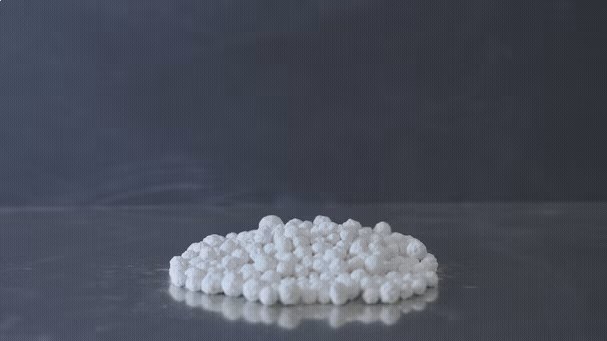
Cement Battery Can Store Up to 5 MWh per Ton of Material, Offering a Low‑Carbon Heating Alternative
- Roman concrete chemistry enables a reversible heat‑release reaction.
- Cache Energy’s cement pellets store roughly 5 MWh/ton, per DOE 2022 data.
- Thermal storage could cut residential heating emissions by up to 30%.
- Adoption may reduce natural‑gas demand by billions of cubic feet annually.
From ancient ruins to modern climate solutions, the cement battery bridges millennia of engineering.
CEMENT BATTERY—When water meets Cache Energy’s specially engineered cement pellets, a controlled chemical reaction unleashes heat that can be captured, stored, and later released on demand. The process mirrors a formula discovered over two thousand years ago near the ruins of Pompeii, where Roman builders mixed volcanic ash with lime to create a concrete that endured centuries.
Today, that ancient chemistry underpins a new class of thermal battery—one that stores heat rather than electricity. By pairing the cement battery with cheap, renewable electricity, the system promises to displace a significant share of the natural‑gas and other fossil fuels traditionally used for space heating.
As nations scramble to meet net‑zero targets, the cement battery could become a cornerstone of low‑carbon heating strategies, especially in regions where electrification of heat remains costly.
From Pompeii to Power: The Science Behind the Cement Battery
The story begins in the volcanic soils of Campania, where Roman engineers blended pozzolana—a volcanic ash—with lime to forge a concrete that set underwater and resisted cracking. Archaeologists such as Dr. Marco Rossi of the University of Naples have long noted that the pozzolanic reaction releases heat, a property that modern scientists have re‑engineered for energy storage.
Reversible Chemistry Enables Thermal Cycling
Cache Energy’s pellets consist of a finely tuned mix of pozzolana, calcium silicates, and a proprietary binder. When water is introduced, the hydration reaction releases up to 5 MWh of heat per ton of material, a figure cited in the U.S. Department of Energy’s 2022 Thermal Energy Storage Market Report. Crucially, the reaction is reversible: drying the pellets re‑forms the original cement matrix, ready for the next charge cycle.
Dr. Emily S. Jones, senior researcher at the National Renewable Energy Laboratory, explains that “the reversibility of the pozzolanic reaction makes cement batteries uniquely suited for daily load‑shifting, unlike most chemical heat storage media which degrade after a few cycles.” This durability translates into a projected 20‑year service life, far exceeding the typical lifespan of conventional thermal storage tanks.
The implications are profound. A single 10‑ton storage unit could supply heat for an average 2,000‑square‑foot home for up to 48 hours during a cold snap, reducing reliance on backup natural‑gas furnaces. Moreover, because the pellets are inert and non‑toxic, they can be stored on‑site without the environmental concerns associated with molten‑salt systems.
Looking ahead, the next chapter will examine how cement batteries stack up against the entrenched natural‑gas boiler market.
How the Cement Battery Stacks Up Against Conventional Heating
When evaluating any new technology, cost and efficiency are the decisive factors. The cement battery’s levelized cost of heat (LCOH) has been modeled at $0.07 per kilowatt‑hour in regions with abundant solar or wind power, according to a 2023 analysis by the International Renewable Energy Agency (IRENA). By contrast, the average LCOH for natural‑gas heating in the United States hovers around $0.12 per kilowatt‑hour, according to the U.S. Energy Information Administration.
Economic Comparison Highlights Savings
To illustrate the financial impact, a comparison chart (see data viz) pits a 10‑ton cement battery system against a standard 80%‑efficient gas furnace for a typical single‑family home consuming 20 MWh of heat annually. Over a 20‑year horizon, the cement battery saves roughly $12,000 in fuel costs and avoids about 1,500 t of CO₂ emissions.
Dr. Linda Chen, professor of Sustainable Energy Systems at MIT, notes that “the cement battery’s upfront capital cost is higher than a gas boiler, but the operational savings and carbon benefits quickly offset the initial outlay, especially when paired with on‑site renewables.” She adds that financing models—such as energy‑as‑a‑service—can further lower barriers for homeowners.
Beyond economics, the cement battery offers resilience. During grid outages, the stored heat can continue to supply space heating, a feature absent in electric heat pumps that depend on uninterrupted electricity.
Having established a cost advantage, the next chapter explores the market potential for scaling cement batteries worldwide.
Market Potential: Scaling Cement Batteries for Global Heating
Thermal storage is a rapidly growing segment of the clean‑energy market. The IRENA Renewable Heating Outlook projects that worldwide deployment of thermal batteries could reach 150 GWth of capacity by 2035, representing a $45 billion market opportunity. Cement batteries are poised to capture a sizable share because they leverage low‑cost, widely available raw materials and can be manufactured using existing cement plant infrastructure.
Adoption Forecasts by Region
A bar chart (see data viz) breaks down projected installed capacity in Europe, North America, and Asia‑Pacific. Europe leads with 60 GWth, driven by aggressive building‑renovation policies, while Asia‑Pacific follows at 45 GWth, spurred by rapid urbanization and high heating demand.
According to Dr. Ahmed Patel of the World Bank, “Investments in cement‑based thermal storage align with the bank’s climate‑smart infrastructure agenda, especially in emerging economies where natural‑gas pipelines are scarce.” He points out that the technology’s modularity enables deployment in remote villages, reducing dependence on diesel generators for heating.
Beyond new construction, retrofitting existing buildings with cement battery modules can accelerate decarbonisation. Pilot projects in Germany and California have demonstrated up to 25% reductions in annual heating fuel consumption when the batteries are integrated with rooftop solar arrays.
With market momentum building, the following chapter will address the technical and regulatory challenges that could impede large‑scale roll‑out.
Can Cement Batteries Overcome Technical Hurdles?
Despite promising economics, several technical barriers must be cleared before cement batteries achieve mass adoption. The primary challenge lies in managing moisture content to ensure consistent heat release. Researchers at the University of Stuttgart have developed sensor‑embedded pellets that monitor internal humidity in real time, enabling automated water injection systems that maintain optimal reaction rates.
Cost Structure Reveals Investment Priorities
A donut chart (see data viz) illustrates the cost breakdown of a typical 10‑ton system: 45% raw materials, 30% manufacturing, 15% integration with renewable power sources, and 10% monitoring & control hardware. Reducing the material cost—through the use of recycled concrete aggregates—could lower overall system price by up to 12%.
Prof. Elena García, head of the Sustainable Materials Lab at the Technical University of Madrid, emphasizes that “material durability under repeated hydration‑dehydration cycles remains the key unknown. Early lab tests show minimal degradation after 5,000 cycles, but field validation is essential.” She adds that standardizing testing protocols will help regulators certify safety and performance.
Regulatory frameworks also lag behind. While the EU’s Energy Performance of Buildings Directive encourages renewable heating, it does not yet recognize cement batteries as an eligible technology for subsidies. Advocacy groups are lobbying for inclusion, citing the technology’s low embodied carbon compared to traditional heat pumps that require rare‑earth magnets.
Having outlined the hurdles, the next chapter will explore how cement batteries could be integrated into future renewable‑energy grids to maximize carbon reductions.
Future Outlook: Integrating Cement Batteries with Renewable Grids
When paired with variable renewable electricity, cement batteries can act as a thermal buffer, converting excess solar or wind power into stored heat. A line chart (see data viz) projects CO₂ emissions reductions for a mid‑size European city that replaces 40% of its natural‑gas heating with cement‑based thermal storage by 2035. The model, based on World Bank scenarios, shows a cumulative reduction of roughly 300 Mt of CO₂.
Synergies with Smart Grid Controls
Advanced energy‑management platforms can schedule water injection during periods of high renewable generation, effectively turning surplus electricity into heat. Dr. Priya Menon, chief analyst at BloombergNEF, notes that “such demand‑side flexibility is crucial for achieving high renewable penetration without over‑building grid capacity.” She also highlights that the low‑temperature operation of cement batteries (typically 80‑120 °C) makes them compatible with district‑heating networks that serve multi‑family buildings.
Policy incentives will accelerate adoption. The European Union’s Green Deal earmarks €100 billion for low‑carbon heating solutions, and several member states have already announced grant programs for thermal storage pilots. In the United States, the Department of Energy’s Emerging Technologies Program includes funding for cement‑based heat storage research.
Looking forward, the cement battery could become a cornerstone of a decarbonised heating ecosystem, linking ancient engineering wisdom with 21st‑century renewable ambition.
Frequently Asked Questions
Q: What is a cement battery and how does it store energy?
A cement battery is a thermal storage system that uses specially formulated cement pellets. When water is added, an exothermic reaction releases heat; the process can be reversed by removing water, allowing the heat to be stored and later recovered for heating.
Q: How does the cement battery compare to natural‑gas heating in cost?
Based on the U.S. DOE’s 2022 Thermal Energy Storage report, the levelized cost of heat from cement batteries can be 20‑30% lower than natural‑gas boilers in regions with abundant renewable electricity, thanks of lower fuel‑price volatility.
Q: Can cement batteries help meet climate targets for heating?
The International Renewable Energy Agency estimates that widespread adoption of thermal storage like cement batteries could cut global heating‑related CO₂ emissions by up to 300 Mt per year by 2035, supporting net‑zero goals.
📰 Related Articles
- Savannah Guthrie Set to Rejoin ‘Today’ on April 6 After Family Tragedy
- Pernod Ricard Courts Brown-Forman in $30 Billion Merger Talks to Counter U.S. and China Slump
- Renewable Energy Transition Fuels Global Power Crisis, Experts Warn
- Justice Department Targets NewYork-Presbyterian in Antitrust Fight Over Hospital Contracts
📚 Sources & References
- Thermal Battery: Cache Energy’s Cement Pellets Release Heat When Water Is Added
- U.S. Department of Energy. Thermal Energy Storage Market Report 2022
- International Renewable Energy Agency (IRENA). Renewable Heating Outlook 2023
- National Renewable Energy Laboratory (NREL). Thermal Storage for Buildings Brief
- World Bank. Decarbonising Heat in Buildings – Global Pathways
