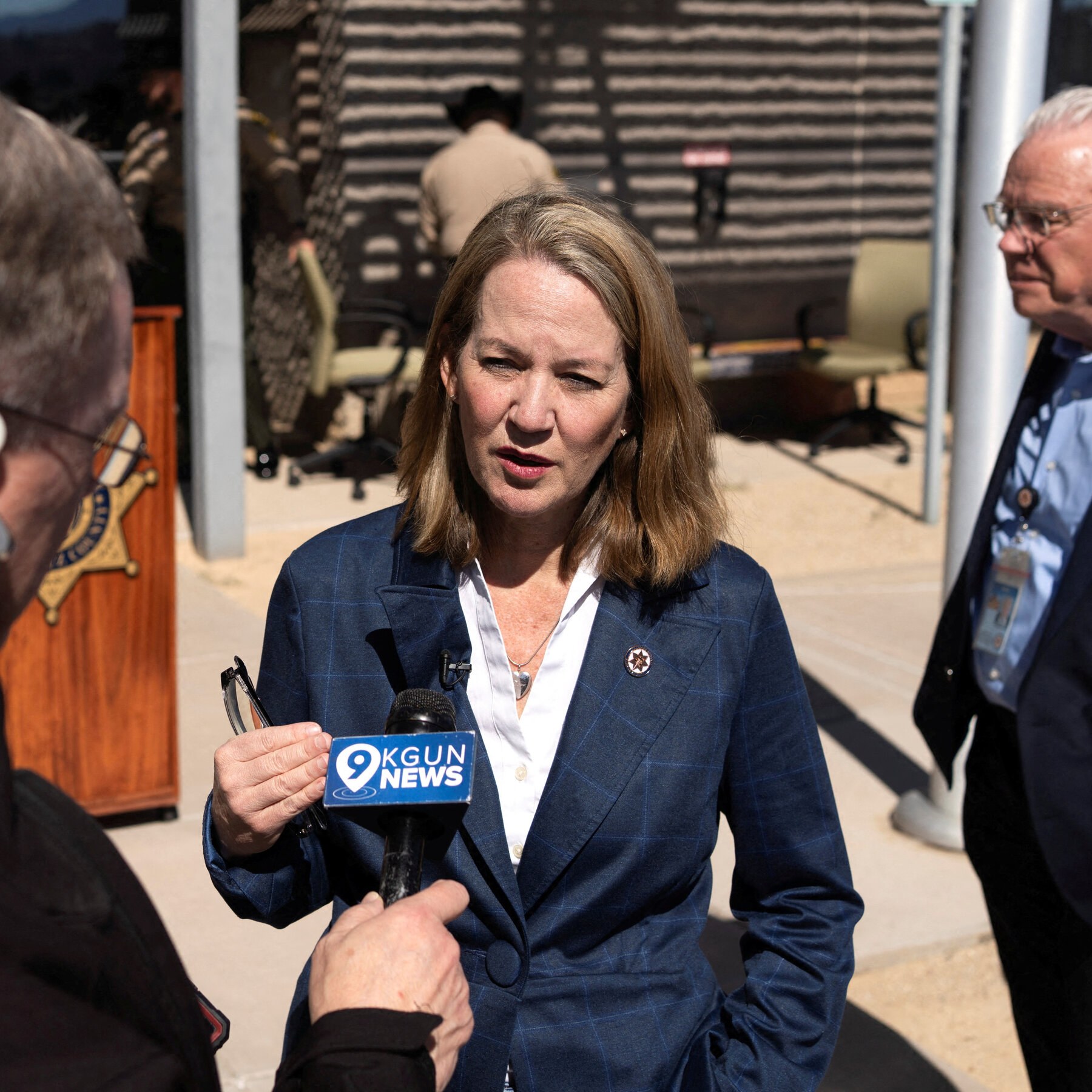
Arizona Files First-Ever Criminal Charges Against Kalshi Prediction Platform
- State prosecutors accuse Kalshi of running an illegal gambling business.
- Charges escalate the legal war between prediction markets and state gaming laws.
- Kalshi faces potential fines and executive liability if convicted.
- Case tests whether event contracts are skill-based derivatives or games of chance.
The move thrusts the three-year-old platform into the center of a national policy fight over what counts as a bet.
KALSHI—Arizona Attorney General Kris Mayes on Monday filed criminal charges against Kalshi Inc., the federally regulated prediction-market operator, alleging the company’s online contracts on elections, weather and economic data constitute an illegal gambling enterprise under state law.
The complaint, lodged in Maricopa County Superior Court, marks the first time a U.S. state has pursued criminal sanctions against a Commodity Futures Trading Commission-approved exchange for its core product. Prosecutors seek injunctive relief, civil penalties and potential prison time for executives if the court agrees the contracts rely on chance rather than skill.
Kalshi responded within hours, calling the prosecution “factually and legally baseless” and vowing to fight the case to the U.S. Supreme Court if necessary. The clash intensifies a widening regulatory rift: federal regulators classify event contracts as legal derivatives, while at least eight states argue they are unlicensed wagers.
How Arizona Built Its Gambling Case Against Kalshi
State investigators spent six months mapping Kalshi’s customer sign-ups, payment flows and marketing language before presenting a 32-count felony information sheet, court records show. Prosecutors zeroed in on contracts such as “Will the Fed raise rates in June?” arguing the outcome hinges on unpredictable policy moves, not research or expertise.
Arizona Revised Statutes §13-3302 defines gambling as risking something of value on an outcome “not under the person’s control or influence,” a standard the state says applies to Kalshi’s binary options. The complaint cites more than 23,000 Arizona residents who opened accounts since 2021, wagering an aggregate $18.7 million on political and economic events.
Expert view
“States are reasserting historic police powers over gaming,” said University of Nevada Reno law professor Ben Edwards, who tracks prediction-market litigation. “Arizona is effectively arguing that if the CFTC won’t police these contracts, we will.”
The indictment names Kalshi CEO Tarek Mansour and COO Luana Lopes Lara as potential defendants, exposing them to individual fines of up to $150,000 and two-year prison terms if convicted on all counts. No arrest warrants have been issued; the executives are expected to surrender for arraignment next month.
Legal analysts note the state must prove Kalshi’s contracts are “games of chance” rather than skill-based forecasting tools. The company counters that its markets produce real-time data used by academics, corporations and government agencies, a utility that distinguishes them from casino bets.
What Kalshi’s Arizona Customer Data Reveals
Internal Kalshi data submitted to the CFTC—and later subpoenaed by Arizona—shows the state ranks fourth in per-capita trading volume, behind only New York, California and Florida. The average Arizona account funded $810, well above the national mean of $532, indicating above-average engagement.
Men aged 25-44 represent 71 percent of the state’s user base, and 63 percent of those customers hold positions lasting less than 24 hours, behavior prosecutors liken to day-trading or sports betting. The state’s forensic accountants claim the short holding periods undercut Kalshi’s argument that its markets reward long-term information discovery.
Expert view
“Duration alone doesn’t prove gambling intent,” counters University of Chicago financial economist Eric Budish, who has studied Kalshi pricing. “High-frequency market makers in Treasury futures also close within hours.”
The complaint highlights promotional emails promising “a 200% return overnight” on election contracts, language Arizona says targets novices, not hedgers. Kalshi defends the wording as standard industry phrasing and notes it added risk disclaimers last year after a CFTC audit.
State investigators also tracked 412 instances where Arizona users allegedly violated Kalshi’s own position-limit rules by wagering more than the $25,000 individual cap. Prosecutors argue the company failed to police its platform, a lapse they deem consistent with an unlicensed gambling operation.
Is Kalshi a Derivatives Exchange or a Sportsbook?
The Commodity Exchange Act grants the CFTC exclusive jurisdiction over “event contracts,” a category Kalshi used in 2021 to win the first-ever federal registration for political prediction markets. The license requires segregation of customer funds, real-time price transparency and position-limit surveillance—standards sportsbooks are not obliged to meet.
Arizona’s prosecution challenges that federal pre-emption, asserting its own gaming statutes are not trumped by the CEA. The state points to a 2006 federal appellate ruling, Commodity Futures Modernization Act v. Nelson, that allowed Iowa to block an unlicensed fantasy-sports operator despite CFTC oversight.
Expert view
“The legal fault line is whether the instrument is ‘contrary to the public interest,’” explained Columbia Law School professor Kathryn Judge, who advised the CFTC on event-contract policy. “Arizona is betting a jury will view election betting as socially harmful.”
Kalshi’s contracts settle at $1 or $0 based on verifiable outcomes such as “Will the CPI exceed 3%?” The company argues this structure mirrors interest-rate futures traded on the Chicago Mercantile Exchange, a comparison Arizona rejects by noting Fed policy is deliberately opaque.
Industry lobbyists warn a conviction could embolden other states. West Virginia, Texas and Alabama have already floated bills to classify prediction markets as gambling, while New Jersey and Colorado are moving in the opposite direction, creating a patchwork that may force congressional intervention.
Timeline of Kalshi’s Regulatory Run-Ins
Kalshi’s clash with Arizona is the latest in a three-year tug-of-war between federal innovation policy and state gaming traditions. The platform launched in 2020 after two years of quiet lobbying at the CFTC, winning approval weeks before the U.S. presidential election.
Almost immediately, the Illinois Gaming Board demanded Kalshi cease offering contracts to its residents, arguing the 2020 election market violated the state’s sports-betting act. Kalshi complied but filed a pre-emptive federal suit that is still pending.
Expert view
“Each state action chips away at the CFTC’s authority,” said Georgetown finance professor James Angel, who served on the agency’s technology advisory committee. “Congress never imagined Twitter polls could become regulated futures.”
In 2022 the CFTC itself proposed tighter rules on event contracts, only to withdraw them after a 90-day comment period drew 14,000 letters, many from academic researchers citing Kalshi data. The agency signaled it would revisit the issue this year, but Arizona’s criminal case now risks short-circuiting that process.
The company has hired former U.S. Solicitor General Paul Clement to lead its defense, signaling it will seek a federal injunction on Supremacy Clause grounds. Clement successfully argued in 2018 that federal gambling law pre-empted New Jersey’s attempt to legalize sports betting—a precedent Kalshi hopes to invert.
What Happens If Kalshi Loses in Court?
A guilty verdict would freeze Kalshi’s Arizona operations and embolden copy-cat prosecutions in states with broad gambling prohibitions. The company books roughly 8 percent of its nationwide volume from Arizona users, translating into an estimated $2.3 million in annual revenue at risk.
More damaging, a conviction could chill venture capital. Kalshi last raised $30 million in Series B funding led by Sequoia Capital at a $250 million valuation. Investors tell reporters that felony exposure triggers automatic board-review clauses that can halt follow-on rounds.
Expert view
“No VC wants to fund a company whose executives face jail time,” said PitchBook fintech analyst Robert Le. “Even a deferred prosecution could slash Kalshi’s valuation by half.”
The company’s terms of service already bar residents of 11 states from trading; adding Arizona would widen the blacklist to 12, denting network effects that rely on diverse opinion pools. Kalshi warns in investor memos that further state bans could push it toward a geographic tiering model that fragments liquidity and widens bid-ask spreads.
Conversely, a Kalshi victory could accelerate federal legislation. Bipartisan bills circulating in the House Financial Services Committee would codify CFTC supremacy over event contracts, pre-empting state gaming laws. Lobbyists predict a Kalshi court win would add momentum for passage before the 2026 mid-term elections.
Frequently Asked Questions
Q: What is Kalshi accused of in Arizona?
State prosecutors charge Kalshi with operating an illegal gambling business, alleging its event contracts—bets on elections, weather, or economic data—constitute unlawful games of chance under Arizona statutes.
Q: How does this case affect prediction-market regulation?
The criminal case deepens the split between states that treat prediction contracts as gambling and federal regulators who call them legal derivatives, setting up a pivotal test for nationwide rules.
Q: Could Kalshi lose its CFTC license?
A felony gambling conviction would not automatically revoke Kalshi’s Commodity Futures Trading Commission designation, but regulators could seek suspension or impose stricter compliance conditions.
