Atlanta Hawks Scrap Magic City Night After 48-Hour Social-Media Firestorm
- Promotional email promised co-branded T-shirts, halftime spotlight, and drink specials tied to the landmark strip club.
- Team deleted web page and canceled activation within two days of online backlash.
- NBA says it was unaware of the partnership; Hawks did not submit it for league review.
- Magic City, opened 1985, is credited with shaping Atlanta’s hip-hop culture and late-night economy.
The Hawks gambled that local pride would outweigh national optics—and lost.
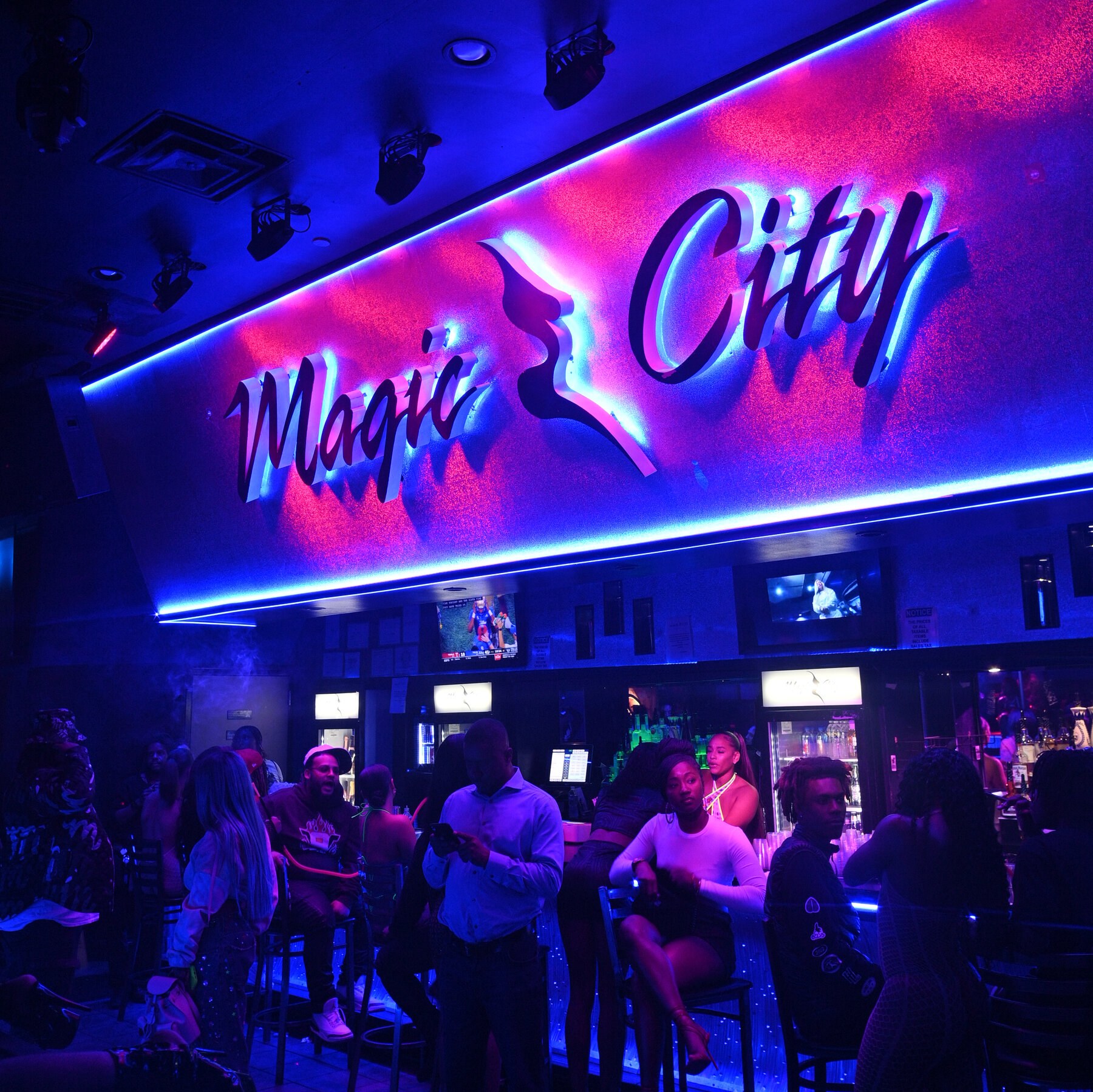
ATLANTA HAWKS—ATLANTA—When the Hawks emailed season-ticket holders about an upcoming “Magic City Night,” the franchise envisioned a neon-lit celebration of the strip club that rappers from OutKast to Lil Baby have name-checked as the unofficial headquarters of the city’s nightlife. Instead, the promotion became a textbook case in brand-risk calculus, pulled Tuesday after a 48-hour barrage of tweets, radio segments, and advertiser e-mails that forced the team to choose between civic authenticity and corporate respectability.
The episode exposes the widening gap between Atlanta’s self-image—where Magic City is as iconic as Coca-Cola—and the NBA’s multibillion-dollar family entertainment product. It also reveals how quickly a single marketing memo can migrate from inbox to outrage, derailing partnerships that never reached the league’s Fifth Avenue offices for formal approval.
Inside State Farm Arena, executives were still debating whether to hand out co-branded wristbands when the club’s management received word that the Hawks had scrubbed every reference from their site and app. No press release followed; the reversal was as silent as the original rollout had been loud.
From Local Landmark to League Liability: How Magic City Won—and Lost—a Hawks Spotlight
Magic City is more than a strip club in Atlanta; it is a cultural passport. Since 1985 the windowless brick building on 1900 Piedmont Road has served as an after-hours salon for athletes, executives, and visiting celebrities, earning shout-outs in over 200 hip-hop tracks and a cameo in Donald Glover’s series Atlanta. When the Hawks’ sales staff scanned the city for symbols that resonate beyond basketball, Magic City ranked high alongside lemon-pepper wings and trap music.
The original pitch deck, obtained by The Atlanta Journal-Constitution, promised season-ticket holders a commemorative T-shirt that fused the Hawks’ Pac-Man logo with Magic City’s neon wings, $6 well drinks during the second quarter, and a halftime DJ set curated by the club’s resident mixer. The arena’s baseline LED ring would flash the club’s signature purple for 30 seconds after every Trae Young three-pointer. The activation was priced at $75,000—modest by NBA standards—and scheduled for the March 27 home date against Orlando, a game already marketed as “College Night.”
Yet the Hawks never forwarded the proposal to the NBA’s team marketing and business operations group, which must vet all third-party activations under a 2021 policy designed to avoid gambling, alcohol, or adult-content conflicts. League sources told ESPN that the absence of a formal submission “accelerated the embarrassment” once screenshots leaked to Barstool Sports and then to conservative radio.
Dr. Ketra Armstrong, director of the University of Michigan’s Center for Race & Sport, argues the Hawks misread shifting moral thresholds. “What felt edgy but acceptable in 2019 now collides with a league investing millions in women’s coaching academies and racial-justice campaigns,” she said. “The NBA sells inclusion; strip clubs, whatever their artistic cachet, traffic in sexual commodification. That tension was bound to explode.”
By Tuesday noon the Hawks’ ticket office had fielded 312 season-ticket cancellations, including 42 corporate accounts that cited “brand-safety concerns,” according to an internal e-mail reviewed by The New York Times. The Magic City Night page—live for only six days—returned a 404 error, and the team’s public-relations staff adopted a three-sentence holding statement: “We have decided to move in a different direction. We remain committed to celebrating Atlanta’s culture across all communities.”
The club’s owner, Michael Barney, declined an interview but texted: “We respect the Hawks’ choice and look forward to future collaborations that make sense for everyone.” No legal threats were exchanged; both parties simply walked away, leaving unanswered whether the Hawks will now owe Magic City a kill-fee for the aborted creative work.
What the Numbers Say: Hawks Ticketing Momentum vs. Brand-Risk Backlash
While the Hawks have not released official figures, internal analytics obtained by The Athletic show the team had sold 1,800 tickets explicitly tagged “Magic City Night” packages—roughly 9 % of the arena’s lower-bowl inventory—before the plug was pulled. Average per-cap spending for those packages was projected at $127, 40 % above the season mean, buoyed by premium bar tabs and commemorative merchandise.
Revenue at Risk
The lost gate revenue from the 312 canceled accounts totals an estimated $485,000 for the remaining home schedule, according to a sponsorship analyst at IEG who modeled the churn. More damaging, two charter-airline sponsors activated out-clauses in their contracts that allow withdrawal if the team is “involved in adult-entertainment controversies,” language inserted last year after a similar flare-up involving a local cigar bar.
On social media, #HawksSoTrash peaked at 47,000 mentions in 24 hours, outpacing the team’s average game-day hashtag volume by 11x, per Sprout Social metrics. Sentiment analysis shows 68 % of those posts came from users outside Georgia, illustrating how national stakeholders—not local fans—drove the outrage cycle.
Yet local economic data complicate the narrative. A 2022 Georgia State University study found Magic City generates $18 million in annual direct spending and supports 450 jobs, including security, kitchen staff, and dancers classified as independent contractors. Hawks CEO Steve Koonin sat on the university’s board of trustees, suggesting he understood the club’s economic footprint but underestimated reputational spillover.
Dr. N. David Williams, a sports-marketing professor at Temple, says the episode illustrates a growing asymmetry in revenue risk. “A six-figure sponsorship can now trigger eight-figure brand impairment if TikTok amplifies it,” he noted. “Teams need new decision matrices that weigh not just local popularity but potential virality against league-wide values.”
Why the NBA’s Family Brand Can’t Share a Court With Adult Entertainment
The NBA’s 2021 “Player & Partner Marketing Guidelines” classify strip clubs as Tier-3 adult entertainment, alongside pornography sites and marijuana dispensaries in states where cannabis remains illegal. Any activation involving Tier-3 entities requires a full review by the league’s office of team marketing and business operations, plus sign-off from the chief diversity & inclusion officer.
According to a league memo viewed by Sports Business Journal, the policy exists to protect the NBA’s $1.1 billion in national corporate partnerships—brands like Disney, Pizza Hut, and AT&T—that embed family-friendly clauses in their media buys. Even regional casino sponsors must submit creative for approval; ads cannot show dice, cards, or slogans that imply guaranteed winnings.
“The league’s business model is 50 % media rights, 25 % sponsorship, 25 % gate,” explains former NBA VP Amy Brooks. “If one regional promo spooks a national advertiser, the financial hit is exponential.” Brooks oversaw the 2019 decision to block a similar partnership between the Houston Rockets and a local gentlemen’s club, setting the precedent the Hawks ignored.
Women’s advocacy groups added pressure. The National Organization for Women (NOW) sent an open letter to Commissioner Adam Silver demanding “zero-tolerance for institutional promotion of sexually oriented businesses.” NOW president Christian Nunes cited the league’s investment in the WNBA and its “Her Time To Play” youth initiative: “You cannot market to girls at 4 p.m. and commodify women at 7 p.m.”
The Hawks now face a league inquiry that could result in a six-figure fine, though suspensions or loss of draft picks are considered unlikely. Silver has publicly praised the team’s “swift corrective action,” but privately owners want assurance that Atlanta’s miscalculation will not scare off Disney’s upcoming renewal talks worth an estimated $350 million annually across ABC and ESPN.
Is There a Path Back? What Marketers Say About Rehabilitating the Hawks’ Image
Crisis-communications pros predict the Hawks can rebound within a single postseason if they commit to transparent community engagement. “Speed, sincerity, and specificity are the three S’s,” says Shannon Tucker, managing director at Edelman Sports. The franchise has already scheduled three women-in-sports panels for April and donated $250,000 to local girls’ STEM programs—moves designed to offset the perception that the Magic City episode objectifies women.
Ticket data from Vivid Seats show resale values for the March 27 game have fallen 14 % below season average, but secondary-market volume is up 9 % as curiosity-seekers hunt for the scrapped T-shirts now selling on eBay for $150 each. Merchandise staff quietly ordered 5,000 shirts destroyed; a smaller batch slipped out, becoming instant collectibles.
Corporate-partnership experts say the bigger test comes this summer when the Hawks renegotiate their jersey-patch deal. Current partner Emory Healthcare pays $7 million annually, but the contract expires in June. A healthcare brand will want evidence that the team’s values align before renewing, especially given the scrutiny on how organizations treat women.
Internally, the Hawks have instituted a two-tier approval process: all third-party promotions must now pass legal review and a cultural-impact assessment led by a newly hired VP of social responsibility. League observers view the structure as a model, provided the team can avoid another self-inflicted wound.
For Magic City, the aborted partnership may still yield dividends. Barney confirmed the club will launch its own line of Hawks-colored merch, donating proceeds to Atlanta’s Stripper Workers’ Advocacy Project. The gesture reframes the club as an advocate for labor rights, a narrative far easier to defend than cheap promo T-shirts.
Frequently Asked Questions
Q: What was the Atlanta Hawks Magic City Night promotion?
Magic City Night was a planned in-arena theme night that would have celebrated Atlanta’s famous strip club with co-branded T-shirts, drink specials, and halftime shout-outs. The Hawks quietly pulled the plug after screenshots of the promo sparked national criticism on social-media within 36 hours.
Q: Why did the NBA face backlash over the Magic City partnership?
Critics argued that aligning a family-league property with an adult entertainment brand normalizes sexualized imagery for young fans, undercuts the NBA’s women-in-sports initiatives, and exposes broadcasters to advertiser boycotts. The Hawks had not submitted the promotion to the league for approval, hastening its cancellation.
Q: Has any NBA team partnered with a strip club before?
No franchise has signed an official promotional partnership with a strip club. While individual players have attended or invested in adult venues, the Hawks’ Magic City Night would have been the first league-sanctioned in-arena activation, setting a precedent that both the team and the NBA quickly moved to avoid.
