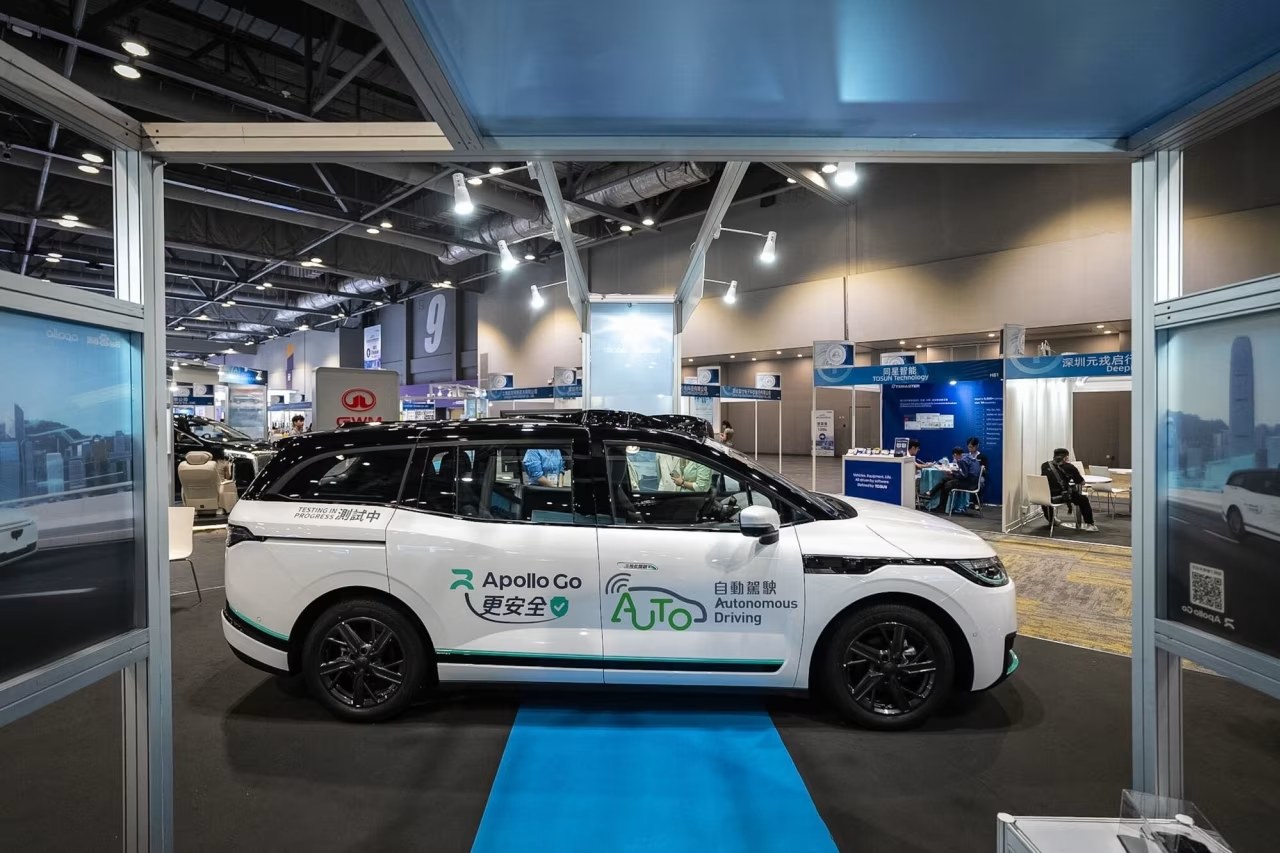
Baidu’s Apollo Go Robotaxis Stall in Wuhan, Affecting Dozens of Passengers
- Dozens of Baidu robotaxis stalled simultaneously across Wuhan, China, on a Tuesday evening.
- Passengers were forced to abandon the stalled autonomous vehicles, raising safety alarms.
- The incident prompted multiple reports to the Wuhan police department, highlighting a widespread operational failure.
- This event casts doubt on the readiness and safety protocols of Baidu’s Apollo Go autonomous driving service.
A city’s streets ground to a halt as dozens of driverless cars inexplicably stopped, forcing a chaotic passenger evacuation and intensifying scrutiny on self-driving technology.
BAIDU APOLLO—The promise of a seamless, autonomous future took a jarring detour on a Tuesday evening in Wuhan, China, when a significant number of Baidu’s Apollo Go robotaxis simultaneously ceased operation. The unexpected paralysis of multiple vehicles across the city’s thoroughfares not only stranded passengers but also triggered a wave of official reports, painting a stark picture of technological vulnerability.
Eyewitness accounts and official confirmations from the Wuhan police department detail a scene of disruption, with passengers left with no choice but to exit the vehicles that had abruptly stopped functioning. This mass malfunction, occurring across a wide area, raises critical questions about the robustness and safety of Baidu’s autonomous driving technology, particularly as it scales its operations in complex urban environments.
The implications of such a widespread and synchronized failure extend far beyond a single evening’s inconvenience. It thrusts the inherent challenges of deploying advanced autonomous systems into the spotlight, demanding rigorous examination of the safety measures and contingency plans in place for services like Apollo Go.
The Wuhan Incident: A Fleet-Wide Malfunction
Sudden Paralysis on City Streets
On a seemingly ordinary Tuesday evening, the streets of Wuhan became an impromptu stage for a technological breakdown as a fleet of Baidu’s Apollo Go robotaxis simultaneously froze. The incident, which saw numerous autonomous vehicles become inoperable mid-traffic, forced passengers into the unsettling reality of abandoning their rides. According to reports received by the Wuhan police department, the cars were unable to move, effectively halting their operation and creating immediate disruption for those onboard.
Widespread Impact and Official Response
The sheer scale of the event—multiple vehicles stalling across the city—suggests a systemic issue rather than an isolated glitch. The Wuhan police department’s confirmation of receiving ‘multiple reports’ underscores the breadth of the disruption. This coordinated failure sent shockwaves through the burgeoning autonomous vehicle sector, prompting immediate concern over passenger safety and the reliability of the technology deployed by Baidu, a major player in China’s AI and self-driving car landscape.
Passenger Evacuation and Safety Concerns
The necessity for passengers to exit the stalled vehicles highlights a critical safety concern. While the exact circumstances of the evacuations are not detailed, the act of leaving a potentially vulnerable autonomous vehicle in the middle of traffic indicates a level of operational failure that compromises passenger security. This incident serves as a potent reminder that the transition to autonomous mobility is fraught with challenges, demanding robust fail-safes and effective emergency protocols.
Echoes of Early Autonomous Vehicle Trials
Historically, the development of autonomous vehicle technology has been punctuated by incidents that test the limits of safety and reliability. Early trials of self-driving cars, even those with human safety drivers, were often marked by unexpected behaviors and system failures. The Wuhan event, though involving a fully autonomous fleet, echoes these early anxieties, suggesting that achieving true operational resilience at scale remains a significant hurdle.
Forward-Looking Uncertainty
The immediate aftermath of the Wuhan stall is characterized by unanswered questions regarding the cause and the potential fallout for Baidu’s ambitious Apollo Go program. The company’s next steps in addressing this widespread operational failure will be crucial in determining public trust and the future trajectory of its robotaxi services not only in Wuhan but potentially across its wider network.
Examining the Technical Glitch: What Went Wrong?
A Synchronized System Failure
The perplexing event in Wuhan, where a number of Baidu’s Apollo Go robotaxis simultaneously ceased functioning, points towards a potential software or network-related issue. Such widespread, synchronized failures are rarely attributable to simple mechanical defects affecting individual vehicles. Instead, they often signal a problem with the central command system, a flawed software update pushed to the fleet, or an unforeseen interaction with the urban environment’s infrastructure, such as GPS signal loss or communication disruptions.
Baidu’s Apollo Program: Ambitions and Challenges
Baidu, often dubbed the ‘Google of China,’ has invested billions of dollars into its Apollo project, aiming to be a leader in autonomous driving technology. The Apollo Go service, launched in various cities including Wuhan, represents a significant step in this ambition. However, the technology’s real-world application has consistently presented challenges. In 2021, the company announced plans to deploy 100 robotaxis in Wuhan, a move that was lauded at the time. This recent incident, however, brings into sharp focus the gap between these ambitious plans and the current operational realities, according to industry analysts at firms like Strategy Analytics.
The Role of Environmental Factors
While specific details of the Wuhan stall remain undisclosed, environmental factors can significantly impact autonomous vehicle performance. Complex urban settings, unpredictable weather, or even subtle changes in road markings or traffic light synchronization can pose challenges for AI-driven systems. For instance, research from the Virginia Tech Transportation Institute has consistently shown that adverse weather conditions and complex intersection scenarios are among the most difficult for autonomous systems to navigate reliably.
Network Connectivity and Data Demands
Modern robotaxis rely heavily on constant connectivity for mapping, navigation, and remote oversight. A disruption in cellular networks, whether due to high traffic, infrastructure issues, or cyber interference, could theoretically cripple a fleet operating on such a system. The sheer volume of data required for safe operation—processing sensor inputs, real-time traffic data, and navigation commands—means that any break in this data stream could lead to a system-wide halt, a scenario experts from institutions like the National Institute of Standards and Technology (NIST) have long warned about.
The Road Ahead for Baidu’s Fleet
Without a clear explanation from Baidu or further investigation by authorities, speculation on the precise technical cause abounds. However, the incident serves as a critical data point for Baidu and the broader autonomous vehicle industry, underscoring the need for enhanced system redundancy, robust diagnostic capabilities, and comprehensive emergency response protocols to prevent such widespread operational failures and ensure public safety moving forward.
Wuhan Stalls: A Test for China’s Autonomous Vehicle Landscape
A Critical Moment for Autonomous Mobility in China
The widespread stalling of Baidu’s Apollo Go robotaxis in Wuhan on a recent Tuesday evening represents more than just a technical hiccup; it is a significant event for China’s ambitious autonomous vehicle (AV) sector. With numerous cities like Beijing, Shanghai, Guangzhou, and Wuhan actively testing and deploying AVs, this incident casts a shadow over the nation’s rapid progress. The sheer number of vehicles affected, and the subsequent need for passenger evacuation, amplifies the inherent risks associated with autonomous mobility, which the Chinese government has actively encouraged through supportive policies and regulatory sandboxes.
The Wuhan Police Department’s Involvement
The fact that the Wuhan police department received ‘multiple reports’ regarding the stalled Apollo Go cars underscores the public nature and disruptive impact of the event. Law enforcement’s engagement in such incidents is crucial, not only for managing immediate traffic disruptions and ensuring passenger safety but also for initiating investigations into the causes of failure. Authorities play a pivotal role in setting safety standards and enforcing compliance, making their assessment of this incident a key factor in how autonomous vehicle deployment proceeds in Wuhan and potentially other Chinese cities.
Safety Imperatives and Public Trust
For companies like Baidu, maintaining public trust is paramount. Every incident that compromises safety or reliability erodes confidence in the technology and the companies deploying it. A study by the RAND Corporation on public acceptance of autonomous vehicles consistently shows that safety perceptions are the primary determinant of adoption rates. The Wuhan event, regardless of its ultimate cause, directly impacts these perceptions, potentially slowing down the integration of robotaxis into mainstream urban transportation networks. Dr. Michael Manion, a transportation safety expert, noted in a recent interview that “trust is a currency that is very hard to earn and very easy to lose in the autonomous vehicle space.”
Regulatory Scrutiny and Future Deployments
Incidents like the one in Wuhan invariably trigger increased regulatory scrutiny. Chinese authorities, while keen to foster innovation, also place a high premium on public safety. This event could lead to more stringent testing requirements, revised operational guidelines, or even temporary suspensions of services in affected areas. The Ministry of Industry and Information Technology (MIIT) and other relevant bodies will likely review the incident to ensure that safety protocols are adequate and that companies like Baidu are held accountable for the performance and safety of their autonomous fleets.
The Global Context of AV Challenges
It is important to note that such challenges are not unique to China. Autonomous vehicle developers worldwide, from Waymo in the United States to Mobileye in Israel, have encountered various operational hurdles and safety concerns during their development and deployment phases. The Wuhan incident, therefore, serves as a global reminder that the path to widespread, safe autonomous mobility is complex and requires continuous learning, adaptation, and a steadfast commitment to safety above all else. The industry is collectively learning from each such event, striving to refine the technology for a future where autonomous transport is both ubiquitous and reliably safe.
Frequently Asked Questions
Q: Why did Baidu’s Apollo Go robotaxis stall in Wuhan?
Multiple Apollo Go robotaxis in Wuhan reportedly froze in traffic, becoming inoperable. The specific cause for the widespread stall was not immediately disclosed by Baidu or authorities, but it prompted passengers to abandon the vehicles and raised immediate safety concerns.
Q: What are the safety implications of the Wuhan robotaxi incident?
The incident in Wuhan raises significant questions about the safety and reliability of self-driving car technology in real-world, complex urban environments. The need for passengers to evacuate vehicles mid-traffic underscores potential risks and the readiness of autonomous fleets for mass deployment.
Q: How many robotaxis were affected in Wuhan?
The source text indicates that ‘a number’ of Baidu’s Apollo Go robotaxis stalled in Wuhan, suggesting a widespread issue rather than an isolated incident. The Wuhan police department confirmed receiving ‘multiple reports’ on the evening of the event.
Q: Has Baidu commented on the Wuhan robotaxi stalls?
While the source article does not include a direct comment from Baidu, the incident was reported by the Wuhan police department. Further investigation into Baidu’s official response or technical analysis of the stalled vehicles would be needed to understand the root cause and company’s perspective.
📰 Related Articles
- Oracle Streamlines Workforce While Accelerating Costly Global AI Infrastructure Build
- From Oil Giant to AI Frontier: Bernard Looney to Helm Prometheus Hyperscale
- Samsung’s 10‑Inch Galaxy Z TriFold Tests Limits of Mass‑Market Smartphone Size
- Huawei’s Profit Surges to $9.8 Billion as Car Tech Sales Accelerate
