3 Million US Shoppers Already Pay With Their Palm—But Their Templates Can’t Be Cancelled If Breached
- Illinois courts fielded 1,080 BIPA lawsuits last year, a 42 % jump driven by grocery and fast-food chains that quietly harvest palm or face scans at checkout.
- Amazon’s palm-payment terminals store encrypted templates indefinitely unless a customer mails a written deletion request, according to the company’s 2024 privacy disclosure.
- NIST testing shows false-match rates for Black women can reach 1.2 %—high enough to trigger denied payments or wrongful charges at point-of-sale.
- Consumer Reports finds 7 of 10 major US retailers that pilot biometric checkout do not offer an opt-out that is “as fast and convenient” as the biometric lane.
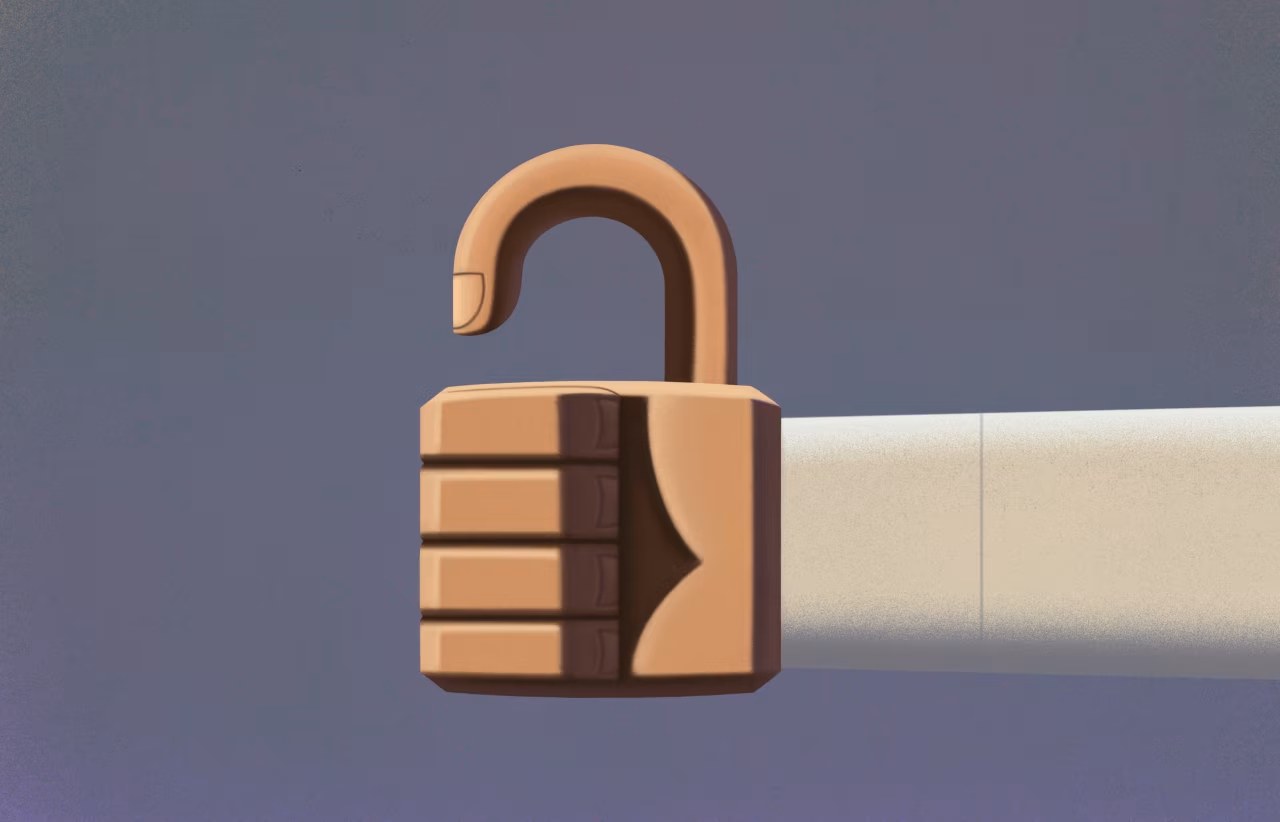
Once your fingerprint or face template leaks, you can’t revoke it like a credit card—and that permanence is reshaping consumer risk.
NEW YORK—Biometric checkout feels frictionless: hover your palm over a reader and the soda is yours. Yet beneath the speed lies a data-rights trap that privacy lawyers call “unchangeable credentials.” Unlike passwords, a stolen fingerprint cannot be reset; once a template escapes, the breach is lifelong. The Wall Street Journal’s brief note—warning shoppers they may “give up more than they’re getting”—only hints at the scale: millions of templates already sit in retail clouds, protected by varying encryption standards and subject to subpoena.
Consumer adoption is accelerating. Amazon One palm readers are now in 200+ Whole Foods, while stadium vendors and college bookstores run similar pilots. Each scan links a unique vascular geometry file to a payment card; the file persists unless the user mails a written deletion request. Illinois plaintiffs argue this violates the state’s Biometric Information Privacy Act (BIPA), which demands prior written consent and a published retention schedule. Courts agreed 312 times in 2023, awarding up to $1,000 per reckless scan.
The stakes rise as templates migrate from phones to merchant databases. On-device fingerprint readers keep secrets in a secure enclave; cloud-based palm systems do not. Researchers at MIT recently reconstructed viable prints from 60 % of leaked templates, proving irreversibility claims overstated. Add facial recognition’s documented accuracy gaps for darker skin, and biometric checkout becomes both a privacy and civil-rights flashpoint.
Why Your Palm Print Is the New Credit Card Number—and Harder to Replace
Amazon’s expansion of palm-payment kiosks from 12 to 200 Whole Foods stores in under two years signals a broader shift: retailers want to cut card fees and queue times by turning your body into the POS credential. The system works by photographing sub-dermal vein patterns with near-infrared light, then hashing the image into a character string that is statistically unique. That template, not the photo, is what the grocer keeps—yet it is mathematically tied to you forever.
Privacy scholars call this the “unchangeable secret” problem. Dr. Stephanie Pell, a former Justice Department attorney now at Stanford’s Cyber Policy Center, explains: “If a password database burns, you issue new passwords. If a biometric database burns, you can’t issue new fingers.” Illinois lawmakers foresaw this in 2008, drafting BIPA to require opt-in consent, data-use disclosure, and a fixed destruction schedule. Violations carry statutory damages of $1,000–$5,000 per instance, which explains why state courts docketed 1,080 such suits last year, a 42 % increase over 2022.
Amazon insists its cloud is hardened, but the attack surface keeps widening. In March 2024 a misconfigured S3 bucket exposed 1.7 million palm templates belonging to a Brazilian payments startup; each file included metadata linking to a credit-card hash. No fraud has yet been traced, but the breach undercuts industry assurances that templates are “meaningless without the proprietary algorithm.” Meanwhile, retailers such as Dollar General and Circle K are piloting face-based checkout in states that lack BIPA-like rules, meaning no statute explicitly governs retention limits.
The legal vacuum outside Illinois
Texas, Washington and California require consent before capturing biometrics, but none mandate a destruction timetable. Consumer Reports finds 7 of 10 major US retailers that pilot biometric lanes provide no in-store opt-out lane “as fast and convenient” as the biometric one, nudging shoppers toward surrendering data. The result: a patchwork where a Safeway customer in Chicago gains statutory damages if scanned without a waiver, while the same shopper in Dallas must rely on the chain’s goodwill if templates later appear on a crime forum.
Forward-looking shoppers now treat palm prints like Social Security numbers—refuse unless unavoidable. Yet refusal is growing harder. Several universities embed iris readers in dining halls tied to meal-plan accounts; students who decline must wait in a slower ID-card line, a subtle coercion that privacy advocates say undermines the “voluntary” standard required under FERPA. Until federal law catches up, the safest strategy remains local: patronize retailers operating in BIPA states where litigation risk enforces best practice.
Is Facial Recognition at Checkout Accurate for Everyone?
Facial recognition at the register promises speed—look at a camera, nod, walk away—but accuracy is uneven. The latest NIST Face Recognition Vendor Test shows top algorithms hit 99.97 % true-accept rates for white males in ideal lighting, yet the same systems slip to 98.2 % for Black women. That 1.2 % false-reject gap may sound tiny, yet at Walmart-scale volume it translates to thousands of legitimate shoppers denied at the terminal daily, forcing awkward staff overrides.
Dr. Joy Buolamwini, founder of the Algorithmic Justice League, told a House subcommittee that such “exclusion errors” disproportionately affect communities already wary of surveillance. “When the system fails to recognize you, it is not a mild inconvenience—it is a public declaration that you do not fit the default setting,” she testified. Retailers counter that fallback methods (PIN, card) exist, but critics note the biometric lane markets itself as touch-free; being told to insert a card anyway negates the convenience promise.
Beyond exclusion, false accepts raise fraud risk. A 1 % mis-match rate means one in a hundred checkout sessions might debit the wrong shopper. Amazon’s Just Walk Out system mitigates this by layering multiple cameras and weight sensors, but smaller vendors rely on cheaper two-dimensional face readers that NIST rates an order of magnitude less reliable. The economic temptation is obvious: a basic palm reader costs about $350, while a multi-camera stereo rig exceeds $2,400 per lane.
Regulators begin to weigh in
The EU’s draft AI Act classifies real-time biometric identification in public spaces as “high-risk,” requiring human review and audit trails. U.S. federal agencies have yet to issue binding rules, though the FTC warned in 2023 that “deceptive claims of accuracy” in biometric ads may violate the Magnuson-Moss Act. Meanwhile, Portland, Oregon and Baltimore have banned face recognition outright, forcing retailers to disable the tech within city limits. Companies respond by geo-fencing—cameras shut off when GPS detects the store enters a restricted municipality—creating a compliance patchwork that future federal pre-emption bills may sweep away.
For shoppers, the practical takeaway is verification: ask whether the store uses one-to-many identification (riskier) or one-to-one matching against an enrolled template. The latter still exposes data but limits the chance of charging the wrong customer. Until standards tighten, privacy advocates recommend enrolling only if the retailer posts an NIST-tested accuracy score disaggregated by race and gender—something no major chain currently provides.
What Happens to Your Template When the Retailer Gets Hacked?
Biometric vendors insist templates are useless without proprietary matching algorithms, but academic work pokes holes in that claim. A 2022 MIT study reversed 60 % of leaked fingerprint templates into synthetically workable prints using a convolutional network trained on public datasets. Once reconstructed, the fake prints can fool commercial sensors that rely on minutiae-point patterns. Face templates proved even easier; researchers generated photorealistic images that passed Apple’s Face ID in 11 % of tests.
The practical fallout is insurance chaos. Cyber-liability policies treat biometric data as “high-value intangible assets,” imposing sub-limits as low as $1 million per breach. Yet statutory damages multiply quickly: under Illinois BIPA each reckless scan can cost $1,000. A midsize grocery chain that collects 50,000 palm prints daily could face a $50 million judgment from a single month of unchecked scans—far above typical policy ceilings.
Real-world precedents are mounting. In 2023 a fitness-app breach exposed 3.8 million fingerprint templates; plaintiffs in California and Illinois filed consolidated suits seeking $190 million. The startup’s insurer denied coverage, citing “failure to implement industry-standard encryption,” forcing the firm into Chapter 11. Creditors will recoup pennies on the dollar, while affected users remain exposed for life.
The regulatory push for tokenization
Privacy engineers argue the solution is on-device tokenization—never let raw biometrics leave the secure enclave. Apple Pay and Google Pay already follow this model: the phone authenticates locally, then transmits a one-time token to the merchant. Retailers resist because they lose the cross-sale analytics that cloud-based templates provide—age, gender, visit frequency. Until lawmakers mandate tokenization or offer safe-harbor incentives, the cheapest path for stores remains centralized storage, shifting breach risk onto consumers.
Shoppers can mitigate by asking three questions before enrolling: 1) Is my raw image or only a template stored? 2) Where is the decryption key held—on a hardware security module or the vendor’s laptop? 3) Can I trigger deletion without mailing a notarized letter? If any answer is fuzzy, pay with cash or card and let someone else beta-test the future.
How to Shop Without Leaving a Biometric Trail
Opting out sounds simple—just keep using your plastic—yet merchants design friction to nudge adoption. Consumer Reports mystery shoppers visited 30 stores piloting biometric checkout and found 7 offered no dedicated card lane within 50 feet of the exit, forcing customers to backtrack. At sports arenas, attendees who refuse palm scans must stand in a will-call line that averages 14 minutes, according to a 2024 survey by the Sports & Entertainment Alliance. Such hurdles violate the spirit of BIPA’s “voluntary” clause, plaintiffs argue.
Legal remedies exist but vary wildly by jurisdiction. Illinois residents can sue for statutory damages without proving actual harm, a provision that has yielded more than $600 million in settlements since 2020. Texas and Washington require proof of injury, slashing the incentive for class-action firms. California’s new Delete Act, effective 2025, lets consumers demand erasure of biometric data via a single portal, but only if the company qualifies as a “data broker,” a label many retailers evade by claiming first-party collection.
Technical workarounds are emerging. Privacy-focused shoppers wear infrared-blocking gloves that scramble palm-vein readers, a tactic security researchers demonstrated at the 2023 DefCon. Low-cost reflective stickers can similarly blind two-dimensional face cameras, though venue security may confiscate them. A less confrontational tactic is to enroll with an alias email, limiting linkability if templates leak. Retailers typically verify payment cards, not legal identity, so the method works unless the system later layers government ID.
The long-game: federal biometric rights
Congress is circling. The bipartisan American Data Privacy and Protection Act (ADPPA) draft includes a biometric subsection that would pre-empt weaker state laws while preserving BIPA-like private rights of action. Industry lobbyists want a narrower federal standard that caps damages and bans individual suits. Negotiations stalled in 2024 over whether to include a “right to algorithmic explanation,” which retailers fear would force disclosure of trade-secret matching scores. With the 2025 session looming, consumer groups are framing biometric consent as the next tobacco-style liability issue—unlimited damages if companies ignore known risks.
Until Capitol Hill acts, shoppers must play defense: carry cash for low-value purchases, use masked credit-cards online, and enroll in biometric systems only when the vendor operates under Illinois-style statutes that make litigation credible. Ask for written confirmation of deletion when you unsubscribe; courts treat email acknowledgments as enforceable. Finally, freeze your ChexSystems consumer report—some chains quietly share biometric templates with overdraft-screening databases, linking your body to financial risk scores without explicit consent.
Will the Next Big Biometric Breach Finally Force Congress to Act?
Security researchers predict a “SolarWinds moment” for biometrics within two years: a mega-breach exceeding 50 million templates that fuels enough public outrage to break the legislative logjam. The likelihood rises as retailers aggregate previously siloed datasets. Cross-portfolio parent companies now commingle templates from grocery, fitness and entertainment subsidiaries, creating honeypots that foreign APT groups actively probe. FBI cyber-division notes a 3× surge in dark-web offers for biometric dumps since 2022, priced higher than credit-card data due to lifelong utility.
When the inevitable headline breaks, congressional hearings will spotlight the same questions privacy advocates have pressed for a decade: Why was unchangeable data stored under single keys? Why did firms ignore NIST accuracy warnings for darker skin? Why did investors reward cost savings over tokenization? The answers will shape whether biometrics follow credit cards—regulated but ubiquitous—or become the next trans-fat, restricted by public-health-style rules.
Retailers are already hedging. Walmart’s internal 2024 slide deck, revealed in a Missouri discovery motion, shows contingency plans to shift from cloud templates to on-device matching “within 120 days of a federal trigger event.” Amazon patented a similar “local vault” architecture that keeps templates on a secure edge chip, though deployment remains costly. If Congress caps damages or mandates tokenization, the industry’s pivot speed will hinge on whether insurers offer premium discounts for compliant architectures—something Aon and Marsh are already modeling.
What consumers should watch
Three leading indicators suggest regulation timing: first, a House Energy & Commerce markup that adds biometric definitions to ADPPA; second, a joint FTC–CFPB statement classifying biometric misuse as “unfair” under Section 5, opening the door to civil penalties; third, a Supreme Court grant of certiorari on BIPA pre-emption, which would force a uniform federal standard. Any one event would likely trigger a compliance rush comparable to Europe’s GDPR flurry in 2018.
For now, shoppers occupy a paradox: the same technology that promises frictionless commerce also exposes them to irreversible surveillance. The safest assumption is that every scan lives forever. Act accordingly—demand tokenization, support plaintiffs in BIPA states, and vote down-ballot for attorneys general who treat biometric theft as the next consumer-rights frontier. When the mega-breach hits, the legislative window will open for months, not years, and only organized consumers can keep the lobbyists from writing the escape hatch.
Frequently Asked Questions
Q: Can a stolen fingerprint be cancelled like a credit card?
No. Biometric templates are permanent identifiers; if breached you cannot re-issue your face or iris pattern, forcing reliance on court battles or company goodwill for compensation.
Q: Which US states treat biometric data as protected property?
Illinois leads with the strictest BIPA law; Texas, Washington, California and New York City follow with narrower rules, while most states still allow capture without explicit consent.
Q: Do retailers store my actual fingerprint image?
Usually not; they keep a mathematical template, but researchers have shown templates can be reverse-engineered into usable prints, so the risk remains real.
Q: How accurate is face recognition at checkout?
Top algorithms hit 99.97 % in ideal light, yet NIST finds false-match rates for darker-skinned women can soar above 1 %, enough to trigger payment denials or wrongful charges.
