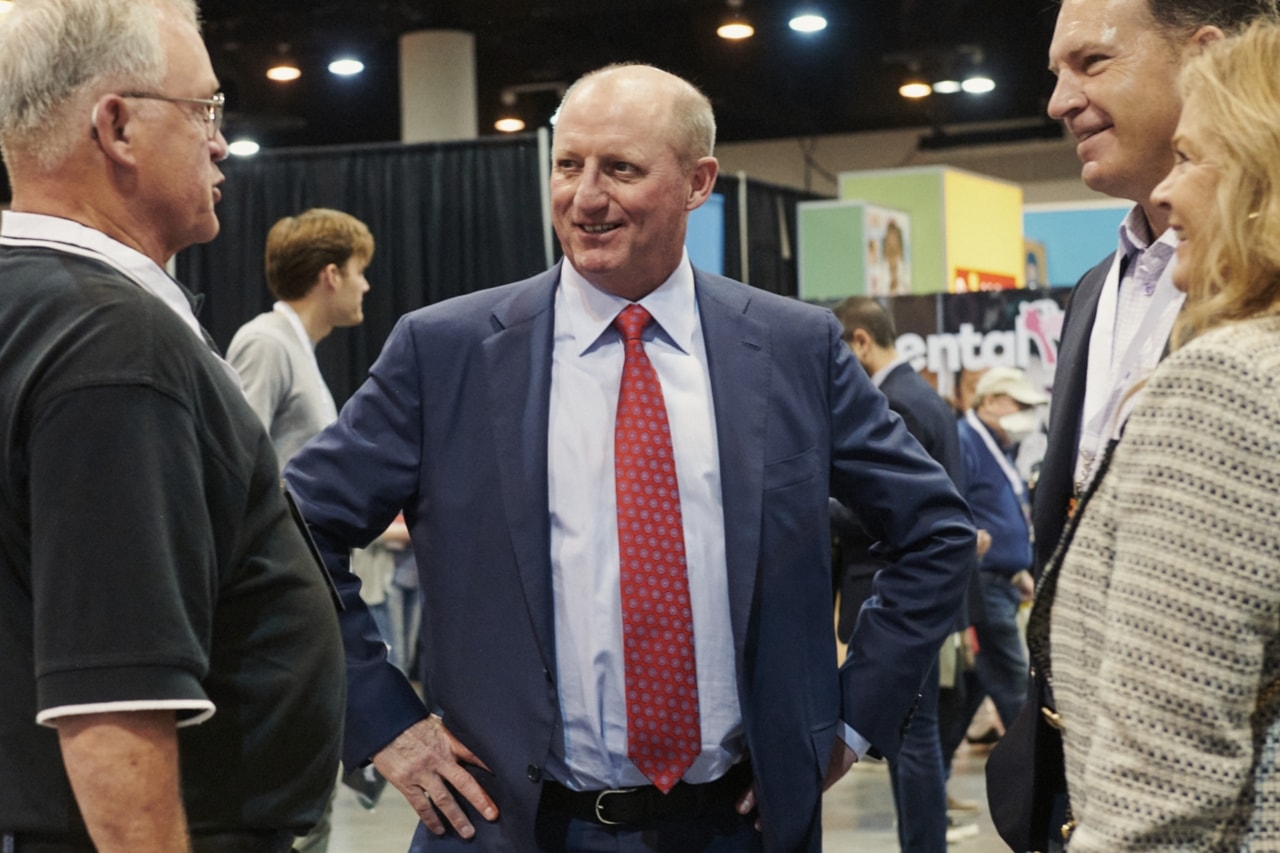
The Dawn of a New Era at Berkshire Hathaway
- Greg Abel takes the reins as CEO, marking the end of Warren Buffett’s tenure at the helm.
- Abel pledges to adhere to Buffett’s investment framework, aiming for continuity and stability.
- The transition occurs amidst a period of significant economic and market challenges, testing Abel’s leadership and strategic prowess.
A New Chapter in Berkshire’s History
BERKSHIRE HATHAWAY—The December quarter will be etched in the annals of Berkshire Hathaway’s history as the last under the stewardship of Warren Buffett, the legendary investor and CEO who has been the face and driving force of the conglomerate for decades. As the year drew to a close, Greg Abel, Buffett’s longtime deputy and chosen successor, stepped into the role of CEO, ushering in a new era for the company.
This transition marks a significant milestone, not only for Berkshire Hathaway but also for the business world at large, given Buffett’s immense influence and the company’s diverse portfolio of businesses and investments. Abel’s ascension to the top post is seen as a strategic move to ensure continuity and maintain the philosophy that has guided Berkshire’s success under Buffett’s leadership.
As Abel embarks on this new journey, he faces the daunting task of living up to the expectations set by his predecessor while navigating the complexities of the current economic landscape. With a pledge to follow Buffett’s ‘framework,’ Abel seeks to reassure investors and stakeholders of his commitment to the principles that have made Berkshire Hathaway a behemoth in the business world.
The Buffett Legacy: A Foundation for Success
Warren Buffett’s impact on Berkshire Hathaway cannot be overstated. Since taking the reins in 1965, Buffett has transformed the company into a multinational conglomerate with a market value of over $500 billion, boasting a diverse portfolio that includes Insurance, Retail, Manufacturing, and Financial Services, among others. His investment philosophy, which emphasizes long-term value creation, quality of earnings, and a disciplined approach to capital allocation, has been the guiding force behind Berkshire’s success.
One of the key aspects of Buffett’s legacy is his ability to identify and acquire quality businesses at attractive valuations. His approach to investing is not merely about buying stocks; it is about acquiring and holding businesses that have strong fundamentals, competitive advantages, and talented management teams. This philosophy has led to the acquisition of iconic brands such as Coca-Cola, American Express, and Wells Fargo, among many others, significantly contributing to Berkshire’s prosperity.
Buffett’s management style, which empowers the CEOs of Berkshire’s subsidiaries to operate their businesses independently, has also been instrumental in the company’s growth. By providing the necessary resources and autonomy, these CEOs have been able to grow their businesses, often through strategic acquisitions and organic expansion, contributing to the conglomerate’s overall success.
The challenge for Greg Abel will be to build upon this legacy while putting his own stamp on the company. As he navigates the complexities of the current market, Abel must balance the need for continuity with the imperative to innovate and adapt to changing business conditions. The Berkshire model, under Buffett’s guidance, has been remarkably resilient, but the test of its robustness will come under new leadership.
Despite the daunting task ahead, Abel’s pledge to follow Buffett’s framework provides a clear direction for the company’s future. By adhering to the principles that have driven Berkshire’s success, Abel aims to reassure investors and stakeholders of his commitment to long-term value creation. However, the question remains as to how Abel will interpret and implement these principles in the context of a rapidly evolving business landscape.
As the economic environment continues to shift, with factors such as inflation, interest rates, and geopolitical tensions influencing market sentiments, Abel’s ability to navigate these challenges will be crucial. His success will depend on his capacity to apply the timeless principles of Buffett’s framework to the dynamic conditions of the modern business world.
Greg Abel: The Right Successor?
Greg Abel, the new CEO of Berkshire Hathaway, brings a wealth of experience and a deep understanding of the company’s culture and operations. Having joined Berkshire in 2000, when the company acquired MidAmerican Energy, Abel has climbed the ranks, eventually becoming the Vice Chairman of Non-Insurance Operations. Throughout his tenure, he has overseen various segments of Berkshire’s portfolio, including the energy, retail, and manufacturing sectors.
Abel’s background in the energy sector, where he initially made his mark, has provided him with a solid foundation in operational management. His experience in leading complex organizations and managing diverse teams will undoubtedly be valuable as he takes on the broader responsibilities of CEO. Moreover, his exposure to Berkshire’s multifaceted businesses has given him a unique insight into the company’s inner workings, preparing him for the challenges of leading such a diverse conglomerate.
Despite his extensive experience, Abel’s appointment as CEO has also raised questions about his investment prowess and his ability to replicate Buffett’s success in the capital markets. While Buffett has been vocal about his confidence in Abel’s abilities, the new CEO will face scrutiny as he begins to make his own investment decisions. The investment community will closely watch how Abel navigates Berkshire’s portfolio, looking for signs of whether he will indeed follow Buffett’s framework or if he will introduce new strategies to drive growth.
The transition period will also be a time of learning for Abel, as he adjusts to the demands of being a CEO of a global conglomerate. He will need to balance the operational aspects of the business with the strategic and financial decisions that dictate Berkshire’s overall direction. The support of the existing management team, coupled with the wisdom and guidance of Buffett, who remains as Chairman, will be invaluable in this process.
Furthermore, Abel’s leadership style and how he chooses to engage with the Berkshire community, including shareholders, employees, and the public, will be under observation. His ability to communicate effectively, to articulate Berkshire’s vision and strategy, and to inspire confidence in the company’s future will be critical in maintaining the strong relationships that Buffett has cultivated over the years.
As Abel settles into his new role, he faces not only the challenge of leading Berkshire Hathaway but also the opportunity to leave his own mark on the company. By blending continuity with innovation, Abel can ensure that Berkshire remains a powerhouse in the business world, while also evolving to meet the changing needs of its stakeholders and the broader market.
Adapting to Change: The Future of Berkshire Hathaway
The future of Berkshire Hathaway under Greg Abel’s leadership will be shaped by his ability to adapt the company’s strategy to the evolving business landscape. As the global economy continues to undergo significant changes, driven by technological advancements, shifting consumer behaviors, and increasingly complex geopolitical environments, Berkshire must remain agile and responsive to these trends.
One of the key areas where Abel may introduce changes is in the company’s approach to technology and innovation. While Berkshire has historically focused on traditional businesses, the rapid growth of the tech sector and the digital transformation of various industries present both opportunities and challenges. Abel may look to increase Berkshire’s presence in the tech space, either through strategic acquisitions or investments in startups and growth companies.
Moreover, the issue of sustainability and environmental, social, and governance (ESG) factors will likely play a more significant role in Berkshire’s decision-making process under Abel’s leadership. As investors increasingly prioritize ESG considerations, companies must demonstrate their commitment to responsible and sustainable practices. Abel’s approach to integrating ESG into Berkshire’s strategy will be closely watched, as it has the potential to impact both the company’s reputation and its long-term financial performance.
The geopolitical landscape also poses significant challenges for Berkshire, with trade tensions, regulatory changes, and global economic uncertainties affecting businesses worldwide. Abel will need to navigate these complexities, ensuring that Berkshire’s diverse operations are resilient in the face of such risks. His experience in managing global businesses will be invaluable in this context, as he seeks to protect and grow Berkshire’s interests across different markets.
Despite these challenges, the opportunity for growth and innovation within Berkshire Hathaway remains substantial. With a strong balance sheet, a talented management team, and a diverse portfolio of businesses, the company is well-positioned to capitalize on new opportunities as they arise. Abel’s pledge to follow Buffett’s framework provides a solid foundation for the company’s future, but it will be his ability to adapt and evolve this framework that will ultimately determine Berkshire’s success in the years to come.
As the business world continues to evolve, the story of Berkshire Hathaway under Greg Abel’s leadership is just beginning. With its rich history, talented leadership, and adaptable business model, Berkshire is poised to remain a major player in the global economy. The question on everyone’s mind—whether Abel can successfully follow in Buffett’s footsteps—will unfold over time, as the new CEO puts his own stamp on the company and navigates the complexities of the modern business environment.
Investment Strategy: A Continuation of Buffett’s Philosophy
At the heart of Berkshire Hathaway’s success under Warren Buffett has been its investment strategy, which emphasizes long-term value creation, discipline, and a focus on quality businesses. As Greg Abel takes the reins, one of the most significant aspects of his pledge to follow Buffett’s framework is the continuation of this investment philosophy. Abel has reiterated his commitment to this approach, indicating that Berkshire will remain a long-term oriented investor, seeking to acquire and hold businesses that have strong fundamentals and growth potential.
The core of Berkshire’s investment strategy has always been about identifying and acquiring quality businesses at attractive valuations. This involves a deep understanding of the businesses in question, their competitive advantages, financial health, and management quality. Buffett has historically taken a patient approach, often waiting for the right opportunities to arise before making a move. This discipline has been a hallmark of Berkshire’s investment success, allowing the company to avoid costly mistakes and capitalize on unique opportunities.
Abel’s experience in overseeing various segments of Berkshire’s portfolio has given him a deep understanding of the company’s investment approach. He has been involved in several significant investments and acquisitions during his tenure, providing him with valuable insights into the process and the criteria that Berkshire uses to evaluate potential investments. As CEO, Abel will continue to rely on the principles of business quality, management talent, and valuation discipline that have guided Berkshire’s investment decisions under Buffett.
One of the key challenges for Abel will be to balance the company’s investment activities with its operational needs. Berkshire’s diversified portfolio of businesses requires significant capital expenditures to maintain and grow their operations. Abel will need to ensure that the company’s investment strategy aligns with its overall business objectives, allocating capital effectively between investments, acquisitions, and internal growth initiatives.
The investment community will closely monitor Berkshire’s investment activities under Abel’s leadership, looking for signs of whether the company will maintain its disciplined approach or if new strategies will be introduced. Abel’s ability to replicate Buffett’s investment success will be a significant factor in determining Berkshire’s future growth and profitability. While it is impossible to exactly replicate Buffett’s unique blend of experience and intuition, Abel’s commitment to the core principles of Berkshire’s investment philosophy provides a solid foundation for the company’s future investment endeavors.
In conclusion, the investment strategy at Berkshire Hathaway under Greg Abel’s leadership is likely to remain grounded in the principles that have driven the company’s success under Warren Buffett. By continuing to focus on long-term value creation, quality businesses, and disciplined capital allocation, Berkshire aims to maintain its position as a premier investment holding company. The future will reveal how effectively Abel implements this strategy and whether he can build upon the legacy of his predecessor in the investment arena.
Leadership and Governance: The Abel Era
As Greg Abel assumes the role of CEO at Berkshire Hathaway, the company enters a new era in terms of leadership and governance. Abel’s appointment marks a significant transition, not only because he is succeeding a legend in Warren Buffett but also because he brings a different style and perspective to the role. The way Abel chooses to lead and govern Berkshire will have a profound impact on the company’s culture, operations, and ultimately, its success.
One of the critical aspects of Abel’s leadership will be his approach to governance. Berkshire Hathaway is known for its decentralized management structure, where the CEOs of its various subsidiaries are given a high degree of autonomy to run their businesses. This approach has been instrumental in attracting and retaining talented executives, as it allows them to operate with a great deal of independence. Abel has indicated that he intends to maintain this structure, recognizing the benefits it has brought to Berkshire in terms of innovation, efficiency, and growth.
Abel’s experience in managing a diverse portfolio of businesses will serve him well in this context. His ability to empower the CEOs of Berkshire’s subsidiaries, providing them with the necessary resources and support while also holding them accountable for their performance, will be crucial. This balanced approach to governance will enable Berkshire to continue benefiting from the entrepreneurial spirit and operational expertise of its subsidiary leaders, while also ensuring that the company’s overall strategy and objectives are met.
The board of directors at Berkshire Hathaway will also play a vital role in the company’s governance under Abel’s leadership. The board, which includes experienced individuals with diverse backgrounds and expertise, provides oversight and guidance to the management team. As Abel navigates the challenges and opportunities facing Berkshire, the board’s input and support will be invaluable, helping to ensure that the company remains on a path of long-term success and growth.
Furthermore, Abel’s leadership style and how he chooses to engage with Berkshire’s stakeholders will be under scrutiny. His ability to communicate effectively with shareholders, employees, and the broader community will be critical in maintaining the trust and confidence that Buffett has built over the years. Abel’s approach to transparency, accountability, and social responsibility will also be closely watched, as these factors have become increasingly important to investors and the public at large.
In conclusion, the era of Greg Abel at Berkshire Hathaway marks a new chapter in the company’s history, with significant implications for its leadership, governance, and overall direction. As Abel settles into his role, his priorities will include maintaining the company’s unique culture, continuing its legacy of success, and positioning Berkshire for future growth and prosperity. The governance structure, leadership style, and stakeholder engagement will all be critical components of Abel’s strategy, as he seeks to build upon the foundations laid by his predecessor and forge a new path forward for the company.
Conclusion: The Future of Berkshire Hathaway
The future of Berkshire Hathaway under Greg Abel’s leadership is filled with both promise and challenges. As Abel pledges to follow Warren Buffett’s framework, he aims to maintain the continuity and stability that have been the hallmarks of Berkshire’s success. However, he also recognizes the need for innovation and adaptation in a rapidly changing business environment.
The transition from Buffett to Abel marks a significant milestone in Berkshire’s history, but it also presents an opportunity for the company to evolve and grow. With a strong foundation in place, thanks to Buffett’s legacy, Abel is well-positioned to build upon this success and take Berkshire to new heights. The key to his success will lie in his ability to balance continuity with change, ensuring that the company remains true to its core principles while also embracing new ideas and strategies.
The coming years will be critical for Berkshire Hathaway as it navigates the complexities of the modern business world. From technological advancements and shifting consumer behaviors to geopolitical uncertainties and environmental challenges, the company will face a myriad of factors that will test its resilience and adaptability. Through it all, Abel’s leadership, vision, and commitment to Berkshire’s core values will be instrumental in guiding the company forward.
As the business world looks on, the story of Berkshire Hathaway under Greg Abel’s leadership will unfold. It is a story of transition, of growth, and of the pursuit of excellence. With its rich history, talented leadership, and adaptable business model, Berkshire Hathaway is poised to remain a premier business conglomerate for years to come. The future may hold challenges, but with Abel at the helm, Berkshire is ready to face them head-on, armed with the wisdom of its past and the vision for its future.
In the end, the future of Berkshire Hathaway will be shaped by Greg Abel’s ability to lead, to innovate, and to inspire. As he embarks on this new chapter in the company’s history, Abel carries the weight of responsibility for maintaining the legacy of his predecessor while forging a new path forward. The journey ahead will be filled with opportunities and challenges, but with the right leadership, the right strategy, and the right mindset, Berkshire Hathaway is ready to embrace the future and continue its tradition of success.
