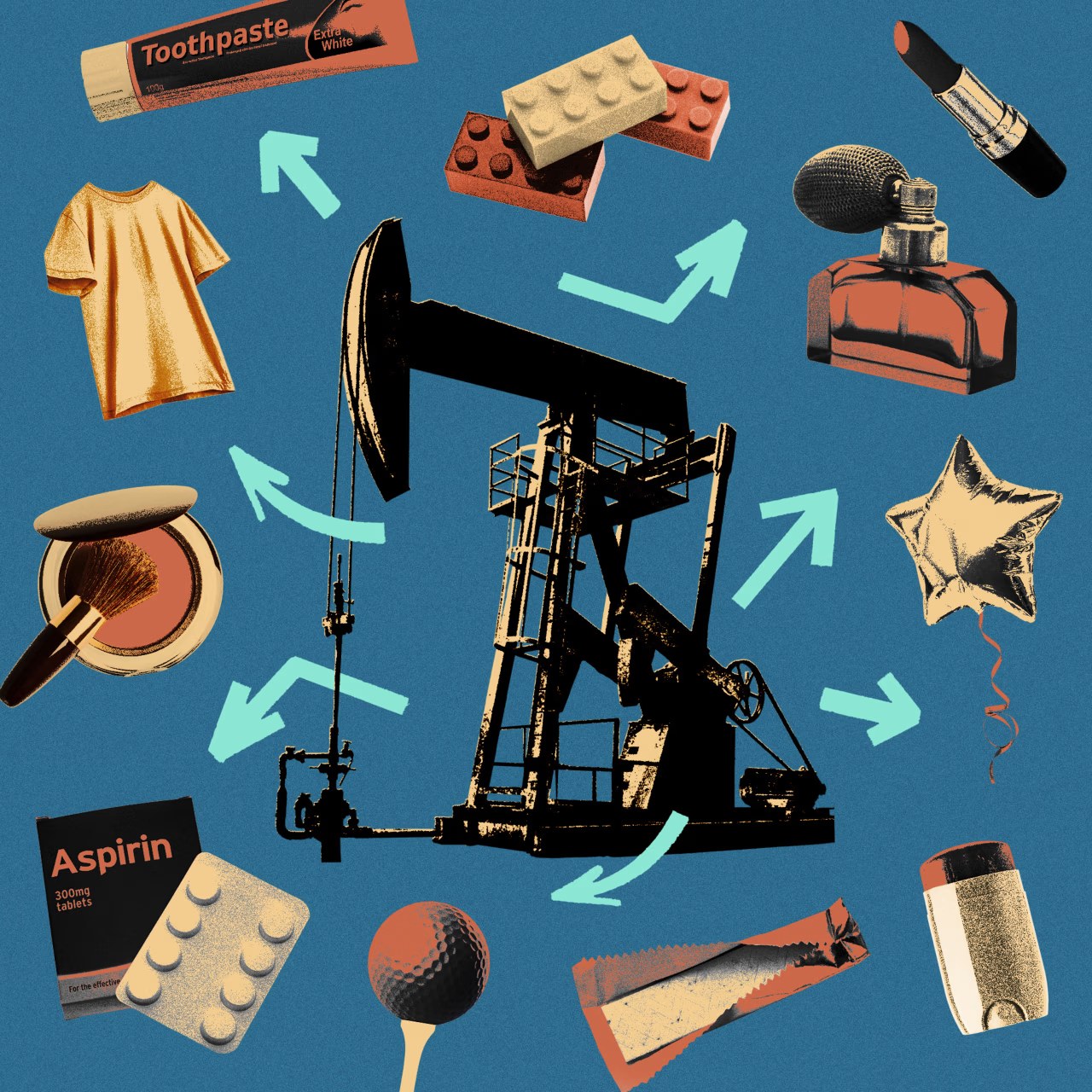
From Golf Balls to Shampoo, 40% of Plastics Trace Back to Petroleum
- Petroleum can comprise up to 40% of the weight of plastic-rich goods like toys.
- Liquid consumer products such as shampoo typically contain about 1% petroleum content.
- Christie Sayes, Baylor University environmental-science professor, quantified these shares for WSJ.
- Everyday items—from sports equipment to toiletries—rely on crude-derived ingredients even when fuel use falls.
Even non-drivers are embedded in an oil economy that reaches far beyond the gas tank.
NEW YORK—Oil’s grip on modern life is tighter than the steering wheel. While headlines track miles driven and gallons pumped, a quiet river of petroleum flows into products that never see a combustion engine. Baylor University environmental scientist Christie Sayes told the Wall Street Journal that a children’s toy molded largely from plastic can be 40% petroleum by weight; a bottle of shampoo, by contrast, owes roughly 1% of its mass to crude. The difference is stark, but the message is uniform: even consumers who shun cars remain tethered to oil.
The petroleum hidden in consumer goods explains why global crude demand keeps climbing even as electric vehicles displace gasoline. Plastics, fertilizers, synthetic rubber, cosmetics and detergents all start in the same wellheads that produce motor fuel. When fuel growth stalls, petrochemicals become the oil industry’s growth engine—projected by the International Energy Agency to account for half of oil-demand growth through 2030.
This investigation traces petroleum’s invisible pathways into ordinary products, quantifies the shares, and examines why breaking up with oil is harder than swapping a gas tank for a battery.
The Plastics Paradox: Why a Toy Can Be 40% Petroleum
Plastic is where oil’s second life becomes most visible. A molded action figure or a set of building blocks can owe up to 40% of its weight to petroleum, Baylor’s Christie Sayes explained, because the polymer feedstock—ethylene, propylene, benzene—derives from refining by-products. Once polymerized, these molecules lock carbon chains into durable shapes that persist for centuries.
From Barrel to Toy Box
The journey begins at refineries along the Gulf Coast. A 42-gallon barrel yields roughly 3.7 gallons of liquefied petroleum gases and petrochemical feedstock, according to the U.S. Energy Information Administration. That stream is cracked into lighter olefins, then shipped to polymer plants where heat and catalysts knit molecules into polyethylene or polypropylene resins. Toy manufacturers pelletize the resin, inject it into steel molds at 200 °C, and produce a finished figure within seconds.
Environmental economist Margaret Walls of Resources for the Future notes that demand for these resins is price-inelastic: ‘Even doubling crude prices only trims plastic consumption a few percent, because there are few scalable substitutes that match plastic’s moldability and strength.’ The result is a market that cushions oil producers when transportation demand falters.
Yet the public rarely links plastic toys at big-box stores to oil wells. Retailers brand items as ‘non-toxic’ or ‘BPA-free’ without addressing the feedstock origin, reinforcing consumer blindness to petroleum’s ubiquity. This disconnect has policy consequences: while 54 jurisdictions regulate plastic bags, fewer than a dozen require product-level disclosure of virgin-petroleum content, leaving shoppers unaware that a cheap doll may embody more crude than a commuter’s spare fuel can.
Forward-looking analysts expect plastic-to-oil ratios to climb. As fuel efficiencies improve and EVs scale, petrochemicals could consume 30% of all oil by 2050, up from 16% today, per IEA baseline forecasts. Toys, packaging and consumer electronics will anchor that growth unless circular-economy mandates intervene. The next chapter explores why liquids like shampoo carry far smaller—but still critical—petroleum shares.
Why Shampoo Contains Oil: The 1% That Keeps Hair Clean
Flip a shampoo bottle and the ingredient list reads like a petrochemical roll call: sodium lauryl sulfate, cocamidopropyl betaine, dimethicone, fragrance. Each is synthesized, at least in part, from petroleum derivatives. Christie Sayes calculates the resulting oil share at roughly 1% by weight once water dilution is accounted for—small, but multiplied across 1.5 billion bottles sold annually in North America.
Surfactants: Oil’s Cleaning Power
Surfactants reduce surface tension so water lifts sebum from hair. The workhorse molecule, sodium lauryl sulfate, is produced by sulfating lauryl alcohol, itself derived from ethylene—an olefin refined from crude. Organic chemist Michael Blumenfeld at UC Santa Barbara notes that plant-based surfactants exist but cost 30–50% more and require agricultural land: ‘Until green premiums fall, most brands stick with petroleum feedstocks.’
Preservatives and fragrances add more oil. Synthetic phenoxyethanol keeps microbes at bay; polycyclic musks provide scent. Both originate in benzene and toluene streams that emerge during catalytic reforming at refineries. Even the bottle is high-density polyethylene, bumping total petroleum content to about 4% when packaging is included.
Consumer-goods giants track crude prices closely. Unilever told investors in 2023 that a $10/barrel rise in Brent erodes gross margin by 40 basis points across its portfolio, chiefly through petrochemical inputs. The firm’s response—light-weighting bottles and boosting recycled content—has trimmed virgin plastic 18% since 2019, but oil derivatives remain irreplaceable for performance chemicals.
Environmental NGOs counter that transparency lags. Only three of the top-ten shampoo brands publish life-cycle carbon or petroleum intensity per wash, according to a 2022 NGO scorecard by ChemSec. Without mandatory disclosure, shoppers cannot compare products on oil content, stalling demand for greener substitutes. The coming section widens the lens to thousands of other petroleum-laced goods.
Beyond Toys and Shampoo: 6,000 Hidden Petroleum Products
The American Petroleum Institute estimates that petroleum is the feedstock for more than 6,000 finished products. Golf balls—whose solid cores are polybutadiene synthesized from butadiene—illustrate the list. So do polyurethane running shoes, polyester fleece jackets, PVC plumbing, and the asphalt that paves roads. Each category consumes a distinct barrel fraction, keeping refineries profitable when gasoline output dips.
Specialty Chemicals: Tiny Volume, Huge Value
Only 3% of a barrel ends up as petrochemicals, yet that slice generated 17% of total refinery-gate revenue in 2023, according to Energy Intelligence. Specialty solvents used in pharmaceuticals command margins above $1,000 per metric ton versus $150 for gasoline, incentivizing refiners to reconfigure plants toward chemical yields.
Cosmetics exemplify high-margin niches. Lipstick relies on microcrystalline wax derived from heavy vacuum gas oil; mascara pigments are dispersed in petroleum solvents. L’Oréal purchases roughly 30,000 tonnes/year of such ingredients, internal procurement slides show. With limited bio-based alternatives that meet color-fastness standards, cosmetics remain a captive market for oil.
Agricultural films offer another case. Polyethylene mulch films increase soil temperature, boosting tomato yields 30% in trials by USDA’s Agricultural Research Service. Biodegradable starch films exist but cost double and decompose unevenly, prompting California to delay bans until 2032. The net effect: farmers lock in polyethylene demand tied to crude.
Even renewable energy equipment hides petroleum. Wind-turbine blades are built with epoxy resins made from bisphenol-A, itself sourced ultimately from benzene. A 3-megawatt turbine consumes roughly 20 tonnes of such plastic, translating into 110 barrels of embedded petroleum per unit, according to National Renewable Energy Laboratory data compiled by WSJ. Electrification therefore does not eliminate oil; it shifts its form.
What Drives Oil Demand When Cars Go Electric?
Global oil demand for road transport peaked in 2019 at 45 million barrels per day, according to the IEA, yet total crude consumption keeps inching upward because petrochemicals outpace fuel losses. Analysts at Wood Mackenzie project petrochemicals will add 5 million bpd of new demand by 2040, offsetting two-thirds of gasoline’s decline. The driver is consumer-goods growth in Asia and limited recycling infrastructure.
Recycling Bottlenecks
Only 9% of all plastic ever produced has been recycled; the rest was landfilled, incinerated, or leaked into the environment, UNEP estimates. Mechanical recycling degrades polymer chains, so food-grade packaging still requires 30–50% virgin resin. Chemical recycling—pyrolyzing plastic back to monomers—remains capital-intensive at $4,000 per tonne of capacity, nearly triple conventional plants, says a 2023 Accenting-Chem report.
Policy fragmentation adds risk. The EU’s proposed Packaging and Packaging Waste Regulation sets recycled-content targets of 30% by 2030, while India’s Plastic Waste Management Rules exempt single-use sachets under 50 ml—precisely the format Hindustan Unilever uses to sell shampoo to 800 million rural consumers. Such loopholes entrench virgin resin demand and, by extension, crude.
Carbon pricing also plays a role. Europe’s Emissions Trading System now prices petrochemical CO₂ at €90 per tonne, raising European ethane cracker cash costs 6%, ICIS calculates. Yet Middle-East producers face no such levy, shifting capacity toward the Gulf and keeping global oil demand intact. ‘Petrochemicals are becoming the new battleground for climate policy,’ says Caroline Hedigerg, senior analyst at Stockholm Environment Institute.
Meanwhile, consumers remain largely unaware that their electric car or reusable shopping bag still embeds petroleum. Surveys by Pew Research find only 28% of U.S. adults know plastic comes from oil, and fewer than 10% recognize synthetic textiles as petroleum products. That knowledge gap weakens political pressure for circular-economy legislation, ensuring oil retains a captive market even in a net-zero mobility future.
Can We Break Up With Petroleum Products?
Substitution is possible but uneven. Bio-based polyethylene, produced from sugar-cane ethanol in Brazil, has the same molecular structure as its fossil twin and is recyclable within existing streams. Braskem’s Triunfo plant produces 260,000 tonnes/year, capturing a 4% premium over conventional PE thanks to corporate sustainability mandates from Coca-Cola and Nestlé. Yet scale is limited: global bio-PE capacity equals just 0.6% of total polyethylene demand.
Policy Levers and Corporate Targets
Extended Producer Responsibility (EPR) laws are emerging in Canada and California, requiring manufacturers to fund end-of-life recycling. By internalizing waste costs, EPR can tilt economics toward recycled resin. In British Columbia, EPR increased plastic recycling rates to 50%, double the North-American average, according to a 2022 StatCan report.
Start-ups are attacking niche segments. Full Cycle Bioplastics uses bacteria to convert organic waste into polyhydroxyalkanoate (PHA) resins certified for marine degradation. Its pilot plant in California converts 2 tonnes/day of food scraps into resin suitable for single-use cutlery. CEO Rick Hegg explained to WSJ that PHA’s production cost, now $4.80 per kilogram, must fall below $3 to compete with virgin polypropylene.
Consumer brands face shareholder pressure. Procter & Gamble pledged to cut virgin petroleum plastic in packaging 50% by 2030; Unilever targets 40%. Progress so far: P&G has achieved a 14% reduction, citing supply-chain constraints for food-grade recycled resin. Failure to meet interim targets invites proxy votes; last year 38% of P&G shareholders supported a plastics-reduction proposal filed by As You Sow, an advocacy group.
Economists argue for recycled-content standards paired with green premiums. A 2023 IMF working paper modeled a $500-per-tonne subsidy for recycled resin and found it could cut virgin plastic demand 35% within a decade while raising consumer prices less than 1%. The obstacle is fiscal: such a subsidy would cost $12 billion annually in the U.S. alone, clashing with tight budgets.
Ultimately, breaking petroleum’s grip requires coordinated action: carbon pricing that includes petrochemicals, EPR that funds collection, and consumer awareness that links shampoo to oil wells. Until those pieces align, oil will continue flowing into products long after the last gasoline car leaves the road.
Frequently Asked Questions
Q: What everyday products contain petroleum?
Petroleum is found in plastics, synthetic rubber, cosmetics, detergents, golf balls, toys, and even asphalt. Items with high plastic content can be up to 40% petroleum by weight, while liquid products like shampoo may contain around 1%.
Q: How much of oil is used for non-fuel products?
Roughly 16% of every barrel of crude oil in the U.S. is allocated to petrochemicals, which become plastics, solvents, and specialty chemicals. This share is rising as fuel demand plateaus, making consumer goods a key growth market for oil producers.
Q: Why is petroleum in shampoo?
Shampoo uses petroleum-derived surfactants, thickeners, and preservatives. While the water content dilutes oil’s share to about 1%, virtually every non-water ingredient—fragrance, dyes, packaging—traces back to petrochemicals, tying personal care to crude prices.
