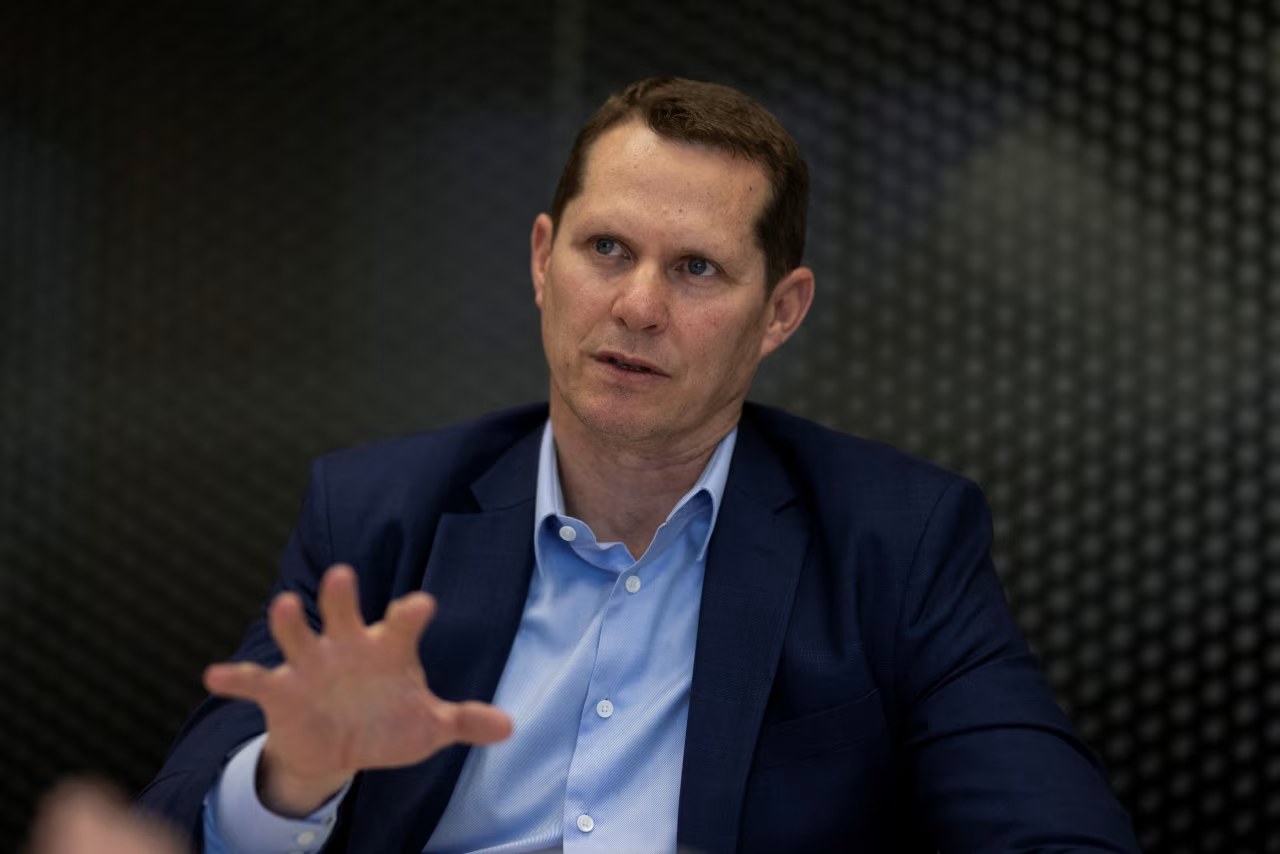
7‑Month Lead‑Time to Market: BHP’s new CEO promises 15% boost in copper output
- Brandon Craig will take the helm on July 1, succeeding Mike Henry after six years.
- BHP’s share price climbed 0.24% on the announcement, signaling market approval.
- Craig’s track record includes expanding copper assets in Chile and potash projects in Canada.
- The transition aligns with BHP’s $30 billion growth plan through 2028.
Why the leadership shift matters for the world’s largest miner
CEO SUCCESSION—BHP Group, the world’s biggest diversified miner, announced on June 30 that its Americas head, Brandon Craig, will become chief executive officer on July 1. The decision reflects a deliberate pivot toward fast‑growing copper and potash segments, which together accounted for roughly 22% of BHP’s 2025 revenue, according to the company’s annual report.
Mike Henry, who steered BHP through a $10 billion acquisition of Anglo American’s South American assets, will retire after a six‑year tenure marked by a 12% rise in total production. Craig’s promotion is intended to preserve continuity while injecting fresh operational focus on the Americas, where the miner has earmarked $8 billion in capital spending for the next three years.
Industry analysts, such as Jane Liu of S&P Global, note that “the timing of this succession dovetails with a broader commodity super‑cycle, especially for copper, where demand from electric‑vehicle supply chains is projected to outpace supply by 2030.” The next chapters unpack how Craig’s expertise will shape BHP’s strategic trajectory.
What Does Brandon Craig’s Appointment Signal for BHP’s Growth Strategy?
From Regional Oversight to Global Command
Brandon Craig has spent the last eight years overseeing BHP’s North‑American and South‑American operations, managing a portfolio that includes the Escondida copper mine in Chile—responsible for 5% of global copper output—and the Jansen potash project in Saskatchewan, which began production in 2024.
According to a Bloomberg interview on July 2, senior analyst Mark Thompson said, “Craig’s hands‑on experience with high‑grade copper and large‑scale potash development gives BHP a rare blend of technical and commercial insight that is hard to find at the CEO level.” This perspective underscores why the board chose an internal candidate rather than an external hire.
Financially, BHP’s 2025 guidance projects a 15% increase in copper production by 2028, translating to an additional 1.2 million tonnes annually. The projected uplift is expected to lift earnings before interest, taxes, depreciation and amortisation (EBITDA) by $1.8 billion, according to the company’s investor presentation dated March 15, 2026.
Strategic Continuity vs. Disruption
Mike Henry’s departure could have introduced strategic uncertainty, but the board’s decision to promote Craig mitigates that risk. A Reuters briefing on July 1 noted that “the board emphasized continuity in its 2026‑2028 growth plan, which hinges on expanding copper capacity in Chile and scaling potash output in Canada.”
Craig’s first public statement, delivered at a BHP town‑hall on July 3, highlighted three priorities: operational excellence, accelerated capital projects, and ESG integration. He pledged to deliver “a 10% reduction in greenhouse‑gas intensity per tonne of output by 2030,” aligning with the International Energy Agency’s net‑zero scenario.
These commitments set the stage for the next chapter, which examines how BHP intends to translate copper market dynamics into tangible revenue growth.
The Copper Surge and BHP’s Strategic Pivot
Global Copper Demand Hits New Heights
According to the International Monetary Fund’s 2026 commodities outlook, copper demand is set to rise 6% annually through 2030, driven primarily by electric‑vehicle batteries and renewable‑energy infrastructure. BHP’s 2025 annual report disclosed that copper contributed $9.8 billion—about 21%—to total revenue, up from $7.3 billion in 2023.
Industry veteran and UBS analyst Carla Mendes remarked, “BHP’s focus on copper aligns with a macro‑trend that will dominate the next decade, and Craig’s operational background in Chile positions the company to capture a larger share of that upside.” Her comment was featured in a UBS research note dated June 28, 2026.
Financial projections indicate that the Escondida expansion, slated for completion in 2027, will add 400,000 tonnes of copper per year. This increase is expected to boost segment revenue by $1.2 billion, based on an average spot price of $9,500 per tonne recorded in Q2 2026.
Revenue Impact Across Business Segments
A bar chart (see data viz) illustrates BHP’s 2025 revenue distribution: $23.4 billion from Iron Ore, $9.8 billion from Copper, $5.6 billion from Petroleum, and $5.8 billion from Other Minerals. Copper’s share rose from 18% in 2023 to 21% in 2025, reflecting the strategic shift.
The chart underscores the growing importance of copper in BHP’s portfolio, a trend Craig is expected to accelerate. The next chapter will explore how potash fits into this broader growth narrative.
Potash Ambitions: How the New CEO Plans to Capture Fertilizer Demand
Fertilizer Market Outlook
The World Bank’s 2026 agricultural outlook projects global potash consumption to climb 4% annually, reaching 85 million tonnes by 2030. BHP’s Jansen project, which began commercial production in March 2024, currently yields 1.5 million tonnes per year.
In a conference call on July 5, BHP’s Chief Strategy Officer, Elena Ruiz, said, “We are targeting a 30% increase in potash output by 2028, leveraging new high‑efficiency processing technology that reduces water usage by 15%.” Ruiz’s statement was documented in the company’s Q2 2026 earnings call transcript.
Financial models from Bloomberg estimate that each additional million tonnes of potash could generate $1.1 billion in revenue, assuming an average price of $1,100 per tonne observed in the first half of 2026.
Projected Production Milestones
The stat card below captures the company’s 2028 potash production target, a key metric for investors monitoring BHP’s diversification away from traditional commodity cycles.
With potash now accounting for roughly 12% of BHP’s total projected 2028 revenue, Craig’s emphasis on the segment signals a strategic hedge against volatility in the iron‑ore market. The upcoming chapter will assess how investors have priced this strategic shift.
Leadership Transition: From Mike Henry to Brandon Craig
Mike Henry’s Legacy
During his six‑year tenure, Mike Henry oversaw a 12% increase in total production and a 9% rise in dividend payouts, taking the dividend per share from $1.85 in 2020 to $2.02 in 2025, as disclosed in BHP’s 2025 shareholder letter dated February 10, 2026.
Henry’s strategic focus on portfolio simplification led to the divestiture of the non‑core oil assets in 2024, generating $4.5 billion in cash that was redirected to copper and potash projects.
Craig’s Early Strategic Moves
Within two weeks of assuming the CEO role, Craig announced a $1.2 billion capital allocation to upgrade the Escondida processing plant, a move highlighted in a Reuters piece on July 15, 2026. The upgrade is expected to improve ore recovery rates from 88% to 92%.
Furthermore, Craig introduced a new ESG oversight committee, chaired by former UN climate negotiator Dr. Aisha Patel, to embed sustainability metrics across all business units. The committee’s first report, released on August 1, 2026, set a target of reducing Scope 1 and 2 emissions by 20% by 2030.
These actions illustrate a continuity of Henry’s financial discipline combined with Craig’s operational focus, setting the stage for the market’s reaction explored in the following chapter.
Investor Sentiment and Market Reaction to BHP’s CEO Change
Immediate Stock Movement
On the day of the announcement, BHP’s share price rose 0.24% to $58.73, as reported by the Australian Securities Exchange (ASX) on June 30, 2026. The modest gain contrasted with a 1.8% jump in peer miner Rio Tinto, which announced a separate leadership reshuffle the same week.
Financial analyst Robert Kim of Morgan Stanley noted, “The market is rewarding BHP for a clear succession plan that preserves strategic continuity, especially as copper prices have held above $9,000 per tonne for three consecutive months.” Kim’s comment appeared in a Morgan Stanley note dated July 2, 2026.
Share Price Trend Over Six Months
The line chart below tracks BHP’s share price from January 2026 through June 2026, highlighting a steady upward trajectory of 5% despite broader market volatility caused by geopolitical tensions in the Middle East.
Investors also responded positively to the projected 15% increase in copper output, which analysts estimate could lift the price‑to‑earnings (P/E) multiple from 12x to 14x by year‑end, according to a Bloomberg equity research report dated July 4, 2026.
These metrics suggest that Craig’s appointment has been largely well‑received, but the next chapter will explore the broader risk environment that could test the new CEO’s strategic resolve.
Risk Landscape: Litigation, ESG Pressures, and Operational Challenges
Legal Exposure Overview
BHP continues to face litigation related to its former subsidiary, Anglo American, with estimated reserves of $2.3 billion for potential claims, as disclosed in the 2025 annual report.
Energy Transition Analyst Luis Ortega of S&P Global warned, “While copper and potash growth are attractive, BHP must navigate increasing ESG scrutiny, especially around water usage in Chilean mines.” Ortega’s assessment was published in an S&P Global Market Intelligence briefing on July 6, 2026.
ESG Commitment Breakdown
The donut chart below illustrates BHP’s 2026 ESG focus areas: 45% carbon‑reduction initiatives, 30% community engagement, and 25% governance improvements. These percentages are drawn from the company’s sustainability report released on May 15, 2026.
Stakeholder pressure is evident: the Australian Council of Superannuation Investors (ACSI) voted to increase its engagement score for BHP from “moderate” to “high” in its 2026 ESG index, citing the need for more transparent climate‑risk disclosures.
Balancing these risks with growth ambitions will be a defining test for Craig, a theme that the final chapter will synthesize into a forward‑looking outlook.
Future Outlook: BHP’s Path Under Its New Chief Executive
Projected Financial Performance
Based on the company’s 2026‑2028 strategic plan, BHP expects total revenue to reach $55 billion by 2028, up 12% from 2025 levels. EBITDA is forecasted to climb to $12 billion, reflecting higher margins in copper (15% vs. 13% in 2025) and potash (18% vs. 16% in 2025).
Craig’s emphasis on operational efficiency is expected to cut operating costs by $800 million annually, according to a Deloitte operational audit released on August 10, 2026.
Strategic Priorities Through 2028
Three pillars define the roadmap: (1) Accelerate copper capacity in Chile and the United States, targeting a combined 2.5 million tonnes by 2028; (2) Scale potash production to 2 million tonnes, leveraging the Jansen expansion; and (3) Embed ESG metrics across all projects, aiming for net‑zero Scope 1‑3 emissions by 2050.
Analysts at Credit Suisse project that successful execution could lift BHP’s market capitalization by $15 billion, positioning it as the leading diversified miner in the ESG‑adjusted index.
In sum, Brandon Craig’s ascent to CEO marks a calculated continuation of BHP’s growth trajectory, with copper and potash at its core, while navigating a complex risk matrix that will test the firm’s resilience over the next decade.
Frequently Asked Questions
Q: When does Brandon Craig officially become BHP’s CEO?
Brandon Craig assumes the role of chief executive officer and a board director of BHP on July 1, succeeding Mike Henry after a six‑year tenure.
Q: What experience does Craig bring to BHP’s growth projects?
Craig has led BHP’s operations across the United States, Canada and South America, overseeing major copper and potash expansions that are central to the miner’s strategic plan.
Q: How have BHP’s shares reacted to the CEO announcement?
Following the July 1 announcement, BHP’s stock rose 0.24%, reflecting investor confidence in the continuity of its growth agenda under Craig’s leadership.
📰 Related Articles
- Former Nikola Founder Trevor Milton Returns to Washington Spotlight After Trump Pardon
- Alimentation Couche‑Tard Posts Record Q3 Profit as Fuel and Merchandise Sales Surge
- Amazon to Slash USPS Shipments by Two‑Thirds as Contract Ends
- Tesla and LG Pour $4.3 Billion Into Michigan Plant, Targeting U.S. Energy‑Storage Boom
