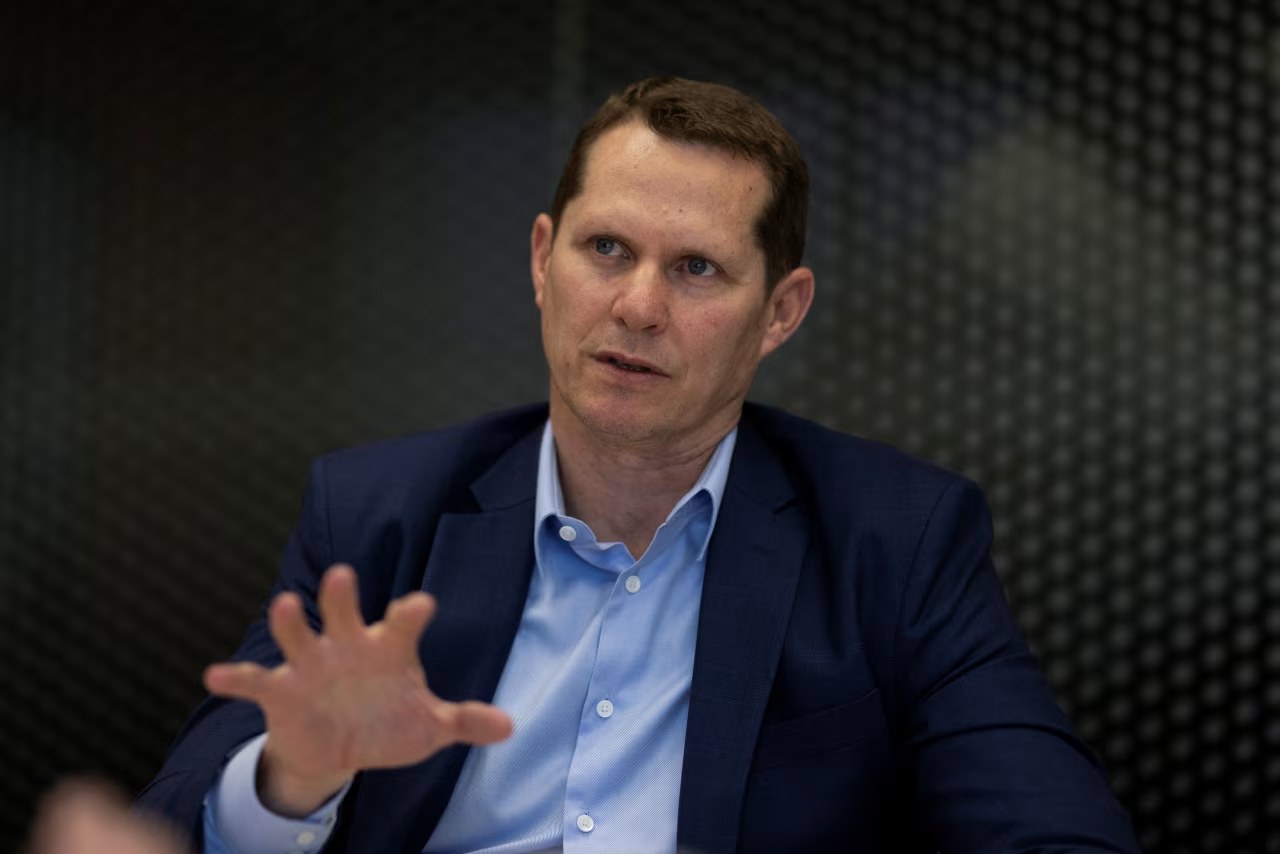
BHP Elevates 25-Year Veteran Brandon Craig to CEO Role Starting July 1
- Brandon Craig, 53, will replace Mike Henry on July 1 after running BHP’s Americas unit since March 2024.
- Investors pushed BHP shares 0.8% higher on the news, signalling confidence in continuity of Henry’s copper-heavy strategy.
- Craig oversaw Vicuna copper-gold joint venture, Escondida optimisation and Canada’s $4.9B Jansen potash mine due in 2027.
- Internal promotion beats out CFO Vandita Pant, Australia boss Geraldine Slattery and Chief Commercial Officer Rag Udd.
World’s largest miner bets that its home-grown ‘copper engineer’ can deliver the next wave of growth without a blockbuster deal.
BRANDON CRAIG—MELBOURNE—BHP Group on Wednesday ended months of succession speculation by naming Brandon Craig, the 53-year-old president of its Americas division, as chief executive officer effective July 1. The decision keeps leadership firmly inside the company that Craig joined in 1999 and signals to investors that the board wants uninterrupted momentum on copper and potash expansions rather than a strategic pivot.
Craig’s ascension comes at a pivotal moment for the 139-year-old mining giant. Global copper demand is projected to double this decade, driven by electric-vehicle wiring, grid upgrades and AI-ready data centres. BHP, already the world’s top copper producer, needs to convert a pipeline of early-stage prospects into producing mines—without overpaying after last year’s failed £34 billion pursuit of Anglo American.
“This next era is going to be about taking that endowment and actually bringing it to life,” Craig told reporters, alluding to Vicuna in the Andes, the Resolution Copper joint venture in Arizona and Canada’s Jansen potash shaft—projects he has helped shape from drill bit to board approval. Chair Ross McEwan praised the incoming CEO for possessing “the perfect match” of operational know-how and capital discipline to deliver “continued outperformance.”
From Field Geologist to Corner Office: Craig’s 25-Year Ascent Inside BHP
Brandon Craig’s promotion is the culmination of a career that began underground. Hired as a geologist at BHP’s 1999 graduate intake, he mapped ore bodies in Western Australia’s Pilbara before moving to iron-ore planning roles where he cut his teeth on the 24-hour logistics of rail and port networks that still generate almost half of group earnings.
His first executive post came in 2013 when he became vice-president of mining for the Pilbara, overseeing seven mines that ship 290 million tonnes a year. Colleagues recall Craig walking haul roads at 4 a.m. to understand truck-cycle times—an attention to detail that later underpinned a 7% strip-ratio improvement that saved roughly $180 million annually.
In 2019 he took the biggest job in Australian mining: president of BHP’s Western Australia iron-ore unit. Over the next five years he integrated autonomous trucks and drills across five sites, lifting ore-handling plant utilisation to 87% and pushing unit cash costs below $13 a tonne—benchmark-beating levels that underwrote group dividends even when iron-ore prices slumped below $80 a tonne.
March 2024 brought a lateral but strategically vital move: president of the Americas, where BHP spends 60% of its growth capital. Craig relocated to Santiago and immediately toured Escondida, the Chilean copper colossus that produces more than 1 million tonnes a year yet was grappling with ore-grade decline and water restrictions. Within six weeks he approved a $200 million desalination expansion that will add 30,000 tonnes of annual copper output from 2026.
“Brandon is the rare executive who can simultaneously optimise a 300,000-tonne-per-day concentrator and evaluate a greenfield exploration play,” says Global X strategist Marc Jocum, whose ETFs hold roughly $340 million of BHP stock. “Putting the engineer of the copper engine in the driver’s seat de-risks delivery of the next billion tonnes of resource.”
Investors who worried BHP might look outside for a deal-hungry outsider instead get an insider who has already spent 18 months stress-testing every growth option against internal hurdle rates. The implied message: execution, not empire-building, will define the next half-decade.
What Exactly Is in the Copper and Potash Pipeline Craig Must Now Deliver?
BHP’s near-term fortunes hinge on four sanctioned projects that together represent $16 billion in capital: Escondida’s sulphide leach expansion, the Vicuna joint venture, Resolution Copper in Arizona and Canada’s Jansen potash stage 2. All four passed board gates under Mike Henry; Craig’s task is to bring them online on time and on budget.
Escondida sulphide leach will add 180,000 tonnes of copper cathode annually by 2027 using bacteria-assisted leaching of low-grade ore that previously fed tailings. BHP expects incremental cash costs of $1.05 per pound—well below today’s $3.80 spot price—implying EBITDA margins above 70% at current prices.
Vicuna, straddling the Chilean-Argentine frontier, hosts inferred resources of 15 million tonnes of copper equivalent plus 11 million ounces of gold. A 2026 pre-feasibility study envisions a 250,000-tonne-per-day block-cave mine producing 450,000 tonnes of copper a year for three decades. Craig personally negotiated the 50:50 joint venture with Chile’s state-owned Codelco, securing political cover and shared infrastructure costs.
Resolution Copper, 55% owned by Rio Tinto but operated by BHP, is forecast to become North America’s largest copper producer, peaking at 500,000 tonnes a year. The U.S. federal land swap completed in December removed a permitting log-jam; Craig must now navigate environmental approvals and a likely U.S. presidential permit.
Jansen stage 2 in Saskatchewan will lift name-plate potash capacity to 8.5 million tonnes a year, positioning BHP as the world’s number-three producer behind Nutrien and Belaruskali. First ore is scheduled for 2029, with cash costs targeted at $65 a tonne compared with current Midwest spot prices above $230.
“These are not science experiments,” Craig told analysts in September. “They are Tier-1 assets with measured resource tonnes, metallurgy we understand, and routes to market we already own.” Analysts at UBS value the combined net present value of the four projects at $26 billion, equivalent to 38% of BHP’s current market capitalisation.
Why BHP’s Board Rejected an External Hire—and What It Signals to the Market
When Mike Henry told reporters last October he still had “plenty of energy,” investors interpreted the remark as a hint he might extend his tenure beyond the six-year average for ASX 20 CEOs. Instead, the board accelerated an 18-month succession process and settled on an internal slate of four finalists: CFO Vandita Pant, Australia boss Geraldine Slattery, Chief Commercial Officer Rag Udd and Americas chief Brandon Craig.
Directors interviewed more than 20 external contenders, according to people familiar with the search, including a former Rio Tinto copper chief and two North-American based mining CEOs. None matched the internal candidates’ institutional knowledge at a moment when BHP must decide whether to green-light $10 billion of overlapping projects without tripping capital-expenditure ceilings.
Chair Ross McEwan framed the choice as continuity. “We have a strategy that is working—disciplined allocation of capital, exposure to future-facing commodities, and a balance sheet that gives us optionality,” he said. “Brandon’s experience and skills are the perfect match to keep delivering that strategy.”
Shareholders largely concur. Whitefield managing director Angus Gluskie, whose fund owns 1.2 million BHP shares, calls Craig “a safe pair of hands who can execute the copper pivot without betting the company on a transformational M&A deal.” BHP’s share price rose 0.8% in Sydney trading, outperforming a flat materials index.
Internal promotions also minimise disruption at a sensitive time. Final permits for Resolution Copper require sustained engagement with U.S. tribal nations; Argentine fiscal terms for Vicuna are under congressional review; and Jansen’s Indigenous engagement protocol is cited by Canadian officials as a template for future licences. An outsider would need months to build equivalent political capital.
Yet the decision carries risk. By selecting a CEO steeped in BHP culture, the board doubles down on its own roadmap. If copper prices sink below $3 a pound or if inflation pushes project capex 20% over budget, investors will have little patience for excuses—and no external scapegoat.
Can Craig Avoid the $49 Billion Deal Trap That Snared His Predecessor?
One question dominated analyst calls after Craig’s appointment: will BHP revive its pursuit of Anglo American? The two companies held informal talks in November, according to people familiar, but no formal bid emerged after Anglo rejected a prior £34 billion approach. Craig must now decide whether to walk away or return with a sweeter offer once regulatory uncertainty in London and Pretoria subsides.
His public comments suggest a preference for organic growth. “It would have to be incredibly compelling to compete with the set of options that we have,” he told reporters, referencing the $16 billion internal pipeline. Analysts at Bernstein read the remark as code for “no major M&A unless copper assets come at recession-era prices.”
History counsels caution. Mike Henry’s 2022 oil-and-gas exit to Woodside netted $8.3 billion but left BHP absent North-Sea cash flow that could have cushioned last year’s 38% profit slide. Meanwhile, the 2011 $20 billion shale bet forced a $13 billion writedown and shareholder lawsuits that still linger.
Craig’s record offers clues. As head of WA iron ore he sanctioned only incremental debottlenecking, adding 20 million tonnes of capacity for $2.4 billion—roughly $12 a tonne versus greenfield builds at $50. In the Americas he approved a $600 million early-works package at Jansen that de-risked shaft sinking and locked in Saskatchewan labour before inflation surged.
Macquarie mining team labels Craig “capital-discipliner-in-chief” and models only $4 billion of bolt-on acquisitions through 2027, mostly copper concentrators in Zambia or Peru that could feed BHP’s marketing arm. Anything larger, they argue, would threaten single-A credit metrics and jeopardise the progressive dividend policy that underpins the stock’s 5.4% yield.
Still, size can be seductive. If Anglo’s share price slips below £15 and copper trades above $4.50, the sum-of-the-parts discount could exceed 35%, tempting an opportunistic offer. Whether Craig resists may determine if he is remembered as the CEO who built mines—or the one who bought at the top.
What Does Craig’s Leadership Mean for BHP’s Dividend and Share Buyback Outlook?
BHP’s progressive dividend policy survived the 2015 Samarco dam disaster, the 2016 commodity rout and last year’s $4.2 billion net loss tied to litigation provisions. Under Craig, investors expect the same mantra: base dividend of at least 50% of underlying attributable profit, plus additional payouts when net debt falls below $10 billion and hurdle-rate projects are scarce.
Consensus forecasts compiled by Visible Alpha project underlying profit of $14.3 billion in fiscal 2025 on an average copper price of $4.05 a pound. Applying the 50% payout threshold implies a base dividend of $7.2 billion, or 142 US cents per share—yielding 5.4% at current FX rates. Any surplus could fund buybacks or special dividends.
Craig’s capital-allocation framework, outlined in internal strategy decks, retains Henry’s 15% internal-rate-of-return hurdle for copper projects and 12% for potash. Macquarie calculates that the four sanctioned growth projects clear those hurdles by an average 350 basis points even if copper slips to $3.30, giving the board scope to return excess cash rather than chase marginal tonnes.
Yet risks lurk. Jansen stage 2 capex is quoted at $4.9 billion in 2023 dollars; Australian mining inflation is running at 9% annually. If capex escalates 25% and potash prices retreat to $200 a tonne, project IRR drops to 9%, breaching policy and tying up capital that could have been returned. Analysts at Goldman Sachs model a 12% probability of a dividend cut in 2027 under such stress.
On the upside, Escondida sulphide leach adds high-margin copper at a capex intensity of $1.15 per pound of annual capacity—among the lowest in the industry. UBS estimates incremental free cash flow of $1.2 billion a year at $3.80 copper, effectively funding a 15-cent special dividend or 2% buyback annually.
For income funds like Whitefield, which relies on BHP for 4% of portfolio yield, Craig’s operational DNA offers reassurance. “We are not looking for a copper evangelist,” says Gluskie. “We want a CFO in hard-hat form who keeps the dividend compounding.” If Craig can convert resource tonnes into cash flow without blowing the budget, the market’s next question will be how high the payout can stretch—not whether it is safe.
Frequently Asked Questions
Q: Who is Brandon Craig at BHP?
Brandon Craig is a 25-year BHP veteran who has run the miner’s Americas division since March 2024. He previously led Western Australia iron ore and now takes over as group CEO on July 1, tasked with delivering copper and potash growth projects.
Q: Why did BHP choose an internal candidate for CEO?
Chair Ross McEwan said Craig’s deep operational knowledge and hands-on role shaping the copper and potash pipeline make him the ‘perfect match’ to execute the strategy laid out by outgoing CEO Mike Henry without disruptive course changes.
Q: What copper projects will Brandon Craig oversee as CEO?
Craig inherits the Vicuna copper-gold joint venture on the Argentina-Chile border, expansion plans at Escondida—the world’s largest copper mine—and the contested Resolution Copper project in Arizona, giving BHP multiple avenues to extend its global copper leadership.
📰 Related Articles
- BHP Elevates Americas Head Brandon Craig to Chief Executive Role Amid Global Expansion
- Former Nikola Founder Trevor Milton Returns to Washington Spotlight After Trump Pardon
- Alimentation Couche‑Tard Posts Record Q3 Profit as Fuel and Merchandise Sales Surge
- Amazon to Slash USPS Shipments by Two‑Thirds as Contract Ends
