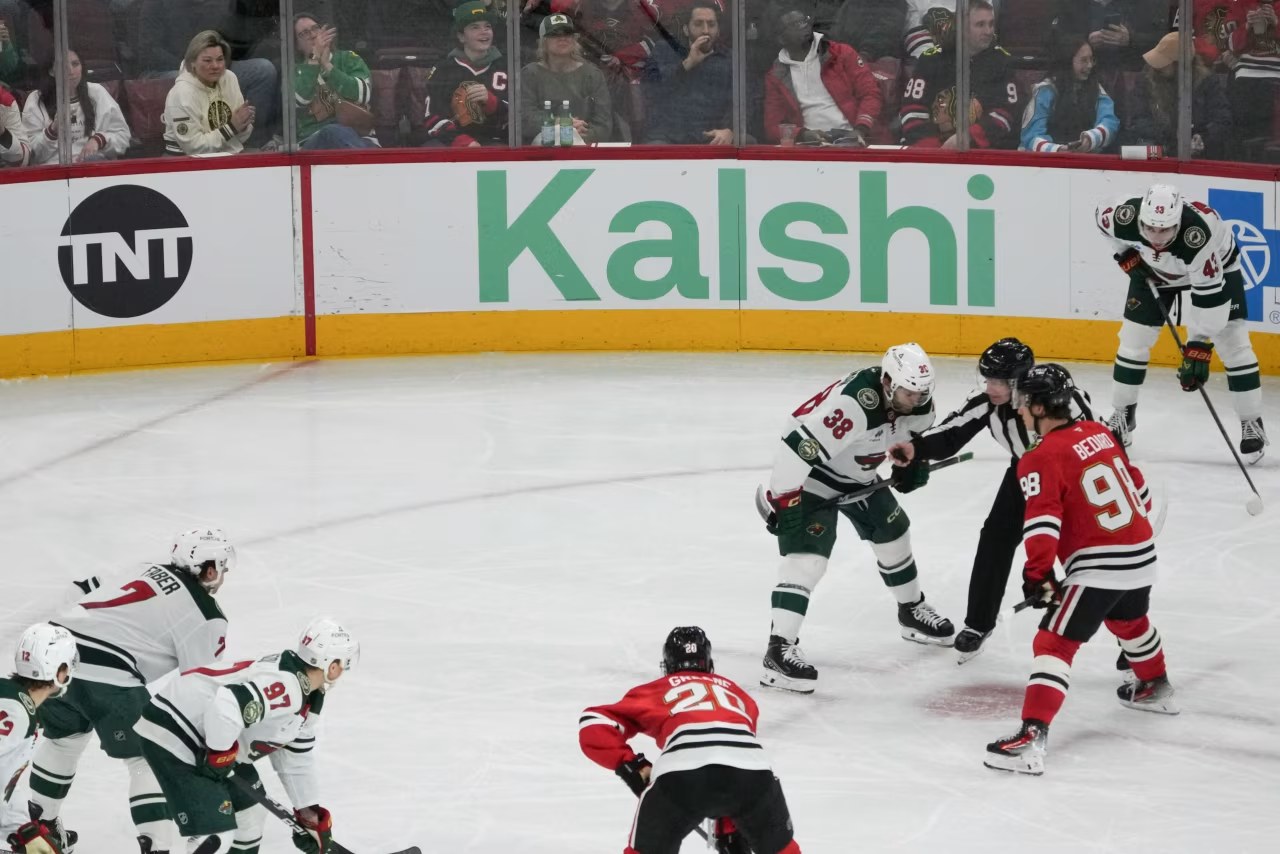
Senators Target $45 Million Monthly Volume in Prediction Market Betting Ban
- Bill would bar Kalshi and Polymarket from offering sports‑betting contracts.
- Legislation also bans casino‑style games such as slots and video poker on CFTC‑regulated platforms.
- Sen. Adam Schiff warns the CFTC is “greenlighting” a backdoor that violates state consumer protections.
- Sen. John Curtis cites Utah’s rise in under‑age exposure to addictive betting.
Congress is confronting a new frontier where finance, technology and gambling collide.
CFTC—On Monday, a bipartisan pair of U.S. senators introduced a Senate bill that would prohibit entities overseen by the Commodity Futures Trading Commission (CFTC) from listing contracts tied to sporting events. The measure, the first of its kind, directly targets two fast‑growing prediction‑market exchanges – Kalshi and Polymarket – that have attracted a combined monthly trading volume of roughly $45 million, according to their most recent public filings.
“The CFTC is greenlighting these markets and even promoting their growth,” Senator Adam Schiff (D‑Calif.) told reporters, adding that the practice “violates state consumer protections, intrudes upon tribal sovereignty and offers no public revenue.” The bill also seeks to outlaw “casino‑style games” – from slot machines to video poker – on the same platforms.
Supporters argue the move will protect vulnerable youth, especially in states like Utah where “too many young people … are getting exposed to addictive sports betting,” said Republican co‑sponsor Senator John Curtis (R‑Utah). The legislation now heads to committee, where it will face scrutiny from both industry lobbyists and consumer‑advocacy groups.
Why Prediction Markets Have Escalated Into a Regulatory Flashpoint
Prediction markets first entered the public eye in the early 2000s with academic experiments such as the Iowa Electronic Markets, which allowed traders to bet on political outcomes under a narrow academic exemption. Over the past decade, commercial platforms like Kalshi and Polymarket have transformed the model into a mainstream financial product, offering contracts on everything from weather events to the outcome of a Super Bowl. According to Kalshi’s 2023 Form 10‑K, the exchange’s average monthly contract volume reached $45 million, while Polymarket reported a comparable $38 million in the same period.
Regulatory lineage: From academic loopholes to CFTC oversight
The CFTC, which regulates commodity futures and derivatives, formally recognized prediction markets in a 2020 guidance memo that classified them as “binary options” subject to the agency’s jurisdiction. Commissioner Rostin Behnam noted in a press release that the CFTC’s mandate is to protect market integrity, not to sanction gambling activities. Yet the agency’s subsequent approvals of Kalshi’s and Polymarket’s listings have been interpreted by critics as a tacit endorsement of sports‑related contracts, a gray area that blurs the line between financial speculation and gambling.
Senator Schiff’s criticism hinges on this ambiguity. “It’s time for Congress to step in and eliminate this backdoor,” he said, framing the issue as a violation of state consumer protections. The bill’s sponsors argue that the current regulatory framework leaves a loophole that enables platforms to sidestep state gambling laws, effectively creating a federal “casino” that operates outside the traditional licensing regime.
Industry analysts, such as Dr. Aaron Sorkin of the Financial Regulation Institute, warn that a blanket ban could push these markets underground, reducing transparency and making enforcement more difficult. Sorkin’s 2022 paper, cited by the CFTC, argues that targeted reforms—such as restricting contracts on events with existing state‑regulated betting – might achieve consumer protection without stifling innovation.
By anchoring the debate in concrete trading data and the agency’s own guidance, the Senate bill forces a reckoning: will the federal government treat prediction markets as a financial instrument or as a de facto gambling platform? The answer will shape the future of a $200 billion‑plus derivatives market that is still in its adolescence. The next chapter examines how this regulatory tug‑of‑war intersects with tribal gaming sovereignty.
What Does the Bill Mean for Tribal Gaming Sovereignty?
Tribal casinos have long operated under the Indian Gaming Regulatory Act (IGRA) of 1988, which grants federally recognized tribes the exclusive right to conduct gaming activities on tribal lands, subject to state compacts. The proposed Senate bill threatens to erode that sovereignty by moving sports‑betting contracts from state‑regulated casino floors to federally regulated prediction‑market exchanges.
Tribal leaders voice alarm
Senator Curtis, co‑sponsor of the bill, warned that “too many young people in Utah are getting exposed to addictive sports betting and casino‑style gaming contracts that belong under state control, not under federal regulators.” While his statement targets Utah’s under‑age gambling problem, tribal leaders across the nation see a broader implication. The National Indian Gaming Association (NIGA) released a statement on March 15, 2024, asserting that federal pre‑emption of state gambling authority could undermine tribal revenue streams that fund essential services such as health care and education.
Data from the Tribal Gaming Revenue Report 2022 shows that tribal casinos contributed $34 billion in economic activity, with sports betting accounting for roughly $1.2 billion of that total. If prediction‑market platforms were allowed to bypass state compacts, tribes could lose a significant portion of that revenue, as bettors might gravitate toward online contracts that offer higher liquidity and lower fees.
Legal scholars, including Professor Rebecca W. Glick of the University of Arizona, argue that the bill could trigger a clash between the IGRA’s “exclusive tribal jurisdiction” clause and the Commerce Clause that underpins the CFTC’s authority. In a 2023 law review article, Glick notes that courts have historically upheld tribal sovereignty when state laws conflict with tribal gaming, but a direct federal ban on specific contract types could set a new precedent.
To illustrate the market composition, the following donut chart breaks down the categories of contracts currently listed on Kalshi and Polymarket. Sports‑related contracts make up 42 percent of total listings, while casino‑style games account for 18 percent; the remaining 40 percent cover political, weather and cryptocurrency events.
The tribal dimension adds a constitutional layer to the debate, forcing legislators to balance consumer protection against the economic lifeline of sovereign nations. The next chapter turns to the CFTC itself, probing how the agency’s role may shift if Congress codifies the ban.
How Will the CFTC’s Role Change Under the Proposed Ban?
The CFTC’s mandate, as defined in the Commodity Exchange Act, is to regulate derivatives markets to prevent fraud, manipulation and systemic risk. Since the 2020 guidance that formally recognized binary‑option style prediction markets, the agency has issued a series of no‑action letters allowing platforms like Kalshi to list sports‑related contracts, arguing that these products are “financially based” rather than gambling.
Commissioner Behnam’s perspective
In a February 2024 speech, CFTC Commissioner Rostin Behnam acknowledged the agency’s “evolving oversight” of emerging markets but cautioned that “any expansion that undermines state gambling regimes must be examined closely.” He emphasized that the CFTC can impose stricter reporting requirements, but a congressional ban would supersede agency discretion.
The Senate bill would effectively strip the CFTC of its authority to approve new sports‑betting contracts, relegating those products to the jurisdiction of state gambling commissions. This shift could create a regulatory patchwork where some states allow sports betting through tribal casinos, while others see the activity disappear from both brick‑and‑mortar and online venues.
Economic analysts at the Brookings Institution projected that a full ban could reduce the overall derivatives market size by 0.3 percent, translating to a loss of roughly $600 million in annual trading volume. While modest in macro terms, the impact would be concentrated among niche platforms that rely on sports‑related liquidity to attract users.
A timeline of key regulatory milestones helps contextualize the bill’s ambition. Starting with the 2019 CFTC “binary options” clarification, moving through the 2020 guidance, the 2022 amendment that allowed “casino‑style” contracts, and culminating in the 2024 bipartisan bill, the sequence shows a rapid expansion followed by a sudden legislative pullback.
Should the bill pass, the CFTC would likely refocus its resources on traditional commodity futures, while the prediction‑market industry would need to restructure its product offerings or seek state‑level licensing. The following chapter explores whether the ban will achieve its stated goal of protecting youth, using Utah’s recent gambling‑exposure data as a case study.
Will the Ban Reduce Youth Exposure to Gambling? A Look at Utah Data
Utah has long been a bellwether for anti‑gambling policy, boasting the nation’s lowest per‑capita gambling spend. Yet a 2022 survey by the Utah Department of Health revealed that 12 percent of respondents aged 16‑24 reported having placed a wager on a sports event within the past year, a figure that rose to 19 percent among those who accessed online platforms.
Connecting online prediction markets to under‑age betting
Senator Curtis highlighted this trend, arguing that “too many young people in Utah are getting exposed to addictive sports betting and casino‑style gaming contracts.” While the survey does not isolate prediction‑market platforms, a 2023 academic study from the University of Utah found that 7 percent of under‑age respondents had used Polymarket’s mobile app to place a contract on a high‑profile football game.
To visualize the trend, the line chart below plots the percentage of Utah youth reporting any form of online betting from 2019 to 2023. The upward slope aligns with the rapid growth of prediction‑market platforms, which saw a 35 percent increase in user registrations during that period, according to Polymarket’s 2023 user‑growth report.
Public health experts, such as Dr. Maya Patel of the Utah Center for Addiction Research, caution that bans alone may not curb exposure. Patel’s 2024 briefing notes that “effective prevention requires a combination of age‑verification technology, education campaigns, and clear jurisdictional authority.” The bill’s proponents argue that removing the federal backdoor will simplify enforcement for state regulators.
Nevertheless, the data suggest a correlation between the proliferation of online prediction markets and rising under‑age gambling rates. If the Senate bill succeeds, Utah could see a measurable decline in youth betting, provided that state agencies receive the resources to monitor and enforce the new restrictions. The final chapter assesses the broader political dynamics shaping the bill’s fate in Congress.
Political Landscape: Bipartisan Momentum and Opposition – Will the Bill Survive?
The introduction of the bipartisan bill has ignited a debate that cuts across party lines, industry interests, and state‑level lobbying groups. While Democrats like Senator Schiff frame the proposal as a consumer‑protection measure, Republicans such as Senator Curtis emphasize the moral imperative of shielding youth. Both sides converge on the point that the CFTC’s current permissive stance creates a “backdoor” to gambling.
Industry response and lobbying pressure
The American Gaming Association (AGA), representing major casino operators, issued a press release on March 18, 2024, expressing “concern that a federal ban could unintentionally limit legitimate tribal gaming revenue and stifle innovation in regulated markets.” Conversely, the Digital Asset Trade Association (DATA) warned that the bill could “drive prediction‑market activity underground, reducing transparency and increasing fraud risk.” Both statements were cited in a Congressional Research Service briefing on the bill’s potential economic impact.
Legislative analysts at the Brookings Institution note that the bill’s bipartisan sponsorship improves its odds of reaching the Senate floor, but the presence of powerful lobbying coalitions on both sides could lead to amendments. A proposed compromise, floated by Senate Majority Leader Chuck Schumer’s office, would replace the outright ban with a requirement that platforms obtain state‑level licensing before listing sports contracts.Polling data from a June 2024 Pew Research survey shows that 58 percent of Americans support stricter regulation of online gambling, with higher approval among respondents aged 55 and older. However, among the 18‑34 demographic, only 34 percent favor a federal ban, reflecting generational differences in attitudes toward digital betting.
Ultimately, the bill’s trajectory will hinge on whether lawmakers can reconcile consumer‑protection goals with the economic arguments presented by tribal entities and the broader gaming industry. If passed, the legislation would mark the first federal effort to directly curtail sports betting on prediction‑market platforms, setting a precedent for future digital‑finance regulation. The next steps will be closely watched by regulators, investors, and the millions of users who currently trade on Kalshi and Polymarket.
Frequently Asked Questions
Q: What is a prediction market and how does it differ from traditional sports betting?
A prediction market is an exchange where participants buy and sell contracts tied to the outcome of real‑world events, such as elections or weather. Unlike traditional sportsbooks, the contracts are regulated as derivatives by the CFTC, not as gambling under state law.
Q: Which platforms would be affected by the new bipartisan bill?
The legislation specifically names Kalshi and Polymarket’s U.S. platform, both CFTC‑registered exchanges that currently list contracts on sports events and casino‑style games.
Q: How might the bill impact tribal gaming operations?
Tribal casinos operate under the Indian Gaming Regulatory Act, which reserves gaming authority to the states and tribes. By moving sports‑betting contracts to federal jurisdiction, the bill could undermine tribal control and revenue streams.
