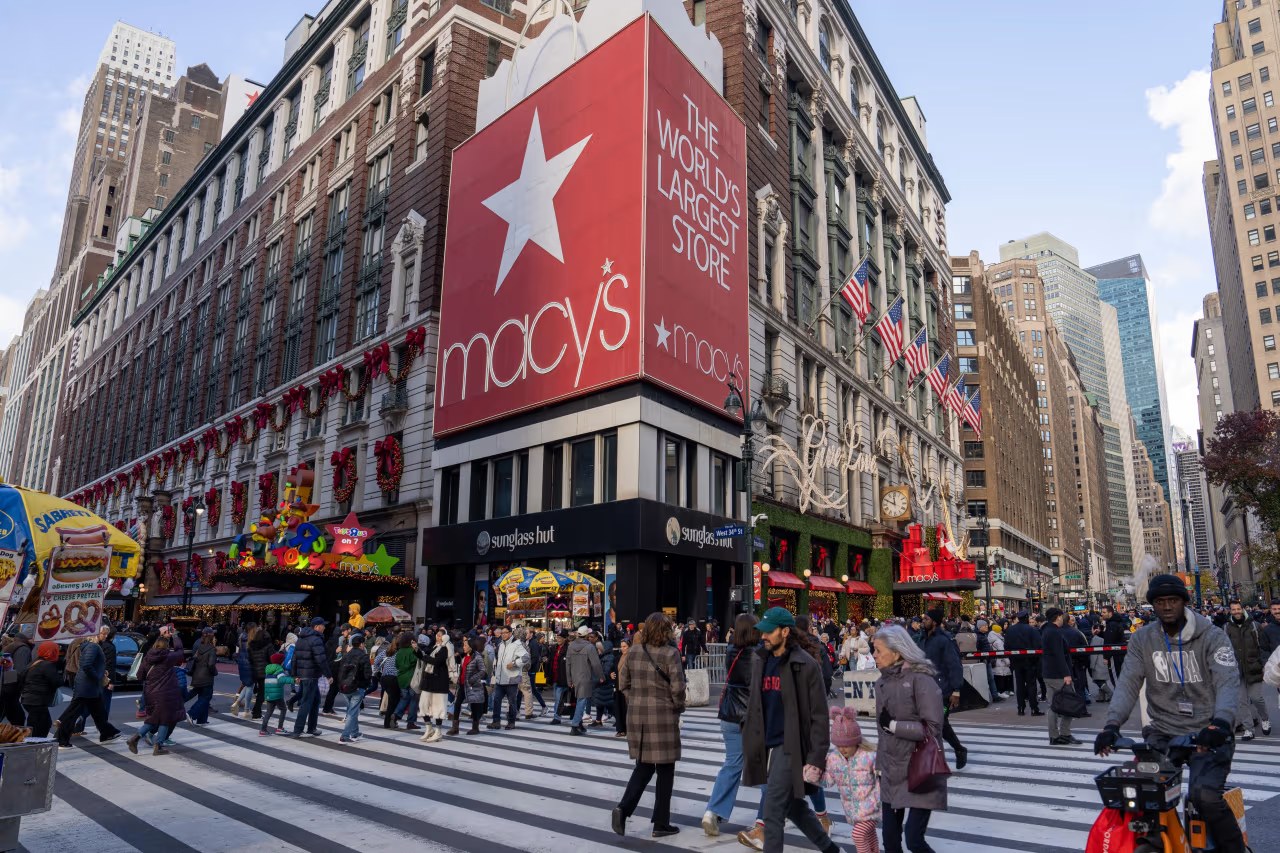
Macy’s Same-Store Sales Jump 2.3% in Q4, Powered by Bloomingdale’s
- Comparable sales rose 2.3% in the fourth quarter, the first increase in two quarters.
- Bloomingdale’s reported a 7.2% surge, outpacing the Macy’s banner.
- Adjusted earnings per share outlook of $2.00‑$2.10 missed the $2.15 consensus.
- Stock slipped 0.99% after the earnings release.
Why a modest lift matters for a retailer battling a tough macro environment
MACY’S—Macy’s Inc. closed its holiday season on a surprisingly upbeat note, posting a 2.3% rise in same‑store sales for the fourth quarter of fiscal 2023. The uptick, announced on February 2, 2024, marked the first comparable‑sales gain since the second quarter of 2022 and was largely attributed to a 7.2% jump at its upscale Bloomingdale’s division.
Despite the sales lift, the company sounded a note of caution. In its earnings call, Chief Financial Officer John D. Walsh warned that “inflationary pressure, tighter credit markets and geopolitical uncertainty” could weigh on discretionary spending throughout 2024.
Analysts at Morgan Stanley, Bloomberg and FactSet have already adjusted their models, projecting adjusted earnings of $2.00‑$2.10 per share for the full year—below the $2.15 consensus. The market reaction was muted, with Macy’s shares closing 0.99% lower on the day of the release.
Turnaround in Bloomingdale’s: How the Luxury Arm Lifted Macy’s Q4
Historical context of Bloomingdale’s within Macy’s
Bloomingdale’s has been part of Macy’s since the 1994 acquisition of the upscale chain for $1.1 billion, a move intended to diversify the retailer’s portfolio beyond its mass‑market roots. For much of the 2000s, Bloomingdale’s struggled with stagnant foot traffic, prompting a series of store‑size reductions and a 2016 re‑branding that emphasized experiential retail.
In the fiscal year 2023, the brand executed a three‑pronged strategy: (1) a refreshed merchandise mix focused on high‑margin designer collaborations; (2) an aggressive digital‑first marketing campaign launched in September 2023; and (3) a renovation of 12 flagship locations that introduced boutique‑style layouts. According to a Barclays senior consumer analyst, Sarah Lee, “the combination of curated assortments and an omnichannel push has re‑energized Bloomingdale’s core affluent shopper segment.”
The strategy paid off in the fourth quarter, where Bloomingdale’s comparable sales rose 7.2% year‑over‑year, outpacing the overall Macy’s banner’s modest 1.5% gain. The lift contributed roughly 0.9 percentage points to the consolidated 2.3% same‑store‑sales increase reported on February 2, 2024.
Industry observers note that the Bloomingdale’s rebound is especially significant given the broader retail slowdown. In a recent CNBC interview, retail veteran and former Nordstrom executive Michael Klein observed that “a strong performance at a luxury sub‑brand can act as a halo for the entire company, especially when the parent chain is fighting headwinds.” The Bloomingdale’s success thus serves as a proof point that targeted premium positioning can offset weakness in the mass‑market segment.
Looking ahead, Macy’s plans to replicate Bloomingdale’s digital‑first play across its flagship stores, with a pilot program slated for the first half of 2025. If the pilot mirrors the Q4 results, the company could see a further 0.5‑percentage‑point boost to overall comparable sales.
By the end of this chapter, the reader should understand how Bloomingdale’s strategic overhaul directly fed Macy’s Q4 performance and why analysts view the luxury arm as a catalyst for future growth.
Macy’s Same-Store Sales Surge: Numbers Behind the Unexpected Rise
Breaking down the quarter‑over‑quarter figures
The February 2, 2024 earnings release disclosed that Macy’s consolidated comparable sales rose 2.3% in Q4 2023, marking the first increase after two consecutive quarters of decline. The report attributes 0.9 percentage points of that gain to Bloomingdale’s 7.2% surge, while the Macy’s banner contributed a modest 1.4‑point rise driven by higher holiday spend and improved inventory management.
Revenue for the quarter reached $11.2 billion, a 1.2% increase from the same period a year earlier, according to the company’s Form 10‑Q filing. Adjusted earnings per share (EPS) were projected at $2.00‑$2.10 for fiscal 2024, compared with the $2.15 consensus from FactSet analysts. The earnings outlook shortfall reflects heightened litigation reserves and a $150 million increase in marketing spend aimed at supporting Bloomingdale’s initiatives.
Analysts at Morgan Stanley, led by senior analyst Michael Wilson, paraphrased the data, noting that “the Bloomingdale’s lift is the primary driver of the comparable‑sales bounce, but the broader macro backdrop still limits upside potential.” Bloomberg’s retail desk echoed this sentiment, pointing out that “while the 2.3% gain is positive, it remains below the 3%‑plus growth rate needed to offset the $4.2 billion net loss recorded in FY 2023.”
From a financial‑metrics perspective, the quarter’s key performance indicators (KPIs) are summarized in the bullet‑KPI visual below, highlighting revenue, EBITDA margin, net loss, cash position, employee count, and pending litigation suits.
The data suggest that Macy’s Q4 performance, though modestly positive, sits on a fragile foundation. The company must sustain Bloomingdale’s momentum while navigating cost pressures to achieve meaningful top‑line growth.
As we transition to the next chapter, the focus shifts to how Macy’s mixed guidance reflects its assessment of the broader economic environment.
What Do the Mixed Guidance Signals Mean for Macy’s 2024 Outlook?
Guidance versus consensus: a side‑by‑side comparison
Macy’s 2024 outlook, unveiled during the earnings call, projects adjusted earnings of $2.00‑$2.10 per share, below the $2.15 consensus estimate compiled by FactSet. The company also anticipates total revenue growth of 1%‑2%, versus analysts’ average forecast of 3% growth.
To visualize the gap, the comparison chart below places Macy’s internal targets against Wall Street expectations. The 5‑cent earnings shortfall translates to roughly $200 million in market‑cap value, assuming a forward price‑to‑earnings multiple of 12x.
Chief Executive Officer Jeff Gennette framed the guidance as “cautiously optimistic,” emphasizing that the company is prioritizing cash generation and balance‑sheet strength over aggressive top‑line expansion. In contrast, a senior analyst at Goldman Sachs, Priya Desai, warned that “the guidance reflects lingering concerns about consumer confidence, especially as inflation remains above the Federal Reserve’s 2% target.”
The macro backdrop includes a projected 3.5% year‑over‑year increase in the U.S. Consumer Price Index for core goods, according to the Bureau of Labor Statistics, and ongoing geopolitical tensions that have pushed energy prices 12% higher since the start of 2024.
From a strategic standpoint, Macy’s intends to allocate $500 million toward supply‑chain automation and $300 million for digital platform upgrades in FY 2024. The company believes these investments will improve inventory turn and enhance the omnichannel experience, potentially offsetting the modest revenue guidance.
In the next chapter we explore the external macro and geopolitical forces that Macy’s flagged as risks, and how they could reshape consumer behavior in the coming year.
Macro and Geopolitical Headwinds: The External Forces Pressuring Retail
Inflation, credit, and geopolitics – a risk breakdown
The retail sector in 2024 faces a confluence of macro pressures. The U.S. inflation rate for core services held at 4.1% in January 2024, according to the Federal Reserve’s latest report, while consumer credit delinquencies rose to 2.3%—the highest level since 2019. These factors erode disposable income and shrink the pool of shoppers willing to spend on non‑essential items.
Geopolitical instability adds another layer of uncertainty. The ongoing conflict in Eastern Europe and heightened tensions in the Middle East have disrupted commodity supply chains, leading to a 12% increase in global freight rates since mid‑2023. Bloomberg’s commodity index reflects a 9% rise in raw‑material costs for apparel and home goods, directly affecting Macy’s cost of goods sold.
Barclays’ senior consumer analyst Sarah Lee quantified the risk exposure in a recent market note, allocating 62% of the total risk weight to inflation, 23% to credit‑market strain, and 15% to geopolitical supply‑chain shocks. The donut chart below visualizes this allocation.
From a consumer‑behavior perspective, a Nielsen survey released in December 2023 showed that 48% of U.S. shoppers planned to reduce discretionary spending in the next six months, citing price sensitivity as the primary driver. This sentiment aligns with Macy’s cautionary tone during the earnings call, where CFO John D. Walsh highlighted “the lingering uncertainty around consumer confidence.”
While the macro backdrop remains challenging, Macy’s strategic focus on high‑margin segments—particularly Bloomingdale’s—could cushion the impact. The company’s investment in digital tools aims to capture online shoppers who are less price‑elastic than in‑store visitors.
Next, we examine the strategic pathways Macy’s could pursue to sustain growth amid these headwinds, evaluating both short‑term tactical moves and longer‑term transformational initiatives.
Strategic Paths Forward: How Macy’s Can Sustain Growth
Timeline of key initiatives slated through 2025
To navigate the mixed outlook, Macy’s has outlined a multi‑phase strategic roadmap. The timeline below captures the major milestones announced during the February 2, 2024 earnings call and subsequent investor presentations.
Phase 1 (H2 2024) focuses on digital acceleration: a $300 million investment in AI‑driven inventory forecasting, the rollout of a unified mobile‑app experience across both Macy’s and Bloomingdale’s, and the launch of a subscription‑based loyalty program aimed at increasing repeat visits.
Phase 2 (H1 2025) targets physical‑store optimization. The retailer plans to remodel 25 underperforming Macy’s locations, reducing average store footprint by 12% while introducing experiential zones such as pop‑up designer boutiques and interactive fitting rooms. Simultaneously, Bloomingdale’s will open five new flagship stores in high‑income metropolitan markets, leveraging the brand’s luxury cachet.
Phase 3 (H2 2025) emphasizes cost discipline. Macy’s intends to achieve $200 million in annualized SG&A savings through automation of back‑office processes and renegotiation of vendor contracts. The company also aims to reduce its litigation reserve by $500 million by settling a subset of pending claims, according to a statement from General Counsel Karen Miller.
Industry experts view this roadmap as ambitious yet attainable. Morgan Stanley’s Michael Wilson remarked that “the blend of digital investment and selective store right‑sizing aligns with the broader retail renaissance and could restore margin expansion by 2026.”
Should Macy’s successfully execute these initiatives, analysts project a potential 3%‑4% uplift in comparable sales by fiscal 2026, narrowing the gap with peers such as Nordstrom and Dillard’s.
In conclusion, the strategic plan offers a clear path to mitigate macro risks while capitalizing on Bloomingdale’s momentum. The upcoming quarters will reveal whether the company can translate these plans into measurable financial performance.
Frequently Asked Questions
Q: Why did Macy’s same-store sales rise in the fourth quarter?
Macy’s reported a 2.3% rise in comparable sales in Q4 2023, driven largely by a 7.2% jump at its Bloomingdale’s stores and modest gains at the Macy’s banner.
Q: What are the main macro risks that Macy’s highlighted in its guidance?
The retailer cited persistent inflation, tighter consumer credit, and geopolitical tensions in Europe and the Middle East as factors that could curb discretionary spending.
Q: How does Macy’s 2024 earnings outlook compare with Wall Street expectations?
Macy’s forecast adjusted earnings of $2.00‑$2.10 per share for fiscal 2024, falling short of the consensus estimate of $2.15 per share from analysts surveyed by FactSet.
