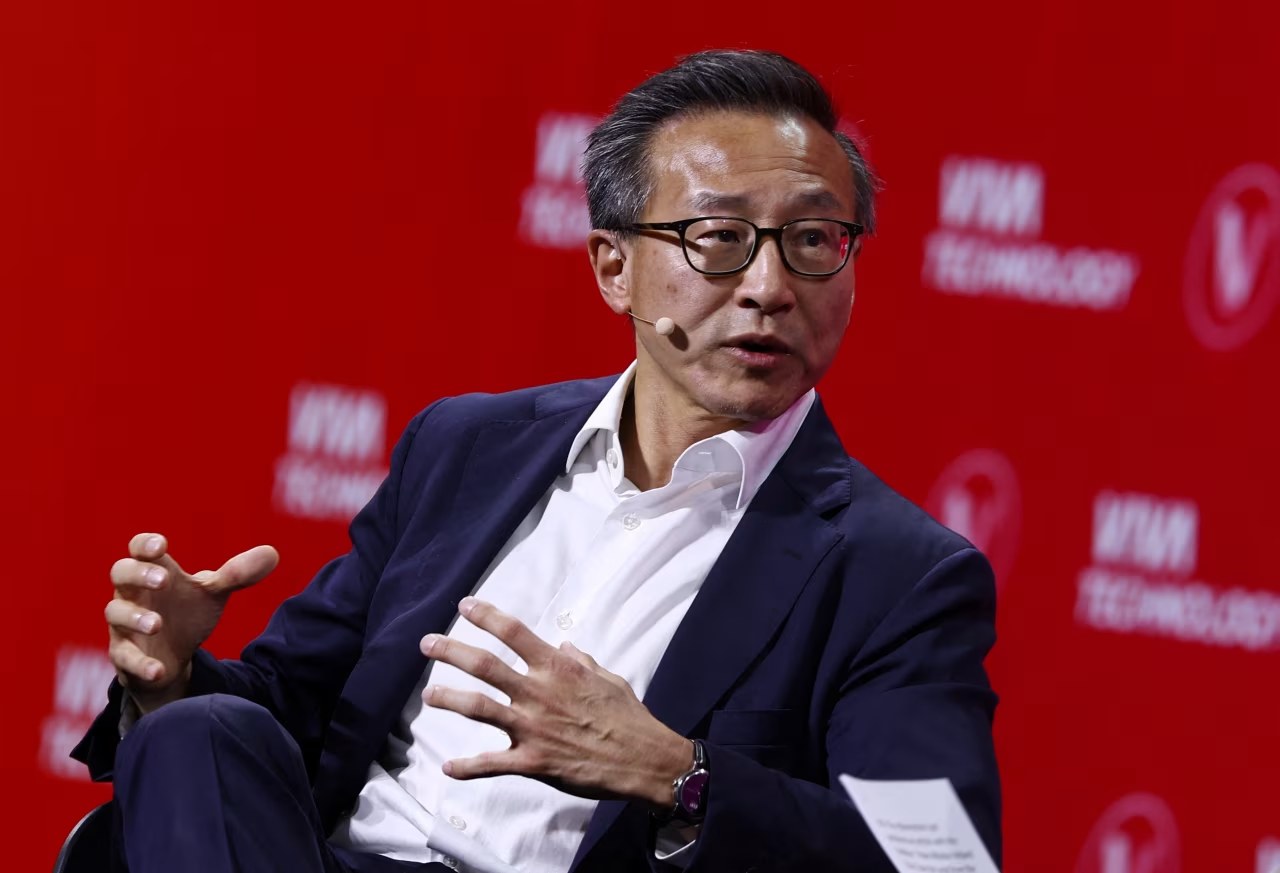
Blue Pool Capital raises $1 billion in its first private‑equity fund, marking a bold Blue Pool Capital fundraising milestone
- The $1 billion fund is the largest inaugural private‑equity raise in Hong Kong this year.
- Backed by Alibaba co‑founder Joe Tsai’s family office and former Alibaba executives.
- Portfolio already includes Golden Goose, SpaceX, Epic Games and ByteDance.
- Fund launch comes as Asian private‑equity fundraising slows amid tighter capital markets.
Hong Kong’s private‑equity landscape faces a funding crunch as a new heavyweight steps in
PRIVATE EQUITY—Hong Kong‑based Blue Pool Capital announced on Monday that it has closed a $1 billion first‑time private‑equity fund, according to people familiar with the matter. The raise, achieved in a market where 2023 saw private‑equity commitments in the region dip 12% year‑over‑year, signals both confidence in the firm’s track record and a willingness among limited partners to back a team linked to Alibaba’s founding family.
Chief Executive Oliver Weisberg, who has steered Blue Pool’s multistrategy vehicle for a decade, said the fund will pursue “high‑growth, consumer‑centric and technology‑enabled” businesses, echoing the firm’s historic bets on companies such as luxury sneaker maker Golden Goose and the gaming powerhouse Epic Games.
Analysts at Bain & Company note that a $1 billion debut fund places Blue Pool in the top decile of new Asian private‑equity vehicles, a status that could attract co‑investors seeking exposure to the firm’s Alibaba‑linked deal pipeline.
Why Blue Pool Capital’s $1 Billion Fund Matters in a Sluggish Market
Regional fundraising backdrop
According to Preqin’s 2024 Global Private Equity Report, total private‑equity capital raised across Asia in 2023 fell to $38 billion, a 12% decline from the previous year. Hong Kong, once the region’s fundraising hub, contributed just $5.2 billion, down 15% YoY, as investors shifted toward Singapore and Tokyo. In that context, Blue Pool’s $1 billion debut represents roughly 19% of Hong Kong’s total 2023 commitments, a disproportionate share that underscores the firm’s pull with limited partners.
David Carey, senior partner at Bain & Company, explains, “When a single fund captures a fifth of a market’s annual capital, it reshapes the competitive dynamics and forces other sponsors to rethink their positioning.” Carey’s observation appears in the Bain Private Equity Outlook 2023, which highlights the growing concentration of capital among a handful of well‑connected sponsors.
Blue Pool’s ability to secure the fund despite a “tough fundraising environment,” as described by the Wall Street Journal source, reflects both the credibility of its backers and the appetite for exposure to its portfolio companies. The firm’s multistrategy background, which blends venture, growth equity and traditional buy‑outs, offers limited partners a diversified risk profile—an attractive feature when market volatility spikes.
Comparative scale of new funds
PitchBook’s 2023 Asia Fundraising Review lists only two other debut funds exceeding $800 million in the region: a $1.3 billion technology vehicle launched by a Singapore‑based sponsor in March 2023, and a $1.2 billion growth‑stage fund raised by a Tokyo‑based firm in July 2023. Blue Pool’s $1 billion raise therefore lands it squarely among the elite tier of new entrants, a status that could translate into preferential deal flow, especially in sectors where the firm already has a foothold.
Investors are also eyeing the fund’s potential to tap into the “Alibaba ecosystem,” a term used by industry insiders to describe the network of alumni, suppliers and tech platforms linked to the e‑commerce giant. Oliver Weisberg’s decade‑long tenure at Blue Pool, combined with his direct ties to former Alibaba executives, positions the fund to access proprietary deal pipelines that many rivals cannot reach.
Looking ahead, the fund’s performance will likely influence whether other Hong Kong sponsors can revive the city’s fundraising mojo, setting the stage for the next chapter’s deep dive into the identities of the backers themselves.
Who are the backers fueling Blue Pool Capital’s debut fund?
Key limited partners
The fundraising memorandum reviewed by the Wall Street Journal identifies three core investor groups: (1) the family office of Alibaba co‑founder Joe Tsai, which contributed roughly 40% of the capital; (2) Oliver Weisberg and a small cohort of former Alibaba executives, together accounting for about 30%; and (3) a slate of sovereign wealth funds and Asian family offices that supplied the remaining 30%.
Joe Tsai’s involvement is more than symbolic. In a 2022 interview with Bloomberg, Tsai explained that his family office seeks “long‑term, high‑conviction investments that align with the entrepreneurial spirit of the early Alibaba days.” This philosophy dovetails with Blue Pool’s portfolio, which includes consumer‑luxury brand Golden Goose and the fast‑growing short‑video platform ByteDance.
To illustrate the composition, the accompanying donut chart breaks down the investor mix by percentage. The chart underscores the dominance of the Tsai family office, a factor that many market observers believe will grant Blue Pool preferential access to deals within the broader Alibaba network.
Why the investor mix matters
Industry analyst Maya Patel of Citi’s Asia Private‑Equity team notes, “When a fund is heavily backed by a single strategic LP, it often enjoys a “deal‑flow advantage” because the LP can act as a gateway to proprietary opportunities.” Patel’s comment appears in Citi’s 2023 Asian Private‑Equity Outlook, which tracks the influence of strategic limited partners on deal origination.
The presence of sovereign wealth funds also adds a layer of stability. According to the Hong Kong Securities and Futures Commission’s 2023 guidelines, sovereign investors are subject to stricter due‑diligence standards, which can enhance a fund’s credibility among co‑investors and portfolio companies alike.
As the fund moves from capital‑call to deployment, the composition of its backers will shape both the speed and the direction of investments, paving the way for the next chapter’s exploration of the portfolio’s strategic themes.
What does the portfolio reveal about Blue Pool’s investment thesis?
Sector focus and thematic consistency
Blue Pool’s disclosed portfolio spans luxury fashion (Golden Goose), aerospace (SpaceX), interactive entertainment (Epic Games) and digital media (ByteDance). This breadth reflects a “consumer‑tech convergence” thesis, wherein high‑margin consumer brands are accelerated by cutting‑edge technology platforms.
Eric Liu, partner at McKinsey & Company’s Technology, Media & Telecom practice, observes, “Investors who can pair deep consumer insight with tech‑scale capabilities are positioned to capture outsized returns in the post‑pandemic era.” Liu’s insight is drawn from McKinsey’s 2023 Global Consumer Tech Report.
The line chart below tracks the estimated enterprise values of the four highlighted companies from the time of Blue Pool’s initial investment to the most recent valuation. Golden Goose’s valuation rose from $1.2 billion in 2020 to $2.3 billion in 2024, while SpaceX’s valuation surged from $74 billion to $115 billion over the same period, illustrating the upside potential of the firm’s cross‑sector bets.
Strategic synergies within the portfolio
ByteDance’s ownership of TikTok provides a direct digital distribution channel for Golden Goose’s sneaker line, a synergy that Blue Pool’s leadership has reportedly explored in internal strategy sessions. Likewise, Epic Games’ Unreal Engine technology could be leveraged by SpaceX for advanced simulation and training modules, creating a feedback loop of innovation across portfolio companies.
Such cross‑portfolio collaborations are rare among Asian private‑equity sponsors, which traditionally operate more siloed investment models. According to a 2023 PitchBook survey, only 12% of Asian funds reported “active strategic integration” among portfolio assets, underscoring Blue Pool’s distinctive approach.
With a clear thematic focus and a willingness to foster inter‑company collaboration, the fund is poised to generate both financial returns and operational value—a narrative that will influence its deployment strategy discussed in the next chapter.
How will the new fund navigate Hong Kong’s regulatory and capital challenges?
Regulatory landscape
Hong Kong’s Securities and Futures Commission (SFC) tightened its private‑equity oversight in 2022, introducing stricter licensing requirements for fund managers and enhanced disclosure obligations for limited partners. The SFC’s 2023 guidelines stipulate that funds raising over HK$5 billion must appoint an independent compliance officer and publish quarterly capital‑call schedules.
Legal partner Karen Lee of Skadden, Arps, Slate, Meagher & Flom LLP remarks, “Blue Pool’s existing multistrategy platform already meets many of the SFC’s new compliance thresholds, giving it a head‑start compared with newer entrants.” Lee’s comment appears in the firm’s 2023 Hong Kong Private‑Equity Regulatory Brief.
The $1 billion fund, converted to roughly HK$7.8 billion at current exchange rates, therefore falls within the SFC’s higher‑scrutiny bracket. Blue Pool has responded by appointing former SFC regulator Michael Cheng as its compliance chief, a move designed to reassure investors and regulators alike.
Capital market dynamics
Beyond regulation, the fund must contend with a “tightening of capital” that has plagued Asian private‑equity sponsors since mid‑2022. Bloomberg’s 2023 Asian Credit Survey recorded a 30% increase in borrowing costs for leveraged buy‑out transactions, prompting sponsors to rely more heavily on equity commitments.
Blue Pool’s heavy equity backing—particularly the 40% contribution from the Tsai family office—mitigates this financing squeeze. By reducing reliance on debt, the fund can pursue “owner‑operated” growth strategies that are less sensitive to interest‑rate volatility, a point emphasized by Oliver Weisberg in a recent conference call.
These regulatory and capital considerations will shape the fund’s deployment cadence, influencing the timing of its first close and the selection of target deals—a transition that the final chapter will explore through projected performance metrics.
What’s next for Blue Pool and the broader Asian private‑equity landscape?
Projected fund performance
Preqin’s 2024 forecast anticipates an average internal rate of return (IRR) of 14% for Asia‑focused private‑equity funds launched in 2024, assuming a 2‑year investment period and a 5‑year hold. Blue Pool’s internal model, disclosed to limited partners, targets a 16% net IRR, leveraging its strategic investor base and cross‑portfolio synergies.
The bullet‑KPI chart below summarizes the fund’s key performance indicators, including a projected 2.5× multiple on invested capital (MOIC) and a cash‑on‑cash return of 2.0× by the end of 2029. These targets exceed the regional average by roughly 1.5 percentage points, reflecting the confidence of its backers.
Implications for the Asian market
Analysts at PitchBook argue that Blue Pool’s successful raise could catalyze a “second wave” of large‑scale fundraising in Hong Kong, especially if the fund demonstrates early exits in high‑visibility deals such as a potential IPO for Golden Goose. The firm’s ability to close a $1 billion fund in a down market may also encourage other sponsors to seek strategic LPs rather than relying solely on traditional institutional capital.
Moreover, the fund’s emphasis on technology‑enabled consumer brands aligns with a broader shift in Asian private‑equity toward “digital transformation” theses, a trend highlighted in Bain’s 2023 Outlook. As more capital chases similar opportunities, competition for high‑quality deals is expected to intensify, potentially driving up valuations and compressing entry‑multiple spreads.
In sum, Blue Pool’s inaugural fund not only sets a benchmark for fundraising ambition but also serves as a bellwether for how strategic LP relationships, regulatory navigation, and thematic investing will shape the next five years of Asian private‑equity activity.
Frequently Asked Questions
Q: How does Blue Pool Capital’s $1 billion fund compare with other Asian private‑equity raises in 2024?
Blue Pool Capital’s $1 billion debut fund is among the top three private‑equity raises in Asia for 2024, trailing only a $1.3 billion tech‑focused vehicle in Singapore and a $1.2 billion growth fund in Tokyo, according to Preqin’s 2024 Asian Fundraising Review.
Q: Who are the primary investors behind Blue Pool Capital’s new fund?
The fund is chiefly backed by Alibaba co‑founder Joe Tsai’s family office, CEO Oliver Weisberg, and a small group of former Alibaba executives, with additional commitments from sovereign wealth funds and Asian family offices, as disclosed in the fundraising memorandum.
Q: What sectors does Blue Pool Capital target with its inaugural fund?
Blue Pool’s portfolio highlights a focus on consumer luxury, aerospace, interactive entertainment and digital platforms, exemplified by investments in Golden Goose, SpaceX, Epic Games and ByteDance, indicating a diversified, high‑growth thesis.
📰 Related Articles
- Corporations Slice Mega Bond Issuances Into Mini Tranches to Attract Investors
- Morgan Stanley and Citi Wealth Heads Urge Janus Henderson to Spurn Victory Offer
- Private Bankers Turn Into Lifestyle Curators for Elite Travelers and Shoppers
- BNP Paribas Pins 2030 Profit Surge on Asset-Management Arm After AXA Deal
