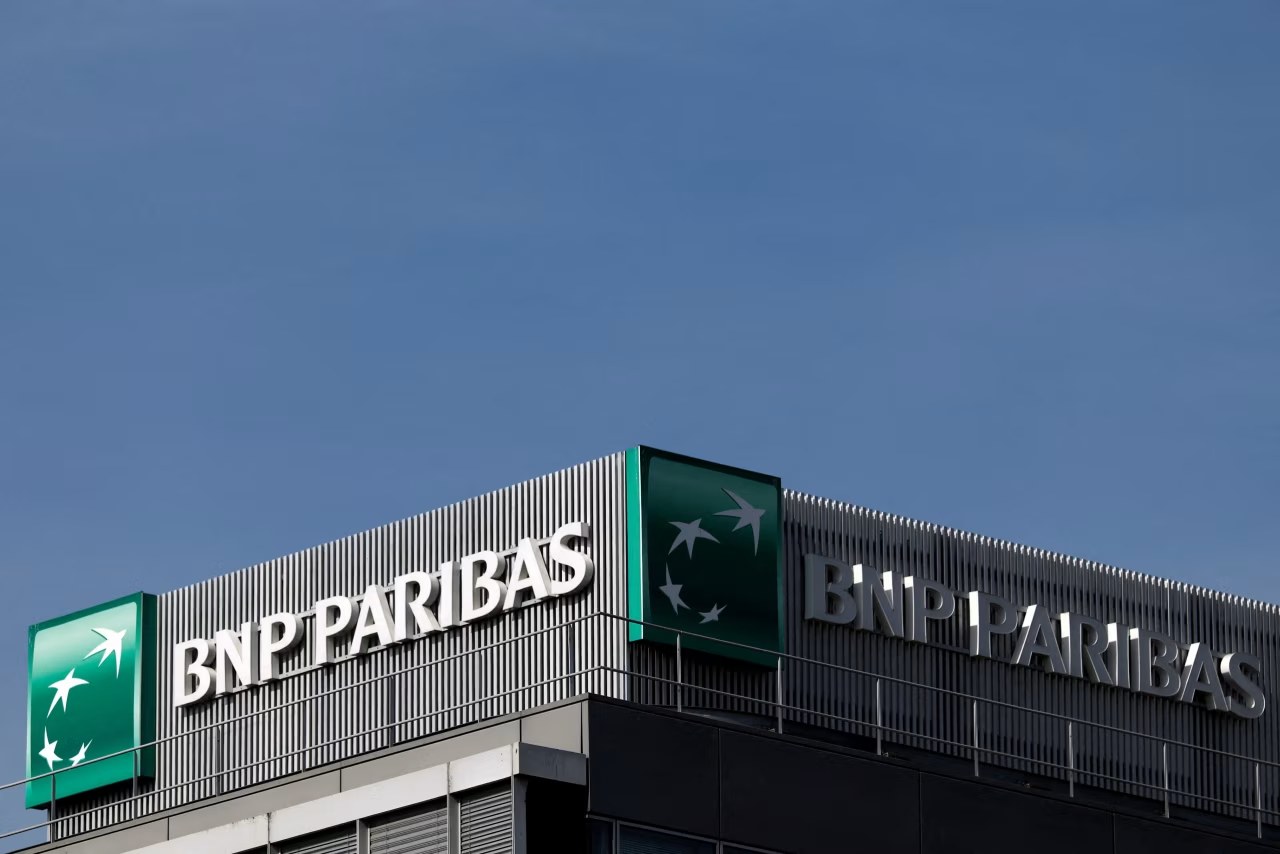
BNP Paribas Eyes 100% Pretax Jump in Asset Arm After €5.1B AXA Purchase
- BNP Paribas wants pretax profit from its asset-management unit to nearly double by 2030.
- The €5.1 billion takeover of AXA’s money-management arm closed last summer and is central to the plan.
- Group-wide, the lender is targeting a 13% return on tangible equity by 2028, a key profitability ratio.
- Asset-management expansion offsets pressure on retail and corporate lending margins.
Can a single acquisition turbo-charge earnings enough to hit double-digit ROE?
BNP PARIBAS—Paris—BNP Paribas has set a bold marker for Europe’s competitive asset-management landscape: within six years the bank intends to almost double the pretax income generated by its newly enlarged funds arm after completing the €5.1 billion absorption of AXA’s portfolio late last summer.
The 13% return on tangible equity target by 2028, reaffirmed alongside the divisional plan, is more than a financial footnote. Analysts at Morgan Stanley estimate every percentage point of ROE equates to roughly €1 billion in market capitalisation for a bank the size of BNP, making the asset-management push a pivotal lever for shareholder value.
Inside the bank, executives see the AXA deal as the last major jigsaw piece in a decade-long pivot away from capital-intensive trading and toward fee-based businesses. “Asset management is the gift that keeps on giving,” one senior Paris-based strategist told Reuters in February. “Fees are sticky, capital-light, and scale fast.”
How the AXA Acquisition Reshapes BNP’s Fee Engine
The transaction handed BNP €735 billion in incremental client assets, lifting the combined unit to €1.3 trillion, enough to rank it sixth globally behind BlackRock, Vanguard, UBS, Fidelity and State Street. More importantly, it added complementary strengths: AXA’s insurance-linked liabilities and liability-driven investment products generate annual fees of roughly 18 basis points, double the blended margin on BNP’s legacy mutual-fund shelf.
Cost-to-income ratio in the cross-hairs
Management told investors the enlarged platform can strip out €220 million in duplicative technology and distribution costs by 2026, a figure that equates to 3% of combined operating expenses. Jefferies analysts model a drop in the division’s cost-to-income ratio from 76% in 2022 to 68% by 2025, unlocking €400 million in pretax profit even before market-related inflows. “The cost story is credible because both firms already run the same custodians and fund-domicile structures in Luxembourg and Dublin,” said Flora Bocahut, European banks analyst at Jefferies.
BNP’s internal projections, shared at a December investor day, show pretax income rising from €1.8 billion in 2022 to an implied €3.4 billion by 2030, a compound annual growth rate just above 8%. The bank’s chief financial officer, Lars Machenil, cautioned that the glide-path assumes 4% annual market appreciation and €65 billion in net new money each year—targets that sit only modestly ahead of the 3.3% and €60 billion the unit averaged between 2015 and 2022.
If achieved, the division would contribute roughly 18% of group pretax profit, up from 11% today, and free up internal capital that can be redeployed toward share buybacks or higher dividend payout ratios. That prospect has already nudged consensus ROE forecasts for 2028 to 12.4%, the highest since 2010, according to Visible Alpha.
What a 13% Return on Tangible Equity Really Means for Investors
Return on tangible equity (ROTE) divides net profit by shareholders’ equity minus intangible assets; it strips out goodwill and brands to show how hard core capital is working. European banks have struggled to lift ROTE above 9% since the global financial crisis, weighed by low rates, stricter capital rules and legacy conduct fines. BNP’s own ROTE languished at 9.7% in 2021 and 10.5% in 2022—still above the euro-area peer average of 7.8% but short of the 15%-plus levels that preceded 2008.
Bridging the gap with fee-based income
Every €100 million in incremental asset-management profit adds roughly 10 basis points to group ROTE because the capital required is negligible, according to JPMorgan banking analyst Kiri Vijayarajah. The bank therefore needs about €3.2 billion in cumulative divisional profit growth over six years to close the 250-basis-point gap between current trajectory and the 13% ambition—precisely the envelope management has laid out.
Competitors are watching closely. UBS achieved a 15.5% ROTE in 2023 after folding Credit Suisse’s asset-trading businesses, while Santander’s 2025 target of 15% relies heavily on its global asset- and wealth-management franchises. “The 13% club is where valuation rerating starts,” said Jon Peace, European banks analyst at Citi. “Below that, shares trade at or below tangible book; above it, premiums emerge.”
BNP currently trades at 0.78× tangible book, implying the market prices in only a 10% ROTE. If the lender hits 13% and sustains it, Peace’s model shows upside to 1.1× book and a €25 billion uplift in market value, equivalent to a 45% share-price gain from late-March levels.
Can BNP Overtake Amundi and Become Europe’s Largest Fund Giant?
France hosts two of the world’s top-ten asset managers, but Amundi—the Crédit Agricole-Société Générale spin-off—has dominated continental rankings since 2015 with €2.1 trillion under management. BNP’s post-AXA tally of €1.3 trillion still leaves a €750 billion gap, yet executives argue the combined entity’s €230 billion annual inflow capacity could close the deficit within a decade.
Inflows, not acquisitions, are the mantra
Chief executive Jean-Laurent Bonnafé ruled out large-scale M&A above €1 billion during the February strategy call, citing valuation multiples of 18-20× earnings for European peers. Instead, BNP will lean on its 150-strong network of corporate and insurance ties, plus AXA’s existing distribution agreements across Asia and the Middle East, to gather what it calls “sticky institutional mandates.”
Early traction is visible. Net new money for the merged unit hit €76 billion in 2023, the strongest since 2017, with 42% sourced outside Europe. Fixed-income ETFs branded BNP Paribas Easy captured an additional €18 billion, lifting the firm to fourth place in European passive fund flows behind Lyxor and BlackRock.
Still, Amundi is not standing still. It bought 70% of Sabadell AM in January for €430 million, adding €22 billion in Spanish pension assets. “The race is about who can scale multi-boutique capabilities fastest,” said Virginie O’Shea, founder of consultancy Firebrand Research. “BNP has the insurance angle, Amundi has the bank partnerships—both can win.”
Execution Risks That Could Derail the 2030 Ambition
Doubling profits is never linear. The most cited threat is market beta: a 20% global equity correction in any single year would clip €600 million off fee income, erasing roughly two years of organic growth. BNP’s stress-test assumes such a drawdown only once every six years, yet the 2020 pandemic and 2022 rate-shock both delivered comparable hits within 24 months.
Regulatory curveballs
Europe’s Sustainable Finance Disclosure Regulation is forcing asset managers to split funds and re-label strategies, raising compliance costs by an estimated 7% this year. “Every new ESG rule chips away at margins unless you can convert it into higher-fee Article 9 products,” warned Sean Tuffy, head of regulatory intelligence at Brown Brothers Harriman.
Talent retention is another flashpoint. Senior portfolio managers at AXA IM received retention packages worth 40% of base pay, due to expire in 2025. Head-hunters at Heidrick & Struggles report a 28% year-on-year rise in mandates for French asset-management executives, pushing compensation benchmarks higher and threatening the bank’s cost-to-income trajectory.
Finally, integration glitches could spook clients. BNP has migrated €420 billion onto a single Aladdin platform, but two large Middle Eastern sovereign mandates worth €14 billion placed the process under review in March. Any defections would dent the €65 billion annual inflow assumption that underpins the 2030 profit goal.
Bottom Line for Shareholders: Is the Market Pricing in Success Too Cheaply?
Despite rallying 18% since the AXA deal closed, BNP shares trade at a 26% discount to the STOXX Europe bank index on a forward price-to-earnings basis. Analysts attribute the gap to French sovereign-risk overhang and litigation reserves, yet the asset-management story is largely ignored, according to Barclays’ Amit Goel, who models a €42 fair value under a blue-sky scenario—35% above late-March levels.
Dividend upside as capital intensity falls
Because asset-management growth consumes little capital, every incremental euro of profit can be paid out. BNP’s 2025 dividend payout guidance of 60% rises to 70% under the division’s strong growth case, lifting dividend per share to €4.90, a 5.8% yield at today’s price. “That yield would be unrivalled among G-SIBs,” Goel wrote.
Options markets are starting to price in the skew: three-month implied volatility on BNP calls at €35 strike has climbed to 28%, the highest since 2022, suggesting investors are positioning for upward revisions. Still, the stock’s beta to the CAC 40 remains 1.3, so macro shocks could overwhelm idiosyncratic gains.
Long-only fund managers see a window. Comgest, a Paris-based asset manager, increased its BNP stake by 2.5 million shares in the fourth quarter, citing “undemanding valuation for a fee-based transformation.” If BNP delivers even 12% ROTE by 2026, Comgest models 15% annual total shareholder returns through decade-end, comfortably above the bank sector’s 8% median.
Frequently Asked Questions
Q: What is BNP Paribas’s 2030 profit target for its asset-management unit?
BNP Paribas aims to nearly double pretax income from its asset-management division by 2030, leveraging the €5.1 billion AXA acquisition completed last summer.
Q: How does the AXA deal fit into BNP Paribas’s broader profitability goals?
The AXA money-management takeover is the cornerstone of BNP’s plan to reach a 13% return on tangible equity by 2028, a key metric watched by investors.
Q: Why is return on tangible equity important for banks like BNP Paribas?
Return on tangible equity measures how efficiently a bank uses shareholder capital; a 13% target signals strong profitability and competitive positioning in European banking.
📰 Related Articles
- BNP Paribas Sets Ambitious Asset Management Growth Target to Near‑Double Pretax Income by 2030
- Cliffwater’s $42 Billion Private-Credit Gate Sparks Flight From Illiquid Loan Bundles
- Andrew Wiederhorn Battles FAT Brands Lenders for Control After Years of Legal Scrutiny
- Private Credit’s Hidden Risks Emerge as Western Alliance-Jefferies Conflict Unsettles Banks
