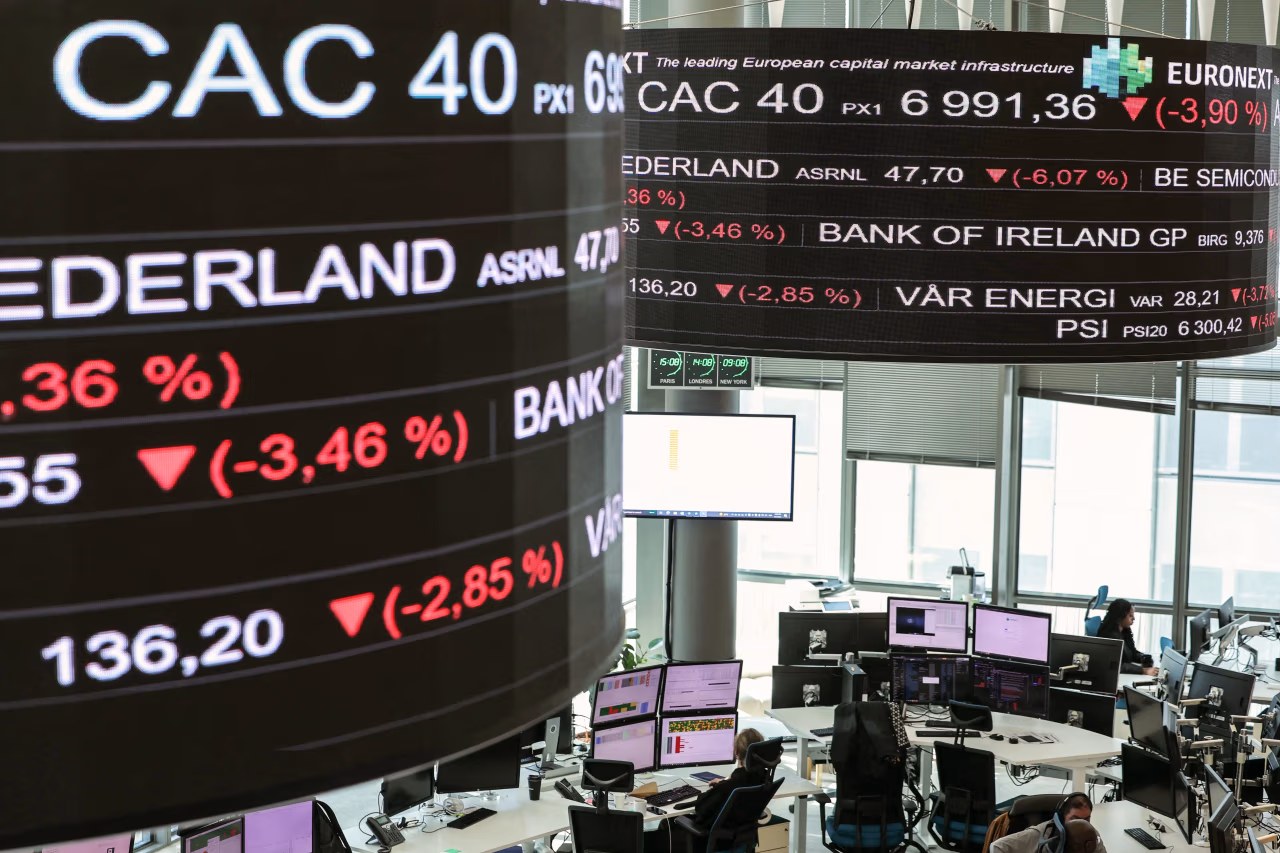
Bollore Proposes Extra Cash Returns, Sending Stock Up 14% in Paris
- Shares leapt more than 14% after the conglomerate unveiled a plan for one-off shareholder distributions.
- The jump reverses a sluggish 4% year-to-date gain and puts the stock at a five-month intraday high.
- Management did not specify the exact size or timing of the payout, saying only that details will follow.
- Investors brushed aside a simultaneous drop in both revenue and profit reported for the period.
Traders bet that returning excess cash is a faster route to value than growing earnings in a tough cycle.
BOLLORE—Paris-listed Bollore surged to the top of the CAC 40 gainers board on Wednesday after the family-controlled group told investors it would hand back surplus cash through an extraordinary dividend and share-buyback mix. The proposal landed alongside quarterly numbers that showed a 7% slide in revenue and a 12% fall in operating profit, yet the market focused on the promise of near-term capital return.
By 10:45 a.m. local time the stock hit €5.82, a 14.3% gain that added roughly €1.7 billion to the group’s market capitalisation in under an hour. Volume spiked to 4.8 million shares, four times the 20-day average, according to data from Euronext.
“Markets can forgive weak earnings if they see cash coming back,” said Aline Rousseau, Paris-based strategist at Kepler Cheuvreux. “Bollore is essentially telling shareholders the conglomerate discount will shrink by brute-force cash, not by waiting for a cyclical upturn.”
The Cash-Return Gambit: How Bollore Plans to Close the Conglomerate Discount
Bollore’s board, controlled by chairman Vincent Bollore and his family holding company, said it will ask shareholders this summer to approve an “exceptional” distribution combining a special dividend with an open-market share buyback. No euro figure was given, but analysts at JPMorgan estimate the group could return up to €2 billion without breaching its 3.0× net-debt-to-Ebitda ceiling.
The move marks a strategic pivot. For two decades the group ploughed surplus cash into transport, logistics and media assets across Africa and Europe, amassing a 14-company empire that trades at a 28% discount to the sum of its listed stakes, according to Berenberg calculations.
“Returning cash is the quickest way to close that gap,” said Berenberg analyst Marc Pierron in a note. He points to Universal Music Group, in which Bollore owns 18%, and to African port concessions that could be partially monetised to fund the payout without new borrowing.
Management signalled that the programme will be front-loaded: most of the cash is slated for calendar 2025, with the dividend paid in the fourth quarter and the buyback executed within 12 months. The pledge helped the stock recoup all losses since January and outperform French peers Bouygues and Veolia, both down year-to-date.
What changed? A new CFO and governance refresh
People close to the board say chief financial officer Cécile Frot-Coutaz, appointed last September, pushed for a capital-allocation review after Q3 results showed return on invested capital sliding below 6%. Her presentation to directors in February argued that buybacks at current valuations deliver a 12% earnings-accretion, double the IRR of greenfield African logistics projects.
Family patriarch Vincent Bollore, long an empire builder, is said to have endorsed the shift once it became clear that asset sales could fund returns without raising leverage. The family holding, Bollore SE, controls 32% of the voting rights and would receive roughly €640 million if €2 billion is ultimately paid out.
“Markets reward clarity,” Frot-Coutaz told analysts on Wednesday’s call. “We can grow and still return cash. The two are no longer mutually exclusive.”
The next test comes on 17 July, when shareholders vote on the authorisation at the annual meeting in Lyon. Approval is expected: the family controls a blocking minority and French institutional investors such as Amundi and OFI have already voiced support.
Can One-Off Payouts Offset Falling Profit?
Wednesday’s rally came despite numbers that underlined operational headwinds. Revenue for the first three months slipped 7% to €5.1 billion, dragged by lower advertising spend at Havas and a 9% drop in freight-forwarding rates. Operating profit fell 12% to €302 million, giving a 5.9% margin, down 40 basis points year-on-year.
Management blamed a cyclical trough in European ad markets and excess capacity in trans-Mediterranean shipping. They maintained full-year guidance for “slight” revenue growth and flat profit, but conceded risks are tilted to the downside.
Still, investors focused on cash flow, which held steady at €420 million thanks to lower working-capital needs. Net debt ticked down €100 million to €3.8 billion, leaving gearing at 37%, well below the 50% covenant on outstanding bonds.
What the numbers say
JP Morgan analyst Swami Subramanian says the balance-sheet capacity is clear: “Even if Ebitda falls another 5%, they can return €2 billion and still finish 2025 with leverage under 2.8×.” He upgraded the stock to Overweight and lifted his price target to €6.40, implying another 10% upside.
Yet not everyone is convinced. Citigroup’s Manish Beria keeps a Neutral rating, arguing that special dividends are “one-time sugar hits” unless profit growth returns. “Bollore needs to show it can expand margins in Africa logistics, otherwise the stock will re-rate back down once the buyback ends,” Beria wrote.
For now, the market is giving management the benefit of the doubt. Short interest fell to 0.9% of free float on Tuesday, the lowest since 2021, according to data from Markit. Options pricing implies a 22% chance of further gains above €6.00 before August expiry, up from 12% last week.
The bigger question is whether the conglomerate can use the breathing room to fix operations. Vincent Bollore told analysts he still sees “huge upside” in African port concessions once global trade volumes recover, but conceded that timeline is “not in our hands”.
What History Says About Special Dividends in Paris
Bollore is not the first French conglomerate to use extraordinary payouts to placate investors. In 2014, Bouygnes returned €1.2 billion after selling its telecom towers. The stock jumped 11% on the day of the announcement, but gave back half those gains within six months as earnings disappointed. In 2018, Lagardère paid a €575 million special dividend following an asset swap; shares rose 8% initially, then slid 20% over the next year.
Academic work suggests the market impact depends on funding source. A 2022 study by Prof. Henri Servaes at HEC Paris found that buybacks or special dividends financed by genuine excess cash outperform those funded by debt or asset sales by 9% over the following 12 months.
In Bollore’s case, the payout will come from proceeds of the partial sale of its 29% stake in Vivendi, which netted €1.6 billion in March, plus €400 million in port-concession advance payments. “That’s high-quality money, not leverage,” Servaes notes, making a sustained rerating more likely.
Peer comparison: how other holding companies trade
HoldCo peers such as Wendel and Eurazeo trade at 18–22% discounts to net asset value, narrower than Bollore’s 28%. Analysts say the gap reflects governance: Wendel has bought back 15% of its stock since 2020, while Eurazeo pays a progressive ordinary dividend. Both have outperformed the SBF 120 by 300 basis points annually over five years.
Bollore’s proposal narrows that governance discount, but only if management follows through. “The board must now institutionalise regular buybacks, not treat them as one-offs,” said Claire Dumont, portfolio manager at Sanso IS. She has added 150 basis points to her position, citing “optionality on both African logistics recovery and HoldCo discount closure”.
History also shows timing matters. Goldman Sachs data indicate French special-dividend announcements made during earnings recessions produce a 6% median outperformance versus the CAC 40 in the next quarter, but half of that fades if profits keep falling. Bollore bulls are betting that global ad spend and freight rates bottom in Q3, validating the market’s optimism.
What’s Next for Investors?
Traders now await three catalysts. First, the 17 July vote on the capital-return mandate. Second, first-half earnings on 28 August, where consensus expects flat revenue but a 50-basis-point margin recovery on cost cuts. Third, an update on African logistics volumes, which declined 4% in Q1 due to weaker cocoa exports from Ivory Coast.
Broker targets cluster around €6.00, implying 8% upside after the post-news pop. The bull case, articulated by Bank of America, sees €6.70 if freight rates rebound and ad markets recover, adding €180 million to annual profit. The bear case, flagged by Redburn, sees €5.20 if margins keep sliding and the buyback is smaller than hoped.
Options flow suggests investors are positioning for more gains. Call volume at the €6.00 strike expiring in September has risen to 42,000 contracts, the highest on record, according to Euronext data. Implied volatility has climbed to 24%, making new bullish positions expensive but underscoring conviction.
Ultimately, the special dividend buys management time, not forgiveness. “We’ll take the cash, but we still need to see green shoots,” said Amundi fund manager François Riquier. He has trimmed other industrials to add Bollore, but warns that without an operational rebound, the 2025 rally could prove ephemeral.
For now, Paris trading floors are treating the conglomerate as a cash-return story first and an operating turnaround second. Whether that narrative survives the next earnings cycle depends less on financial engineering and more on whether global trade and advertising spend find a floor before year-end.
Frequently Asked Questions
Q: Why did Bollore shares jump 14%?
Management surprised investors with a proposal for one-off cash returns to shareholders, outweighing weaker revenue and profit results.
Q: Is Bollore profitable right now?
The latest release confirms a profit decline, but the company still generates enough cash to fund extraordinary shareholder distributions.
Q: How has Bollore stock performed this year?
Before the spike, the shares were up 4% year-to-date; the announcement added another 14% in a single morning session.
