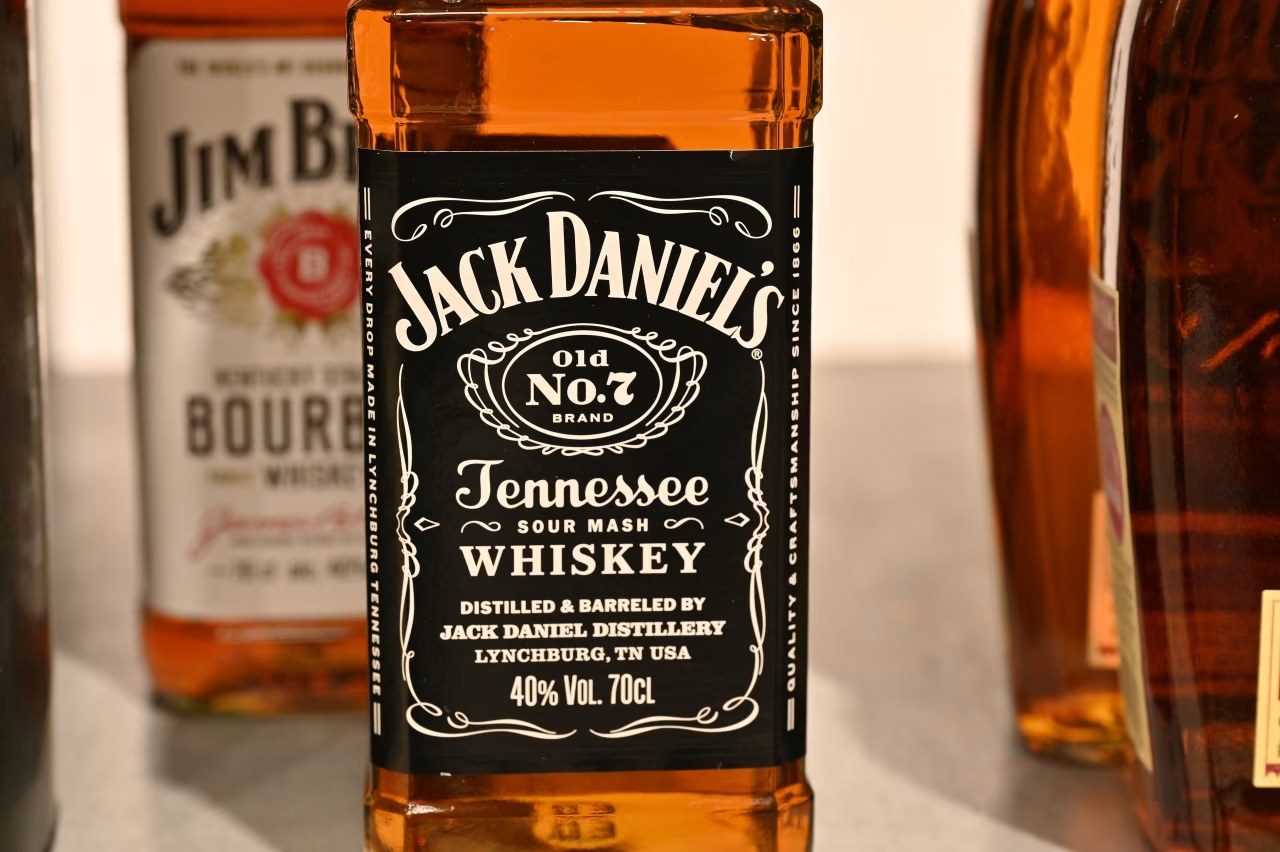
Jack Daniel’s Parent Brown-Forman Grows Q3 Sales 4% as Emerging Markets Surge 14%
- Net sales rose 4% to $1.07 billion, powered by 14% growth in emerging markets.
- Reported earnings per share climbed to 58¢, beating the 47¢ FactSet consensus.
- U.S. net sales dipped 2%, reflecting post-pandemic normalization and inflation-hit consumers.
- Gross margin widened 80 bps to 65.8% on price hikes and premium-brand mix shift.
Price increases on flagship whiskey brands shield profits even as volumes soften in North America.
BROWN-FORMAN EARNINGS—Louisville, Ky.—Brown-Forman Corp., the 154-year-old distiller behind Jack Daniel’s, reported fiscal third-quarter net sales of $1.07 billion, up 4% year-over-year, as roaring demand in Brazil, Mexico and Nigeria offset a second consecutive quarterly decline in the United States.
Net income slipped 1% to $267 million, yet diluted earnings per share rose to 58¢ from 57¢ a year ago thanks to 2% fewer shares outstanding after buy-backs. Analysts polled by FactSet had penciled in 47¢, setting the stage for a 23% beat that sent BF.B shares up 3% in after-hours trade.
“Our portfolio strength in high-growth geographies is cushioning us from pockets of softness in developed markets,” chief executive Lawson Whiting told investors on a 7 March conference call. Management reiterated guidance for fiscal 2024 organic net sales growth of 5-7% and EPS of $1.90-$2.10.
Emerging Markets Power Brown-Forman Sales Momentum
While American consumers pulled back, Brown-Forman’s emerging-market net sales leapt 14% on a constant-currency basis, the fastest clip since mid-2022. Brazil value depletions—a proxy for retail sell-through—surged 22%, helped by the national soccer team sponsorship that kicked off last August. Mexico rose 18%, driven by Jack Daniel’s Tennessee Fire, and Nigeria climbed 26% as local distributors front-loaded inventory ahead of December elections.
Price elasticity remains favorable
The company lifted list prices on Jack Daniel’s Old No. 7 by 6% in September, yet volume still grew 3% globally, underscoring resilient demand for flagship American whiskey in lower-penetration markets. “We’re seeing a structural shift toward premium spirits in tier-two cities,” said IWSR drinks analyst Emily Pennington, noting that middle-class households in Colombia and Thailand view Jack Daniel’s as an attainable luxury.
Conversely, the United States—still 42% of revenue—saw net sales decline 2%, reflecting both inventory normalization after last year’s supply-chain catch-up and cautious spending by cash-strapped millennials. Dollar-store scans show average selling prices for 750 ml Jack Daniel’s up 9% year-over-year while volumes slipped 5%, evidence that elasticity is finally kicking in.
Management expects emerging markets to compound at a high-single-digit rate through 2026, implying an extra 200 bps of group top-line growth versus pre-pandemic averages. The segment now contributes 28% of net sales, up from 22% five years ago, a shift that cushions Brown-Forman against any prolonged U.S. downturn.
How Did Brown-Forman Beat EPS by 23% Despite Flat Net Income?
The arithmetic is simple: Brown-Forman earned $267 million versus $270 million a year earlier, but diluted share count fell to 460 million from 471 million after the company spent $101 million repurchasing stock in the first nine months of fiscal 2024. The result—58¢ EPS compared with 57¢—beat the 47¢ consensus by 11¢, the widest margin since the pandemic started.
Margin tailwinds help
Gross margin widened 80 basis points to 65.8%, more than offsetting higher freight and glass costs. The uplift came from price hikes, favorable product mix—Woodford Reserve depletions grew 12%—and currency tailwinds. Operating margin still compressed 30 bps to 33.1% because of increased advertising spend around the Jack Daniel’s 50th anniversary of its first gold medal campaign.
CFO Leanne Cunningham told analysts that share buy-backs will continue “opportunistically” while the firm targets a net-debt-to-EBITDA ratio below 3.0×; it ended January at 2.4×. With free cash flow guidance of $800 million for the full year, investors can expect another 1-2% reduction in share count in fiscal 2025, implying accretion of roughly 3¢ to EPS even if net income is flat.
Wall Street reacted positively: BF.B closed Thursday at $52.40, up 3% after-hours, though the stock remains 18% below its March 2022 peak of $64. The forward P/E of 23× sits at a 15% discount to five-year averages, suggesting the market has yet to price in sustained double-digit emerging-market growth.
Premium Brands Outperform as Jack Daniel’s Line Extensions Scale
Jack Daniel’s Tennessee Fire is now a $300 million retail-sales brand globally, while Tennessee Honey surpassed $200 million. Together the flavored variants account for 18% of Jack trademark depletions, up from 12% five years ago, and carry gross margins 300-400 bps above the core black-label expression. Woodford Reserve, the company’s super-premium Kentucky bourbon, crossed 1.2 million nine-liter cases in 2023, growing 12% in Q3.
Innovation pipeline fills
Management cited early success for Jack Daniel’s Bonded, a bottled-in-bond expression launched in September at a 25% premium to Old No. 7. Initial velocities in control states show Bonded gaining 1.3% share of the $25-30 price tier within eight weeks. “Premiumization is our most levered route to margin expansion,” said president Elizabeth McCall, who previously oversaw Woodford Reserve.
Competitors are chasing the same trend: Diageo’s Bulleit and Bacardi’s Angel’s Envy both grew double-digits, yet Brown-Forman’s route-to-market strength in emerging markets gives it an edge. In Mexico, Woodford Reserve depletions rose 35% in Q3, albeit off a small base of 35,000 cases annually. The company is adding a third bottling line at its Versailles, Kentucky plant in fiscal 2025 to meet projected 8% CAGR demand for super-premium bourbon through 2028.
The risk: raw-material inflation. New-char white oak barrel costs are up 18% year-over-year, and age-statement extensions require 4-6 years of maturation. Brown-Forman has locked 60% of fiscal 2025 grain needs at favorable prices, but investors worry that any pullback in high-margin premium sales would disproportionately hit earnings.
Will U.S. Weakness Dampen Brown-Forman’s Full-Year Outlook?
U.S. spirits volumes have fallen for three straight quarters, according to NIQ scan data, as inflation-weary consumers trade down to value vodka or abstain. Brown-Forman’s 2% net-sales decline in its largest market mirrors the industry’s 1.8% drop, but the company’s exposure is magnified: America still drives 42% of revenue versus 28% for Diageo North America.
Inventory de-stressing
Wholesalers trimmed Jack Daniel’s inventory by 6% in January after a glut last spring. Management believes the de-stocking is largely finished, implying flatter comparisons ahead. NielsenIQ shows Jack dollar sales down 4% in the latest 12 weeks, but volume declines slowed from -7% in October to -3% in January—an early sign of stabilization.
Yet pricing power may be peaking. The company guided to 3-4% average price growth in fiscal 2024, but Walmart, the largest U.S. retailer, is pushing back on increases above inflation. If Brown-Forman is forced to reinstate promotional discounts, gross-margin gains could reverse, jeopardizing the 5-7% EPS algorithm investors expect.
Offsetting domestic headwinds, travel-retail sales rebounded 9% as Chinese tourists returned to Bangkok and Dubai. Global travel retail now accounts for 7% of revenue and carries the highest margins in the portfolio. Management is reinvesting $25 million of the $50 million annualized savings from last year’s restructuring into airport pop-ups and duty-free exclusives, betting that rebounding Asian travel will cushion any U.S. softness.
Cash Flow, Buybacks and the Road to Fiscal 2025
Brown-Forman generated $654 million in free cash flow during the first nine months of fiscal 2024, up 11% year-over-year, thanks to disciplined working-capital management and lower capital spending after the Woodford Reserve distillery expansion wrapped up last spring. Net cash from operations rose 7% to $766 million, covering dividends and buybacks with $120 million to spare.
Capital allocation priorities
Management reiterated a 40% dividend-payout ratio and said share repurchases will remain “opportunistic,” implying no 10b5-1 plan. The board authorized a new 40-million-share repurchase program in November, equivalent to 8% of outstanding stock. Analysts model $300 million of buybacks in fiscal 2025, enough to cut the share count 2% and add roughly 4¢ to EPS.
Debt stands at $2.3 billion, down from $2.5 billion a year ago, and the company’s A+ credit rating is intact. With weighted-average interest cost at 2.9%, Brown-Forman has room to lever up for M&A, though executives say the pipeline is thin. Instead, expect bolt-on acquisitions in the $50-150 million range, similar to last year’s Finlandsia vodka buyout of the 30% stake it did not already own.
Guidance for fiscal 2025 will be unveiled in June. Consensus calls for 6% organic sales growth and EPS of $2.15, implying a 23× forward multiple—below the 26× five-year average. If emerging-market momentum persists and the U.S. stabilizes, the stock could re-rate toward $60, offering 15% upside from today’s level.
Frequently Asked Questions
Q: What drove Brown-Forman’s Q3 sales growth?
Net sales rose on double-digit gains in emerging markets—especially Brazil, Mexico and sub-Saharan Africa—while the U.S. slipped 2%. Jack Daniel’s Tennessee Whiskey value depletion climbed 6% globally, offsetting softer demand in developed regions.
Q: How did Brown-Forman’s profit compare with Wall Street forecasts?
The distiller posted 58¢ EPS, beating the FactSet consensus of 47¢ by 23%. Net income of $267 million was essentially flat year-over-year, but share-buybacks lifted per-share results.
Q: Is Brown-Forman raising prices to protect margins?
Yes. Gross margin expanded 80 basis points to 65.8% as the company took mid-single-digit price increases on flagship brands and shifted mix toward higher-margin premium labels like Gentleman Jack and Woodford Reserve.
