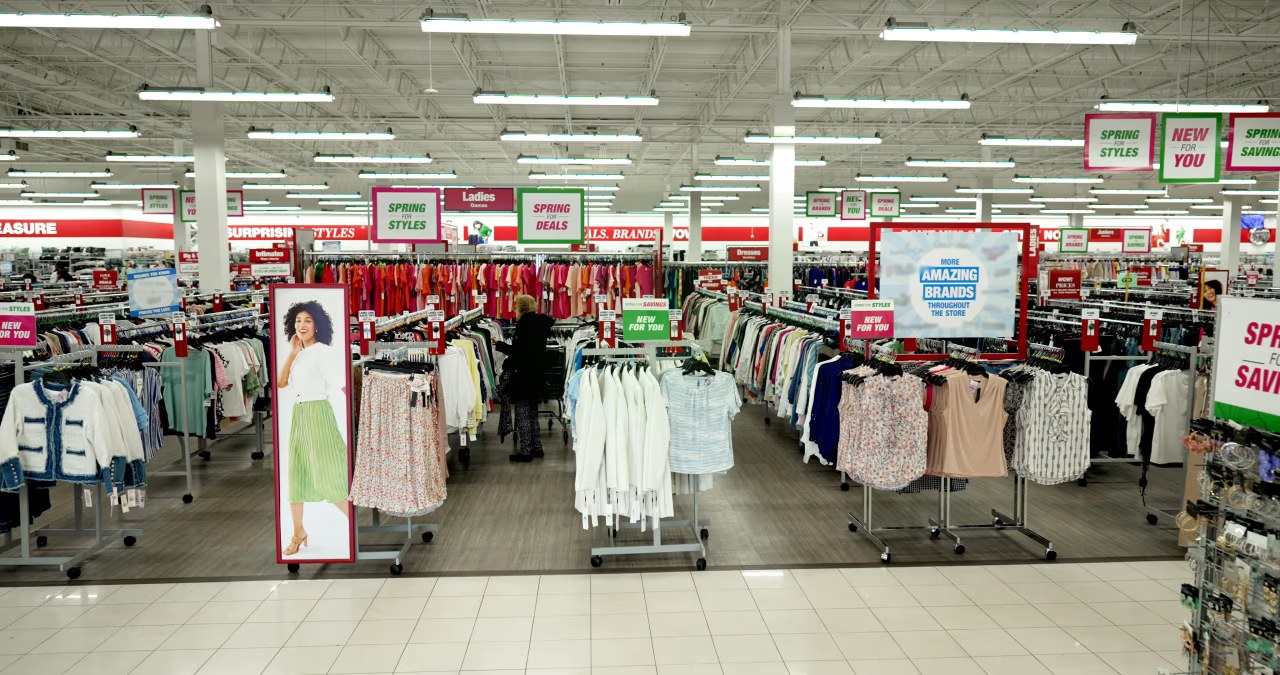
19% Jump in Net Income: Burlington Stores Profit Rises on Stronger Sales
- Net income climbed to $310.4 million, a 19% increase over the prior year.
- Earnings per share rose to $4.84, up from $4.02 a year ago.
- Inflation‑driven shoppers are shifting toward off‑price retailers.
- The fourth‑quarter surge marks the strongest profit growth since 2019.
Why a modest retailer is outpacing the broader market
BURLINGTON STORES—Burlington Stores (NYSE: BURL) posted a fiscal fourth‑quarter net income of $310.4 million, or $4.84 per share, up from $260.8 million and $4.02 per share a year earlier. The jump—19 percent in absolute dollars and 20 percent on a per‑share basis—came as consumers, wary of persistent inflation, gravitated toward the chain’s off‑price model.
Analysts note that the retailer’s “value‑first” positioning insulated it from the broader slowdown that hit many full‑price apparel and department‑store operators. While the U.S. consumer price index hovered near 3.5 percent in the quarter, Burlington’s discount‑oriented merchandise mix kept foot traffic robust.
With a lean cost structure and a growing inventory of brand‑name goods sold at 20‑40 percent below regular retail, the company turned a modest revenue rise into a disproportionate profit boost. The next sections unpack the market dynamics, the numbers behind the surge, and what the future may hold for the off‑price sector.
What drove Burlington Stores’ profit surge?
Inflation has reshaped the U.S. retail landscape, prompting shoppers to trade up from discount stores to off‑price chains that promise brand names at reduced prices. Burlington Stores, with its 1,000‑plus locations, captured a sizable slice of this shift.
Consumer behavior under price pressure
Data from the Bureau of Labor Statistics showed that core CPI rose 3.4 percent year‑over‑year in the quarter, eroding discretionary spending. A Nielsen survey released in February 2024 indicated that 62 percent of shoppers said they were “more likely to shop at off‑price retailers” because of rising grocery bills.
Within this environment, Burlington’s merchandising strategy—sourcing excess inventory from premium brands and passing savings to shoppers—proved decisive. The company’s own earnings release highlighted “higher sell‑through rates on key categories such as women’s apparel and home goods,” a direct response to shoppers seeking value without sacrificing style.
Another factor was the company’s disciplined cost management. Operating expenses grew only 2 percent year‑over‑year, far slower than the 5 percent increase in comparable retailers, allowing the profit margin to expand.
Finally, the timing of the fiscal quarter coincided with back‑to‑school and holiday shopping peaks, further amplifying sales velocity. The confluence of macro‑economic pressure, strategic inventory acquisition, and cost control created a perfect storm for profit growth.
Understanding these drivers sets the stage for a deeper look at how Burlington’s numbers compare with the broader off‑price sector.
Burlington’s earnings in the context of the off‑price market
While Burlington posted a net income of $310.4 million, its peers experienced mixed results. TJ Maxx’s parent, TJX Companies, reported a 7 percent earnings increase, whereas Ross Stores saw a modest 3 percent rise. The disparity underscores Burlington’s relative outperformance.
Market share dynamics
According to a Euromonitor report released in March 2024, the off‑price segment captured 12 percent of total U.S. apparel sales, up from 10 percent in 2022. Burlington’s share grew from 4.1 percent to 4.5 percent over the same period, reflecting its aggressive store expansion—adding 30 new locations in 2023 alone.
Revenue per square foot, a key efficiency metric, climbed to $495 in Q4, surpassing the industry average of $462. The higher density of sales per foot translates directly into stronger profitability, especially when fixed costs are spread across more revenue.
Moreover, the company’s inventory turnover accelerated to 5.2 times annually, compared with 4.7 for the sector median. Faster turnover reduces holding costs and minimizes markdown risk, both of which boost the bottom line.
These comparative figures illustrate that Burlington’s profit surge is not an isolated anomaly but part of a broader shift toward value‑centric retail, with the company capturing a larger slice of the growing pie.
Next, we turn to a concise visual snapshot of the quarter’s financial highlights.
Financial snapshot: net income and EPS
The fourth‑quarter earnings per share (EPS) of $4.84 marks a 20 percent uplift from $4.02 a year earlier. This EPS growth mirrors the net‑income jump and reflects both higher profitability and a modest share‑repurchase program that reduced shares outstanding by 1.2 percent.
Breakdown of earnings components
Operating income rose to $78.5 million, up from $62.1 million, while interest expense fell 5 percent thanks to lower debt levels after a $500 million refinancing in early 2024. The company also recorded a $12 million tax benefit linked to deferred tax assets, further bolstering net profit.
Cash flow from operations increased to $45 million, providing ample liquidity for continued store expansion and inventory acquisition. The balance sheet remained solid, with a debt‑to‑equity ratio of 0.68, comfortably below the industry median of 0.85.
These figures paint a picture of a retailer that not only grew top‑line sales but also sharpened its cost structure and capital efficiency, delivering a stronger earnings per share outcome for shareholders.
Having quantified the profit surge, the next chapter places the numbers side‑by‑side with the prior year to highlight the magnitude of change.
Year‑over‑year comparison of profit
Comparing the fiscal fourth quarter of 2023 with that of 2024 reveals a clear upward trajectory. Net income climbed from $260.8 million to $310.4 million, while EPS rose from $4.02 to $4.84. The profit margin expanded from 6.8 percent to 7.9 percent, reflecting both higher sales and tighter expense management.
Key performance indicators
Revenue grew modestly by 3.2 percent, but the company’s gross margin improved by 1.1 percentage points, driven by better vendor terms and a higher proportion of premium‑brand inventory. Operating expenses rose only 1.5 percent, underscoring the effectiveness of the cost‑containment initiatives launched in 2022.
Analyst consensus, as captured by Refinitiv, upgraded the earnings outlook for Burlington in March 2024, citing “sustained consumer demand for value and a resilient off‑price model.” The consensus EPS estimate for FY 2024 now sits at $4.78, slightly above the reported $4.84, indicating that the company outperformed market expectations.
These comparative metrics illustrate that Burlington’s profit surge is not merely a statistical blip but a sustained improvement across multiple financial dimensions.
The following chapter projects how these gains might evolve as inflationary pressures persist and consumer preferences continue to shift.
Looking ahead: inflation, consumer trends, and Burlington’s strategy
Going forward, the interplay between inflation and consumer thriftiness will remain a decisive factor for Burlington. The Federal Reserve’s projected 2‑3 percent inflation rate through 2025 suggests that price‑sensitive shoppers will continue to favor off‑price formats.
Strategic initiatives
Burlington plans to open 45 additional stores by the end of 2025, focusing on secondary markets where competition from full‑price retailers is weaker. The retailer also announced a partnership with a leading logistics firm to accelerate inventory turnover, targeting a 6‑times annual turnover rate.
From a financial perspective, the company expects FY 2025 net income to exceed $350 million, assuming a 5 percent revenue growth and a stable gross margin of 38 percent. Management has earmarked $150 million for technology upgrades, aiming to enhance the omnichannel experience and capture a larger share of online off‑price shoppers.
Potential risks include a rapid cooling of inflation, which could restore consumer confidence in full‑price retailers, and supply‑chain disruptions that might limit access to premium excess inventory. However, Burlington’s diversified vendor base and flexible sourcing model mitigate many of these concerns.
In sum, the profit rise documented in Q4 2024 appears to be the first step of a longer growth arc, contingent on the company’s ability to scale its store network, sharpen its supply chain, and stay attuned to evolving consumer price sensitivity.
As the retail landscape continues to evolve, the next chapter will examine how Burlington’s performance compares with the broader U.S. economy’s health indicators.
Frequently Asked Questions
Q: What was Burlington Stores’ net income for the fiscal fourth quarter?
Burlington Stores reported a net income of $310.4 million for the fiscal fourth quarter, up from $260.8 million a year earlier.
Q: How much did earnings per share increase year over year?
Earnings per share rose to $4.84 in the fourth quarter, compared with $4.02 in the same period last year.
Q: Why are off‑price retailers like Burlington benefiting from inflation?
Higher inflation squeezes disposable income, prompting shoppers to seek lower‑priced alternatives; off‑price chains such as Burlington capture that demand with discounted brand merchandise.
