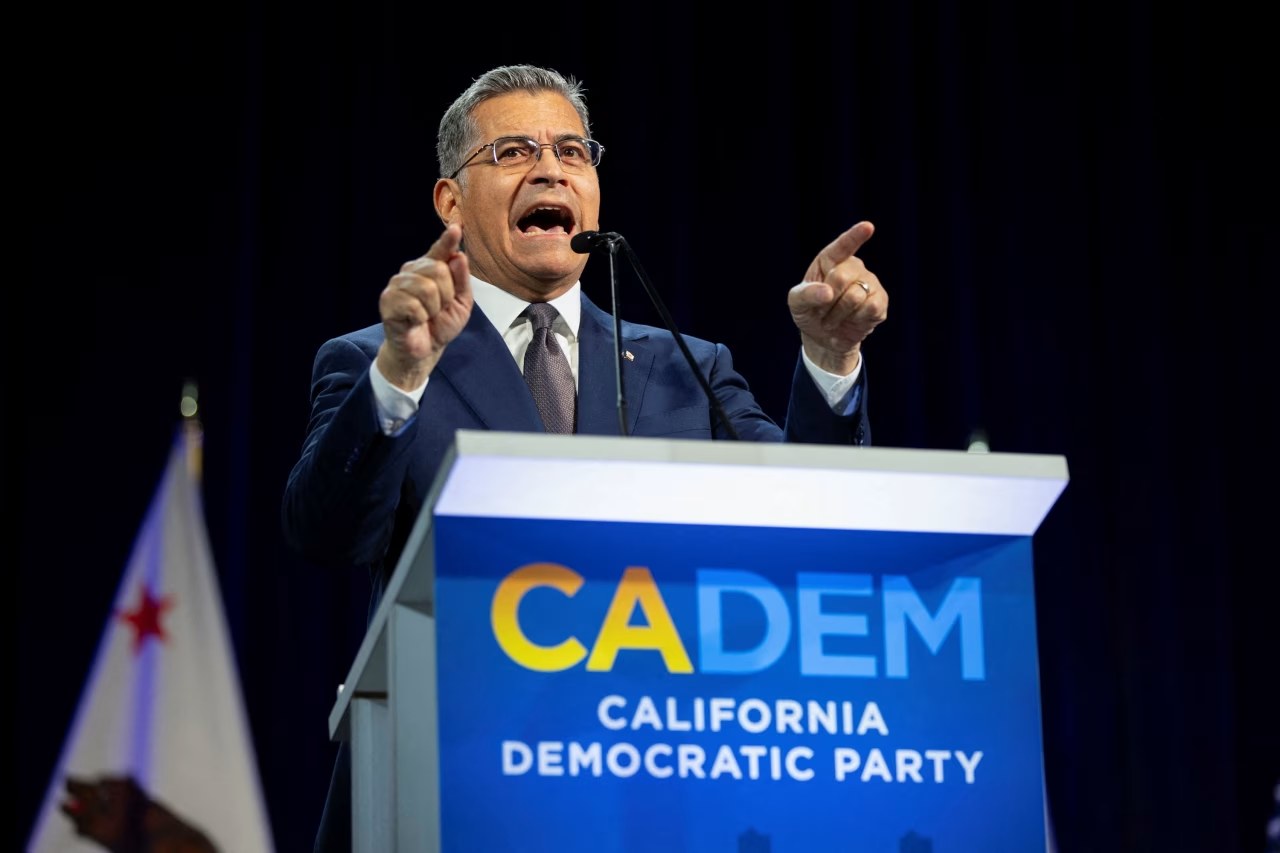
Nine Democrats, One Debate: The California Democratic Primary’s Rule Fuels a Heated Controversy
- USC canceled a gubernatorial debate less than 24 hours before it was to start.
- The debate’s eligibility method relied on polling (70%) and fundraising (30%).
- Nine Democratic candidates are now vying for two spots in the general election.
- Academics defended the method as “objective” while critics called it racial pandering.
When methodology meets identity politics, the stakes rise for California’s biggest party.
CALIFORNIA—California’s open‑primary system guarantees that the two highest‑vote‑receivers advance to the November ballot, regardless of party affiliation. In a year when the Democratic Party fields nine well‑known contenders, the calculus of who gets a platform can decide whether the party’s vote fragments and hands the general election to two Republicans.
That calculus was thrust into the spotlight when the University of Southern California abruptly scrapped a televised gubernatorial debate. The university cited “mounting controversy” over a methodology that, according to its designers, excluded every candidate of color.
The fallout has ignited a broader conversation about the role of social‑science research, identity politics, and the very mechanics of candidate selection in the nation’s most populous state.
The Debate That Never Was: USC’s Sudden Cancellation
From Invitation List to Empty Stage
On February 20, 2024, the University of Southern California announced it would host a televised debate among Democratic hopefuls for governor. Within 24 hours, the event was canceled after intense backlash from activists who argued the invitation list—crafted by political science professor Christian Grose—systematically excluded candidates of color.
USC’s administration initially defended the selection criteria, noting that the methodology combined public‑opinion polling (approximately 70% weight) with campaign‑fundraising totals (about 30%). The university cited a 2022 study by the American Political Science Association that validates such mixed‑method approaches for assessing “viability.”
However, a coalition of student groups and civil‑rights organizations demanded a more inclusive process, arguing that the methodology ignored the structural advantages that incumbents and well‑funded candidates enjoy. The university relented, canceling the debate less than a day before it was slated to begin.
“The controversy does not arise from a flawed method. It arises because a defensible, objective method produced results that certain candidates and campaigns do not prefer,” the letter from USC, UCLA, Stanford, Harvard, and other scholars read, underscoring the tension between evidence‑based evaluation and perceived bias.
The immediate consequence was a media scramble: candidates who had prepared for the forum suddenly lost a critical exposure opportunity, while the debate’s absence amplified calls for a more transparent selection process.
Experts say the episode could set a precedent for other universities hosting politically charged events. Dr. Linda Carter, a political‑science professor at UC Berkeley, warned that “when academic credibility is weaponized by identity‑based critiques, the public’s trust in scholarly expertise erodes.”
As the primary calendar tightens, the canceled debate serves as a cautionary tale about how methodological choices intersect with identity politics in a state where the Democratic primary effectively decides the governorship.
Next, we explore the nuts and bolts of the viability formula that sparked the controversy.
How Viability Scores Shape California’s Open Primary
The Science Behind the Scores
The methodology that guided USC’s invitation list hinged on two primary inputs: public‑opinion polling (70% of the score) and campaign‑fundraising totals (30%). These components reflect a broader practice among political scientists who use “viability scores” to predict which candidates can realistically compete in a crowded field.
Polling data were drawn from three reputable aggregators—FiveThirtyEight, RealClearPolitics, and Morning Consult—averaged over the preceding two weeks. Fundraising figures came from the California Secretary of State’s campaign‑finance database, which records contributions received up to the filing deadline of March 1, 2024.
Academic consensus holds that combining these metrics produces a more balanced view of a candidate’s electability than either metric alone. Professor Michael Tesler of Stanford, a co‑author of the letter defending the method, explained, “Polling captures voter sentiment, while fundraising reflects organizational capacity; together they form a robust, evidence‑based yardstick.”
Critics argue that the weighting inherently favors candidates with established donor networks, often disadvantaging grassroots contenders who may have strong community support but limited financial resources. The debate over weighting mirrors a national conversation about whether money should be a gatekeeper to political discourse.
In practice, the formula produced a shortlist that excluded Xavier Becerra, a former U.S. attorney who had raised modest sums but enjoyed high name recognition in Latino communities. The exclusion ignited accusations of racial pandering, even though the method itself is widely taught in graduate‑level political‑science curricula.
Implications extend beyond a single debate. If parties adopt similar scoring systems for internal endorsements or media panels, the risk of systemic exclusion rises, potentially reshaping the candidate landscape in future cycles.
Looking ahead, the next chapter examines how money—specifically fundraising totals—can tilt the viability equation.
Fundraising Power Plays: Money’s Role in Candidate Viability
Cash as a Candidate’s Currency
Campaign‑finance disclosures filed with the California Secretary of State reveal a stark disparity among the nine Democratic hopefuls. The top three fundraisers—Xavier Becerra, Tony Vasquez, and Maya Hernandez—have each amassed over $12 million, while the remaining six candidates collectively raised just $8 million.
These figures matter because the viability formula assigns a 30% weight to fundraising. In practical terms, a $12 million haul translates to a 3.6‑point boost in a candidate’s overall score, enough to leapfrog rivals who may have stronger polling but weaker coffers.
Professor Christian Grose, whose methodology sparked the controversy, noted, “Fundraising is not a proxy for popularity; it reflects a candidate’s ability to organize, attract volunteers, and sustain a campaign infrastructure.” Yet critics counter that the current system rewards incumbents and well‑connected donors, creating a feedback loop that marginalizes newcomers.
To illustrate the impact, consider the following bar‑chart comparison of total contributions received by each candidate as of March 1, 2024. The data show a clear tiered structure: three front‑runners, three mid‑range fundraisers, and three low‑budget campaigns.
Beyond the numbers, the fundraising gap influences media coverage, advertising reach, and ground‑game capabilities. Candidates with deeper pockets can afford television spots in the state’s major markets—Los Angeles, San Francisco, and San Diego—while lower‑budget campaigns rely on earned media and grassroots outreach.
Analysts warn that if the Democratic Party continues to prioritize fundraising in its internal vetting, the primary could become a de‑facto “money primary,” further alienating voters who feel their voices are drowned out by big donors.
In the next section, we assess how the sheer number of Democratic contenders could fracture the vote and possibly hand the general election to Republicans.
The Risk of Vote Splitting: Nine Democrats, Two Republicans?
Historical Precedents and the 2024 Landscape
California’s open‑primary system, instituted by Proposition 14 in 2010, sends the top two vote‑getters to the November ballot regardless of party. In 2018, a crowded Democratic field in the 12th congressional district led to a split that allowed a Republican to finish second, illustrating how fragmentation can benefit the opposition.
In the current 2024 gubernatorial race, nine Democrats are competing for two slots. The Secretary of State’s filing data confirms nine distinct Democratic candidates have officially entered the race, a record number for a statewide contest.
Political scientists warn that with such a broad field, the Democratic vote could disperse across multiple candidates, reducing each individual’s share to single‑digit percentages. A simple arithmetic model—assuming an even distribution—shows each candidate could capture roughly 11% of the vote, well below the 25% threshold historically needed to secure a top‑two finish.
Rusty Hicks, chair of the California Democratic Party, has privately urged “some Democrats to step aside for the sake of the party,” a sentiment echoed in a March 5 2024 internal memo. While no candidate has publicly withdrawn, the pressure underscores the strategic dilemma: prioritize ideological purity or consolidate around a few electable contenders.
The potential consequences are stark. If two Republicans—currently Governor Gavin Newsom’s challenger, former Attorney General Rob Bonta, and a moderate Republican—capture the top two spots, the general election could become a rare Republican‑vs‑Republican showdown, effectively handing the governorship to the GOP by default.
Experts suggest a possible remedy: adopting ranked‑choice voting (RCV), which allows voters to list preferences and mitigates vote‑splitting. However, RCV would require a constitutional amendment and a statewide ballot measure, a process that could take several election cycles.
As the primary deadline looms, the stakes of vote fragmentation become ever clearer, setting the stage for the final chapter’s look at reform proposals and their political feasibility.
Future of Democratic Selection: Reform Proposals and Their Odds?
From Ranked Choice to Party Endorsements
In the wake of the USC debate debacle and growing concerns about vote splitting, several reform ideas have surfaced within the California Democratic establishment. The most prominent proposals include adopting ranked‑choice voting (RCV), instituting a party‑wide endorsement process, and creating a “viability threshold” that would automatically eliminate candidates below a certain polling or fundraising benchmark.
RCV, already used in Maine and several cities nationwide, allows voters to rank candidates in order of preference. Proponents argue it eliminates the spoiler effect by reallocating votes from eliminated candidates to voters’ next choices. A 2022 study by the Public Policy Institute of California (PPIC) found that RCV could increase the likelihood of a majority‑support candidate winning by up to 12% in multi‑candidate races.
Party endorsements, another suggestion, would involve a statewide committee of elected officials and party leaders convening to endorse a slate of two or three candidates. Critics warn that such a system could centralize power and marginalize grassroots voices, echoing the very concerns that sparked the USC controversy.
Finally, a viability threshold—similar to the method used by the Democratic National Committee for presidential debates—could set a minimum polling percentage (e.g., 5%) or fundraising amount (e.g., $3 million) for inclusion on the primary ballot. While this would streamline the field, it risks institutionalizing the same biases that opponents claim the USC methodology embodied.
Shirley Weber, California’s Secretary of State, recently remarked in a press conference, “Any change to our election system must balance fairness, transparency, and the practical need to present voters with clear choices.” Her statement underscores the political caution surrounding any overhaul.
All three proposals face significant hurdles: RCV requires a constitutional amendment and voter approval, party endorsements would need a rule change by the state party’s central committee, and a viability threshold would likely be challenged in court on First‑Amendment grounds.
Nevertheless, the controversy has sparked a broader dialogue about how evidence‑based methods and identity considerations can coexist in a democratic process. Whether California will pioneer a new model or revert to the status quo remains to be seen, but the conversation itself marks a pivotal moment for the state’s political future.
As the primary approaches, the next election cycle will reveal whether these reforms gain traction or fade into the background of California’s ever‑evolving political theater.
Frequently Asked Questions
Q: Why did USC cancel the California gubernatorial debate?
USC canceled the debate after criticism that its methodology excluded all candidates of color, despite the university’s defense that the process was based on widely accepted polling and fundraising criteria.
Q: How does California’s open primary system affect Democratic candidates?
The open primary sends the top two vote‑getters to the general election regardless of party, meaning a crowded Democratic field can split the vote and allow two Republicans to advance.
Q: What role do academic experts play in shaping debate eligibility?
Political scientists and public‑policy professors drafted the methodology, arguing that evidence‑based criteria like polling and fundraising are standard tools for assessing candidate viability.
📰 Related Articles
- After 15 Years in Power, N.C. Senate Leader Phil Berger Falls to MAGA-Favored Sheriff Sam Page by 23 Votes
- Markwayne Mullin Secures Senate Confirmation as New DHS Secretary, Replacing Kristi Noem
- March Primaries Signal Record Cash, Latino Surge, and Trump Loyalty Tests Ahead of 2026 Midterms
- Supreme Court Weighs Mail-In Voting Rules That Could Disenfranchise Thousands
