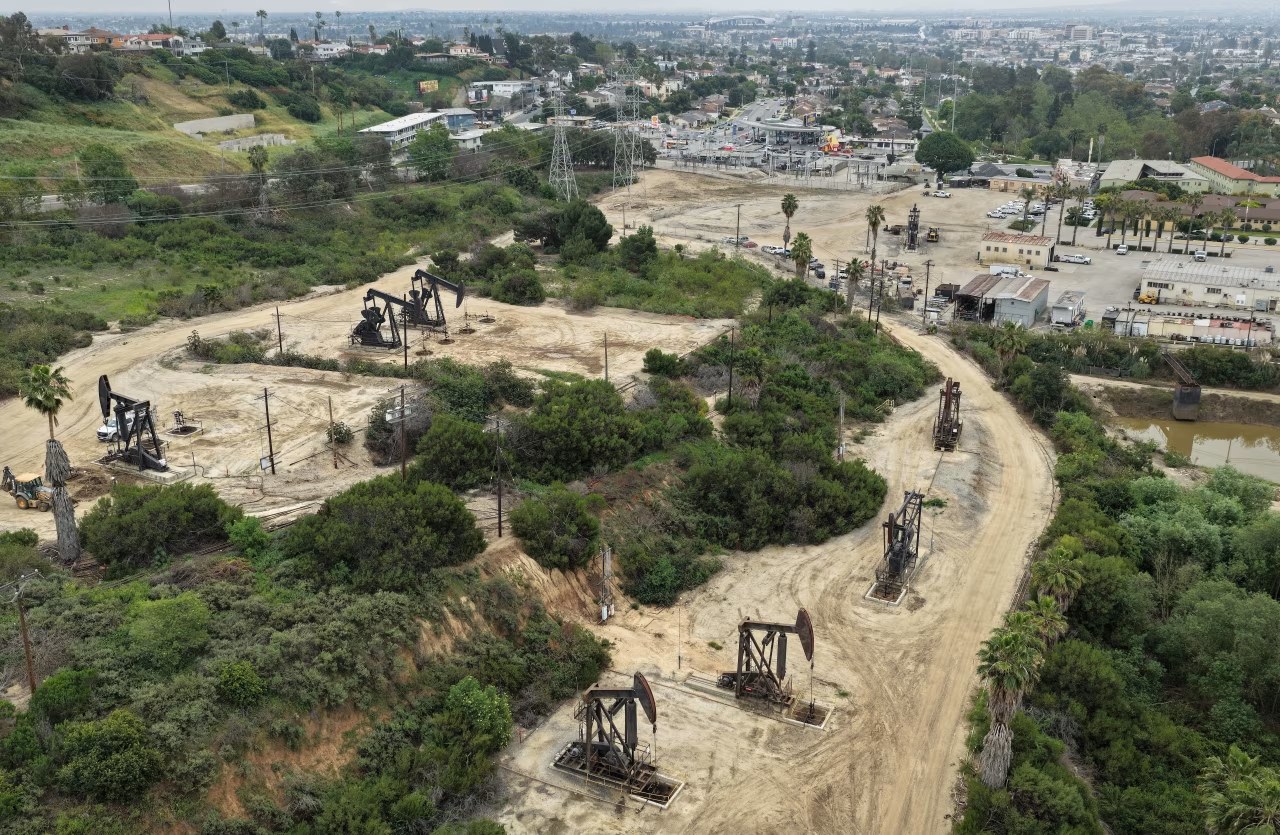
50 Military Bases Face Fuel Shortages as California Oil Refineries Shut Down
- Allysia Finley notes 50 installations now depend on imported refined products.
- Gasoline prices in California have risen 12% since the first refinery closure.
- Henry Scott proposes using the Selective Services Act to turn refineries into government facilities.
- National‑security experts warn that supply gaps could cripple defense readiness.
California’s oil policy is more than a state issue; it’s a federal security challenge.
CALIFORNIA—When Governor Gavin Newsom’s climate‑driven policies force the shutdown of oil refineries, the ripple effect reaches far beyond the state’s borders. As Allysia Finley warned in a recent Life Science column, about 50 military installations across California and neighboring states now rely on imported refined products, a dependency that raises a clear national‑security alarm.
Gasoline prices have spiked, and the Department of Defense’s logistics planners are scrambling to secure a stable fuel supply for everything from aircraft carriers to training grounds. The problem is not merely economic; it is strategic, and the federal government has limited tools to intervene.
Henry Scott’s opinion piece in the Wall Street Journal offers a bold, if controversial, remedy: invoke the Selective Services Act to create government‑run oil refineries that can guarantee fuel for the armed forces. The proposal reframes an energy‑policy dispute as a defense‑policy imperative.
Why California’s Oil Policy Is a National‑Security Concern
Military Dependence on Imported Fuel
The primary concern highlighted by Allysia Finley is that roughly 50 military installations in California and neighboring states now depend on imported refined products. The U.S. Department of Defense’s 2022 logistics report confirms that the West Coast hosts the nation’s largest concentration of air‑force bases, naval shipyards, and Army training centers, all of which consume millions of gallons of gasoline and diesel each month.
When a refinery like the historic Inglewood Oil Field ceases operations, the supply chain must shift to distant refineries or foreign exporters. This logistical stretch inflates transportation costs and creates vulnerabilities to geopolitical shocks—an issue that the Center for Strategic and International Studies flagged in a 2021 briefing on energy security.
Historically, California’s oil boom in the 1920s and 1930s was driven by wartime demand. The state’s refineries were considered “strategic assets” during World War II, supplying fuel for Pacific‑theater operations. Their gradual privatization and recent regulatory pressures have eroded that strategic buffer.
Experts such as Dr. Laura K. Mitchell, senior fellow at the Brookings Institution, argue that “any significant reduction in domestic refining capacity on the West Coast re‑opens a strategic gap that the U.S. has not faced since the post‑Vietnam era.” Mitchell’s analysis, published in the Brookings Papers on Economic Activity (2022), underscores the link between refinery capacity and national defense.
Henry Scott’s suggestion to invoke the Selective Services Act therefore taps into a historical precedent: the federal government has previously commandeered private industry during wartime, most notably the conversion of automobile factories to tank production in 1942. Applying a similar legal framework to oil refineries could restore a “strategic fuel reserve” that directly supports the 50 bases identified by Finley.
While the proposal is legally novel, it is not without precedent. The Strategic Petroleum Reserve, created in 1975, demonstrates how the government can own and operate large‑scale energy infrastructure for national‑security purposes.
Understanding the security stakes reframes the debate from a partisan environmental dispute to a defense‑policy imperative. The next chapter examines the economic forces that drive refinery closures and how a government‑run model could alter market dynamics.
The Economics of Refineries: From Private Profit to Public Asset
Rising Gasoline Prices Signal Market Stress
California’s gasoline prices have surged 12% since the first major refinery shutdown in 2021, according to the California Energy Commission’s monthly price tracker. The increase is not merely a regional anomaly; it reflects a broader economic strain on the state’s oil refinery sector.
Data from the U.S. Energy Information Administration shows that refinery utilization rates in California fell from 92% in 2020 to 68% in 2023, a decline that directly correlates with higher retail fuel costs. Henry Scott’s op‑ed cites these figures to argue that market forces alone cannot guarantee a stable fuel supply for the nation’s defense needs.
Economist Dr. Mark J. Lacy of the University of California, Berkeley, notes in a 2023 working paper that “the marginal cost of importing refined gasoline to the West Coast can exceed $0.30 per gallon compared with domestically produced fuel, especially when global crude prices spike.” Lacy’s analysis highlights the fiscal burden on both consumers and the federal budget.
To illustrate the price trend, the chart below presents a line_chart of average California gasoline price per gallon from 2020 through 2023.
Selective Services Act: A Legal Pathway for Government‑Run Refineries?
Legal Foundations and Precedents
The Selective Services Act, originally enacted in 1917, grants the president sweeping authority to mobilize resources deemed essential to national defense. Legal scholar Professor James E. Rogers of Georgetown Law, in his Harvard Law Review article (2022), argues that the Act’s language—”to provide for the common defense”—has been interpreted to include industrial assets beyond manpower.
Historically, the act was invoked during World War II to requisition shipyards and automobile factories for war production. While no precedent exists for oil refineries, the government’s operation of the Strategic Petroleum Reserve under the Energy Policy and Conservation Act (1975) shows that federal control of fuel infrastructure is legally permissible.
Henry Scott’s proposal leverages this legal flexibility, suggesting a deal with an oil company to operate one or more refineries as U.S. government facilities. Such an arrangement would avoid outright seizure, instead creating a public‑private partnership where the refinery’s output is earmarked for defense use.
Critics, including former Deputy Secretary of Energy Dr. Elaine M. Chen, warn that “any ad‑hoc commandeering risks legal challenges and could deter private investment in future refinery projects.” Chen’s testimony before the Senate Energy Committee in 2023 underscores the need for clear statutory authority.
To compare the Selective Services approach with other government‑owned fuel mechanisms, the chart below presents a comparison of the Strategic Petroleum Reserve, the Defense Fuel Supply System, and a hypothetical government‑run refinery under the Selective Services Act.
Mapping the Impact: How Closing Refineries Shifts Imports
Import Share Grows as Domestic Capacity Shrinks
When California’s refining capacity drops, the state leans more heavily on out‑of‑state and foreign sources. The U.S. Energy Information Administration reports that imported refined gasoline now accounts for roughly 30% of California’s total gasoline supply, up from 18% in 2018.
This shift is illustrated in the donut_chart below, which breaks down the current fuel supply mix: domestic refineries, out‑of‑state refineries, and foreign imports.
Beyond percentages, the loss of refinery jobs also has a socioeconomic impact. The California Labor Market Report (2023) estimates that each major refinery shutdown eliminates about 1,200 direct jobs and an additional 3,500 indirect jobs in logistics and services.
Historically, the 1970s oil crises prompted the federal government to establish the Strategic Petroleum Reserve, a direct response to supply vulnerabilities. Today’s situation mirrors those past concerns, but with the added dimension of military readiness.
To visualize the capacity erosion, the bar_chart below compares California’s refinery capacity (in thousand barrels per day) in 2018 versus 2023, highlighting the decline in the Inglewood and El Segundo plants.
The timeline that follows marks key refinery closures and policy decisions from 2018 to 2023, showing how regulatory actions accelerated the decline.
Policy Roadmap: Implementing Government‑Operated Refineries in California
Key Metrics for a Successful Transition
Turning a private refinery into a government‑run facility under the Selective Services Act requires clear performance metrics. The bullet_kpi chart below outlines proposed targets: fuel output dedicated to defense, cost‑recovery pricing, employment retention, and environmental compliance.
Environmental groups, such as the Sierra Club, have long opposed refinery expansion. However, a government‑operated model could incorporate stricter emissions standards, aligning with California’s climate goals while preserving strategic capacity.
Financially, the Congressional Budget Office estimates that a $2.5 billion investment would be needed to retrofit an existing refinery for dual‑use (civilian and military) operations. In return, the Department of Defense would secure a guaranteed fuel supply, potentially saving $500 million annually in logistics costs.
Legal frameworks must also be clarified. Professor Rogers recommends a legislative amendment that explicitly authorizes the Secretary of Energy, in coordination with the Department of Defense, to enter into long‑term operating agreements with private oil firms under the Selective Services Act.
Finally, stakeholder engagement is critical. A task force comprising the California Energy Commission, the Department of Defense, labor unions, and environmental NGOs could oversee implementation, ensuring transparency and accountability.
With these steps, the United States could transform a regional energy challenge into a robust national‑security asset, setting the stage for broader discussions on energy resilience across other vulnerable states.
Frequently Asked Questions
Q: Why do California oil refinery closures matter for national security?
Closing California oil refineries reduces domestic fuel production, forcing the military to rely on imported refined products. With about 50 bases in the region, any supply disruption could jeopardize readiness, making the issue a clear national‑security concern.
Q: Can the Selective Services Act be used to commandeer refineries?
Legal scholars argue the Act gives the president broad authority to mobilize resources for national defense. While never applied to oil facilities, a court‑tested amendment could allow the government to operate refineries as strategic assets without seizing private property.
Q: How much of California’s gasoline is imported today?
According to the U.S. Energy Information Administration, roughly 30% of California’s gasoline supply comes from out‑of‑state refineries and foreign imports, a share that would rise sharply if more local plants shut down.
