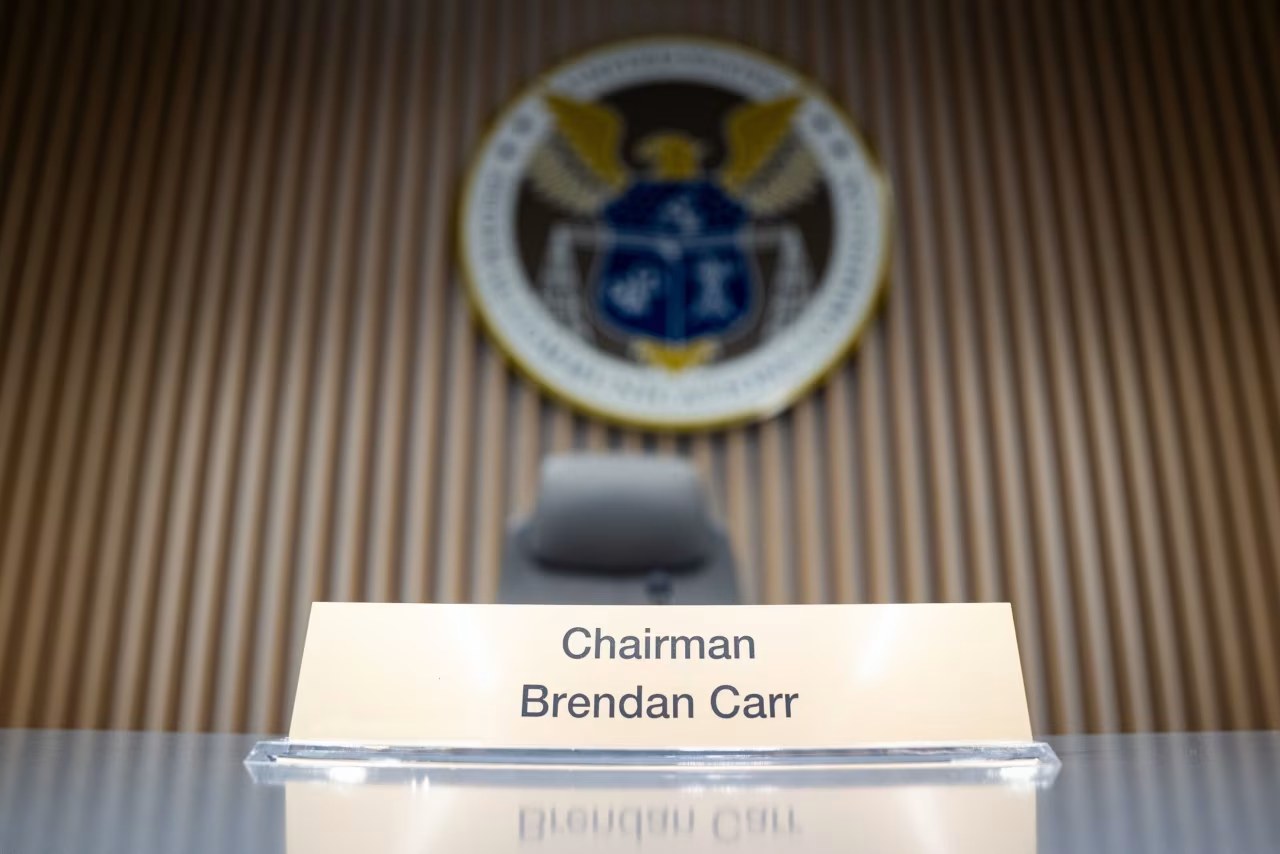
FCC Chair’s TikTok Offensive Stokes Fears of Historic Free-Speech Breach
- Brendan Carr’s public letters to Apple and Google urge immediate TikTok delisting, citing Chinese ownership.
- Legal scholars say the move would mark the first time Washington has forced a U.S. communications platform offline.
- The Wall Street Journal editorial board warns the campaign risks cementing a bipartisan pattern of White House meddling in online speech.
- First-Amendment litigation groups are already preparing court challenges if the agency formalizes its threat.
Can national-security fears override the constitutional right to speak and receive information?
TIKTOK BAN—Federal Communications Commission Chairman Brendan Carr is testing that question with an aggressive push to erase TikTok from American phones, a step critics say would turn the regulator into a censor and erode a core protection the Founders placed ahead of all others.
The campaign, first reported by the Journal’s editorial page on 19 March, positions the Trump-appointed Republican as the point man for an administration that once campaigned on draining the swamp but now stands accused of flooding it with new speech restrictions.
Legal analysts told Digital News that Carr’s demand—that Apple and Google remove TikTok from their app stores or face an FCC inquisition—breaks with 90 years of bipartisan precedent that kept the agency focused on transmission pipes, not content.
From Spectrum Cop to Speech Arbiter: How the FCC Reached This Moment
Created in 1934 to tame the chaos of radio interference, the Federal Communications Commission has historically policed technical matters: call-sign assignments, tower heights, bandwidth etiquette. It has no statutory power over smartphone software. Yet in a pair of open letters last autumn Carr asserted that TikTok’s Beijing-based parent, ByteDance, poses a “clear and present danger” capable of weaponizing 150 million American users’ data.
The letters, which carry no legal force but implicitly threaten license reviews for the two gatekeepers of mobile software, signal a muscular new reading of the agency’s “public interest” mandate. “This is the regulatory equivalent of bringing a bazooka to a knife fight,” says Gigi Sohn, a former FCC counselor now at Georgetown’s Institute for Technology Law & Policy. “Once you conflate national security with content control, the First Amendment becomes collateral damage.”
The shift did not occur overnight. During the Biden years the White House faced its own accusations of jawboning—informal pressure on platforms to suppress Covid-19 misinformation. Republicans condemned those efforts as censorship. Now, with a Republican in the FCC’s top seat, the partisan script has flipped, but the underlying tactic—government jawboning—remains identical, warns Jameel Jaffer, executive director of Columbia’s Knight First Amendment Institute. “The Constitution does not grant the government a national-security exception to coerce private actors into silencing speech,” Jaffer said.
Data gaps complicate the debate
While U.S. intelligence agencies have confirmed that Chinese law can compel ByteDance to hand over user data, no publicly released audit shows that the firm has ever transferred Americans’ videos or messages to Beijing. That evidentiary vacuum fuels skeptics who see the FCC’s posture as politics masquerading as policy. “If the standard for banning a platform is theoretical risk, the First Amendment becomes a dead letter,” says Caitlin Vogus, deputy director at the Center for Democracy & Technology.
Carr’s office declined multiple interview requests for this article but pointed to his public filings, in which he cites Treasury Department findings that ByteDance employees surveilled U.S. journalists in 2022. Even so, those incidents involved internal misconduct, not bulk data exfiltration, and Treasury has not recommended an app-store ban.
The episode underscores a broader realignment inside the GOP. Traditional libertarian voices that once dominated Republican tech policy—think Senators Ted Cruz and Mike Lee—now compete with an ascendant populist wing that views Big Tech as both monopoly villain and national-security weak link. Carr, a 44-year-old lawyer who clerked for Judge Antonin Scalia, embodies that fusion: free-market on broadcast ownership rules, hawkish on China, and increasingly comfortable wielding federal muscle against Silicon Valley.
What Happens If Apple and Google Call Carr’s Bluff?
Neither Apple nor Google has complied with Carr’s request—yet both companies, which control 99.6 percent of U.S. smartphone operating systems, face a strategic minefield. Removing TikTok would cost them billions in commission revenue and invite antitrust scrutiny from Democrats who already accuse the duo of app-store monopoly abuse. Refusal, on the other hand, risks tangling with an agency that can slow or deny international spectrum approvals, a lever the FCC has quietly used since the 5G rollout began.
Industry lobbyists say informal back-channel discussions are already under way. “The carriers are nervous,” says a telecom-policy director at one top-ten tech firm who requested anonymity because negotiations are ongoing. “If the FCC can yank an app with 150 million users, what stops them from targeting WhatsApp or Telegram next?”
Legal precedent favors the platforms—for now. In 2020 the Supreme Court ruled in Barr v. TikTok Inc. that the Trump administration had exceeded statutory authority when it tried to outlaw the app via emergency economic-powers law. But that decision rested on narrow administrative grounds; it did not foreclose future bans that follow proper notice-and-comment procedures. Carr’s current strategy appears designed to exploit that loophole by pressuring intermediaries rather than issuing an outright federal prohibition.
Market signals flash red
ByteDance’s private-market valuation has fallen 25 percent since Carr’s letters surfaced, according to PitchBook data, erasing roughly $80 billion in paper wealth and spooking investors who fear a forced U.S. divestiture. Meanwhile, domestic rivals such as Snap and Meta have added $50 billion in combined market capitalization on speculation that TikTok’s demise would shift ad dollars westward.
Yet those same rivals privately worry about regulatory mission creep. “Today it’s TikTok, tomorrow it could be any foreign-owned platform that hosts political speech,” says a senior policy counsel at a major U.S. social-media firm. “We’re all wondering where the guardrails are.”
The uncertainty has already chilled expansion plans. Cloud-service providers tell Digital News that at least three foreign social-media startups have delayed U.S. launches until the policy landscape clarifies, a development that could cost American tech workers thousands of high-skill jobs.
Forcing TikTok to sell to a U.S. buyer—Microsoft and Oracle have both circled—remains the most-discussed exit ramp. Yet even a spin-off would face First-Amendment hurdles if the sale is compelled by government edict rather than market forces. “A court will ask whether the remedy is narrowly tailored to the harm,” says Blake Reid, a telecom professor at UCLA. “If there are less-restrictive ways to secure data, such as storage localization, an involuntary sale may fail strict scrutiny.”
Could a Court Stop the FCC Before the App Goes Dark?
Any formal FCC action to block TikTok would almost certainly trigger an immediate constitutional challenge, and the agency’s own lawyers are quietly bracing for litigation. “We’ve been told to expect a lawsuit within hours of a final order,” says a career FCC attorney who requested anonymity because they are not authorized to speak publicly. The plaintiffs’ bar is already sharpening its knives.
The Knight First Amendment Institute, Electronic Frontier Foundation, and ACLU have all signaled willingness to represent affected creators, arguing that a ban would violate both the First Amendment and the Administrative Procedure Act. Their likely venue: the D.C. Circuit Court of Appeals, which in 2020 slapped down the Trump administration’s earlier TikTok prohibition.
Legal scholars say the government would need to clear two high bars. First, it must prove that TikTok poses an imminent, non-hypothetical threat—tougher than pointing to general Chinese intelligence laws. Second, it must show that banning the entire platform is the least-restrictive means of protecting national security, a standard courts interpret rigorously when core speech rights are at stake.
Precedent cuts both ways
In Holder v. Humanitarian Law Project (2010) the Supreme Court allowed the government to criminalize support for foreign terrorist organizations, but that ruling involved coordinated conduct, not speech platforms used by millions of ordinary Americans. Conversely, the Court’s 1965 decision in Lamont v. Postmaster General struck down a law requiring recipients to request foreign “communist political propaganda” in person, underscoring that the government may not erect procedural hurdles to overseas information.
Courts also look askance at content-based discrimination. Because Carr has singled out TikTok while sparing domestic apps that vacuum up similar data—Meta, Google, Twitter—the policy could trigger heightened scrutiny under the equal-protection component of the Fifth Amendment. “When the government picks winners and losers in the marketplace of ideas, eyebrows rise,” says Stuart Benjamin, a Duke law professor who co-directs the Center for Innovation Policy.
Discovery could prove embarrassing for the FCC. Plaintiffs would likely demand classified threat assessments and any communications with U.S. rivals such as Meta, raising the prospect that internal emails reveal a motive beyond national security. “If there’s a smoking gun that says ‘Let’s kneecap TikTok to help domestic competitors,’ the case is over,” says a former senior DOJ official who worked on tech antitrust matters.
Even if the administration prevails in court, the political fallout could linger for years. Young voters—TikTok’s core demographic—already break 3-to-1 against Republican candidates, according to Pew polling, and a ban would supercharge that antipathy. “It’s the kind of cultural grievance that can mobilize 18-year-olds for a decade,” says Sarah Longwell, a GOP pollster who focuses on swing voters.
Is There a Less Catastrophic Way to Secure American Data?
National-security veterans say the debate need not be binary. A growing chorus of former intelligence officials argues that data-localization requirements—storing U.S. user information on American soil under the oversight of a domestic third-party custodian—could blunt Chinese access without torching the First Amendment. Such a model already governs U.S. credit-rating agencies operating in China, creating a workable if imperfect symmetry.
Microsoft’s proposed acquisition of TikTok in 2020 included exactly those safeguards: a new U.S.-based subsidiary, code review by government-cleared engineers, and ring-fenced servers in Texas and Virginia. The deal collapsed when Beijing balked at surrendering its algorithm, but analysts say a revised structure could pass muster, especially if paired with export-control waivers that let ByteDance retain core intellectual property.
Encryption offers another off-ramp. End-to-end encryption of direct messages would prevent ByteDance employees—wherever they sit—from reading user content, addressing the specter of targeted surveillance raised by Treasury’s 2022 probe. Critics counter that metadata—who talks to whom, when, and for how long—would still be exposed, but security experts call that a manageable risk. “Metadata is not nothing, but it’s a lot less than content,” says Susan Landau, a Tufts University cybersecurity professor who served on the Obama-era NSA review panel.
Congress could step in
Bipartisan bills circulating in both chambers would empower the Committee on Foreign Investment in the United States (CFIUS) to compel divestiture only after a full administrative record and judicial review, replacing FCC ad-hocery with a transparent process. The leading proposal, sponsored by Senators Mark Warner (D., Va.) and John Thune (R., S.D.), has already cleared the Senate Commerce Committee and awaits floor time. House Republicans, however, have balked at granting new authority to an administration they distrust, leaving the measure in limbo.
ByteDance, for its part, has quietly floated a “Project Clover” plan—modeled on the existing “Project Texas”—that would route all U.S. traffic through Oracle-controlled servers, delete legacy backups in Singapore and Virginia, and establish a stand-alone board of U.S. citizens with security clearances. The proposal echoes fixes that resolved earlier spats over Russian telecom equipment, but trust remains low on Capitol Hill after years of conflicting disclosures.
Whatever the outcome, the episode has already redrawn battle lines in the tech-policy wars. Free-market libertarians find themselves allied with progressive digital-rights groups, while populist hawks join forces with domestic-platform incumbents. “The realignment is fundamental,” says Gene Kimmelman, a former DOJ antitrust official now advising tech investors. “We’re watching a 1990s-era telecom regulator try to police a 2020s-era speech ecosystem. Something has to give.”
Most observers expect a compromise: a court order delaying enforcement long enough for ByteDance to sell a majority stake to U.S. investors, probably at a fire-sale price. Whether that satisfies constitutional muster will hinge on the fine print—and on whether the judges believe the threat is real or merely political theater.
The Global Fallout: Will Other Democracies Follow America’s Lead?
America’s allies are watching the standoff with a mixture of curiosity and alarm. The European Union has so far eschewed blanket bans, opting instead for sweeping new compliance rules under the Digital Services Act that require TikTok to open “transparent centers” in Dublin and allow regulators to audit its source code. The contrast underscores diverging philosophies: Washington favors prohibition; Brussels prefers surveillance.
The divergence has practical consequences. If the United States bans TikTok while Europe does not, American travelers would still be able to download the app once overseas, creating a patchwork enforcement regime that critics call “digital whack-a-mole.” VPN providers are already marketing “TikTok tourism” packages that route traffic through Canadian or Mexican servers, undermining any claim that a U.S. ban would fully sever Chinese data access.
Authoritarian governments, meanwhile, could seize on the American precedent to justify their own censorship. India has already banned TikTok outright, but its democratic backsliding makes it an uncomfortable role model. “When the world’s oldest constitutional democracy starts banning apps, authoritarians clap,” says Allie Funk of the nonprofit Freedom House. Vietnam, Turkey, and Pakistan have all temporarily blocked social media in recent years under the guise of national security; a U.S. ban would give those actions a veneer of legitimacy.
Exporting the First Amendment
U.S. cloud providers fear retaliation. If Washington forces Apple and Google to delist TikTok, Beijing could respond by yanking American apps from Chinese stores or imposing data-localization rules that favor domestic champions such as Huawei and Tencent. The net effect: a fragmented internet where speech rights vary by passport, eroding the global commons that underpins cross-border commerce.
American creators who have built businesses atop TikTok are already hedging. Talent agencies report a 40 percent surge in requests for multi-platform strategies that repurpose short-form videos for YouTube Shorts and Instagram Reels, even though those outlets generate lower ad rates. “The knock-on economic damage is real,” says Karyn Spencer, chief marketing officer at influencer network Whalar. “We’re talking about a $15 billion U.S. creator economy that could lose a fifth of its revenue overnight.”
Some policy analysts argue that the United States should leverage its soft-power advantage by exporting privacy technology rather than prohibition. A State Department-led initiative to fund open-source encryption tools, for instance, could help foreign dissidents avoid surveillance without sparking the sovereignty battles that bans inevitably provoke. “We win more hearts and minds with code than with coercion,” says Sarah Drinkwater, director of the Responsible Technology Hub at Omidyar Network.
Yet the domestic politics are moving faster than the diplomacy. With the 2026 mid-term campaigns already taking shape, both parties see TikTok as a useful cudgel: Republicans rail against Chinese espionage; Democrats highlight GOP inconsistency on speech rights. The result is a legislative arms race that leaves little room for nuanced solutions—and a global audience wondering whether the Bill of Rights still applies in the digital age.
Frequently Asked Questions
Q: Why does the FCC want to ban TikTok?
Chairman Brendan Carr argues TikTok’s Chinese ownership creates an unacceptable national-security risk that outweighs the app’s speech value, so he is pressuring Apple and Google to delist it.
Q: Does the First Amendment protect TikTok?
Yes. Courts treat social-media platforms as modern public forums; any government order to erase an app must survive strict-scrutiny review that the FCC has not yet met, according to constitutional scholars.
Q: Has the FCC ever banned an app before?
No. The agency has never forced nationwide removal of a communications platform, so Carr’s unprecedented demand has drawn warnings from both tech trade groups and civil-liberties organizations.
