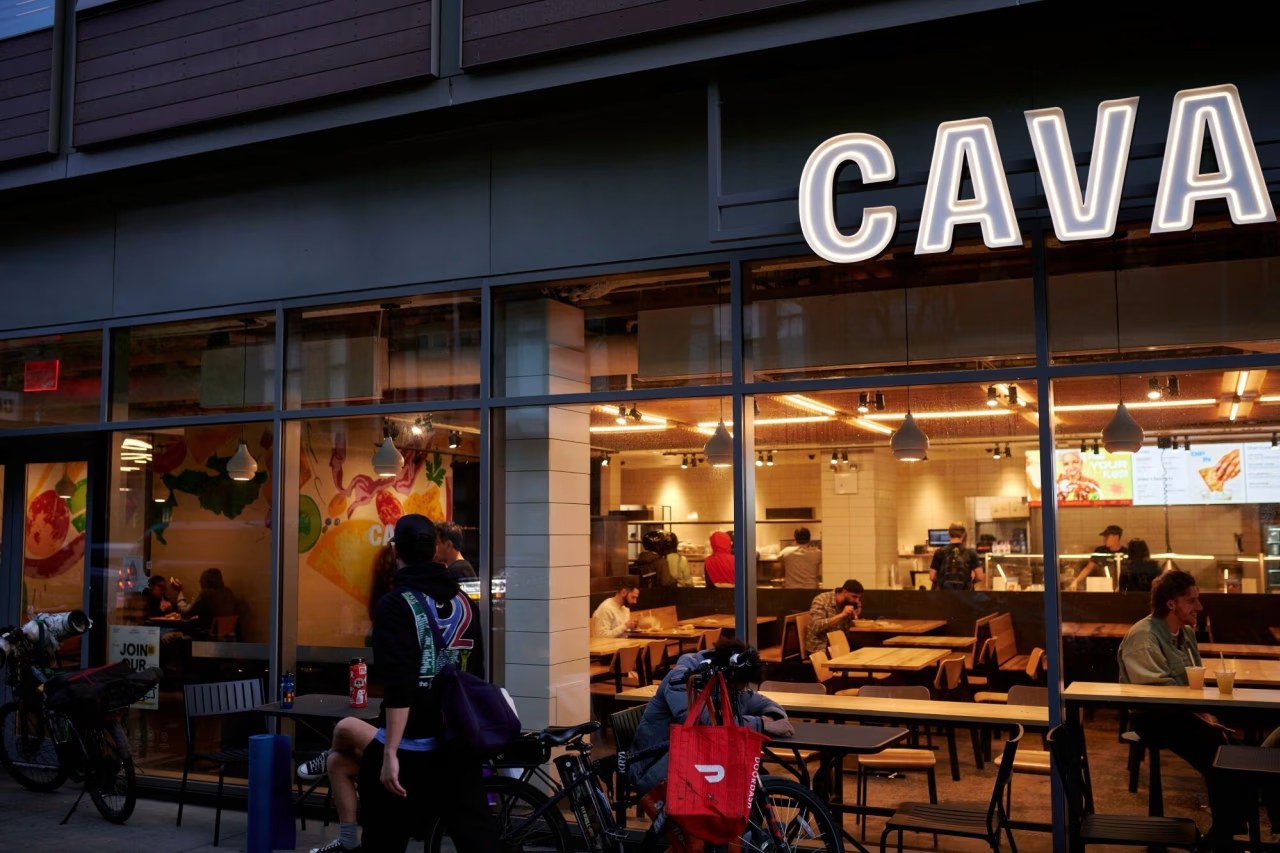
Cava Hikes Worker Premiums 12% as CFO Tests Self-Insurance Escape Hatch
- Cava Group lifted employee healthcare premiums for the first time since 2019, citing a 12% surge in underlying claims.
- CFO Tricia Tolivar is now weighing self-insurance—cutting out the carrier—to regain control over the $12M annual spend.
- Finance chiefs at fast-casual chains face a 7-10% industry-wide cost spike, the fastest pace since 2011.
- Switching to self-insurance could save 5-15% but exposes the balance sheet to catastrophic claims.
One premium hike won’t cover next year’s medical inflation, forcing CFOs to gamble on risk retention.
CFO STRATEGY—Rising pharmaceutical costs and specialty-drug claims pushed Mediterranean restaurant operator Cava Group to raise worker healthcare premiums in 2025, the first such move in six years, according to people familiar with the decision. The 12% increase, confirmed by CFO Tricia Tolivar during a March all-hands call, is meant to offset a double-digit jump in medical claims but still leaves the chain scrambling for longer-term fixes.
Self-insurance—once the domain of Fortune 500 giants—is now on Tolivar’s desk. By paying employee medical bills directly and hiring a third-party administrator, Cava could trim 5-15% of its estimated $12 million annual health spend, consultants at Willis Towers Watson estimate. The trade-off: Cava absorbs the tail risk of a million-dollar cancer case or neonatal emergency that could wipe out a quarter’s profit.
The dilemma illustrates a broader pain point for corporate finance leaders. Employer health premiums rose 7% nationally in 2024, the fastest clip since 2011, according to KFF. Fast-casual chains with tight margins feel the squeeze acutely because they compete for hourly workers who benchmark benefits against retail giants such as Starbucks and Target, both of which have kept worker contributions flat by self-insuring for years.
The Premium Squeeze: Why 2025 Feels Different
Cava’s 12% premium hike mirrors what finance teams across the service sector are modeling for next year’s open-enrollment cycle. Internal documents reviewed by The Wall Street Journal show the chain’s per-employee health cost hit $14,300 in 2024, up from $12,800 in 2023, primarily driven by a 22% jump in specialty-drug claims and a 9% rise in emergency-room visits. The company insures roughly 3,400 workers under its fully-insured plan with Aetna.
Specialty drugs rewrite the cost curve
Pharmacy carve-out data from PBM Navitus show that GLP-1 weight-loss medications and biologic infusions now account for 42% of Cava’s total pharmacy spend, compared with 26% two years ago. A single employee prescription for Humira can eclipse $80,000 annually, surpassing the entire salary of a store manager. CFOs call this the ‘laser cost’—one claimant can swing quarterly earnings.
Consultancy Mercer surveyed 1,600 employers in January and found 62% expect health costs to grow 8-10% in 2025, double the 3-4% forecasts of 2018-2020. The catalyst: insurers exiting the small-group market and hospital systems demanding 15-18% rate increases to offset staffing inflation. Cava’s fully-insured renewal quote from Aetna came in 14% above 2024 levels, prompting Tolivar to test self-insurance.
Yet raising worker contributions carries brand risk. Cava’s Glassdoor reviews already flag benefits as a ‘con’; recruiters say competitors Sweetgreen and Chipotle highlight zero-premium plans in hiring pitches. The chain’s 2025 hike pushes single-employee contributions to $1,260 a year, still below the $1,800 national average for restaurant workers but enough to dent retention in a 3.9% unemployment market.
Bottom line: a single premium bump won’t neutralize medical inflation, so CFOs are pivoting from cost-sharing to risk-sharing.
Self-Insurance 101: How CFOs Trade Certainty for Control
Self-insurance, also known as self-funding, lets employers pay medical claims as they occur rather than pre-paying fixed premiums to a carrier. Cava would set aside reserves—typically 115% of expected claims—and purchase stop-loss insurance to cap losses above $250,000 per member. Roughly 65% of U.S. workers at firms with 200+ employees are already in self-insured plans, KFF data show.
Regulatory arbitrage saves real money
Because self-insured plans are governed by federal ERISA rules, they escape state-level premium taxes (2-3%) and state-mandated benefits, trimming 5-7% of plan cost. Cava’s finance team estimates annual savings of $1.1 million—equal to 90 basis points of operating margin—if the chain absorbs up to $500,000 in shock claims per year.
Stop-loss carriers, however, are tightening terms. Swiss Re Corporate Solutions told clients in February it will raise attachment-point rates 18% for restaurant portfolios, citing ‘adverse selection’ as healthy groups exit the fully-insured risk pool. Cava’s broker said a $250,000 specific stop-loss policy now costs $190 per member per year, up from $155 in 2023.
Finance chiefs also confront cash-flow volatility. A single organ transplant can trigger a $1.2 million claim, wiping out the savings from a mild year. Restaurant brands Ruby Tuesday and Quiznos both exited self-insurance after catastrophic claims in 2016-17, reverting to fully-insured arrangements within 24 months.
Still, Tolivar sees strategic upside: direct data on employee health usage could inform wellness programs and menu development—linking low-sodium offerings to lower hypertension claims. The CFO has asked HR to model a ‘virtual captive’ where Cava and two peer chains pool risk via a cell-captive insurer domiciled in Vermont.
Narrow Networks and Rx Carve-Outs: The Middle Road
Between fully-insured and self-insured lies a menu of surgical tweaks. Cava is piloting a narrow-network HMO that excludes the highest-cost 15% of hospitals in each market, steering workers to centers of excellence such as Cleveland Clinic and Mayo Clinic for complex surgeries. Early results show a 9% reduction in billed charges, according to an internal January flash report.
Reference-based pricing caps facility costs
The chain also imposed Medicare-plus-140% as the maximum reimbursement for imaging and outpatient surgeries. Anthem data show the tactic cut facility spend 18% in 2024, but sparked 312 balance-billing complaints—prompting HR to hire a patient-advocacy vendor at $6 per member per month.
Pharmacy carve-outs are gaining traction. By shifting drug benefits to an outside PBM, Cava could negotiate rebates at 18% of ingredient cost versus the 12% Aetna retains. However, the move adds implementation friction: employees must carry separate ID cards and formulary exceptions can take 72 hours, complicating retention for a workforce averaging 27 years old.
Finance teams must also weigh collective-buying alliances. The National Restaurant Association’s Leveraged Buying Program pooled 42 brands to extract a 6% discount on stop-loss premiums; Cava declined to join, citing data-privacy concerns.
The takeaway: partial measures can deliver 60% of self-insurance savings with only 30% of the balance-sheet risk, a trade-off many CFOs now prefer in an earnings-volatile sector.
What Happens If the Gamble Goes Wrong?
CFOs remember the cautionary tales. Quiznos self-insured its 9,000 workers in 2015, only to face a $4.8 million cluster of high-cost neonatal claims that erased quarterly EBITDA. The sandwich chain reverted to fully-insured coverage within 18 months and paid a 22% premium uplift for the privilege, according to court documents from its 2020 bankruptcy.
Stop-loss gaps can sink budgets
Many policies include 24-month ‘run-out’ clauses, meaning claims incurred but not reported before cancellation still hit the employer. Ruby Tuesday got stung by a $1.3 million organ-transplant claim filed two months after it left self-insurance, driving same-store margin down 110 bps.
Cava’s audit committee has asked for a 1-in-200-year stress test. Under that scenario, three simultaneous catastrophic claims could produce a $3.6 million loss, equal to 6% of 2024 operating income. The board wants stop-loss coverage lowered to $100,000, but that would raise premium cost 2.3x and erode most self-insurance savings.
Credit markets are watching. Moody’s senior analyst Brian Weddington notes that restaurant issuers with self-insured liabilities trade at 25-40 bps wider spreads due to earnings volatility. Cava, which went public in 2023, has $310 million in convertible notes outstanding; Weddington says a surprise seven-figure claim could spook bondholders already nervous about casual-dining traffic.
Yet staying fully-insured is no safe haven. Aetna signaled it may exit the small-group market in three states, threatening Cava with forced carrier swaps that could trigger re-underwriting and a 20% premium spike. Tolivar must decide by September 30 to secure January 1 rates.
Ultimately, the debate is existential: accept predictable but soaring premiums or swap them for lumpy, controllable losses that could—on paper—deliver competitive advantage.
Will CFOs Become the New Health-Care Payers?
The bigger picture is a structural shift of risk from insurers to corporate balance sheets. Consulting firm PwC estimates that employer health liabilities now exceed $1 trillion nationally, equivalent to 4.3% of GDP. As CFOs like Tolivar absorb actuarial risk, they are effectively becoming shadow payers—setting formularies, negotiating hospital rates and even designing disease-management apps.
Data stewardship raises privacy alarms
Self-insured plans give employers access to granular claims data, including diagnoses. The EEOC fined Walmart $5.2 million in 2022 for allegedly using health data to discriminate in shift scheduling. Cava’s legal team is drafting a data-governance charter that anonymizes identifiers and limits access to two actuaries.
Investor disclosures are evolving. Starting in 2025, the SEC’s cyber-security rules require public companies to describe ‘material risks’ related to sensitive employee data. Health data breaches average $10.9 million per incident, IBM calculates, exceeding the cost of payment-card breaches by 38%.
Despite hazards, early movers can win talent. Sweetgreen CEO Jonathan Neman told investors that offering zero-premium, self-insured plans helped cut frontline turnover 14% in 2023, saving $7 million in hiring and training. Tolivar is modeling similar retention benefits: every 10-point reduction in turnover equals 30 bps of restaurant-level margin for Cava.
Looking ahead, Wall Street analysts predict a bifurcated market. Large chains with robust balance sheets will self-insure and monetize health data via wellness apps, while smaller players accept fully-insured inflation and pass costs to workers through higher deductibles. The line-item once labeled ‘employee benefits’ is morphing into a strategic lever no different than menu pricing or real-estate negotiations.
For Cava, the decision window is closing fast. Brokers need 90 days to underwrite stop-loss, meaning Tolivar must commit by October to lock in 2025 rates. Whatever path she chooses will ripple through earnings calls, retention metrics and ultimately the price of a SuperGreens bowl.
Frequently Asked Questions
Q: Why did Cava raise premiums in 2025?
Medical claims rose 12% in 2024, forcing Cava to lift worker contributions for the first time since 2019. CFO Tricia Tolivar says the chain must now decide between continuing with a fully-insured carrier or absorbing risk via self-insurance to blunt future cost shocks.
Q: What is self-insurance for employers?
Instead of paying fixed premiums to an insurer, the company pays its employees’ medical bills directly and hires a third-party administrator to process claims. It is common among firms with 200+ staff and can cut costs 5-15% but adds balance-sheet volatility.
Q: How much are employer health costs rising nationally?
KFF’s 2024 survey pegs average premium growth at 7% for family coverage, the fastest clip since 2011, while pharmacy carve-out reports show specialty drug claims up 18%. Analysts forecast another 8-10% jump in 2025 plan years.
