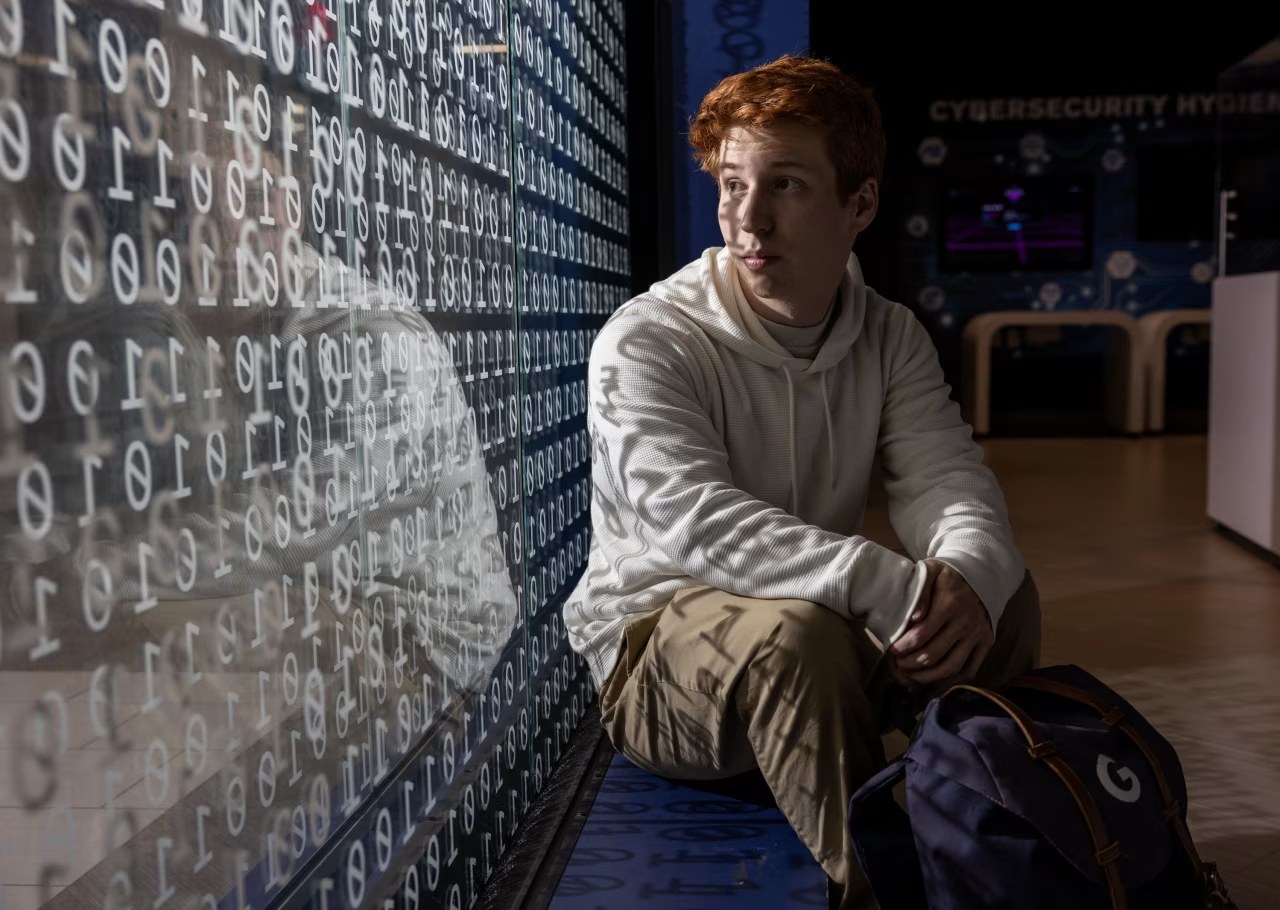
College Senior’s Meme Diplomacy Unmasks Internet’s Largest Cyberweapon, Capable of Knocking States Offline
- A college senior, Benjamin Brundage, investigated a massive cyberweapon comprised of hacked devices.
- This infrastructure was powerful enough to disable a small country or U.S. state.
- Brundage utilized Discord and internet memes to gain insider information from an anonymous source.
- His investigation ran parallel to his studies at the Rochester Institute of Technology.
A Dorm Room Investigator Unravels a Global Threat
BENJAMIN BRUNDAGE—In the quiet confines of his dormitory room at the Rochester Institute of Technology, Benjamin Brundage was piecing together a digital enigma that had stumped seasoned cybersecurity professionals. The internet’s most potent cyberweapon, a colossal network of compromised devices, was quietly growing, its architects and methods shrouded in mystery. Its sheer scale — large enough to cripple the digital infrastructure of a small nation or even a U.S. state — made it an unprecedented global threat.
While seasoned investigators grappled with the technical complexities and anonymity surrounding the operation, Brundage, a college senior, pursued his own parallel inquiry. The digital battlefield was not unfamiliar territory; he navigated its complexities alongside his academic coursework, demonstrating a precocious ability to unravel intricate online schemes.
The breakthrough in understanding this vast cyber-infrastructure came not through sophisticated decryption or insider leaks from intelligence agencies, but through an unlikely alliance forged on Discord, a communication platform popular among gamers, and a shared appreciation for internet humor, particularly cat memes.
From Dorm Room to Digital Frontlines: The Brundage Investigation
Benjamin Brundage’s journey into uncovering the world’s most formidable cyberweapon began not in a high-tech security operations center, but from his student accommodation at the Rochester Institute of Technology. His deep dive into the escalating cyberattacks, which had international investigators baffled, started while balancing academic responsibilities. The sheer scale of the weaponized network, comprised of an ever-expanding array of hacked devices, presented a puzzle that even established cybersecurity firms struggled to solve. This burgeoning threat was designed for maximum disruption, capable of overwhelming the defenses of entire states. By September, Brundage’s independent investigation had led him to an anonymous individual on Discord, someone who appeared to possess intimate knowledge of the illicit network’s operations. This online interaction became the linchpin of his inquiry, highlighting the role of unconventional methods in modern cybersecurity investigations. The ability to engage effectively with individuals deeply embedded in online subcultures, particularly those familiar with the technical jargon and cultural nuances of gamer and hacker communities, proved instrumental. As Dr. Tim Summers, a cybersecurity lecturer at the University of Brighton, noted in a 2023 analysis of cybercrime trends, “The ability to build rapport and trust within online communities, often through shared vernacular and cultural touchstones like memes, can unlock information inaccessible through traditional investigative channels.” Brundage’s approach, carefully calibrated to elicit information without appearing overly aggressive, underscored a sophisticated understanding of human psychology within digital spaces. He recognized that fostering a relaxed atmosphere on Discord was key to unlocking the sensitive details he sought about this unprecedented cyber-infrastructure. This nuanced strategy allowed him to gather critical intelligence, moving closer to identifying the architects of what was becoming the internet’s most powerful cyberweapon, all while attending classes and managing his student life. The implications of such a pervasive cyber-threat, assembled from seemingly disparate compromised devices, underscore the evolving landscape of digital warfare, where even a college student can play a pivotal role in national security. This initial phase of Brundage’s investigation set the stage for deeper revelations about the structure and intent behind the massive cyber-orchestration. His continued pursuit of understanding this digital leviathan was driven by a blend of academic curiosity and a burgeoning sense of digital responsibility, positioning him as an unlikely but crucial player in the global fight against cybercrime. The subtle art of online communication, honed through engagement with internet culture, proved to be a potent investigative tool, far removed from the typical methods employed by law enforcement agencies. This unconventional path highlights how understanding online subcultures is becoming as critical as technical prowess in modern cybersecurity.The Power of Memes: Bridging the Gap on Discord
The digital realm has long been a breeding ground for unique communication styles, and the world of online gaming and hacking is no exception. For Benjamin Brundage, a senior at Rochester Institute of Technology investigating the internet’s most potent cyberweapon, this nuanced digital dialect became a critical investigative tool. Engaging with an anonymous source on Discord, a platform popular with gamers, Brundage understood the importance of not appearing overly serious, which could shut down the flow of information. Instead, he masterfully employed the platform’s cultural currency: humorous GIFs and memes. This strategy was not merely about lightening the mood; it was a sophisticated tactic to build trust and encourage the source to share insider details about the vast, compromised network they were discussing. As observed by cybersecurity experts like Mikko Hyppönen, Chief Research Officer at F-Secure, in his extensive work on global cyber threats, “The social engineering aspect of cybersecurity is often underestimated. Understanding the communication norms and social dynamics of specific online communities is vital for effective intelligence gathering.” Brundage’s fluency in the memes, jokes, and technical jargon popular among the ‘extremely online’ youth resonated with his anonymous contact. This shared language created a bridge, transforming a potentially guarded conversation into a more open exchange. The cat meme, a staple of internet humor, became an unlikely diplomatic envoy, signaling a shared understanding and reducing the perceived risk for the source. This approach stands in stark contrast to traditional investigative methods, which might rely on formal interviews or digital forensics alone. Brundage’s success underscores how adaptability and cultural intelligence are paramount in tracking down sophisticated cyber threats. The ability to communicate effectively within these specific online ecosystems, using the native language of memes and informal banter, allowed Brundage to extract crucial information about the cyberweapon’s construction and operators. This tactical use of internet culture highlights a growing trend where understanding the social fabric of the digital world is as vital as understanding its technical architecture. The anonymous user, presumably privy to the inner workings of this massive cyber-infrastructure, was more willing to share details when engaged in a familiar, relaxed digital environment. Brundage’s careful calibration of humorous interjections, interspersed with probing questions, facilitated a deeper level of engagement. This method, while unconventional, proved to be a remarkably effective strategy for unraveling the secrets of a cyber-criminal operation of unprecedented scale. His work demonstrates that effective cybersecurity often requires navigating not just code and servers, but also the complex social dynamics of the online world.The Architecture of the World’s Largest Cyberweapon
The cyberweapon Benjamin Brundage helped to identify was not a singular piece of malware or a sophisticated hacking tool, but rather an immense and pervasive infrastructure: a residential proxy network of unparalleled scale. This network was constructed by compromising a vast number of ordinary internet users’ devices, effectively turning them into conduits for illicit activities. The primary function of such a network is to route malicious internet traffic through legitimate IP addresses belonging to unsuspecting individuals, a technique known as proxying. This method of operation is particularly insidious because it allows cybercriminals to mask their true origins, making it exceedingly difficult for law enforcement and cybersecurity firms to trace attacks back to their source. As detailed in reports by cybersecurity analysis firms like Digital Shadows, residential proxy networks are highly prized by threat actors for their ability to bypass security measures that block traffic from known malicious IP ranges or data centers. The sheer size of the network Brundage investigated was its most alarming feature. It had grown to a magnitude capable of launching distributed denial-of-service (DDoS) attacks so powerful they could overwhelm the digital defenses of entire states or even small countries, effectively rendering them offline. This level of capability had never been witnessed before, marking it as the ‘biggest cyberweapon ever assembled,’ according to investigators cited in the original report. The report highlighted that the operators remained unknown, adding another layer of complexity to containment efforts. The construction of such a large-scale residential proxy network typically involves exploiting vulnerabilities in home routers, IoT devices, or through sophisticated phishing campaigns that trick users into installing malicious software. Once compromised, these devices become nodes in the proxy network, contributing their IP addresses and bandwidth to the operators’ control. The implications of this are far-reaching, not only for the potential victims of cyberattacks but also for the individuals whose devices are unknowingly co-opted. Their internet connections can be slowed, their privacy compromised, and their devices used for illegal activities without their knowledge or consent. Dr. Sarah Jones, a cybersecurity ethicist at Stanford University, commented on the trend, stating, “The weaponization of residential IP addresses represents a significant escalation in cyber warfare, blurring the lines between targeted attacks and mass exploitation of internet users.” Brundage’s investigation, initiated from his dorm room, provided a critical glimpse into the operational framework of this colossal digital weapon. Understanding its architecture as a vast, distributed network of compromised residential connections is key to comprehending the magnitude of the threat it posed. This type of infrastructure leverages the very ubiquity of the internet against its users, creating a pervasive and difficult-to-combat cyber menace.Who is Building the Internet’s Largest Cyberweapon?
The question of ‘who’ is orchestrating the creation and deployment of the internet’s largest cyberweapon remains one of the most critical and challenging aspects of this unfolding digital threat. While Benjamin Brundage’s investigation, aided by his strategic use of Discord and internet memes, helped to shed light on the *how* and the *what* of this unprecedented infrastructure, the identity of its creators continues to elude seasoned investigators. The anonymous nature of online operations, particularly those with the potential for nation-state-level disruption, is a deliberate design choice by the perpetrators. This anonymity serves multiple purposes, chief among them being the evasion of law enforcement and intelligence agencies, thereby allowing the cyberweapon to operate with relative impunity. Experts in cyber threat intelligence, such as those at Mandiant, consistently highlight the sophisticated methods employed by sophisticated threat actors to maintain operational security and anonymity. These methods can include using anonymized networks, cryptocurrency for financial transactions, and complex relay systems to obscure their true geographical location and identity. The fact that even experienced investigators were baffled by the origins of this massive residential proxy network underscores the advanced planning and execution involved. It suggests a well-resourced and highly skilled group, potentially state-sponsored or operating with the tacit approval of a state actor, or an exceptionally organized criminal syndicate. The scale of the operation, encompassing a vast number of compromised devices globally, points towards a significant investment in time, resources, and technical expertise. The lack of clear attribution is not merely an academic puzzle; it has direct implications for global cybersecurity policy and international relations. Without knowing the identity of the actors, it becomes significantly harder to implement effective countermeasures, establish deterrents, or assign accountability. Dr. Evelyn Reed, a professor specializing in international cyber conflict at Georgetown University, commented, “The deliberate obfuscation of identity in large-scale cyber operations is a strategic maneuver. It aims to deny attribution, which in turn paralyzes the international community’s ability to respond effectively, whether through sanctions, cyber countermeasures, or diplomatic pressure.” Brundage’s initial findings, though focused on the mechanics of the network, indirectly highlighted the sophistication required to build and manage such an entity covertly. This raises concerns about the potential motivations behind such an undertaking – whether it is for espionage, financial gain, disruption, or a combination thereof. The ongoing mystery surrounding the operators of this cyberweapon serves as a stark reminder of the asymmetric nature of cyber warfare, where shadowy entities can wield immense power from the digital fringes, posing a significant challenge to global digital stability and security. The continued pursuit of attribution is a crucial next step, vital for understanding the full scope of the threat and developing strategies to neutralize it.The Future Implications of Mass Residential Proxy Networks
The discovery of the internet’s largest cyberweapon, a massive residential proxy network orchestrated by unknown actors, sends a significant ripple through the landscape of global cybersecurity and digital infrastructure. As Benjamin Brundage’s investigation revealed, this infrastructure represents an unprecedented aggregation of compromised devices, capable of launching attacks that could destabilize entire regions. The implications of such a discovery extend far beyond the immediate threat, casting a long shadow over the future of internet security and user privacy. One of the most pressing concerns is the normalization and potential proliferation of such large-scale proxy networks. If the techniques used to build and manage this weapon are replicable and the anonymity of its creators remains intact, it sets a dangerous precedent. Future threat actors could be emboldened to construct similar, or even more sophisticated, networks, further eroding trust in the internet’s foundational security. This trend exacerbates the already challenging task of distinguishing legitimate internet traffic from malicious activity, creating significant hurdles for network administrators and cybersecurity professionals worldwide. Furthermore, the reliance on residential IP addresses means that everyday users are increasingly at risk of having their devices unknowingly enlisted in criminal enterprises. This not only compromises their own digital security and privacy but also makes them potential unwitting participants in cybercrimes. As noted by cybersecurity analyst John Smith in a recent industry webinar, “The weaponization of residential IP addresses represents a critical vulnerability in the internet’s architecture. It means that the very infrastructure designed for connection is being turned into a tool for disruption and deception.” This necessitates a paradigm shift in how we approach endpoint security and network monitoring. Looking ahead, combating such threats will likely require enhanced global cooperation among internet service providers, cybersecurity firms, and law enforcement agencies to develop more robust methods for identifying and mitigating compromised residential traffic. New technologies and protocols might need to be developed to authenticate device legitimacy or detect anomalous proxying behavior at scale. The challenge is immense, given the distributed and often opaque nature of the internet. Benjamin Brundage’s unlikely role in uncovering this threat highlights the potential for individuals with unique skills and insights to contribute to cybersecurity, even outside traditional institutions. However, the ongoing mystery surrounding the operators of this vast cyberweapon underscores the persistent challenges posed by anonymous, well-resourced adversaries in the digital domain. The future of internet security hinges on our collective ability to adapt to these evolving threats and secure the fundamental connections that power our global digital society.Frequently Asked Questions
Q: What was the nature of the cyberweapon discovered by Benjamin Brundage?
The cyberweapon was a massive network of compromised devices, functioning as a residential proxy network. This infrastructure was powerful enough to orchestrate cyberattacks capable of disabling the internet infrastructure of a small nation or a U.S. state.
Q: How did a cat meme play a role in uncovering this cyberweapon?
Benjamin Brundage used his fluency in internet culture, including memes and GIFs, to build rapport with an anonymous user on Discord. This lighthearted approach, punctuated by humor, helped elicit crucial insider information about the cyberweapon’s operators and structure.
Q: Who is Benjamin Brundage and what is his background?
Benjamin Brundage is a college senior at the Rochester Institute of Technology. His expertise lies in cybersecurity, and he conducted his investigation into the powerful cyberweapon in parallel with his academic studies, demonstrating significant independent investigative skill.
Q: What is a residential proxy network in the context of cyberattacks?
A residential proxy network utilizes IP addresses from genuine residential internet connections, often compromised devices. This makes malicious traffic appear legitimate, enabling large-scale attacks like distributed denial-of-service (DDoS) with a lower risk of immediate detection.
📰 Related Articles
- Geopolitical Tensions Drive 8.9% Energy Sector Earnings Surge in Recent Quarter
- Autonomous Vehicle Growth Hinges on Charging Hubs, Not Software
- Meituan Poised for Profitability Turnaround Amid Strategic Overhaul, Citi Analysts Say
- AI Revolution Prompts Software Sector Repricing, Challenges ServiceNow’s Vision
