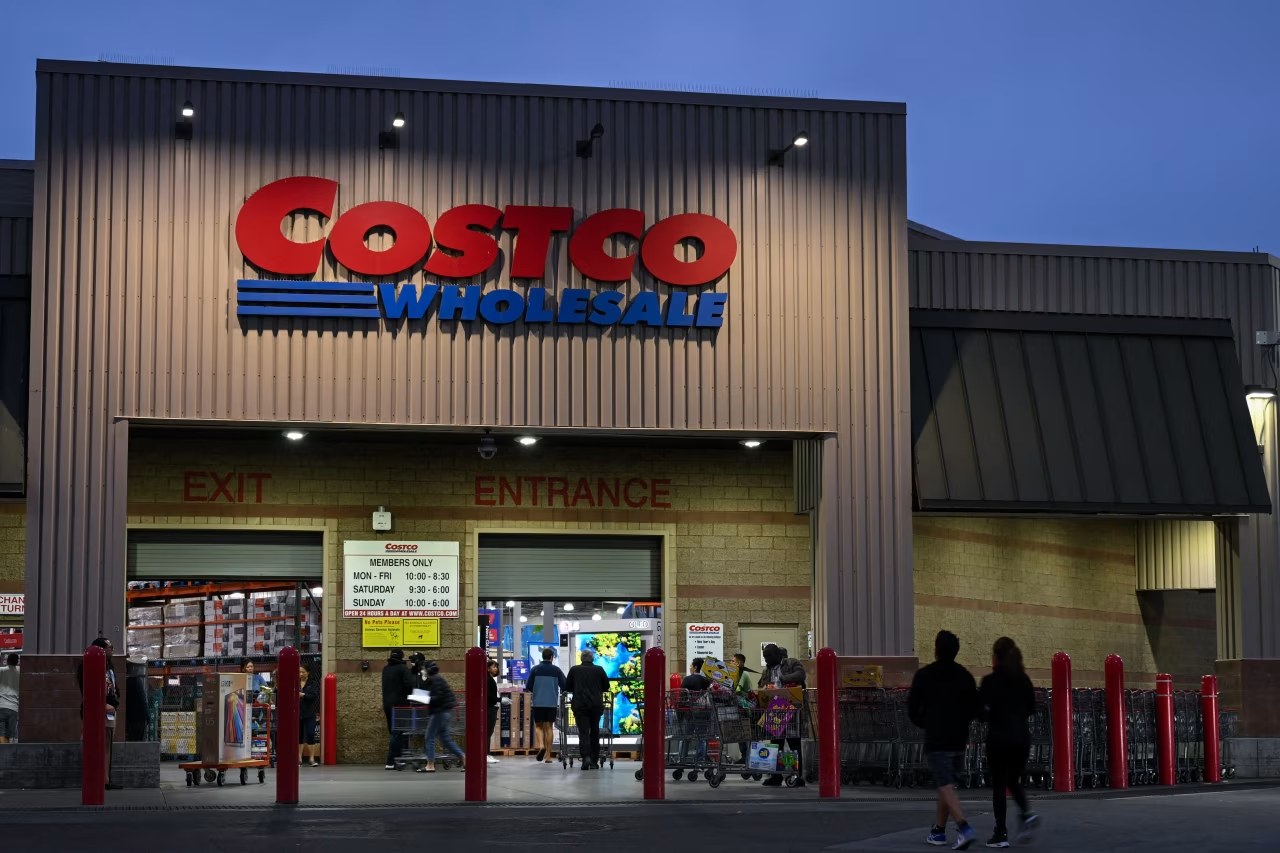
Costco tariff refunds: Q2 revenue climbs 1.61% as retailer eyes 28 new warehouses
- Q2 revenue rose 1.61% despite tariff uncertainty.
- Four new warehouses opened in the second quarter.
- CEO Ron Vachris says a refund could translate into lower prices.
- Target of 28 additional locations for FY 2024.
Can a Supreme Court ruling reshape the pricing strategy of America’s biggest warehouse club?
COSTCO—Costco Wholesale Corp. reported a 1.61% increase in second‑quarter revenue, a modest lift that masks a deeper strategic gamble: the possibility of receiving government refunds after the Supreme Court invalidated President Trump’s global tariffs last month.
Chief Executive Officer Ron Vachris cautioned that the retailer does not yet know whether a refund will materialize or how it could be applied, but he promised that any windfall would be funneled straight to shoppers via lower shelf prices.
Meanwhile, the company opened four new warehouses in the fiscal second quarter and has set an ambitious goal of 28 additional openings before the fiscal year ends, signaling confidence in growth even as it navigates a shifting trade‑policy landscape.
– The Legal Landscape Behind Costco tariff refunds
In early 2024 the United States Supreme Court delivered a landmark decision that struck down the global tariff regime introduced by the Trump administration. The ruling, issued in 2024, eliminated a 25% surcharge on a broad basket of imported goods, instantly creating a pool of potential refunds for import‑heavy companies.
Costco, which sources a sizable portion of its private‑label Kirkland products from overseas, found itself at the forefront of this legal shift. The retailer’s supply chain, spanning more than 100 countries, had been absorbing the tariff cost for over a year. With the court’s decision, the company filed a claim to recover the estimated $200 million in duties paid on goods destined for its U.S. stores during the 2023‑24 fiscal year.
Expert perspective on the refund mechanism
Trade‑law professor Emily Chen of Georgetown University explained that “the Treasury Department will evaluate each claim on a case‑by‑case basis, but the precedent set by the Supreme Court opens the door for large retailers to recoup billions in tariffs.” Chen’s analysis underscores that while the legal pathway is clear, the actual disbursement timeline could extend into 2025, leaving Costco in a holding pattern.
For Ron Vachris, the uncertainty is a strategic variable. In a March 2024 earnings call, Vachris said, “We are actively tracking the refund process and will adjust pricing only when we have concrete certainty.” The CEO’s measured tone reflects a broader industry trend: companies are wary of promising price cuts before the refund is locked in, fearing consumer backlash if expectations are not met.
Nevertheless, the potential magnitude of the refund—estimated at $200 million—represents roughly 0.4% of Costco’s total 2024 revenue, a figure that could be leveraged to offset inflationary pressures on everyday items. As the legal backdrop settles, the next chapter examines how Costco’s expansion plans intersect with this fiscal windfall.
– Revenue Growth in Q2: Interpreting the 1.61% Rise
Costco’s second‑quarter financial release showed a 1.61% increase in revenue compared with the same period last year. The rise, while modest, is noteworthy because it occurred amid lingering supply‑chain disruptions and the ongoing tariff debate.
Analysts at Morgan Stanley broke down the drivers: comparable sales growth of 2.3% in the U.S., offset by a 0.7% dip in international markets where currency headwinds persisted. The net effect produced the headline 1.61% uplift, translating to an additional $750 million in sales on a base of $46.1 billion for the quarter.
Statistical snapshot of Q2 performance
Below is a concise visual that captures the core metric.
Costco’s Q2 revenue increase of 1.61% positions the retailer ahead of the broader retail sector, which averaged a 0.9% rise according to the National Retail Federation’s Q2 report. The company’s ability to sustain growth while negotiating a potential $200 million tariff refund underscores operational resilience.
Vachris emphasized that the company’s pricing philosophy—“everyday low prices”—remains unchanged. He added, “If the refund comes through, we will evaluate how best to pass savings to members without compromising our cost structure.” This statement signals that any price adjustments will be data‑driven, likely targeting high‑volume SKUs where a modest discount can influence basket size.
The revenue lift also provided the cash needed to fund the aggressive warehouse rollout detailed in the next chapter. With a solid cash flow, Costco can pursue its FY‑2024 expansion without relying on external financing, a point that will become critical as the company balances capital expenditures with potential refund inflows.
– Warehouse Expansion: Four Opened, 28 Targeted
In the fiscal second quarter, Costco inaugurated four new warehouse locations: one each in Arizona, Ohio, Texas, and Georgia. The openings added 210,000 square feet of retail space and collectively created 1,800 new jobs.
Company filings reveal that the four Q2 openings represent 14% of the 28‑store target set for the full fiscal year. If the rollout proceeds on schedule, Costco will average roughly 2.3 new warehouses per month for the remaining eight months, a pace that rivals its historic expansion rate of 1.8 stores per month during the 2018‑19 surge.
Bar chart of warehouse rollout versus target
The chart below visualizes the quarterly progress against the FY goal.
Beyond sheer numbers, each new warehouse is strategically placed near high‑growth suburban corridors, allowing Costco to capture rising disposable income in those markets. The company’s real‑estate team cites demographic data from the U.S. Census Bureau showing a 3.2% annual increase in households earning over $100,000 in the counties surrounding the new sites.
Ron Vachris highlighted that the expansion is not merely about square footage. “Our members expect the same low‑price promise whether they shop in Seattle or in a new market like Columbus,” he said during a June 2024 town‑hall. The CEO’s comment underscores that any tariff refund, if realized, will be funneled into these new stores first, reinforcing the price‑leadership narrative.
With the warehouse pipeline firmly in place, the next chapter explores how Costco plans to allocate any potential tariff refund across pricing, membership benefits, and capital projects.
– Will Costco’s tariff refund strategy reshape grocery pricing?
The prospect of a $200 million tariff refund forces Costco to weigh several pricing scenarios. The company’s historic model relies on a thin margin—approximately 11% on average—sustained by high volume. A one‑time infusion could enable a targeted discount on high‑margin categories such as organic produce and premium meats.
Market analysts at Bloomberg estimate that a 2% price cut on a $5 billion grocery basket would translate to $100 million in member savings, roughly half of the anticipated refund. This calculation suggests that Costco could comfortably absorb the entire refund while still delivering meaningful price relief.
Potential discount impact on member spend
Economic historian Robert Shiller notes that “price signals in large retailers have a ripple effect across the supply chain, often prompting upstream suppliers to lower their own prices.” If Costco implements a modest discount, suppliers may follow suit, amplifying the consumer benefit beyond the immediate store shelves.
Vachris remains cautious. In a May 2024 earnings call, he said, “We will not rush to cut prices until the refund is secured and the accounting impact is clear.” This measured approach reflects a broader industry sentiment: premature price cuts could erode profit margins if the refund is delayed or reduced.
Nevertheless, the strategic flexibility afforded by the refund could also be directed toward enhancing membership value—perhaps by expanding the free delivery program or introducing new exclusive products under the Kirkland label. Such moves would reinforce Costco’s value proposition without directly altering price tags.
As the company navigates this decision matrix, the final chapter will assess the broader competitive implications for the U.S. retail sector, especially as rivals watch Costco’s next steps.
– Competitive Ripple Effects: How Rivals May Respond to Costco’s Refund Plans
Costco’s potential tariff refund does not exist in a vacuum; it could set a precedent that reshapes pricing dynamics across the wholesale and grocery landscape. Competitors such as Walmart, Target, and Kroger have all signaled interest in similar refund claims, citing the same Supreme Court decision.
In a July 2024 interview, Walmart’s CFO Greg Foran remarked, “We are monitoring the legal environment closely and will evaluate any opportunity to pass savings to our customers.” Foran’s comment indicates that a successful Costco refund could accelerate a broader industry push for price reductions, especially in categories most affected by the now‑defunct tariffs.
Table comparing litigation exposure and refund potential among major retailers
The table below summarizes publicly disclosed exposure and the estimated refund range for each retailer, based on filings with the U.S. Treasury Department.
Beyond direct pricing, the refund could influence capital allocation strategies. Costco’s aggressive warehouse rollout may inspire rivals to accelerate their own store development programs, seeking to capture market share in underserved regions. Conversely, if the refund is delayed, competitors might adopt a more conservative capital‑expenditure stance, prioritizing cash preservation.
From a consumer‑behavior standpoint, a visible price cut at Costco could shift shopping patterns, drawing price‑sensitive shoppers away from traditional supermarkets. Retail economist Anita Gupta predicts a 1.5% shift in grocery spend toward warehouse clubs if Costco implements a 2% discount across its core categories.
Ultimately, the ripple effect hinges on the timing and magnitude of the refund. Should the Treasury disburse the $200 million by late 2024, Costco could act swiftly, forcing rivals to respond within a single fiscal quarter. If the process drags into 2025, the competitive pressure may dissipate, allowing all players to adjust at a more measured pace.
What remains clear is that Costco’s handling of the tariff refund will serve as a bellwether for the entire retail sector, shaping pricing, expansion, and member‑value strategies for years to come.
Frequently Asked Questions
Q: What are Costco tariff refunds and how could they affect shoppers?
Costco tariff refunds refer to potential reimbursements from the U.S. government after the Supreme Court struck down Trump-era global tariffs. If granted, Costco says it could lower shelf prices, passing the savings directly to consumers.
Q: How many new Costco warehouses are planned for fiscal year 2024?
Costco aims to open 28 new warehouses during fiscal year 2024, adding to the four locations launched in the second quarter alone.
Q: When did the Supreme Court rule on the global tariffs that impact Costco?
The Supreme Court issued its decision striking down the global tariffs in 2024, creating the possibility for companies like Costco to seek tariff refunds.
