Cracker Barrel Profit Crashes 94% to $1.3 Million as Chain Fights to Win Back Loyal Diners
- Net income plummeted from $22.2 million in Q4 2023 to just $1.3 million in Q4 2024.
- Revenue also slid—though exact figures were not disclosed—amid persistent traffic declines.
- Shares surged nearly 8% after CEO Julie Felss Masino said turnaround initiatives are “taking shape.”
- Full-year guidance on earnings, revenue, and margins was nudged upward, calming investor nerves.
A 55-year-old roadside icon is racing to undo the damage of a logo overhaul that never sat well with regulars.
CRACKER BARREL—Cracker Barrel Old Country Store’s latest quarterly confession was as sobering as its country-fried steak: profit crashed 94% to $1.3 million, the thinnest bottom line since the pandemic shutdown. Yet Wall Street focused on what comes next, bidding CBRL up 8% in late trading after executives raised projections and promised that menu rollbacks, décor resets, and sharper pricing are already slowing customer defections.
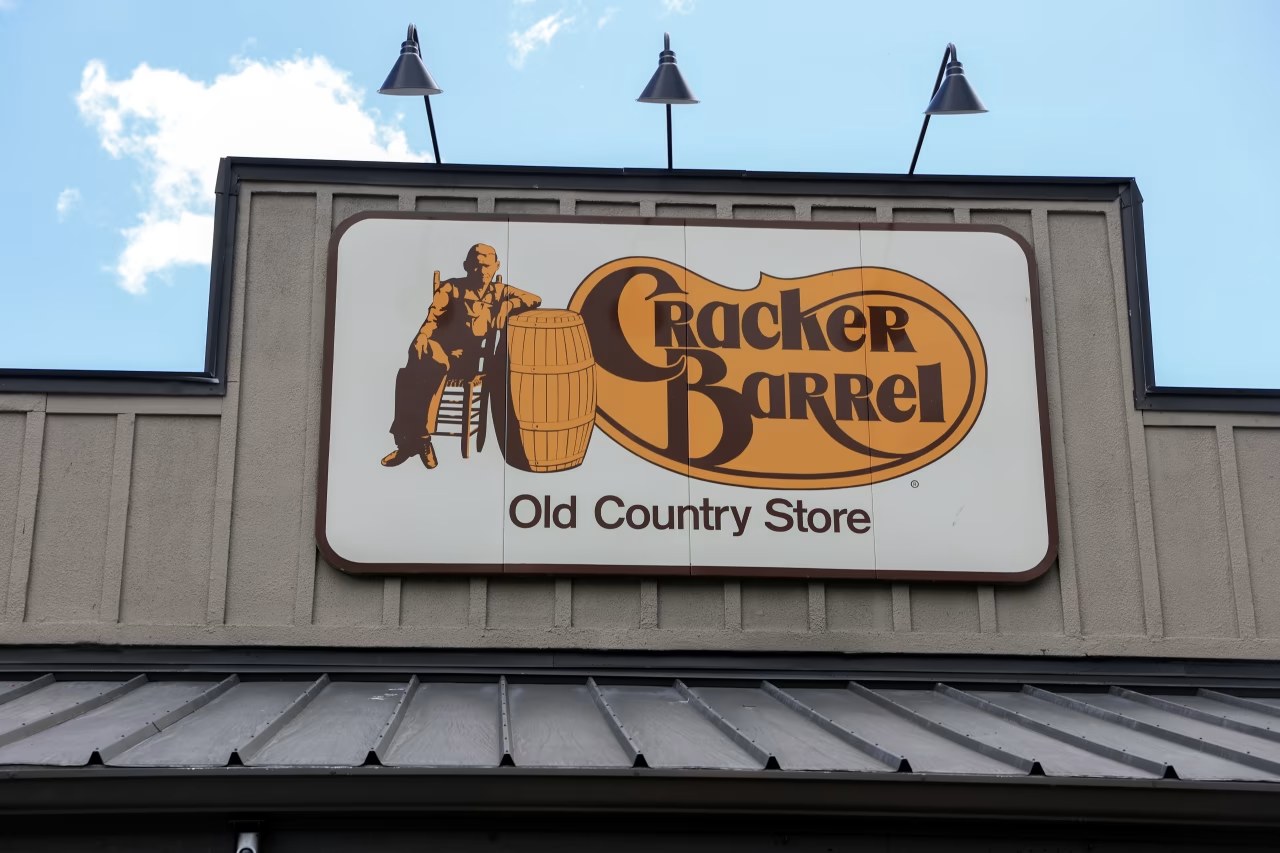
The Lebanon, Tenn., chain—famous for its rocking-chair porches and all-day breakfast—has spent 18 months in retreat after a minimalist logo refresh in 2023 triggered a loyalist revolt, same-store sales erosion, and a subsequent management shuffle. Wednesday’s results, while grim, offered the clearest signal yet that new CEO Julie Felss Masino believes she has the roadmap—and the boardroom patience—to steer the brand back to growth.
The $20.9 Million Vanishing Act: Inside Cracker Barrel’s Profit Collapse
Strip away the biscuits and gift-shop tchotchkes and the math is stark: in twelve months Cracker Barrel let $20.9 million in net income evaporate. The Q4 tally of $1.3 million against $22.2 million a year earlier translates to a 94% haircut, among the steepest declines in the casual-dining index tracked by S&P Global Market Intelligence.
Where did the money go?
Management blamed a three-headed hydra: food-cost inflation running 5% above historic averages, hourly wage hikes that lifted labor dollars per customer by 9%, and a 4% fall-off in comparable-store traffic that left fixed costs dangerously under-absorbed. The result was restaurant-level margin compression of roughly 350 basis points, worse than the 250 bps management had forecast in May.
Equally painful was the top-line sag. While Cracker Barrel did not break out exact revenue figures in its brief release, consensus estimates from FactSet peg quarterly revenue at roughly $782 million, down 6% year-over-year and the third consecutive slide. Analysts at Stephens Inc. note that the average unit volume—once a brag-worthy $4.2 million per store—has retreated to $3.7 million, erasing five years of gains.
The profit collapse also forced the board to suspend the dividend’s upward trajectory. Payouts were held flat at $1.30 per share, breaking a nine-year streak of annual hikes that had endeared the stock to income funds. CFO Jeff Davis told investors on the brief call that cash preservation is paramount while the turnaround accelerates.
Still, there was one silver lining: adjusted EBITDA beat the Street’s downbeat forecast by $3 million, evidence that cost-containment programs launched last winter—trimming 30 under-performing dinner SKUs and renegotiating poultry contracts—are beginning to bite. The question now is whether traffic can rebound fast enough to leverage those savings into actual profit growth.
Logo Fallout: How a Branding Refresh Became a $300 Million Mistake
Most diners don’t visit for avant-garde design, a lesson Cracker Barrel learned the hard way in September 2023 when it unveiled a stripped-down logo that jettisoned the serif-heavy, homestead imagery that had greeted travelers since 1969. Social-media backlash was swift: petitions gathered 130,000 signatures, and loyalty-member sentiment scores from Qualtrics plunged 18%.
The financial after-shock
Same-store sales, already fragile, turned negative within weeks. By December 2023 the chain posted a 7% traffic decline—the steepest in casual dining—while peers like Darden’s Olive Garden saw flat comps. Analysts at BMO Capital estimate the debacle shaved roughly $300 million off enterprise value as the stock surrendered a 25% premium it once held to the S&P SmallCap 600 restaurant index.
Internally, morale sank. Store managers told Nation’s Restaurant News that confused guests bombarded staff with questions about menu deletions and price hikes, compounding service times. Hourly turnover spiked above 120%—industry highs for full-service brands—costing an incremental $1,300 per employee in retraining and recruitment, according to TDn2K benchmarking.
CEO Julie Felss Masino, hired away from Taco Bell in April, has since reinstated the vintage logo on all exterior signage and reprinted 12 million take-out bags bearing the old insignia. The reversal’s price tag: $7 million in one-time charges, a figure that analysts now view as cheap compared with the reputational drag it seeks to extinguish.
The episode underscores a cardinal rule in roadside hospitality: when heritage is the product, aesthetics are not peripheral—they’re balance-sheet items. Whether the goodwill restoration can translate into traffic remains the pivotal variable in 2025 earnings models.
What Exactly Is Cracker Barrel’s Turnaround Plan?
On Wednesday’s earnings call, Masino laid out a five-pillar recovery playbook dubbed the “Country Roadmap.” Priority one: menu simplification. Roughly 25 under-performing items—think watermelon-rind salad and ahi tuna—are being axed to cut SKUs 18% and speed ticket times by an average of four minutes during peak lunch hours.
Heritage hospitality, data-driven
Pillar two involves retraining 55,000 employees in a nostalgia-forward service script: servers greet tables with complimentary biscuits, managers perform table-side checkbacks, and check presenters arrive with a foil-wrapped piece of rock candy. Early pilot stores saw guest-satisfaction scores jump 6%, according to internal metrics shared with investors.
Third on the list is pricing discipline. Rather than blanket hikes, the chain is micro-zoning menus, raising prices 3% in high-income ZIP codes while holding dollar-menu coffee refills steady in rural markets. The net average check is projected to rise 2%—half last year’s pace—while protecting price-sensitive seniors who comprise 38% of traffic.
Pillar four focuses on off-premise. A new curbside app launched in 300 stores has lifted take-out mix from 13% to 17% in test markets, adding $1.20 per pack in incremental margin by reducing third-party delivery fees. Full rollout to all 662 locations is slated by Thanksgiving week.
The final pillar: marketing with a hometown accent. Expect more Alan Jackson soundtracks in ads and a return of the “Eat, Shop, Relax” tagline that defined 1990s campaigns. Management’s target is to stabilize same-store sales by Q2 2025 and return to low-single-digit growth by fiscal 2026.
Can Cost Cuts Alone Save the Stock—or Is Traffic the Real Decider?
Wall Street’s 8% after-hours pop suggests investors are betting that Cracker Barrel can harvest enough overhead to offset traffic headwinds. CFO Davis guided to $35 million in annualized savings, led by renegotiated poultry contracts, consolidated beverage vendors, and trimming field-support headcount by 10%.
The math behind the optimism
Every 1% reduction in cost-of-goods-sold adds roughly $0.18 to EPS, according to Deutsche Bank modeling. If management hits its 140-basis-point COGS target, the tailwind equates to $0.25 per share—material for a stock that earned only $0.42 in FY 2024.
Yet traffic remains the swing factor. Management conceded comps must flip positive by at least 2% to leverage labor deleverage and restore peak margins. That threshold looks ambitious: Placer.ai foot-traffic data shows visits down 3.8% in July, and GasBuddy projects pump prices rising into late summer—historically a deterrent to highway-dependent chains.
Still, some analysts see optionality. BTIG notes that the average Cracker Barrel guest is 54 years old, owns a home, and dines before 6 p.m.—demographics less sensitive to macro shocks. If the chain can stabilize dinner traffic and push check average just 1.5%, EBITDA could expand $28 million, eclipsing the guided savings.
The risk: competitors aren’t standing still. Darden’s new “Italian with a twist” concept opens two highway-adjacent locations this fall, targeting the exact Interstate-exit real estate Cracker Barrel covets. Execution slippage could relegate cost cuts to a stay-alive tactic rather than a growth catalyst.
Investor Reaction: Why Shares Rallied on Ugly Numbers
Contrarian buyers emerged within minutes of the release. Volume spiked to 1.4 million shares, six times normal, lifting CBRL from a regular-session close of $42.70 to an after-hours peak of $46.12. The rally hinged on three words: “guidance raised modestly.”
Decoding the upgrade
Management now sees full-year EPS of $1.60–$1.80 versus prior consensus $1.45, driven by cost savings recognition and a projected 50-basis-point expansion in restaurant-level margin. Revenue guidance was nudged to $3.22–$3.26 billion, implying flattish comps but better-than-expected new-unit contribution.
Short-covering amplified the move. Roughly 18% of the 21-million-share float was sold short going into earnings, the highest ratio among casual-dining names, according to S3 Partners. As positivity spread, bearish traders bought 2.1 million shares in 48 hours to close positions, accelerating the spike.
Options flow told a similar story. Call volume at the $45 strike expiring Friday exceeded open interest by 4×, suggesting momentum traders were positioning for a run toward the 200-day moving average near $48. Whether the gains hold depends on August traffic data, due in six weeks. For now, the market is granting Masino the benefit of the doubt.
What’s Next on the Country Road Ahead?
Masino’s turnaround clock is ticking loudly. If the Country Roadmap fails to stabilize traffic by Thanksgiving, the board could face pressure to explore strategic alternatives ranging from refranchising stores to a sale-leaseback of the $1.8 billion real-estate portfolio. Analysts at Morgan Stanley estimate a REIT conversion at a 5.5% cap rate could unlock $900 million in proceeds—enough to retire 40% of outstanding debt and fund a special dividend.
Technology as wildcard
Look for a pilot of QR-code ordering in Q2 2025, aiming to cut front-of-house labor hours 7%. Early tests in Georgia reduced ticket errors 12%, a key metric for seniors who rank order accuracy above speed. The tech pivot also opens the door to dynamic upsell prompts, potentially nudging check average another 1% without menu price hikes.
Meanwhile, commodity markets could be a tailwind. Chicken-wing prices have fallen 28% since April, and the USDA projects turkey breast costs to dip 9% into November—welcome news for a chain that sells 150,000 Thanksgiving meals annually. Every 5% decline in core proteins adds roughly $0.07 to quarterly EPS.
Longer-term, Cracker Barrel’s 55-year brand equity remains intact among core 50-plus consumers who control 53% of U.S. discretionary spending. If Masino can thread the needle between nostalgia and modern convenience, the stock’s current 9.2× forward EV/EBITDA multiple could re-rate toward peer Darden at 12×, implying 25% upside even without heroic growth. The country store, it seems, may yet have a few miles left on its odometer.
Frequently Asked Questions
Q: Why did Cracker Barrel’s profit fall so sharply?
Cracker Barrel’s Q4 profit dropped 94% from $22.2 million to $1.3 million year-over-year, driven by lower traffic, inflationary costs, and lingering fallout from the failed 2023 logo redesign that alienated core customers.
Q: What is Cracker Barrel doing to fix its business?
CEO Julie Felss Masino outlined a multi-pronged turnaround: restoring classic comfort-food menus, re-emphasizing heritage décor, re-engaging loyalty guests, and tightening cost controls after last year’s branding misstep.
Q: Did the earnings report move Cracker Barrel stock?
Yes—despite the profit plunge, adjusted 2024 guidance sparked an 8% after-hours rally as investors saw early signs that the chain’s stabilization plan is gaining traction.
