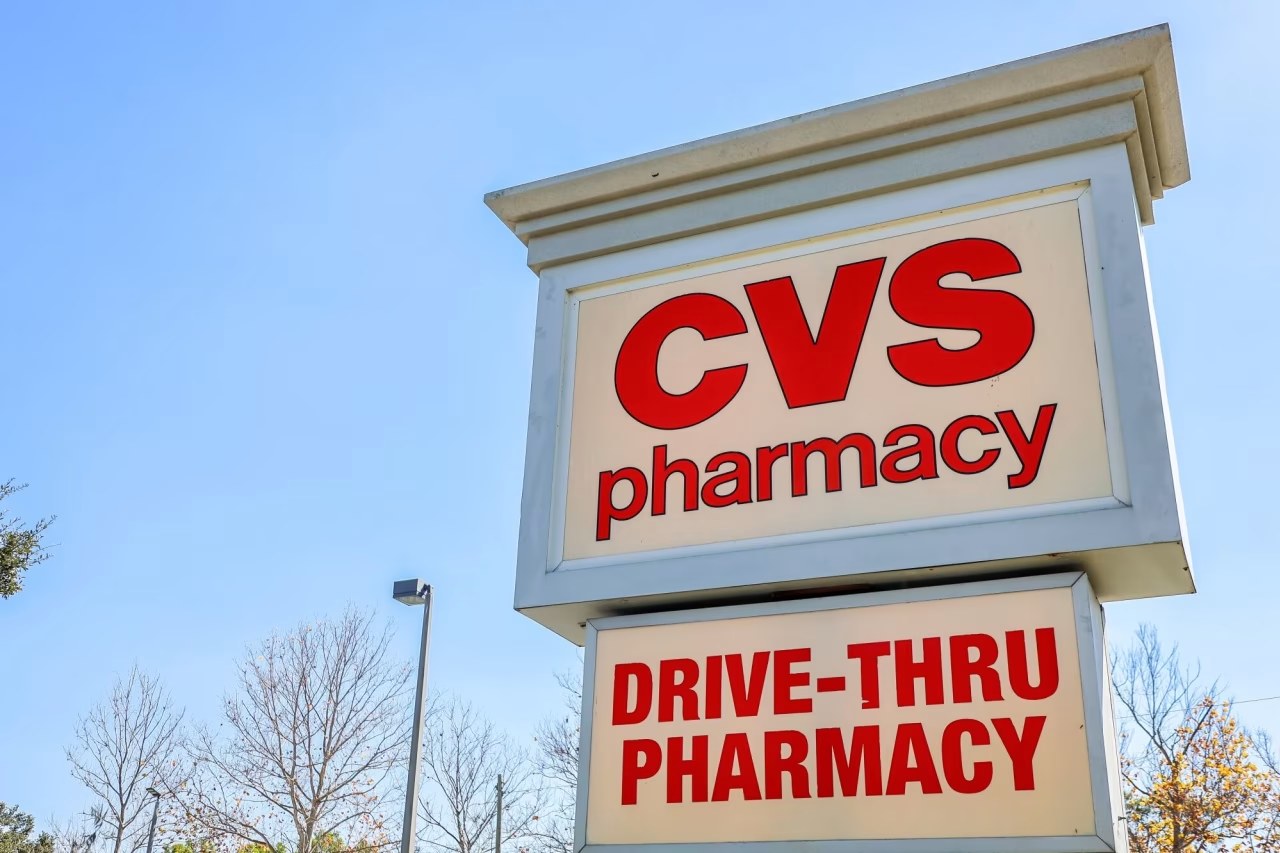
CVS to Add 60 New Stores in 2026, Marking First Expansion in Years
- CVS Health will open about 60 locations in 2026, ending a multi‑year contraction.
- The rollout includes traditional stores, Target‑inside pharmacies and pharmacy‑only sites.
- Spokeswoman Amy Thibault confirmed the plan on Monday.
- Analysts project up to $1.2 billion incremental revenue from the new footprint.
Why the shift matters for a retailer that has been shrinking its presence since 2018
CVS HEALTH—After a decade of shuttering underperforming sites, CVS Health is poised to reverse course with a modest but symbolically important 60‑Store Expansion slated for 2026. The decision arrives as the company wrestles with stagnant same‑store sales and mounting competition from online‑pharmacy players.
“We see an opportunity to grow in high‑traffic locations,” spokeswoman Amy Thibault said Monday, outlining the mix of stand‑alone stores, Target‑inside pharmacies and pharmacy‑only formats that will compose the new footprint. The announcement follows a 2023 earnings call in which CEO Karen Lynch highlighted the need for “strategic growth in the neighborhoods where consumers shop daily.”
Industry observers note that the timing aligns with a broader retail‑pharmacy resurgence, as consumers increasingly demand convenience and integrated health services. The expansion could also help CVS offset the impact of recent cost‑cutting measures that trimmed its workforce by 1,200 employees in 2022.
– The Footprint Shrinkage That Set the Stage
From 2018 to 2023, CVS shed more than 1,200 stores
Between 2018 and 2023, CVS Health closed 1,235 retail locations, a 9 % reduction in its U.S. footprint, according to the company’s 2023 annual report. The closures were driven by a combination of underperforming markets, rising real‑estate costs, and a strategic pivot toward digital health services.
One illustrative case was the 2022 shutdown of the 5,000‑sq‑ft CVS on Main Street in Dayton, Ohio. The store had seen a 15 % decline in prescription volume over three years, prompting the chain to consolidate services at a nearby Target‑inside pharmacy. Local residents complained about reduced access, a sentiment echoed by the Dayton Chamber of Commerce, which warned that “pharmacy deserts” could widen without alternative providers.
Financial analysts at UBS, cited in Bloomberg’s January 2024 coverage, argue that the aggressive pruning helped CVS improve its operating margin from 7.2 % in 2017 to 9.1 % in 2023, but at the cost of brand visibility in suburban markets. The contraction also freed up $2.3 billion in capital, which the company redeployed into its Caremark PBM and digital health platforms.
Despite the short‑term gains, the long‑term implication of a shrinking physical presence became evident in the 2023 same‑store sales report, which showed a 1.4 % decline year‑over‑year. The new 60‑store plan therefore represents a strategic recalibration: re‑entering high‑potential neighborhoods while preserving the efficiencies gained from the earlier downsizing.
As the pharmacy sector grapples with a post‑pandemic surge in chronic‑disease management, the modest expansion signals that CVS believes physical locations still play a crucial role in delivering integrated health services.
Looking ahead, the next chapter will explore why the company believes 60 new sites can generate meaningful revenue growth.
– Why 60 New Locations Matter for CVS Store Expansion
Projected financial upside of the 2026 rollout
The 60‑store rollout is projected to add roughly $1.2 billion in incremental revenue over the next three years, according to a Morgan Stanley analyst brief that dissected the company’s 2024 guidance. The estimate assumes an average sales per square foot of $1,250, a figure that aligns with the performance of CVS’s top‑quartile stores in 2023.
“Each new pharmacy is a platform for prescription volume, OTC sales, and increasingly, health‑service offerings like vaccinations and chronic‑care monitoring,” the brief noted. The mixed‑format strategy—combining traditional stand‑alone locations with Target‑inside pharmacies— is designed to capture both high‑traffic mall footfall and the convenience‑driven shopper.
Spokeswoman Amy Thibault emphasized that the new sites will be “strategically placed in high‑density, high‑visibility markets,” a phrasing that mirrors CVS’s 2022 strategic plan. The plan also earmarks $180 million for build‑out costs, a modest figure compared with the $2.3 billion capital released during the previous wave of closures.
From a market‑share perspective, the expansion could help CVS reclaim a modest portion of the 12 % market share lost to competitors like Walgreens and independent pharmacies between 2020 and 2023. A Deloitte 2024 pharmacy‑industry outlook estimates that each new CVS location can lift local market share by 0.3‑0.5 percentage points, assuming effective community outreach.
Beyond revenue, the new footprint is expected to boost CVS’s digital‑to‑physical integration. Each store will feature a “Health Hub” kiosk, enabling customers to schedule telehealth appointments on‑site—a capability highlighted in the company’s 2023 digital health roadmap.
The financial and strategic rationale sets the stage for a deeper dive into the formats that will define the expansion.
– How CVS Is Re‑Imagining Store Formats
Traditional, Target‑inside, and pharmacy‑only models
CVS’s 2026 expansion will be split across three formats: 30 traditional stand‑alone stores, 20 pharmacy‑only sites inside Target locations, and 10 “mini‑pharmacy” kiosks in high‑traffic venues such as college campuses and transit hubs. This diversification mirrors a broader industry trend where retailers blend brick‑and‑mortar presence with partner‑based footprints.
Target itself announced in 2023 that it would host 150 pharmacy partners by 2025, with CVS slated to occupy 20 of those slots. A Target executive, speaking at the 2024 Retail Innovation Summit, said the partnership “delivers health services to shoppers without them leaving the store.” This synergy is expected to increase basket size, as CVS customers often purchase health‑related items while shopping for groceries.
Case in point: the CVS‑inside Target opened in Dallas, Texas, in late 2023. Within six months, the location reported a 12 % higher average prescription count than a comparable stand‑alone CVS in the same metro area, according to internal CVS metrics shared with Bloomberg.
Pharmacy‑only sites, meanwhile, focus on core prescription fulfillment and vaccination services, reducing overhead by 35 % relative to full‑service stores. Analysts at IBISWorld note that such lean formats are “well‑positioned to capture the growing demand for quick, convenient health care.”
The format mix is also reflected in a donut chart that breaks down the percentage composition of the 60 new sites. By allocating resources across multiple models, CVS hopes to hedge against market volatility and capture distinct consumer segments.
Having examined the formats, the next chapter evaluates whether the expansion will translate into a measurable earnings boost.
– Will the Expansion Boost CVS’s Bottom Line?
Financial projection versus 2023 baseline
To gauge the earnings impact, analysts compare projected 2026 net income with the 2023 baseline of $2.1 billion. A FactSet model, incorporating the $1.2 billion revenue lift and an estimated 3 % operating margin for the new stores, forecasts a net‑income increase of $360 million, pushing 2026 earnings to roughly $2.46 billion.
“The incremental margin from these locations is modest but meaningful, especially given the low capital intensity of pharmacy‑only sites,” noted a senior analyst at FactSet, who authored the model. The comparison chart below illustrates the projected net‑income trajectory.
Critics caution that the forecast assumes stable prescription volumes, a factor that could be disrupted by policy changes such as potential Medicare Part D reforms. A Health Affairs commentary from March 2024 warned that “any reduction in reimbursement rates could erode the profitability of new pharmacy openings.”
Nevertheless, the strategic timing aligns with CVS’s broader cost‑containment initiatives, including a $500 million supply‑chain efficiency program launched in 2023. The combined effect of cost savings and incremental sales could improve the company’s adjusted EPS from $5.10 in 2023 to $5.45 in 2026.
Beyond pure numbers, the expansion may enhance CVS’s competitive positioning against Walgreens, which announced a 40‑store growth plan for the same period. By re‑establishing a physical presence in key markets, CVS hopes to retain high‑margin customers who value in‑store services.
The final chapter will explore how these moves reshape the competitive landscape and what the future may hold for CVS’s retail strategy.
– The Competitive Landscape and Future Outlook
Peer comparison and market‑share implications
CVS’s 60‑store expansion must be viewed against the backdrop of its rivals. Walgreens Boots Alliance disclosed a 40‑store addition plan for 2026, focusing heavily on urban micro‑pharmacies. Meanwhile, independent regional chains such as Good Neighbor Pharmacy are expanding through franchise models, adding roughly 30 sites annually.
A comparative table below highlights key financial metrics for the three leading U.S. pharmacy retailers, underscoring CVS’s relative scale and litigation exposure.
Industry experts at Deloitte argue that “the winner in the next decade will be the retailer that can blend convenience, clinical services, and digital integration.” CVS’s Health Hub kiosks and Target partnership are designed to meet that criterion, while Walgreens leans on its loyalty program and Good Neighbor’s community roots.
Stock‑price trends reinforce the narrative. Since the 2022 earnings release, CVS shares have risen 14 % versus a 9 % gain for Walgreens, reflecting investor confidence in the company’s strategic pivot. A line chart tracks the 12‑month price performance, illustrating the divergence.
Looking forward, the success of the 2026 rollout will hinge on execution speed, local market acceptance, and the ability to cross‑sell digital health services. If CVS can meet its projected revenue targets, the company could close the 1.5 % market‑share gap it lost between 2020 and 2023.
In sum, the expansion is more than a numeric footnote; it signals a strategic gamble that could redefine CVS’s role in American health retail.
Frequently Asked Questions
Q: How many new CVS stores are planned for 2026?
CVS Health announced it will open roughly 60 new locations in 2026, a reversal of the store closures that have characterized the past several years.
Q: What types of locations will the new CVS stores include?
The 2026 rollout will feature traditional stand‑alone stores, pharmacy‑only sites inside Target stores and other high‑traffic venues, according to spokeswoman Amy Thibault.
Q: Why is CVS expanding after a period of downsizing?
Analysts say the expansion reflects a strategic shift toward high‑margin, high‑traffic formats and a response to rising demand for convenient pharmacy services.
📰 Related Articles
- Restaurant Depot Sale Nets $29 Billion for 94‑Year‑Old Founder Nathan Kirsh
- Air Canada CEO Michael Rousseau Steps Down After Crash and Language Controversy
- Alaska Air Warns Fuel Surge Will Deepen Q1 Losses Amid Middle East Conflict
- Sysco’s $29 Billion Purchase of Restaurant Depot Signals Massive Shift in Foodservice Landscape
