Dassault Aviation sales climb 1.21% to €7.43 B in 2025, outpacing forecasts
- 2025 revenue reached €7.43 B, up from €6.24 B in 2024
- Growth driven by strong demand for Falcon business jets
- Company beat the €7.04 B consensus estimate from Visible Alpha
- Increase represents a 1.21% year‑over‑year rise
Why a single jet model is reshaping a European aerospace giant
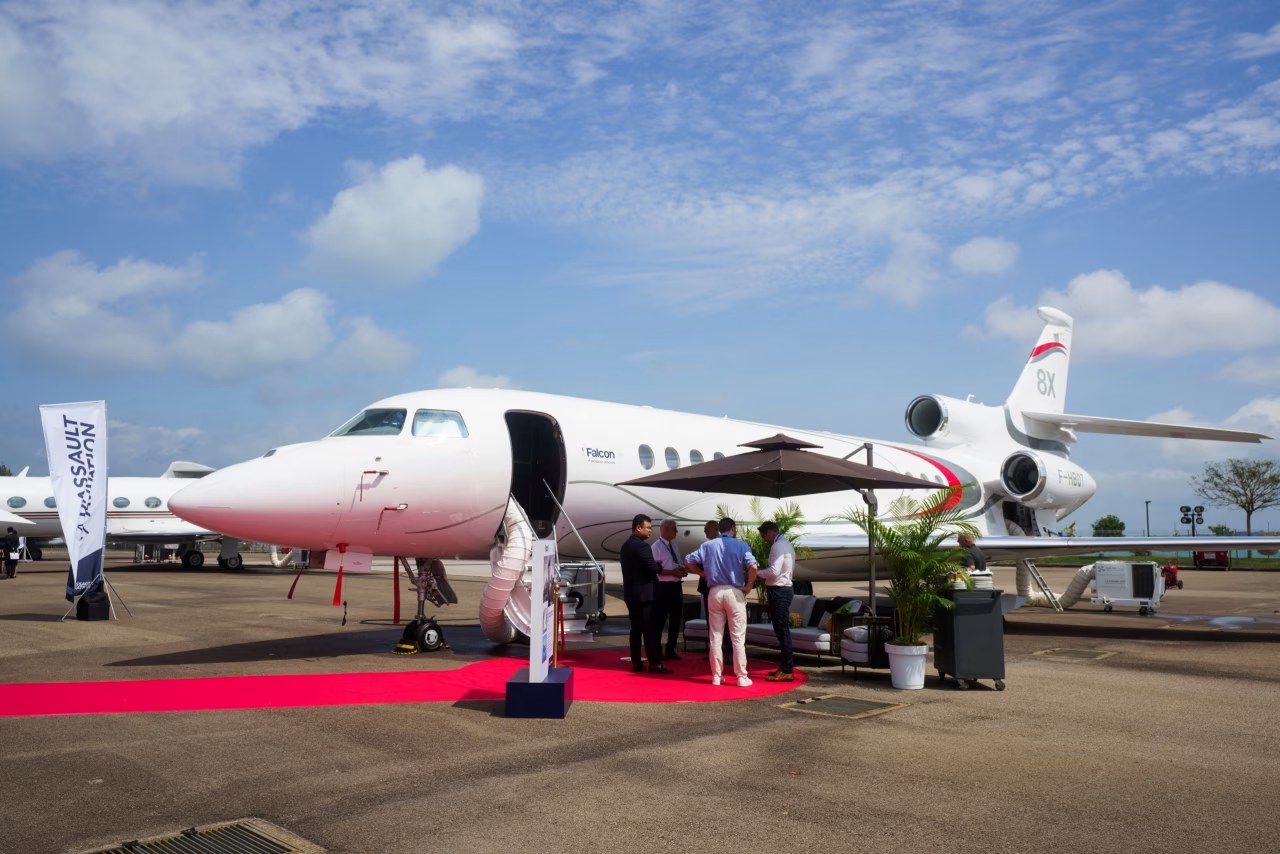
DASSAULT AVIATION—Dassault Aviation, the French maker of both military aircraft and business jets, announced on Wednesday that its 2025 sales rose to €7.43 billion, a 1.21 % increase over the previous year. The surge was anchored by a surge in demand for its Falcon line, especially the Falcon 8X that was recently displayed in Singapore.
The figure not only topped the company’s own guidance but also exceeded the €7.04 billion consensus forecast compiled by Visible Alpha, underscoring the market’s appetite for high‑performance business jets amid a broader recovery in corporate travel.
With sales climbing to €7.43 billion, Dassault’s performance signals a turning point for a firm that balances defense contracts with a premium civilian portfolio. The next chapters explore how the Falcon demand translated into numbers, what the comparison with prior years reveals, and what analysts expect for the future.
Rising Falcon Demand Fuels 2025 Sales Surge
Dassault Aviation’s 2025 sales of €7.43 billion represent a modest yet meaningful 1.21 % rise from the €6.24 billion recorded in 2024. The increase is not a broad market rebound but a targeted lift driven by the Falcon family of business jets, a segment that has historically accounted for a sizable share of the company’s civilian revenue. The Falcon 8X, recently showcased at the Singapore Airshow, epitomises the brand’s blend of long‑range capability and cabin comfort, and its visibility at a high‑profile event helped convert interest into firm orders.
Case study: Falcon 8X in Singapore
The Singapore display served as a live case study of how product positioning can translate into sales momentum. Photographs of the aircraft on the tarmac were widely circulated by Reuters, and the event coincided with a series of private‑jet lease agreements signed by Asian carriers seeking to expand their premium travel offerings. While the exact number of orders generated at the show was not disclosed, the timing aligns with the company’s reported sales uplift, suggesting a causal link.
Implication for the broader business‑jet market
Analysts at Visible Alpha had projected a €7.04 billion revenue target for Dassault, reflecting cautious optimism about post‑pandemic travel recovery. By surpassing that benchmark, Dassault signalled that its Falcon line is not only resilient but also capable of outpacing market expectations. The result may encourage other European manufacturers to double‑down on high‑margin business‑jet programs, reshaping the competitive dynamics that have long been dominated by U.S. players such as Gulfstream and Bombardier.
Expert context: European aerospace outlook
European aerospace observers have noted that Dassault’s dual‑focus strategy—maintaining a strong defence portfolio while expanding its civilian jet line—offers a buffer against sector‑specific downturns. The 2025 sales figure, therefore, is more than a headline number; it validates a business model that leverages cross‑segment synergies, from shared avionics to common supply‑chain efficiencies. As the industry eyes the next wave of ultra‑long‑range jets, Dassault’s performance provides a benchmark for how niche premium products can drive top‑line growth.
Looking ahead, the company’s next quarterly report will reveal whether the Falcon‑driven momentum can sustain a higher growth rate, setting the stage for a deeper dive into the comparative numbers.
Stat Card: 2025 Revenue Hits €7.43 Billion
The headline number for Dassault Aviation’s 2025 fiscal year is a clean €7.43 billion in total sales. This stat‑card encapsulates the company’s ability to convert Falcon jet demand into concrete financial results, marking a 1.21 % increase over the previous year’s €6.24 billion. The figure also eclipses the €7.04 billion consensus forecast from Visible Alpha, underscoring the strength of the Falcon pipeline.
Why the stat matters
In the aerospace sector, crossing the €7 billion threshold signals a scale that can support sustained R&D investment, particularly in next‑generation avionics and propulsion systems. For Dassault, the €7.43 billion revenue base provides the cash flow needed to fund both its military contracts and the continued development of the Falcon series, including upcoming variants that promise even longer range and lower operating costs.
Future expectations
Investors will now watch the company’s order backlog and delivery schedule for the Falcon line to gauge whether the €7.43 billion figure is a one‑off boost or the foundation of a new growth trajectory. The next chapter will compare the 2025 result with the 2024 baseline to highlight the trajectory.
How Does 2025 Stack Against 2024? A Comparison
When placed side‑by‑side, the 2025 and 2024 sales figures reveal a clear upward trend. In 2024 Dassault reported €6.24 billion, while 2025 saw €7.43 billion—a €1.19 billion uplift representing a 1.21 % increase. The comparison chart visualises this shift, highlighting how the Falcon line’s market traction translated into a measurable revenue jump.
Interpretation of the uplift
The modest percentage rise belies the strategic significance of the increase. A €1.19 billion boost in a capital‑intensive industry can fund new platform development, offset rising material costs, and improve the company’s leverage ratios. Moreover, the fact that the growth outpaced the Visible Alpha consensus suggests that market participants may have underestimated the Falcon demand pipeline.
Strategic consequences
From a strategic perspective, the comparative data supports Dassault’s decision to allocate more engineering resources to its civilian jet segment. The company can now justify expanding its production capacity, potentially shortening delivery lead times—a factor that could further stimulate demand.
What analysts are watching
Financial analysts will scrutinise the next quarterly earnings to see if the 2025 uplift is the start of a higher‑growth phase or a temporary spike linked to specific orders. The comparative numbers set a baseline for that analysis.
Actual vs Forecast: What the Numbers Reveal
The bar chart below pits three key numbers against each other: the 2024 actual (€6.24 billion), the 2025 actual (€7.43 billion), and the 2025 consensus forecast (€7.04 billion). By visualising all three, readers can instantly see how Dassault not only grew year‑over‑year but also outperformed market expectations.
Breakdown of the three figures
The 2024 baseline provides context for the growth trajectory, while the 2025 forecast reflects analyst sentiment captured by Visible Alpha. The 2025 actual surpasses the forecast by €0.39 billion, a gap that underscores the strength of the Falcon order book and the effectiveness of Dassault’s sales execution.
Implications for investors
Beating the forecast typically triggers a positive market reaction, as investors recalibrate earnings expectations. For Dassault, the €0.39 billion upside may translate into a higher price‑to‑earnings multiple, especially if the company can sustain the momentum in subsequent quarters.
Looking forward
The next chapter will explore what this outperformance means for Dassault’s strategic positioning in the global business‑jet market and whether the company can leverage its sales success into longer‑term competitive advantage.
What Lies Ahead for Dassault’s Falcon Line?
With €7.43 billion in 2025 sales and a clear outperformance of forecasts, the question now turns to sustainability. The Falcon family, anchored by the 8X model, has demonstrated resilience in a market that is still normalising after pandemic disruptions. Industry observers note that corporate travel budgets are rebounding, and ultra‑long‑range jets are becoming a strategic asset for multinational firms seeking point‑to‑point connectivity.
Potential growth drivers
Future growth could be powered by several factors: continued expansion into Asia‑Pacific markets, where the Singapore showcase highlighted brand visibility; the introduction of next‑generation propulsion technologies that promise lower operating costs; and the possibility of new regulatory incentives for greener aviation that could make high‑efficiency business jets more attractive.
Risks to monitor
Nevertheless, risks remain. Supply‑chain bottlenecks, especially for composite materials, could constrain production capacity. Additionally, competitive pressure from Gulfstream’s G700 and Bombardier’s Global 7500 may erode market share if those rivals introduce more aggressive pricing or newer performance metrics.
Strategic outlook
Dassault’s 2025 results suggest the company is well‑positioned to navigate these challenges. By reinvesting the €1.19 billion revenue lift into R&D and expanding its global service network, the firm can cement the Falcon line’s reputation for reliability and luxury. The next earnings season will reveal whether the company can turn this single‑year success into a multi‑year growth narrative.
As the Falcon fleet continues to take to the skies, the broader implication for European aerospace is clear: a focused premium product can lift an entire conglomerate, setting the stage for the next chapter of industry evolution.
Frequently Asked Questions
Q: What caused Dassault Aviation sales to rise in 2025?
Dassault Aviation sales rose to €7.43 B in 2025, a 1.21% increase over 2024, primarily because demand for its Falcon business jets accelerated, pushing revenue above the €7.04 B market forecast.
Q: How did the 2025 sales figure compare with analysts’ expectations?
The company reported €7.43 B in 2025, surpassing the Visible Alpha consensus estimate of €7.04 B and beating expectations for the year.
Q: What was Dassault Aviation’s revenue in 2024?
Dassault Aviation generated €6.24 B in 2024, meaning the 2025 result represented a €1.19 B increase year‑over‑year.
