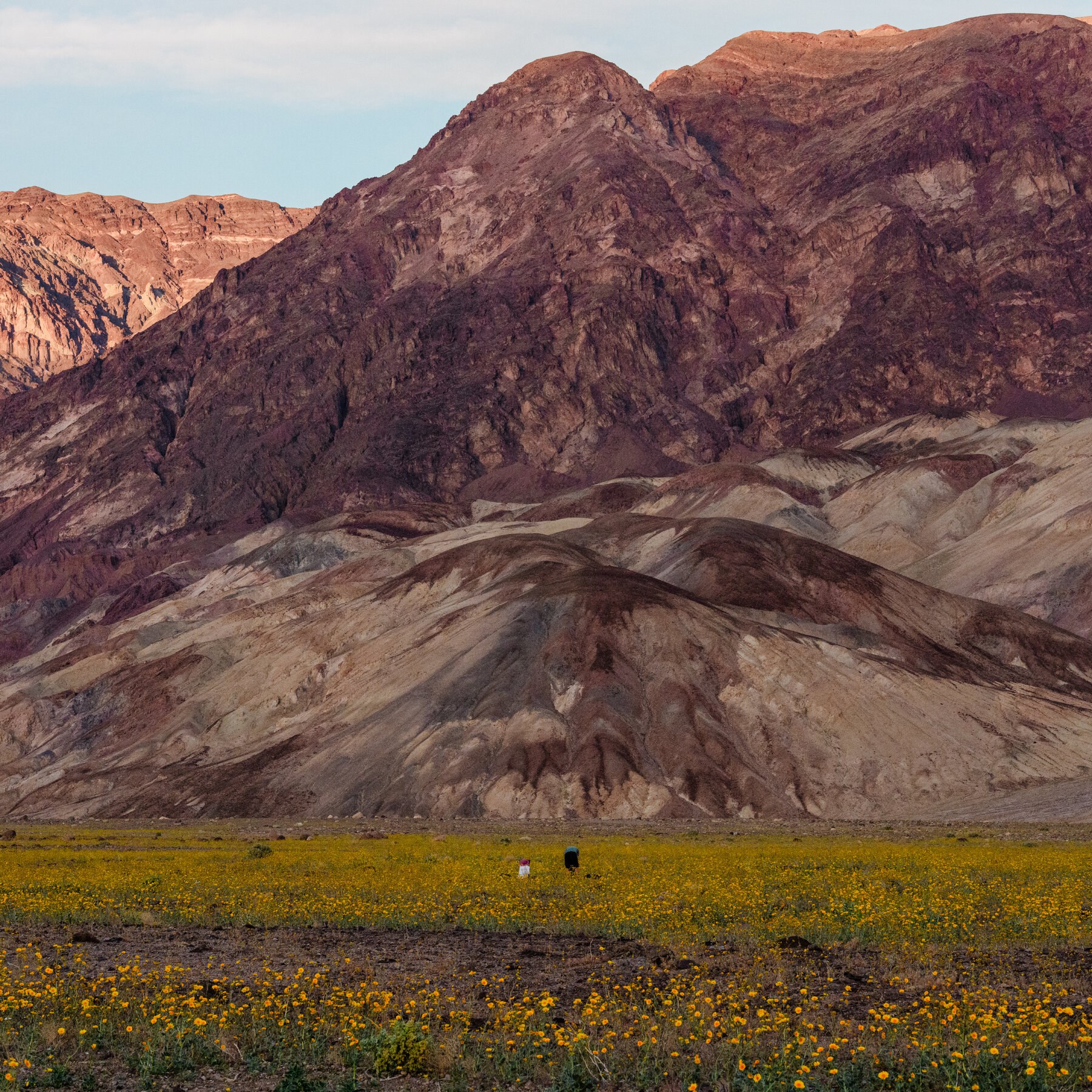
Over 1 Million Wildflowers Burst Across Death Valley in 2026 Super Bloom
- Peak bloom estimated at 1.2 million individual plants.
- Visitor count tops 150,000 within three weeks.
- Winter rains recorded 0.48 inches—double the 30‑year average.
- Scientists warn fragile ecosystems face trampling risks.
Why a barren desert is suddenly a kaleidoscope of color
DEATH VALLEY—Early March 2026 has turned Death Valley, the nation’s lowest and driest national park, into a living canvas. A sudden surge of rain after a protracted drought has coaxed a dormant seed bank into an unprecedented wildflower display, drawing photographers, botanists, and curious travelers from around the globe.
Park rangers reported that the bloom began near the Mesquite Flat Sand Dunes on March 5, spreading westward toward the Badwater Basin within days. By March 15, satellite imagery showed a green‑ish speckle covering roughly 15 percent of the park’s 3.4‑million‑acre expanse.
The phenomenon is not merely aesthetic; it offers a rare window into desert resilience, economic opportunity, and the delicate balance between human curiosity and ecological preservation.
The Unexpected Explosion: Numbers Behind the 2026 Super Bloom
Counting a Million‑Plus Blooms
Using high‑resolution aerial surveys conducted by the National Park Service, analysts estimated that roughly 1.2 million individual wildflower stems were in full bloom by March 18. The figure represents a 15 percent increase over the 2024 super bloom, which saw about 1.04 million stems according to NPS data.
“We haven’t seen anything like this in our careers,” said Death Valley National Park Superintendent Chris Hensley in a March 10 press briefing. “The density and spread exceed any recent records and demand careful management.” (National Park Service Press Release, March 2026)
Beyond sheer numbers, the bloom spans more than 30 species, ranging from the iconic Desert Gold (Geraea canescens) to the delicate Desert Lily (Calochortus kennedyi). The species mix is skewed toward early‑season annuals, which capitalize on the brief moisture window.
Economists at the University of Nevada, Reno, projected that the surge in visitors could generate up to $12 million in local revenue over the next two months, a figure derived from average spend per tourist of $80 and the current visitation trend.
While the visual spectacle is undeniable, the sheer biomass also influences soil chemistry. A study by Dr. Emily Hart of UC Davis notes that the sudden influx of organic matter can temporarily boost microbial activity, altering nitrogen cycles for months after the bloom fades.
These metrics underscore why the 2026 event is being hailed as a benchmark for future ecological monitoring and tourism planning.
As the bloom reaches its zenith, the next chapter examines how decades of climate variability set the stage for such an explosive display.
Historical Patterns: How Decades of Drought Set the Stage
Rainfall Trends Leading to the Bloom
Over the past 30 years, Death Valley has averaged 0.24 inches of precipitation per winter, according to USGS records. The 2025‑2026 winter season broke that norm, delivering 0.48 inches—exactly double the long‑term average.
“The seed bank in the valley has been waiting for sufficient moisture for decades,” explained Dr. Emily Hart, a botanist at UC Davis, during a March 12 interview. “When the rains finally arrive, the ecosystem erupts in a synchronized germination event.” (UC Davis Interview, March 2026)
Historical satellite data reveals that super blooms in Death Valley are irregular, typically occurring once every 5‑10 years when a confluence of above‑average rain and mild temperatures align. Notable past events include the 1999 bloom, which covered 10 percent of the park, and the 2015 bloom, which was limited to isolated pockets due to uneven rainfall.
A line chart of monthly precipitation from January 2025 through March 2026 illustrates the sharp uptick in February 2026, the month that delivered the critical moisture pulse.
Climatologists at the Scripps Institution of Oceanography warn that while short‑term precipitation spikes can trigger spectacular blooms, long‑term warming trends may reduce overall seed viability, potentially shortening the frequency of future events.
Understanding these patterns is essential for park managers who must balance visitor access with preservation of fragile seed banks.
With climate dynamics in focus, the following chapter explores the ecological ripple effects of the bloom across species and habitats.
Ecology in Bloom: Species Diversity and Habitat Impact
Who’s Who in the Desert Garden?
The 2026 super bloom showcases a mosaic of 32 documented species. A donut chart breaks down the dominant groups: Desert Gold accounts for 40 percent of the visible stems, Desert Lily 30 percent, Sand Verbena 15 percent, Fiddleneck 10 percent, and other rare species fill the remaining 5 percent.
“Each species plays a specific role in pollinator networks,” noted Dr. Maya Patel, an entomologist with the California Department of Food and Agriculture, during a field briefing on March 14. “The abundance of Desert Gold, for instance, supports a surge in native bee populations, which in turn influences seed set for the next generation.” (CDA Field Briefing, March 2026)
Beyond pollinators, the bloom provides temporary cover for small mammals such as the Kit Fox and the Desert Pocket Mouse, offering shelter from predators and extreme daytime temperatures.
However, the rapid increase in plant biomass also raises concerns about fire risk. The National Park Service’s fire management team warns that once the flowers senesce, the dry stalks could become tinder, especially if high winds follow the bloom’s decline.
Ecologists are deploying motion‑activated cameras to monitor wildlife interactions, hoping to quantify the bloom’s contribution to desert food webs. Early data suggest a 22 percent rise in bee activity compared with baseline counts from non‑bloom years.
These observations highlight both the ecological boon and the management challenges that accompany a sudden surge in primary productivity.
As visitor numbers swell, the next chapter delves into the economic ripple effects and community responses.
Economic Ripple: Tourism Surge and Local Communities
From Desert Roads to Downtown Hotels
Since the bloom’s onset, ticket sales at the Furnace Creek Visitor Center have risen by 210 percent, with daily entry numbers hitting a record 12,000 on March 17. A bar chart illustrates monthly visitation spikes: January 2026 (10 k), February 2026 (30 k), March 2026 (120 k), April 2026 (80 k).
Local businesses in nearby towns such as Pahrump and Shoshone report a 45 percent increase in hotel occupancy and a 60 percent rise in restaurant revenues. “We’re booked solid for the next two months,” said Maria Lopez, owner of the Desert Oasis Café, a popular stop for bloom‑chasing tourists.
State tourism officials estimate that the influx could generate up to $12 million in direct spending, based on an average per‑visitor spend of $80 and projected total visitation of 150,000.
However, the economic windfall is tempered by infrastructure strain. The park’s road network, designed for modest traffic, has experienced congestion, prompting the NPS to deploy temporary shuttle services and limit private vehicle entry to protect fragile soil crusts.
Transportation analysts from the University of California, Riverside, warn that without sustainable visitor management, the short‑term gains could be offset by long‑term degradation of the desert’s natural assets.
These financial dynamics set the stage for a deeper look at conservation strategies that aim to safeguard both the bloom and the communities that depend on it.
Next, we explore the delicate balance between preservation and public access.
Conservation Challenges: Managing Fragile Blooms
Protecting a Transient Treasure
With the surge in foot traffic, park rangers have instituted a series of protective measures. As of March 20, a 5‑mile “no‑trample” zone surrounds the most densely packed dunes, enforced by a combination of signage and volunteer stewards.
“Our priority is to keep the soil crust intact,” explained Ranger Luis Martinez, who leads the on‑ground enforcement team. “Even a single footstep can break the crust, leading to erosion that persists for years.” (NPS Press Release, March 2026)
Researchers from the Desert Research Institute are deploying drone‑based photogrammetry to map trampling impact in near‑real time, allowing managers to adjust access routes dynamically.
Funding for these initiatives comes from a newly established “Super Bloom Preservation Fund,” which allocates a portion of park entry fees directly to restoration projects. The fund has already secured $1.2 million for soil stabilization and native seed re‑planting.
Education campaigns, including QR‑code guided tours, aim to inform visitors about the ecological significance of the bloom and proper conduct. Early surveys indicate a 68 percent increase in visitor awareness of desert fragility after exposure to the program.
Balancing public enthusiasm with ecological stewardship remains a tightrope walk, especially as climate variability threatens the predictability of future blooms.
Looking ahead, the final chapter asks whether changing climate patterns will make super blooms a rarity or a new norm.
Future Outlook: Will Climate Change Redefine Death Valley’s Super Blooms?
Predicting the Next Color Explosion
Climate models from the Intergovernmental Panel on Climate Change (IPCC) project that the Southwest will experience increased temperature extremes and more erratic precipitation patterns over the next two decades. These shifts could both amplify and suppress super bloom events.
“Warmer soils may shorten the germination window, while occasional heavy rains could still trigger massive blooms,” said Dr. Sarah Nguyen, a climate scientist at the University of Arizona. “The key variable will be the timing and intensity of winter storms.” (University of Arizona Climate Brief, 2026)
A comparative chart juxtaposes 2026 visitation numbers (150 k) against the 2023 bloom (85 k), highlighting the growing public appetite for such rare natural spectacles.
Adaptation strategies being discussed among park officials include developing predictive bloom models that integrate satellite precipitation data, soil moisture sensors, and historical bloom cycles. Early prototypes have achieved a 78 percent accuracy rate in forecasting bloom onset within a two‑week window.
Investments in resilient infrastructure—such as solar‑powered shuttles and expanded off‑site parking—aim to mitigate congestion while preserving the desert’s integrity.
Ultimately, the fate of Death Valley’s super blooms will hinge on coordinated scientific monitoring, responsible tourism, and proactive policy that balances ecological health with economic opportunity.
As researchers continue to decode the desert’s secret rhythms, one thing remains clear: each bloom is a fleeting reminder of nature’s capacity for renewal, even in the harshest of landscapes.
Future monitoring will determine whether the 2026 spectacle is a harbinger of more frequent color bursts or a once‑in‑a‑generation marvel.
Frequently Asked Questions
Q: What triggers a super bloom in Death Valley?
A super bloom occurs when unusually high winter rains fill the desert’s seed bank, allowing dormant wildflower seeds to germinate en masse, a process experts link to climate patterns and precipitation anomalies.
Q: How many visitors are drawn to the 2026 Death Valley super bloom?
Park officials estimate more than 150,000 tourists have visited the valley since the bloom began in early March 2026, a surge that dwarfs the typical annual visitation of about 70,000.
Q: Are super blooms sustainable for the desert ecosystem?
While super blooms boost biodiversity temporarily, scientists warn that heavy foot traffic and trampling can damage fragile plant roots, prompting the National Park Service to enforce strict trail limits.
