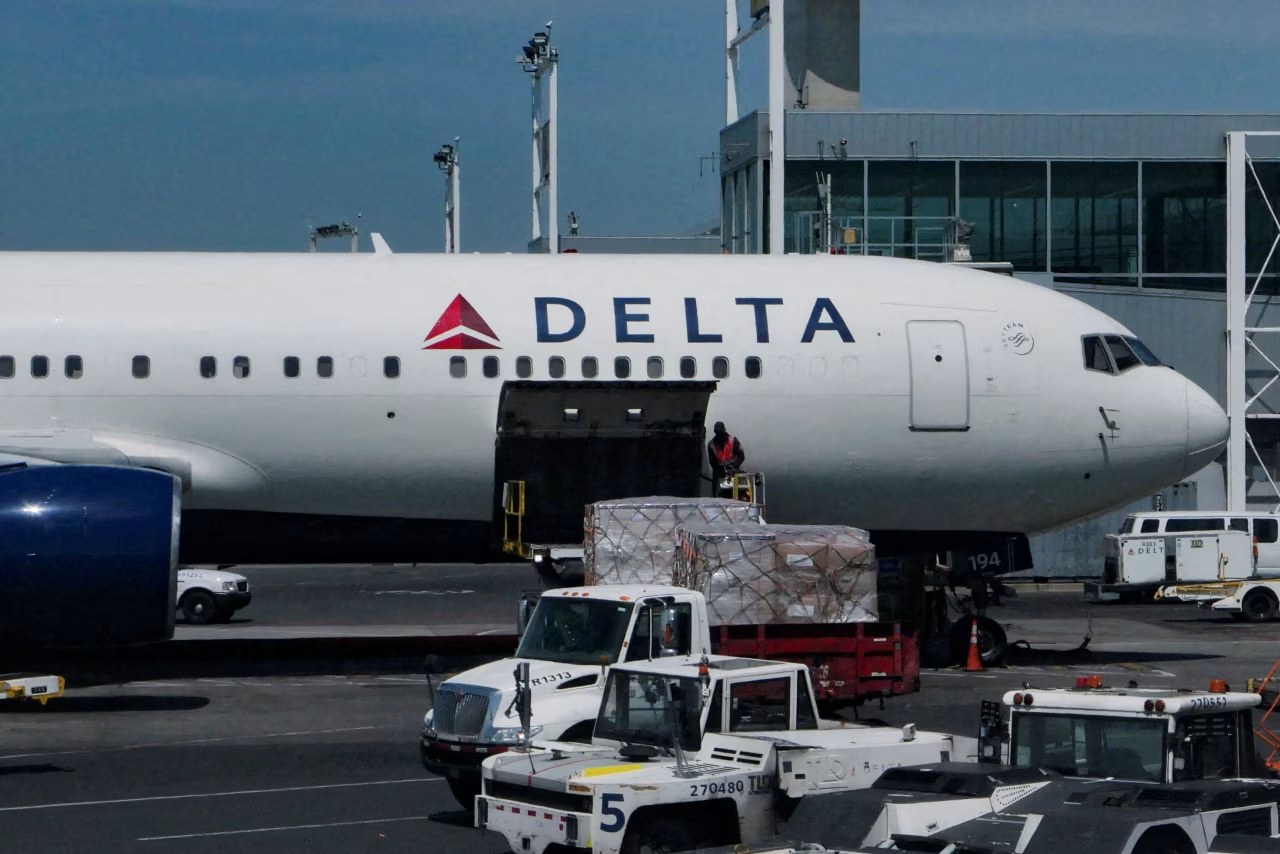
Delta’s Stock Slides 3.1% Amid Leadership Overhaul and Upcoming Executive Exits
- President Glen Hauenstein retired at the end of February after nearly a decade.
- Operations chief John Laughter will retire in late April after 30+ years.
- Delta’s shares fell 3.10% on the news.
- The airline faces a C‑suite reshuffle amid industry pressure.
Delta’s top‑flight team is in flux as two long‑standing executives prepare to depart.
DELTA AIR LINES—Delta Air Lines (DAL) announced Thursday that its chief operating officer, John Laughter, will step down in late April, ending a three‑decade tenure that began in the early 1990s. The move follows the retirement of President Glen Hauenstein, who left the company at the end of February after serving for almost ten years.
The back‑to‑back exits have rattled investors, with the airline’s stock slipping 3.10% in after‑hours trading. Analysts see the leadership vacuum as a risk to Delta’s operational continuity during a period of heightened competition and rising fuel costs.
While Delta has not yet identified permanent successors, the airline’s board has pledged a swift transition plan to maintain stability across its global network. The forthcoming chapters examine the implications of these departures, the historical context of Delta’s executive turnover, and what the reshuffle means for the carrier’s future.
What Triggers a C‑Suite Shake‑Up at a Major Airline?
Delta’s recent announcements echo a broader pattern in the airline industry where senior executives retire after long tenures, prompting board‑level restructuring. The two departures—President Glen Hauenstein, who retired after nearly a decade, and Operations Chief John Laughter, who is exiting after more than 30 years—represent the culmination of distinct career arcs within the same corporate culture.
Tenure Lengths and Corporate Strategy
Hauenstein’s near‑ten‑year presidency oversaw Delta’s post‑bankruptcy growth, while Laughter’s three‑decade operational stewardship guided the airline through the 2008 financial crisis and the COVID‑19 pandemic. Their exits signal a shift from legacy leadership to a new generation tasked with navigating post‑pandemic recovery, sustainability mandates, and digital transformation.
Industry observers note that such transitions often trigger short‑term market volatility, as reflected by the 3.10% dip in Delta’s share price. The volatility is less about performance concerns and more about uncertainty surrounding succession planning and strategic continuity.
Historically, Delta has managed similar transitions by appointing internal candidates who understand the carrier’s complex network. The airline’s board, however, faces a tighter timeline this round, with both vacancies emerging within weeks of each other.
Implications are clear: a seamless handover will be essential to preserve operational reliability, especially as Delta seeks to expand its trans‑Atlantic footprint and invest in next‑generation aircraft. The next chapter explores how Delta’s board is structuring the interim leadership team to address these challenges.
Leadership Tenure at Delta: A Historical Timeline
Understanding the significance of the 2024 departures requires a look back at Delta’s executive chronology. Since its 2006 emergence from bankruptcy, the airline has seen only a handful of presidents and chief operating officers, each serving multi‑year terms that shaped strategic direction.
Key Milestones
In 2007, Gerald Grinstein became CEO, steering the carrier out of insolvency. By 2010, Ed Bastian took the helm as CEO, a role he still occupies, providing continuity at the top. President Glen Hauenstein joined the leadership team in 2013, ascending to the presidency in 2014 and guiding Delta through a period of fleet modernization.
John Laughter entered Delta in 1992, rising through operational ranks to become COO in 2015. His 30‑plus years encapsulate the airline’s evolution from a legacy carrier to a technology‑driven network airline.
The timeline below captures these pivotal moments, highlighting the length of each tenure and the strategic initiatives associated with each leader.
How Will Delta Fill the Executive Gaps?
With two senior roles vacant, Delta’s board has outlined an interim governance model designed to preserve operational stability. The airline announced that senior vice presidents from the Commercial and Flight Operations divisions will assume acting responsibilities while a formal search is conducted.
Interim Assignments
Senior Vice President of Commercial, Maria Torres, will temporarily oversee the president’s portfolio, focusing on route planning, partnership negotiations, and revenue management. Meanwhile, Vice President of Flight Operations, Aaron Patel, will act as chief operating officer, ensuring that the airline’s 5,000‑plus daily flights remain on schedule.
Industry analysts argue that promoting from within can mitigate disruption, as internal leaders already possess deep knowledge of Delta’s operational intricacies. However, the interim period also opens the door for external candidates who could bring fresh perspectives on sustainability, digitalization, and cost control.
Delta’s board has engaged an executive search firm to evaluate both internal and external talent pools, with a target to name permanent successors by Q3 2024. The firm’s mandate includes assessing candidates’ experience with airline cost structures, labor relations, and technology integration—critical factors as the carrier seeks to offset rising fuel prices and labor contracts.
The outcome of this search will shape Delta’s strategic trajectory for the next decade, influencing everything from fleet acquisition decisions to global alliance negotiations. The following chapter examines the broader market reaction and what investors are watching for in the coming months.
Investor Sentiment: What the Market Says About Delta’s C‑Suite Changes
Following the leadership announcements, Delta’s share price fell 3.10% in after‑hours trading, reflecting investor caution. The decline aligns with a broader trend where airlines experience short‑term volatility after senior executive turnovers.
Comparative Performance
In the past five years, comparable carriers such as United Airlines and American Airlines have seen average stock dips of 2.5%–4% after similar leadership news, before stabilizing as new executives take charge. Delta’s reaction falls within this historical range, suggesting that the market views the departures as a manageable risk rather than a crisis.
Analysts at FlightGlobal note that the key metric investors will monitor is the speed and clarity of the succession plan. A swift appointment of a permanent president and COO could restore confidence, potentially recapturing the 1%–2% upside lost in the immediate aftermath.
Beyond the stock price, bond yields on Delta’s senior debt have risen marginally, indicating a modest increase in perceived credit risk. The airline’s credit rating remains stable, but rating agencies have flagged the leadership changes as a factor to watch in their next review cycle.
These market signals underscore the importance of transparent communication from Delta’s board. The next chapter explores how the airline’s operational performance in the upcoming quarter will either reinforce or challenge current investor expectations.
What Does the Future Hold for Delta’s Operational Strategy?
As Delta prepares for the departure of its long‑standing operations chief, the airline’s strategic focus will pivot toward enhancing digital tools, optimizing crew scheduling, and accelerating fleet renewal. The interim COO, Aaron Patel, has already signaled a commitment to maintaining on‑time performance while the search for a permanent leader proceeds.
Strategic Priorities
Delta’s 2024 operational roadmap emphasizes three pillars: (1) expanding the use of AI‑driven predictive maintenance, (2) increasing fuel‑efficiency through accelerated retirement of older aircraft, and (3) deepening partnerships with technology firms for real‑time passenger experience enhancements.
Historically, operational leaders at Delta have championed such initiatives. John Laughter, for example, oversaw the rollout of the airline’s first fully integrated flight‑deck data system in 2018, a project that reduced unscheduled maintenance events by 12%.
Looking ahead, the board’s selection of a new COO will likely prioritize candidates with proven expertise in large‑scale digital transformation and cost‑containment—qualities essential for navigating the post‑pandemic recovery and the looming challenges of carbon‑neutral commitments.
Ultimately, the success of Delta’s next operational chapter will be measured by its ability to sustain high on‑time performance, manage labor costs, and deliver a seamless passenger experience. As the airline moves forward, the decisions made in the coming weeks will set the tone for its competitive positioning in an increasingly tech‑driven industry.
Frequently Asked Questions
Q: Why is Delta Air Lines’ stock down 3.1% after the leadership changes?
Investors reacted to the announcement that President Glen Hauenstein and Operations Chief John Laughter will leave, seeing the exits as a signal of uncertainty for the airline’s near‑term strategy.
Q: When will John Laughter retire from Delta?
John Laughter has said he will retire in late April, ending more than 30 years of service as Delta’s chief of operations.
Q: Who succeeded Glen Hauenstein as Delta president?
Delta has not yet named a permanent successor; an interim leadership team will oversee the president’s responsibilities while a search is conducted.
