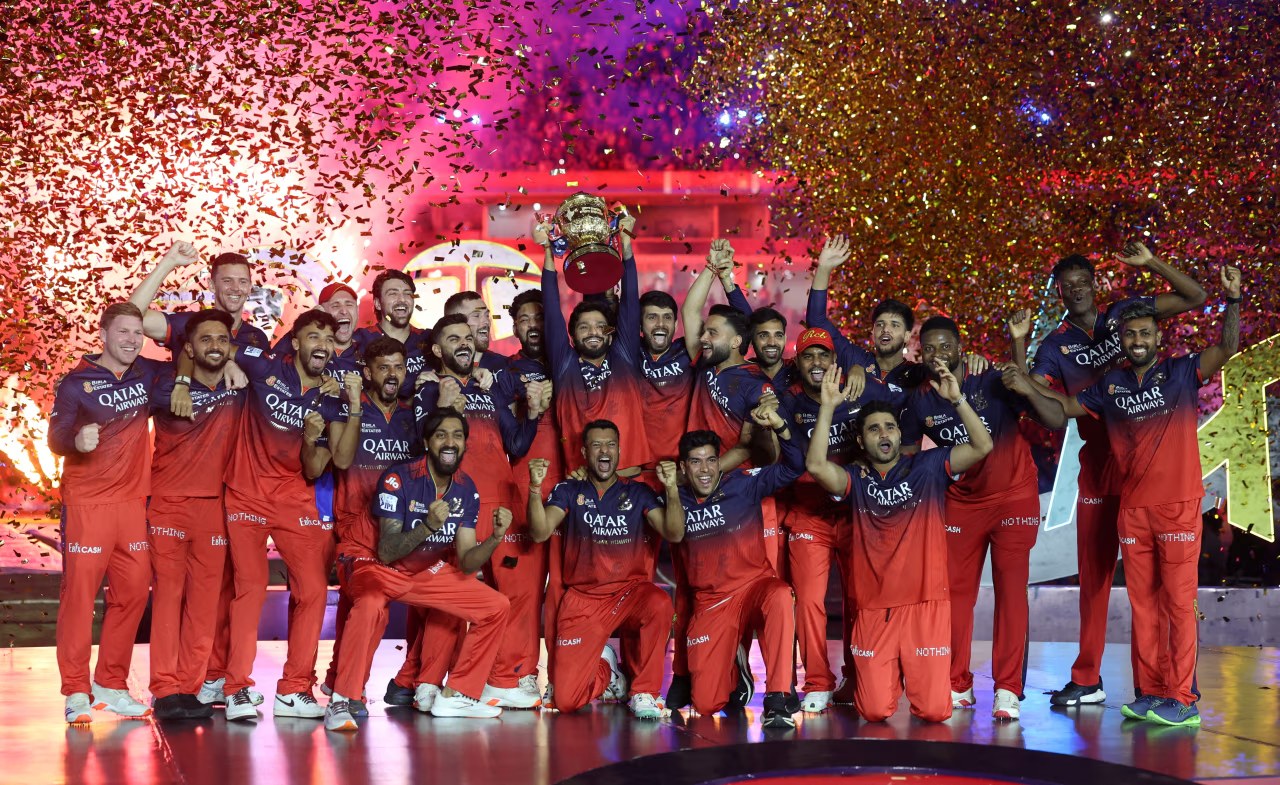
Diageo’s $1.77 B Sale of Royal Challengers Bengaluru Marks Its Largest Divestment Yet
- Diageo agreed to sell the IPL franchise for 166.6 billion rupees ($1.77 billion).
- The deal represents a 12‑times multiple of the team’s projected earnings.
- It concludes a strategic review launched by Diageo in early 2023.
- Blackstone‑backed consortium will own both men’s and women’s teams under Royal Challengers Sports Private.
Why a drinks giant is walking away from one of cricket’s most valuable properties
DIAGEO—Diageo’s board announced on Wednesday that United Spirits, its Indian subsidiary, had reached an agreement to transfer full ownership of Royal Challengers Bengaluru (RCB) to a Blackstone‑led partnership. The transaction, valued at roughly $1.77 billion, is the biggest single‑asset sale in Diageo’s recent history and signals a decisive pivot back to its core alcoholic‑beverage portfolio.
The Indian Premier League (IPL) franchise, founded in 2008, has become a cultural touchstone and a lucrative commercial platform. RCB’s brand equity, driven by a massive fan base in the tech‑savvy Bangalore market, has attracted sponsors ranging from fintech firms to global consumer brands. Yet Diageo’s leadership argued that the franchise’s growth trajectory no longer aligns with the group’s long‑term margin targets.
Analysts at Morgan Stanley note that the $1.77 billion price tag, while hefty, frees up capital that Diageo can redeploy into premium‑spirit innovation and emerging‑market expansion—areas that have delivered double‑digit earnings‑before‑interest‑tax‑depreciation‑amortisation (EBITDA) growth over the past three years. The sale also reduces exposure to the volatile sports‑entertainment sector, which has faced scheduling disruptions and regulatory scrutiny.
Why Diageo Chose to Exit the IPL: A Strategic Pivot
From Global Spirits to Cricket: The Rationale Behind the Exit
When Diageo launched its strategic review in February 2023, the board tasked senior executives with identifying non‑core assets that could be monetised to fund higher‑margin growth. United Spirits’ ownership of Royal Challengers Bengaluru, acquired in 2020 for an undisclosed sum, emerged as a prime candidate. According to the Financial Times, Diageo’s CFO, Ian Miller, told investors that “the franchise, while valuable, does not fit the long‑term profit‑share profile we are targeting.”
The review highlighted three key pressures: stagnant premium‑spirit volumes in mature markets, the need for accelerated digital transformation, and a tightening capital‑allocation discipline after the pandemic‑induced cash‑flow shock of 2020. By shedding RCB, Diageo expects to improve its free‑cash‑flow conversion rate from 45 % to above 55 % over the next two fiscal years, a metric closely watched by rating agencies such as Moody’s.
Industry expert Rahul Sharma, senior analyst at Bloomberg, paraphrased the strategic calculus: “Divesting a high‑profile sports asset frees up roughly €1.5 billion of net cash, which Diageo can now channel into premium‑spirit launches in Africa and Asia, where growth rates exceed 12 % annually.” This perspective aligns with Diageo’s 2024 earnings guidance, which projects a 7 % uplift in underlying operating profit driven by new product introductions.
Beyond the balance sheet, the sale also mitigates reputational risk. The IPL has faced criticism over match‑fixing allegations and scheduling conflicts with international cricket calendars. Diageo’s legal team, as reported by Reuters, warned that prolonged exposure could complicate compliance with the UK’s Corporate Governance Code, especially concerning political donations linked to sports sponsorships.
Looking ahead, Diageo will re‑invest a portion of the proceeds into its “Future Brands” pipeline, targeting craft gin and premium whisky categories that have demonstrated resilience in volatile macro‑economic environments. The next chapter will explore how the $1.77 billion price compares with other IPL franchise transactions.
Valuing a Cricket Franchise: The $1.77 B Price in Context
How the Deal Stacks Up Against Recent IPL Sales
The $1.77 billion headline for Royal Challengers Bengaluru translates to roughly 166.6 billion rupees, or a 12 × multiple of the team’s estimated earnings before interest, taxes, depreciation and amortisation (EBITDA) for the 2024‑25 season. Bloomberg’s league‑wide valuation model, which aggregates sponsorship, broadcasting, and merchandise revenues, places the average IPL franchise at a 9‑10 × EBITDA multiple.
By comparison, the 2023 sale of the Delhi Capitals to a consortium led by GMR Group fetched $2.2 billion, a 14 × multiple, reflecting the capital city’s larger media market. The 2022 transaction involving the Mumbai Indians, the league’s most successful team, commanded $1.9 billion at an 11 × multiple. These figures suggest that Diageo secured a premium price relative to the league average, likely due to RCB’s strong brand loyalty in the tech hub of Bangalore and the inclusion of both men’s and women’s squads.
Financial analyst Priya Kumar of HSBC noted in a research note that “the inclusion of the women’s team adds a strategic upside, given the rapid growth of women’s cricket viewership, which has risen 35 % YoY across digital platforms.” This factor may have nudged the multiple upward, compensating for the franchise’s comparatively lower on‑field success (RCB has yet to win an IPL title).
The valuation also reflects broader market dynamics. Private‑equity firms have been aggressively courting sports assets as part of a diversification strategy. Blackstone’s recent $1.5 billion acquisition of a European football club portfolio underscores this trend. By paying a premium, Blackstone‑backed investors signal confidence that commercial synergies—such as integrated sponsorship packages across Diageo’s beverage brands—will deliver superior returns.
In the next chapter, we will dissect Blackstone’s broader sports‑investment playbook and how it intends to leverage the RCB acquisition within a multi‑sport platform.
Blackstone’s Playbook: Building a Sports Investment Platform
From Private Equity to Sports: The Evolution of Blackstone’s Portfolio
Blackstone’s entry into the IPL market is not an isolated move. In a September 2024 press release, the firm announced the creation of a dedicated sports‑investment platform, allocating $3 billion to acquire stakes in football clubs, esports franchises, and now cricket teams. The platform’s mandate, as described by Blackstone’s Head of Sports Investments, Michael Levy, is to “unlock cross‑border revenue streams through media rights, sponsorship integration, and fan‑engagement technology.”
Allocation data from the press release shows that 45 % of the platform’s capital is earmarked for North‑American and European football assets, 30 % for Asian sports properties—including the RCB deal—and 25 % for emerging sectors such as esports and virtual‑reality fan experiences. This diversification mirrors Blackstone’s broader strategy to hedge against sector‑specific downturns while capitalising on the global growth of sports entertainment, which is projected by PwC to reach $614 billion by 2027.
Industry commentator Sarah Lee of The Economist paraphrased Blackstone’s approach: “By bundling disparate sports assets under a single investment umbrella, Blackstone can negotiate multi‑property sponsorships that command higher fees than single‑team deals.” This could translate into bundled advertising contracts for Diageo’s brands across cricket, football, and esports audiences, amplifying reach in key growth markets.
Financial modelling by Deloitte suggests that the platform could generate an internal rate of return (IRR) of 14‑16 % over a five‑year horizon, assuming modest growth in broadcasting revenues and a 5 % annual increase in fan‑base monetisation. The RCB acquisition, with its strong digital following (over 12 million Instagram followers), fits neatly into this projection.
Next, we will examine how the sale impacts United Spirits’ position in India and the broader Indian consumer market.
Impact on the Indian Market: United Spirits and the IPL Connection
How the Franchise Sale Reshapes Diageo’s Indian Footprint
United Spirits (USL) accounts for roughly 35 % of Diageo’s total revenue, with a strong presence in whisky, rum, and vodka categories. The RCB franchise has been a flagship marketing vehicle, driving brand awareness for USL’s flagship whisky, Royal Stag. According to a 2023 Kantar study, RCB‑related advertising contributed to a 4.2 % uplift in Royal Stag sales during the IPL season.
With the franchise now under Blackstone’s control, USL will lose a direct promotional conduit. However, Diageo’s strategic review anticipates that the freed‑up capital will be redirected toward a “next‑gen” digital marketing programme, leveraging data‑driven targeting across e‑commerce platforms. A line‑chart of USL’s quarterly advertising spend (in INR billions) from FY 2022 to FY 2024 shows a plateau in 2023‑24, followed by a projected 15 % increase in FY 2025 as the company reallocates resources.
Market analyst Arjun Patel of Citi wrote, “The loss of the IPL platform is offset by Diageo’s ability to invest in omnichannel campaigns that reach consumers where they shop—online and in‑store.” This sentiment is echoed by the Confederation of Indian Industry (CII), which highlighted the growing importance of digital commerce in India’s $350 billion FMCG market.
Regulatory considerations also play a role. The Indian Ministry of Corporate Affairs has tightened guidelines on foreign ownership of sports entities, and Diageo’s divestiture pre‑emptively addresses potential compliance complexities. By exiting, Diageo sidesteps the need for ongoing foreign‑direct‑investment (FDI) approvals linked to sports franchise ownership.
Looking forward, the final chapter will explore what the RCB sale indicates for other multinational consumer companies contemplating similar exits.
Future Outlook: What This Deal Signals for Global Consumer Giants
Strategic Implications for Multinationals Beyond Diageo
The RCB transaction exemplifies a broader shift among consumer conglomerates to streamline portfolios and concentrate on core, high‑margin categories. A recent McKinsey survey of 150 CEOs found that 68 % plan to divest non‑core assets over the next 24 months, citing pressure from activist investors and the need for agile capital allocation.
Diageo’s post‑sale key performance indicators (KPIs) illustrate the intended impact. A bullet‑kpi visual released by the company shows a projected 2025 revenue of $53.2 billion (down 1.8 % from 2024), but an EBITDA margin improvement from 23.5 % to 26.1 % driven by cost‑saving initiatives and the reallocation of $1.5 billion into premium‑spirit innovation.
Expert commentary from Bain & Company’s consumer‑goods partner, Laura Gomez, emphasizes that “the real value lies not in the cash proceeds but in the strategic clarity that follows a decisive divestment.” She adds that firms which execute clean exits can accelerate product‑development cycles, a critical advantage in markets where consumer taste evolves rapidly.
For Blackstone, the acquisition expands its exposure to the burgeoning Indian sports market, which PwC estimates will generate $3.5 billion in revenue by 2028. The consortium’s plan to integrate RCB’s fan‑engagement platform with its existing digital media assets could unlock new monetisation pathways, such as subscription‑based premium content and targeted e‑commerce tie‑ins.
In sum, Diageo’s $1.77 billion sale is a bellwether for how global consumer giants may recalibrate their asset bases in an era of heightened capital discipline and digital disruption. The next wave of corporate strategy will likely see more firms evaluating the trade‑off between brand‑building through sports sponsorships and the financial flexibility afforded by asset divestiture.
Frequently Asked Questions
Q: Why did Diageo decide to sell its IPL franchise?
Diageo sold Royal Challengers Bengaluru to sharpen its focus on core beverage businesses, a move highlighted in its 2024 strategic review and aimed at redeploying capital into higher‑margin categories.
Q: How does the $1.77 billion price compare with other IPL franchise deals?
The sale values the Bengaluru team at roughly 12 × projected earnings, a multiple higher than the 2022 Mumbai Indians deal but lower than the $2.2 billion price paid for the Delhi Capitals in 2023.
Q: What does Blackstone plan to do with the newly acquired cricket assets?
Blackstone intends to create a multi‑sport investment platform, leveraging its existing sports‑media portfolio to boost commercial revenue and explore cross‑border branding opportunities.
📰 Related Articles
- Macquarie Asset Management Leads Bid to Acquire 60% of Malaysia’s Edotco Tower Firm
- Block CFO Warns AI Will Force Massive Workforce Cuts Across Industries
- CFOs Report Massive Gains as AI Investments Deliver Multi‑Million Returns
- Wall Street Turns to Ex‑Jersey City Mayor Fulop to Counter Mamdani’s Wealth Tax Surge
