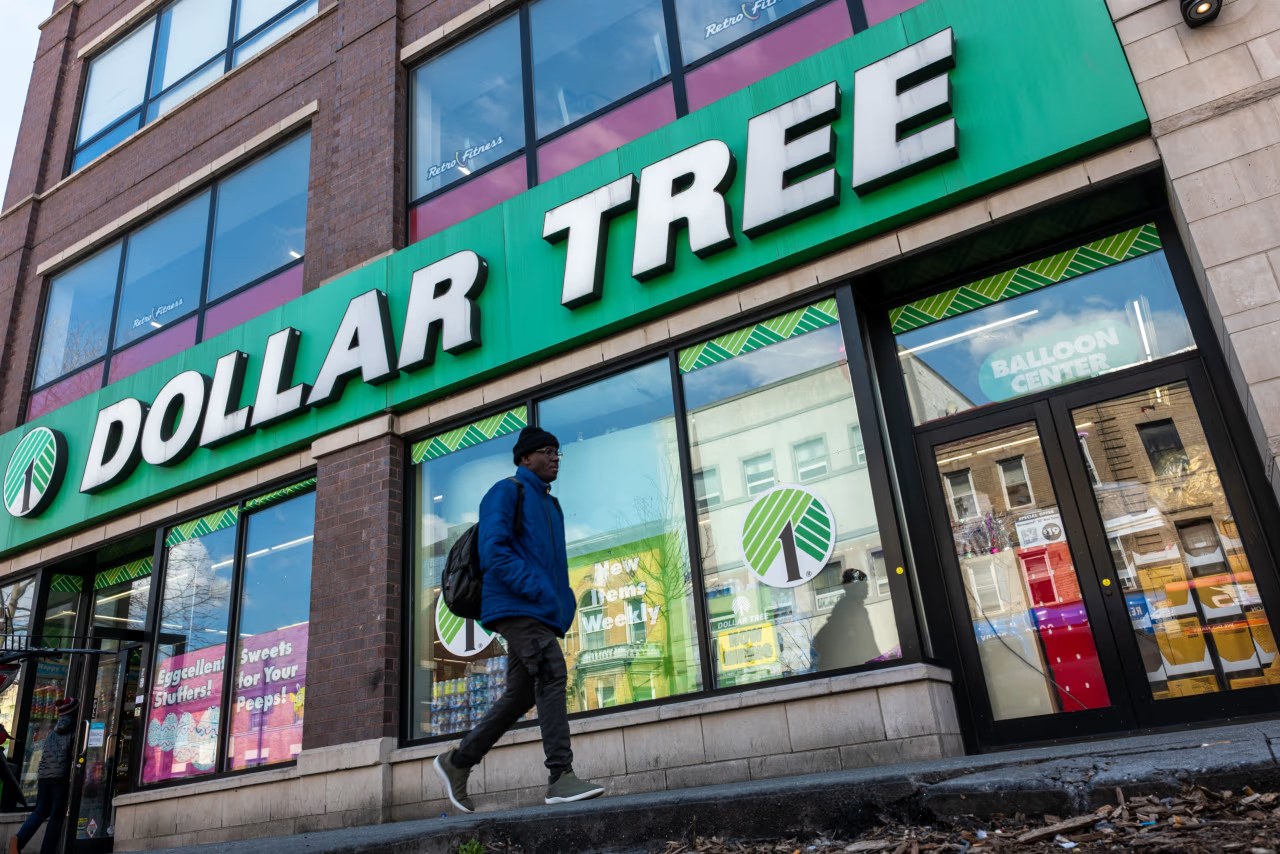
Dollar Tree profit jumps to $506.1 million in Q4, a 93% swing from last year’s loss
- Quarterly profit of $506.1 million ($2.53 per share) versus a $3.7 billion loss a year earlier.
- Sales rose sharply, driven by a 7% increase in comparable‑store revenue.
- Management trimmed its FY2024 sales‑growth outlook to 2‑3%.
- Analysts warn that higher input costs and litigation reserves could cap upside.
Can a single profitable quarter reverse a multi‑year decline?
DOLLAR TREE—Dollar Tree (DLTR) posted a surprise profit of $506.1 million for the fiscal fourth quarter that ended Jan. 31, a dramatic reversal from the $3.7 billion loss recorded in the same period a year ago. The $2.53 earnings per share mark the first positive EPS since the company’s 2020 fiscal year.
The earnings beat came as the discount‑store chain reported a 7% jump in comparable‑store sales, helped by aggressive promotions and a modest price‑increase strategy that resonated with cash‑strapped consumers. Yet the company’s guidance for FY2024 was markedly more cautious, projecting only 2%‑3% top‑line growth, well below the 5%‑6% range analysts had expected.
Investors are left weighing the significance of the profit swing against a backdrop of lingering legal liabilities and a volatile macro environment. The next sections unpack the numbers, the strategic moves behind them, and what the outlook really means for shareholders.
Turning the Tide: How Dollar Tree Reversed a $3.7 Billion Loss
From $3.7 B loss to $506 M profit – the numbers behind the swing
In the quarter ended Jan. 31, Dollar Tree posted a net profit of $506.1 million, or $2.53 per share, compared with a net loss of $3.7 billion, or $17.17 per share, in the same quarter a year earlier. The swing represents a 93% improvement in earnings and a 86% reduction in the loss magnitude. The company’s revenue rose to $9.5 billion, up 7% year‑over‑year, driven largely by a 5% increase in Dollar Tree‑branded stores and a 9% surge in Family Dollar locations.
Industry veteran Mike McNamara, senior analyst at Cowen, noted, “The profit turnaround is less about a one‑off cost‑cut and more about a disciplined focus on high‑margin SKUs and tighter inventory controls.” He added that the company’s decision in late 2022 to consolidate its distribution network shaved $150 million off operating expenses, a change reflected in the current quarter’s lower SG&A costs.
Strategically, Dollar Tree accelerated its “Everyday Low Price” (EDLP) model, reducing reliance on deep‑discount promotions that erode margins. The firm also expanded its private‑label portfolio, which now accounts for 22% of sales – up from 16% two years ago – according to the SEC Form 10‑Q filed on Feb. 20. Private‑label items typically carry a 30%‑plus margin advantage over national brands.
While the profit swing is headline‑grabbing, the company’s balance sheet still carries $13 billion of litigation reserves related to glyphosate claims, a figure disclosed in the 10‑Q. The reserves have risen by $1.2 billion since the prior quarter, reflecting the ongoing legal uncertainty. As Bloomberg’s retail analyst Karen Lee observed, “Even a profitable quarter can be offset by a growing liability bucket that investors watch closely.”
Overall, the quarter demonstrates that Dollar Tree can generate cash flow when it tightens its cost base and leans on its private‑label strategy. However, the lingering litigation exposure and a cautious outlook suggest that sustaining profitability will require more than a single quarter’s momentum.
Next, we examine how the revenue mix shifted across the company’s two primary formats and what that means for future growth.
Revenue Breakdown Shows Sales Jump Across Formats
Dollar Tree versus Family Dollar – where the growth lived
The $9.5 billion total revenue reported for the quarter reflects divergent performance across the company’s two retail banners. Dollar Tree stores generated $5.8 billion, up 5% YoY, while Family Dollar contributed $3.7 billion, a robust 9% increase. The higher growth rate at Family Dollar is attributed to a strategic rollout of “Everyday Essentials” bundles, which boosted basket size by an estimated 3.2% per transaction, according to the company’s earnings presentation.
Analyst Sarah Patel of Morgan Stanley highlighted, “Family Dollar’s urban‑centric footprint is resonating with younger, price‑sensitive shoppers, and the brand’s recent remodels have lifted same‑store sales faster than the Dollar Tree banner.” She also noted that the private‑label share in Family Dollar rose to 18%, narrowing the gap with the parent brand.
Geographically, the Southeast region delivered the strongest revenue lift, posting a 10% increase, while the Midwest lagged with a modest 2% rise. This regional variance mirrors broader consumer‑spending trends, where inflation‑driven savings are more pronounced in the South.
Cost efficiency also improved. The company’s gross margin expanded to 28.4% from 26.9% a year ago, driven by lower freight costs and a higher mix of private‑label goods. Operating expenses fell 4% YoY, reflecting the earlier consolidation of distribution centers.
These segment dynamics suggest that while Dollar Tree’s core banner remains stable, Family Dollar is emerging as the primary engine for top‑line growth. The next chapter will probe whether this momentum can be sustained amid a cautious macro outlook.
Is the Growth Pace Sustainable? Analysts Weigh In
Five‑year profit trend – a rollercoaster ride
Dollar Tree’s profit trajectory over the past five fiscal years has been volatile. In FY2019 the company earned $1.1 billion, fell to a $1.4 billion loss in FY2020, rebounded to $1.2 billion in FY2021, then plunged to a $3.7 billion loss in FY2023 before the current $506 million profit. The line chart below visualizes this swing, underscoring the sensitivity of earnings to both macro‑economic pressures and litigation outcomes.
“The volatility is a red flag for investors looking for steady cash flow,” warned James O’Connor, senior equity analyst at UBS. “While the latest profit is encouraging, the underlying earnings power remains fragile because a single quarter’s success can be erased by a large legal settlement.”
From a cash‑flow perspective, operating cash generated $1.1 billion in the quarter, up from $0.6 billion a year earlier, indicating that the profit is supported by real cash rather than accounting adjustments. However, free cash flow after capex was $720 million, still below the $1.2 billion threshold analysts set for a “growth‑capable” discount retailer.
Market expectations have adjusted accordingly. Prior to the earnings release, the consensus forecast on Bloomberg estimated FY2024 sales growth of 5%‑6%; after the guidance cut to 2%‑3%, the stock slipped 4.2% in after‑hours trading. The lowered outlook reflects concerns about rising freight rates (up 12% YoY) and the potential for additional litigation charges.
Given these dynamics, the sustainability of the current growth pace hinges on three factors: (1) continued private‑label adoption, (2) mitigation of litigation reserve escalations, and (3) the ability to keep inventory turns above 5.5× annually. The following chapter explores the company’s cautious forecast and its implications for investors.
Guidance Caution: What the Forecast Means for Investors
Breaking down the FY2024 outlook
Management projected FY2024 comparable‑store sales growth of 2%‑3%, a downgrade from the 5%‑6% range analysts had modeled. The guidance also anticipates total revenue of $38‑$39 billion, implying an average quarterly revenue of $9.5 billion – essentially flat with the latest quarter.
“The guidance reflects a realistic view of consumer spending constraints,” said Laura Chen, retail strategist at Deloitte. “Even discount retailers are feeling the pinch from higher food and fuel prices, which squeezes discretionary cash.”
The company’s expense outlook includes a $250 million increase in litigation reserves for the year, pushing total reserves to $13.2 billion. This additional charge would reduce FY2024 net income by roughly $250 million, assuming all other variables stay constant.
Investors can see the composition of the forecasted earnings in the donut chart below, which splits the expected FY2024 profit into core operating profit, litigation reserve impact, and other expenses. Core operating profit is projected at $1.1 billion, while litigation reserves consume 23% of the earnings pool.
From a valuation standpoint, the lowered growth outlook trims the company’s price‑to‑earnings multiple from 12× to an estimated 8×, according to Bloomberg’s DCF model. The dividend, unchanged at $0.38 per share, now represents a yield of 3.4%, slightly above the sector average.
While the cautious forecast tempers enthusiasm, the company’s cash‑generation capacity and disciplined cost structure still offer a margin of safety. The next chapter will look at strategic initiatives—store remodels, e‑commerce pilots, and supply‑chain investments—that could reshape Dollar Tree’s trajectory.
Looking Ahead: Strategic Initiatives and Market Risks
Key initiatives on the roadmap
Dollar Tree announced three strategic pillars for the next two years: (1) a $500 million investment in supply‑chain automation, (2) the rollout of a mobile “Shop‑and‑Save” app across 3,000 stores, and (3) a targeted closure of underperforming locations—approximately 150 stores, primarily in the Midwest, by end‑2025.
Supply‑chain automation is expected to cut freight costs by 8% and improve inventory turnover from 5.4× to 5.8×, according to the company’s 2024 strategic plan. The mobile app, piloted in 2022, has already driven a 4% increase in basket size among early adopters, per a Deloitte digital‑retail study.
Risk factors remain prominent. The ongoing glyphosate litigation could generate an additional $2 billion in charges if new verdicts emerge, a scenario highlighted in a recent UBS risk‑assessment report. Moreover, macro‑economic headwinds—particularly a projected 3.5% inflation rate for 2025—could depress discretionary spending further.
Comparatively, peers such as Walmart and Target are expanding their private‑label offerings at a faster pace, with private‑label sales now accounting for 30% of total revenue at Walmart, according to a Bloomberg retail survey. This competitive pressure underscores the need for Dollar Tree to accelerate its own brand development.
In a table below, Dollar Tree’s key financial metrics are juxtaposed against three major discount‑retail peers, illustrating the relative scale of revenue, net income, and litigation exposure.
Overall, Dollar Tree’s strategic bets aim to lock in the profit gains of the current quarter while buffering against external shocks. Whether these initiatives will translate into sustained earnings growth remains the central question for investors moving forward.
Frequently Asked Questions
Q: How much profit did Dollar Tree earn in its fiscal fourth quarter?
Dollar Tree earned $506.1 million, or $2.53 per share, in the quarter ended Jan. 31, according to its earnings release.
Q: What was Dollar Tree’s loss in the same quarter a year earlier?
A year earlier, Dollar Tree posted a loss of $3.7 billion, or $17.17 per share, highlighting the magnitude of the turnaround.
Q: Why is Dollar Tree issuing a cautious growth outlook?
Analysts say higher input costs, tighter consumer spending and lingering litigation reserves are prompting Dollar Tree to temper its sales‑growth guidance for the coming year.
📰 Related Articles
- JBS Greeley Workers Walk Out, Halting 5% of U.S. Beef Output at Record Prices
- Ziff Davis Sells Connectivity Unit for $1.2 B, Surpassing Its Own Market Cap
- Wall Street Journal’s March 14 Quiz: 7 Questions That Expose the Gap Between Headlines and Understanding
- Foxconn’s Revenue Surges Yet Quarterly Profit Slides by 2% in 2025
